


Blue Throated Macaw

Original price was: $15,000.00.$10,000.00Current price is: $10,000.00.
The Blue Throated Macaw is a large macaw species scientifically known as Ara glaucogularis. Reaching around 33 inches in length, it is recognized for striking blue upper plumage, yellow underparts and a distinctive blue throat patch. This social, vocal macaw has a listed lifespan of up to 50 years and requires substantial space, enrichment and long-term avian veterinary care.
Out of stock
Blue Throated Macaw – Ara glaucogularis
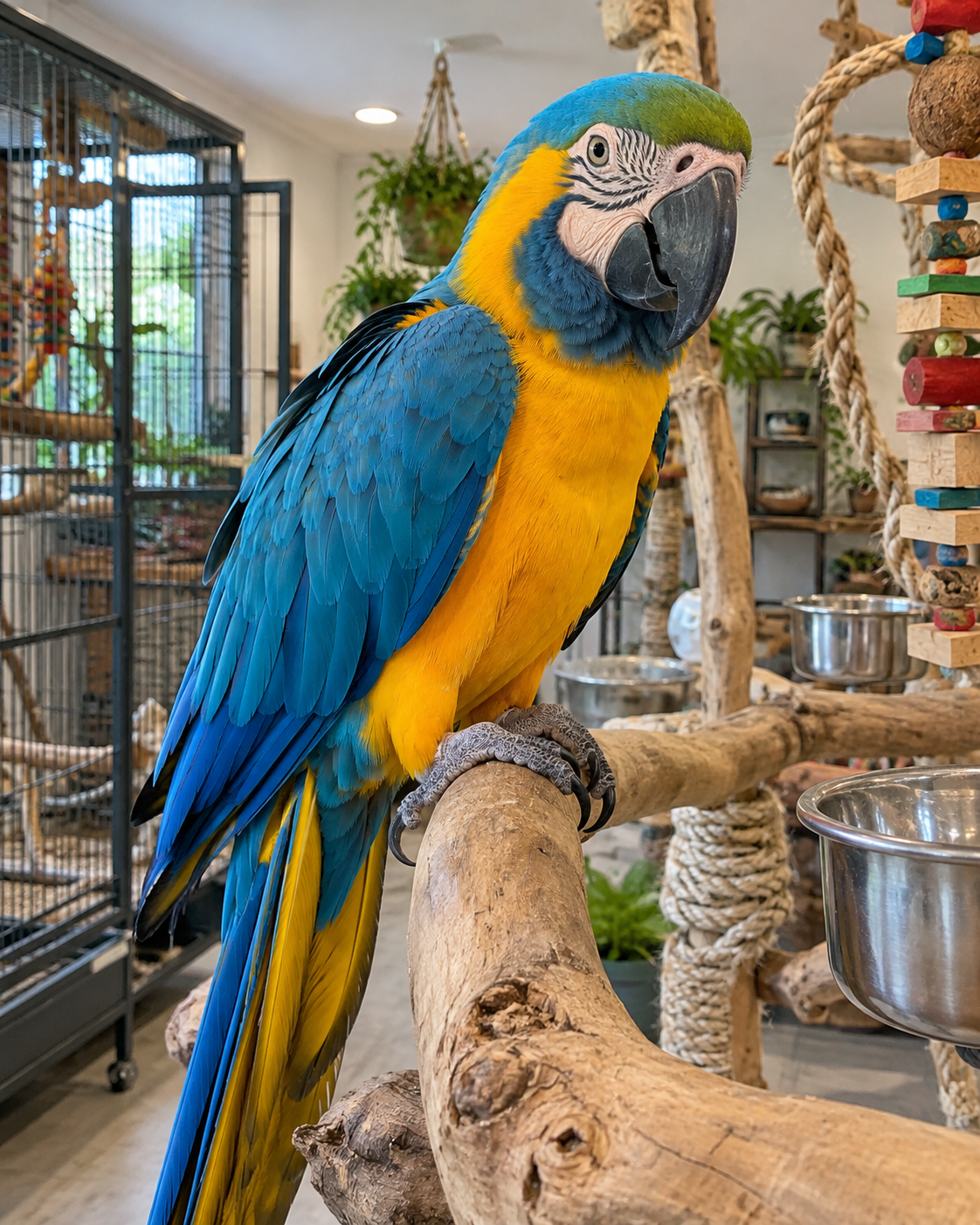
The Blue Throated Macaw is a striking large parrot known for its rich blue-and-yellow colouring and the distinctive blue feathering across the throat that gives the species its common name. Scientifically classified as Ara glaucogularis, it is one of the most visually recognizable macaws in South America.
Your listing specifies a size of approximately 33 inches, which makes this a large bird that needs a substantial amount of space for movement and daily activity.
The species is also highly social and vocal, making interaction, environmental stimulation and a consistent routine important parts of responsible care.
Blue Throated Macaw Details
- Common Name: Blue Throated Macaw
- Scientific Name: Ara glaucogularis
- Bird Species: Macaw
- Size: Approximately 33 inches
- Lifespan: Up to 50 years
- Colours: Blue and Yellow
- Sounds: Chatterer, vocal communicator
- Interaction: Social
- Comparable Breeds: Hyacinth Macaw, Blue Headed Parrot
What Does a Blue Throated Macaw Look Like?
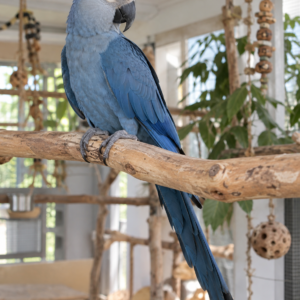
The Blue Throated Macaw has bright blue plumage across the back, wings and upper parts of the body, with contrasting yellow on the chest and underside.
Its most distinctive feature is the blue colouring around the throat and lower face.
The facial area also includes pale exposed skin with dark feather lines, a characteristic feature seen in many macaws.
The large curved beak is strong and adapted for handling food and manipulating objects.
The long tail adds significantly to the bird’s overall body length and contributes to the elegant appearance associated with large macaws.
Blue Throated Macaw Size
Your listed size for the Blue Throated Macaw is approximately 33 inches.
This large body size means the species requires significantly more room than a small or medium parrot.
Housing should allow the bird to stretch, climb and move between strong perches comfortably.
A suitable environment should also account for the long tail, which requires extra clearance around perches and enclosure walls.
Blue Throated Macaw Lifespan
The listed Blue Throated Macaw lifespan is up to 50 years.
That potential longevity makes this species a major long-term commitment.
Actual lifespan can vary according to genetics, nutrition, exercise, veterinary care, environment and individual health.
A prospective owner should therefore think carefully about whether they can provide appropriate care for decades rather than focusing only on the initial acquisition.
Social and Interactive Behaviour
You describe the Blue Throated Macaw as social, which is an important part of the species profile.
Large macaws are intelligent birds that benefit from regular interaction and environmental stimulation.
A bird that receives little interaction or enrichment may not have enough opportunities to express normal behaviours.
Daily routines can include supervised interaction, training, climbing, chewing and foraging activities.
Social interaction should be consistent without forcing contact when the bird prefers space.
Vocal Behaviour and Communication
The Blue Throated Macaw is listed as a chatterer and vocal communicator.
Macaws naturally use a range of sounds to communicate.
These sounds can include contact calls, chatter and louder vocalizations.
Prospective owners should understand that a large macaw can be significantly louder than many smaller companion birds.
This makes household environment and noise tolerance important considerations before ownership.
Housing a Blue Throated Macaw
Housing should be strong, spacious and designed for a large parrot.
The bird needs room for comfortable movement, strong perches and climbing opportunities.
Suitable perches should vary in safe diameter and texture.
Food and water stations should be easy to access and clean.
The environment should also include bird-safe toys and materials suitable for a powerful macaw beak.
Because macaws are active birds, supervised time outside the primary enclosure can be valuable when provided safely.
Enrichment and Mental Stimulation
The Blue Throated Macaw benefits from varied enrichment.
Appropriate options can include:
- Large bird-safe chew toys
- Strong natural branches
- Climbing structures
- Swings
- Foraging activities
- Food-searching toys
- Bathing opportunities
- Training sessions
Enrichment should be rotated periodically to prevent the environment from becoming repetitive.
The Association of Avian Veterinarians provides educational resources for bird owners covering husbandry, enrichment and general companion-bird care:
Association of Avian Veterinarians – Pet Bird Care
Diet and Nutrition
A Blue Throated Macaw needs a balanced feeding program appropriate for a large parrot.
Diet should not rely heavily on one food type.
A formulated parrot diet, appropriate fresh vegetables and other suitable foods may be included depending on the individual bird’s needs and avian veterinary recommendations.
Age, activity and health status can affect nutritional requirements.
Professional advice is useful for developing an appropriate long-term feeding plan.
Veterinary Care
An avian veterinarian should be identified before bringing home a Blue Throated Macaw.
Routine veterinary examinations can help establish baseline information regarding:
- Weight
- Body condition
- Nutrition
- Beak and feather condition
- Respiratory health
- General wellbeing
The Association of Avian Veterinarians provides resources for companion-bird owners and access to avian veterinary information:
Association of Avian Veterinarians
Blue Throated Macaw vs Hyacinth Macaw
The Hyacinth Macaw is one of the more relevant comparison species because both are large macaws with substantial space requirements.
However, their colouring is very different.
The Blue Throated Macaw has blue upper plumage with yellow underparts, while the Hyacinth Macaw is predominantly deep cobalt blue.
Both species require strong housing, large perches, regular enrichment and careful long-term planning.
Blue Throated Macaw vs Blue Headed Parrot
The Blue Headed Parrot is much smaller than a Blue Throated Macaw.
Although both can display strong blue colouring, their overall body size, proportions and housing requirements are very different.
A Blue Throated Macaw requires significantly more physical space and heavier-duty equipment than a smaller parrot.
This makes size and long-term housing one of the most important distinctions between the two.
Preparing for Blue Throated Macaw Ownership
Before bringing home a Blue Throated Macaw, the environment should already be prepared.
This includes appropriate large-bird housing, sturdy perches, feeding stations, enrichment and access to avian veterinary care.
Noise level should also be considered.
Large macaws are vocal birds, and their calls may not be suitable for every household.
A responsible owner should consider long-term lifestyle, housing stability and the bird’s potential 50-year lifespan before making a commitment.
Why the Blue Throated Macaw Is Distinctive
The Blue Throated Macaw combines dramatic blue-and-yellow plumage with a distinctive blue throat and large macaw body size.
Its social behaviour, vocal communication and intelligence make it an engaging species, but these same traits also create substantial care requirements.
For anyone researching this macaw, responsible ownership means planning for space, interaction, enrichment, nutrition and veterinary care over many years.
Frequently Asked Questions
What is the scientific name of the Blue Throated Macaw?
The scientific name is Ara glaucogularis.
How big is a Blue Throated Macaw?
Your listing specifies a size of approximately 33 inches.
What is the Blue Throated Macaw lifespan?
Your listed lifespan is up to 50 years.
What colours does a Blue Throated Macaw have?
The species is primarily blue and yellow, with distinctive blue colouring around the throat.
Is the Blue Throated Macaw social?
Yes. Your listing describes the species as social.
Is the Blue Throated Macaw vocal?
Yes. It is described as a chatterer and vocal communicator.
Is the Blue Throated Macaw similar to a Hyacinth Macaw?
Both are large macaws requiring substantial housing and enrichment, but they differ significantly in colour and appearance.
Where can I learn more about caring for macaws?
The Association of Avian Veterinarians provides professional companion-bird care resources:
Be the first to review “Blue Throated Macaw”
Related products

Macaw Parrots


Macaw Parrots
Macaw Parrots

Macaw Parrots
Macaw Parrots


Macaw Parrots

Macaw Parrots
Macaw Parrots
Reviews
There are no reviews yet.