



Hyacinth Macaw for Sale

Original price was: $20,000.00.$15,000.00Current price is: $15,000.00.
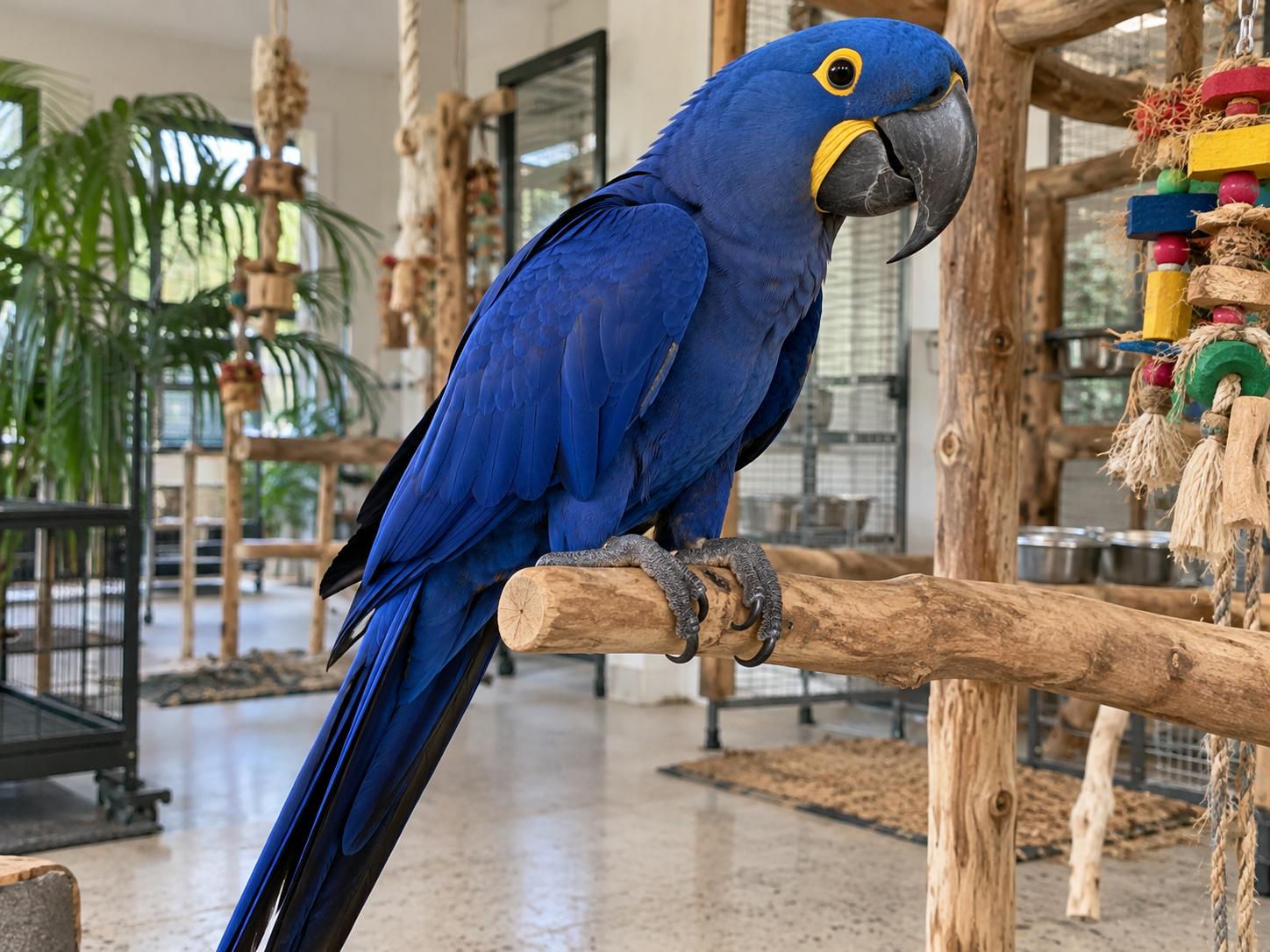
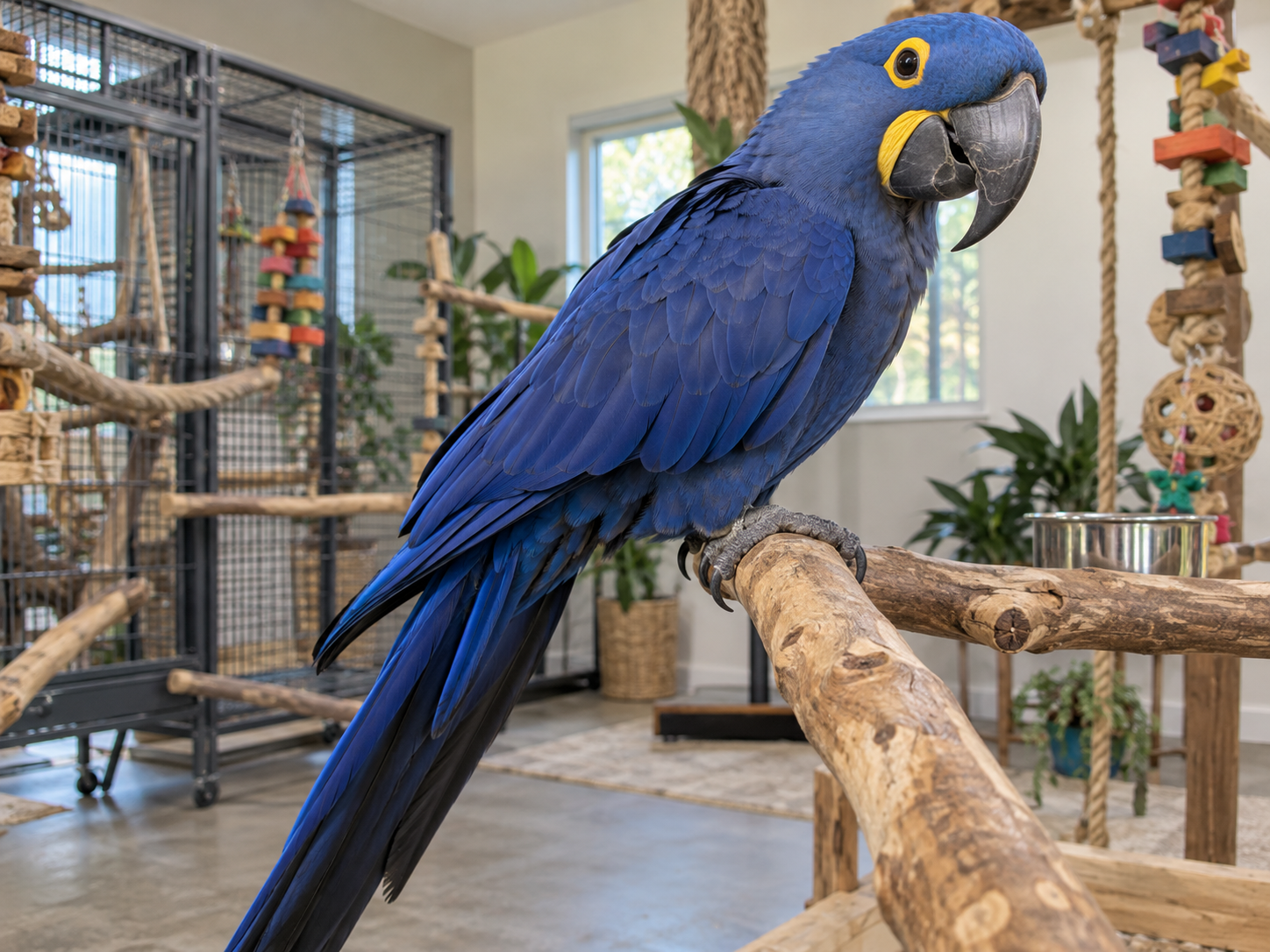
Male and female Hyacinth Macaws are represented in this listing. Scientifically known as Anodorhynchus hyacinthinus, this large macaw is famous for its intense cobalt-blue plumage, yellow skin around the eyes and lower beak, powerful dark bill and exceptionally large body size. Adults reach approximately 35–39 inches and weigh around 1.2–1.45 kg. The reported lifespan is approximately 30–50 years or more, making long-term housing, enrichment, nutrition and avian veterinary care essential.
Hyacinth Macaw for Sale – Male & Female
For buyers researching a hyacinth macaw for sale, the Hyacinth Macaw is one of the most distinctive large parrots in aviculture. Scientifically classified as Anodorhynchus hyacinthinus, this species is also known as the Hyacinthine Macaw, Blue Macaw and Black Macaw.
Its striking appearance comes from deep purple-blue to cobalt-blue plumage covering almost the entire body, contrasted by bright yellow skin around the eyes and along the lower mandible.
The World Parrot Trust lists adult Hyacinth Macaws at approximately 90–100 cm, or 35–39 inches, in length and 1,200–1,450 grams, or around 42–50.75 ounces, in weight.
Both male and female birds can share this dramatic colour pattern, so visual appearance alone should not be used to determine sex.
Hyacinth Macaw Details
- Common Name: Hyacinth Macaw
- Alternative Names: Hyacinthine Macaw, Blue Macaw, Black Macaw
- Scientific Name: Anodorhynchus hyacinthinus
- Sex Represented: Male and Female
- Bird Type: Macaw
- Adult Size: Approximately 35–39 inches
- Adult Weight: Approximately 1.2–1.45 kg
- Reported Lifespan: Approximately 30–50 years or more
- Primary Colour: Deep blue
- Conservation Status: Vulnerable
- CITES Listing: Appendix I
What Does a Blue Hyacinth Macaw Look Like?
The blue hyacinth macaw is immediately recognizable because nearly the entire bird is blue.
Adults have a deep purple-blue body colour, slightly darker wings and somewhat paler feathers around the head.
The bill is large, curved and dark grey to black.
The face includes a bare yellow eye ring and a distinctive yellow crescent of skin around the base of the lower mandible. Adult eyes are dark brown.
The combination of blue plumage and bright yellow facial skin distinguishes this species from other blue macaws.
Its very large bill is also a major identifying feature.
Male and Female Hyacinth Macaws
Both male and female birds are represented in this listing.
Male and female Hyacinth Macaws are very similar in external appearance, so sex should not be guessed purely by body size or colour.
When a buyer specifically wants a male or female bird, appropriate sex-identification documentation or veterinary testing is preferable.
Individual temperament should also be assessed separately from sex.
Handling, socialization, age and previous environment can all influence how a bird behaves.
Hyacinth Macaw Size
The hyacinth macaw size is one of the species’ most important characteristics.
Adults reach approximately 35–39 inches, making them among the largest macaws.
They also weigh around 1.2–1.45 kg, giving them a substantial physical presence.
That body size means suitable housing must allow room for:
- Full-body movement
- Wing stretching
- Climbing
- Large perches
- Large enrichment items
- Strong feeding stations
- Safe supervised activity
A Hyacinth Macaw should not be housed as though it were a small or medium-sized parrot.
Hyacinth Macaw Lifespan
The World Parrot Trust reports a Hyacinth Macaw lifespan of approximately 30–50 years or more.
That makes ownership a major long-term commitment.
Actual lifespan varies depending on:
- Genetics
- Diet
- Exercise
- Veterinary care
- Environmental quality
- Housing
- Long-term husbandry
A lifespan figure should be treated as potential longevity rather than a guarantee for every individual bird.
Hyacinth Macaw Price
People researching hyacinth macaw price should consider more than the initial advertised amount.
The price of an individual bird can vary according to:
- Age
- Sex
- Documentation
- Handling history
- Health information
- Geographic location
- Availability
- Breeding history
- Individual condition
Because no exact selling price has been provided for this listing, the page should display the actual current price rather than inventing a generic figure.
Long-term ownership costs are also substantial.
A Hyacinth Macaw needs large housing, durable perches, high-quality food, heavy-duty enrichment and routine avian veterinary care.
Housing a Hyacinth Macaw
Housing requirements for this species are substantial.
The World Parrot Trust recommends access to a large enclosure at least 15 metres, or 50 feet, in length for at least part of the year and notes that permanent indoor confinement is not recommended.
A companion-bird environment should include:
- Very strong perches
- Large climbing structures
- Large feeding stations
- Heavy-duty toys
- Chewing materials
- Bathing opportunities
- Room for movement
Equipment must be durable enough to withstand the species’ powerful bill.
Enrichment and Chewing
Hyacinth Macaws are vigorous chewers.
The World Parrot Trust recommends bird-safe woods such as fir, pine, willow and elder, along with heat-sterilized pine cones and large wooden or vegetable-tanned leather toys.
Suitable enrichment can include:
- Large chew toys
- Natural branches
- Foraging toys
- Climbing structures
- Large swings
- Bathing
- Training activities
Enrichment should be changed periodically so the environment remains stimulating.
Diet and Nutrition
Wild Hyacinth Macaws rely heavily on palm nuts.
The World Parrot Trust notes that their natural diet includes nuts from several palm genera along with other fruits and some molluscs.
In professional captive care, diet may include suitable nuts, vegetables, fruits and complete formulated macaw food.
However, feeding should be tailored to the individual bird rather than copied from a generic list.
The Association of Avian Veterinarians provides dedicated macaw care resources through its Pet Bird Care Series.
Association of Avian Veterinarians – Macaw Care
Sounds and Vocal Behaviour
Hyacinth Macaws are vocal birds.
Their calls include loud croaking and screeching sounds, along with growls, yaps and other communication noises. Flocks can be especially loud.
Prospective owners should therefore consider household noise tolerance before acquiring this species.
A large macaw should never be expected to remain consistently quiet.
Natural Range of the Hyacinth Macaw
Wild Hyacinth Macaws occur in three main isolated populations across central South America.
Current range includes areas of:
- Brazil
- Bolivia
- Paraguay
The species is strongly associated with landscapes containing abundant nut-bearing palms, gallery forest, palm savannas and dry woodland.
This wild range should not be interpreted as proof of the origin of any particular captive bird.
Conservation Status
The conservation status of the Hyacinth Macaw is especially important.
The World Parrot Trust currently lists the species as Vulnerable, with an estimated 4,700–11,000 mature individuals and a stable population trend. It is also included under CITES Appendix I.
Wild populations were heavily affected by trapping between 1970 and 1990, when numbers were reduced to an estimated 3,000 birds. Habitat destruction and loss of suitable nesting cavities remain major concerns.
Responsible sourcing and appropriate documentation are therefore particularly important.
Hyacinth Macaw Conservation Work
Conservation programs continue to support this species.
The World Parrot Trust reports work involving nest monitoring, artificial nest boxes, veterinary support, habitat protection and population surveys.
A 2025 range-wide survey included updated population information, while nest-box programs continue to support breeding success.
This work demonstrates why legitimate captive breeding and protection of wild habitat both remain important.
Veterinary Care
A Hyacinth Macaw should have access to a qualified avian veterinarian.
Routine examinations help establish baseline information about:
- Body weight
- Beak condition
- Feet
- Plumage
- Nutrition
- Respiratory health
- General wellbeing
The Association of Avian Veterinarians maintains professional care resources for macaw owners.
Association of Avian Veterinarians
Preparing for Hyacinth Macaw Ownership
Anyone considering a hyacinth macaw for sale should prepare well before bringing the bird home.
The setup should include:
- Large, durable housing
- Heavy-duty perches
- Strong enrichment
- Appropriate feeding equipment
- Safe climbing areas
- Access to avian veterinary care
Noise, space and long-term financial commitment must also be considered.
A bird weighing more than a kilogram and potentially living for several decades requires much more planning than a smaller companion parrot.
Why the Hyacinth Macaw Is Distinctive
Few parrots have the visual impact of a blue Hyacinth Macaw.
Its deep cobalt-blue plumage, bright yellow facial skin, extremely large bill and 35–39 inch body length make it immediately recognizable.
For buyers researching a Hyacinth Macaw for sale, appearance should only be one part of the decision.
Housing, enrichment, nutrition, veterinary care, conservation status and legitimate documentation should all be considered before ownership.
Frequently Asked Questions
What is the scientific name of the Hyacinth Macaw?
The scientific name is Anodorhynchus hyacinthinus.
What is the Hyacinth Macaw size?
Adults measure approximately 90–100 cm, or 35–39 inches, in length.
How much does a Hyacinth Macaw weigh?
Adults weigh approximately 1,200–1,450 grams.
What colour is a blue Hyacinth Macaw?
Adults have deep purple-blue to cobalt-blue plumage with bright yellow skin around the eyes and lower mandible.
What is the Hyacinth Macaw lifespan?
The World Parrot Trust reports approximately 30–50 years or more.
What is the Hyacinth Macaw price?
The Hyacinth Macaw price varies according to age, sex, documentation, location, availability and individual condition. The actual current selling price should be shown directly on the listing.
Are male and female Hyacinth Macaws different in colour?
Both sexes share the same general deep blue and yellow colour pattern. Confirmed sex should rely on documentation or appropriate testing rather than appearance alone.
Is the Hyacinth Macaw endangered?
The World Parrot Trust currently lists the species as Vulnerable, with approximately 4,700–11,000 mature individuals remaining. It is listed under CITES Appendix I.
Do Hyacinth Macaws need large housing?
Yes. Their large size and activity level require substantial space, strong perches and durable enrichment.
Where can I learn more about macaw care?
The Association of Avian Veterinarians provides dedicated macaw care resources:
Be the first to review “Hyacinth Macaw for Sale”
Related products

Macaw Parrots

Macaw Parrots
Macaw Parrots


Macaw Parrots

Macaw Parrots
Macaw Parrots
Macaw Parrots


Macaw Parrots
Reviews
There are no reviews yet.