


Blue and Gold Macaw for Sale

Original price was: $4,000.00.$2,999.00Current price is: $2,999.00.
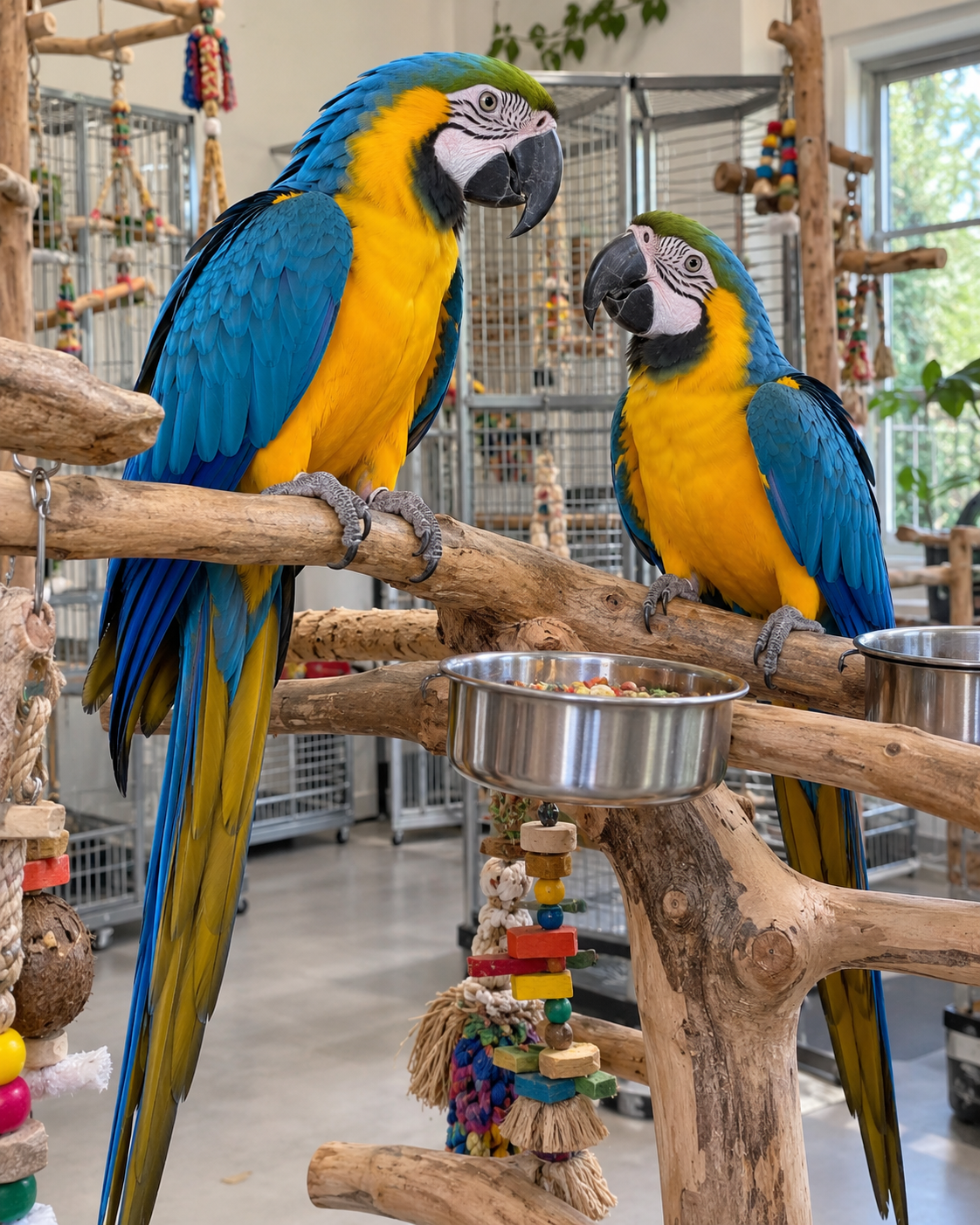
Male and female Blue and Gold Macaws are represented in this listing. Also known as the Blue-and-yellow Macaw and scientifically classified as Ara ararauna, these large parrots are recognized for vivid blue upper plumage, bright golden-yellow underparts and long colourful tails. They can reach up to approximately 35 inches in length and have a listed lifespan of 50–60 years. Blue and Gold Macaws are highly social, vocal, playful and intelligent birds that require substantial space, enrichment, interaction and long-term avian veterinary care.
Blue and Gold Macaw for Sale – Male & Female
For buyers researching a blue and gold macaw for sale, the Blue and Gold Macaw is one of the most recognizable large parrots in aviculture. Scientifically known as Ara ararauna, the species is also called the Blue-and-yellow Macaw, Yellow-breasted Macaw and Blue Macaw.
The combination of brilliant blue upper plumage and golden-yellow underparts makes this species immediately recognizable.
Your listing represents both male and female Blue and Gold Macaws, allowing buyers to consider individual birds while understanding the responsibilities involved in keeping a large, intelligent and highly social parrot.
The World Parrot Trust lists Ara ararauna at approximately 86 cm, or 33.5 inches, in length and approximately 1,040–1,286 grams in weight. Your stated maximum size of up to 35 inches therefore falls within a practical description of this large macaw species.
Blue and Gold Macaw Details
- Common Name: Blue and Gold Macaw
- Alternative Name: Blue-and-yellow Macaw
- Scientific Name: Ara ararauna
- Bird Species: Parrot
- Sex Represented: Male and Female
- Size: Up to approximately 35 inches
- Lifespan: Approximately 50–60 years
- Colours: Bright blue and yellow
- Sounds: Vocal, capable of learning words and sounds
- Interaction: Highly social, affectionate, playful and intelligent
- Comparable Parrots: African Grey Parrot, Scarlet Macaw
What Does a Blue and Gold Macaw Look Like?
The Blue and Gold Macaw has one of the most distinctive colour patterns among large parrots.
Adults have brilliant blue feathers covering much of the back, wings and upper tail. The chest, abdomen and underside are predominantly golden yellow.
The forehead and crown contain green colouring, while the throat is darker, often appearing black.
One of the species’ most recognizable facial characteristics is the largely bare white facial area marked by fine lines of small green feathers.
The large bill is dark grey to black and is adapted for manipulating food, climbing and interacting with objects.
The long blue-and-yellow tail contributes considerably to the macaw’s overall body length.
Male and Female Blue and Gold Macaws
Both male and female Blue and Gold Macaws are represented in this listing.
Male and female birds look very similar externally, so visual appearance alone is not a reliable way to establish sex.
Where a buyer specifically wants a male or female Blue and Gold Macaw, documented sex information or appropriate veterinary testing should be used instead of guessing from body size or plumage.
Sex should also not be treated as a guarantee of personality.
Each macaw develops individual behavioural traits based on socialization, environment, previous handling, genetics and daily routine.
A prospective owner should therefore evaluate the individual bird rather than making a decision based solely on whether it is male or female.
Blue and Gold Macaw Lifespan
The blue and gold macaw lifespan makes ownership a substantial long-term commitment.
You have listed the expected lifespan as approximately 50–60 years. The World Parrot Trust reports longevity of about 60 years for this species.
However, lifespan figures should be understood as potential longevity rather than a guarantee for every bird.
The Association of Avian Veterinarians notes that actual life expectancy in parrots can be influenced by nutrition, genetics, stress, exercise and other health factors.
Anyone considering a Blue and Gold Macaw should therefore plan for decades of feeding, housing, enrichment and professional veterinary care.
Blue and Gold Macaw Personality and Interaction
Blue and Gold Macaws are highly social parrots.
They are generally active, intelligent and strongly engaged with their environment. They can interact with people, learn routines and respond to regular training and enrichment.
Your listing describes the birds as:
- Highly Social
- Affectionate
- Playful
- Intelligent
These traits make interaction an important component of daily care.
A macaw should not be expected to remain confined with little stimulation throughout the day.
Regular interaction, training and environmental enrichment can help provide appropriate outlets for the bird’s intelligence and activity.
Talking and Vocal Behaviour
The Blue and Gold Macaw is a vocal parrot.
Macaws naturally produce powerful calls, and the World Parrot Trust describes Blue and Gold Macaw vocalizations as loud, raucous and sometimes harsh.
Individual birds can also learn words, phrases and familiar sounds.
The Association of Avian Veterinarians notes that Blue and Gold Macaws are intelligent and can be trained to perform different commands or vocal recognitions, including learning words and phrases.
However, prospective owners should not interpret “talking bird” as meaning the bird will communicate quietly or speak on demand.
Normal macaw vocalization can be loud.
Blue and Gold Macaw Price
People researching a blue and gold macaw price should look beyond the initial purchase figure.
The actual selling price can vary according to:
- Age
- Sex
- Individual handling history
- Health information
- Documentation
- Geographic location
- Breeding history
- Current availability
Because no exact selling price has been provided for this listing, the product page should display your actual current price rather than relying on a generic market estimate.
The initial Blue and Gold Macaw price is also only part of the financial commitment.
Long-term ownership involves suitable housing, food, enrichment materials, veterinary examinations and potential unexpected healthcare expenses.
Housing a Blue and Gold Macaw
Space is particularly important for this species.
A Blue and Gold Macaw is a large parrot with a long tail and substantial wingspan.
The World Parrot Trust recommends access to a large flight enclosure and specifically notes an enclosure approximately 15 metres, or 50 feet, long for part of the year in avicultural settings.
A household companion setup may differ, but the principle remains the same: this species needs substantial room for physical activity.
Housing should contain strong, appropriately sized perches, climbing opportunities and enrichment suited to a large macaw.
The enclosure and surrounding area should also be constructed with the bird’s powerful bill in mind.
Enrichment and Intelligence
Blue and Gold Macaws require considerable environmental stimulation.
Suitable enrichment can include:
- Large bird-safe chew toys
- Strong wooden items
- Safe natural branches
- Large perches
- Swings
- Ladders
- Foraging opportunities
- Regular bathing
The World Parrot Trust recommends large macaw toys, bird-safe wood, pine cones, large perches, swings and ladders for this species.
Enrichment should be changed periodically to prevent the bird’s environment from becoming overly repetitive.
Diet and Nutrition
Blue and Gold Macaws require a high-quality, varied feeding program.
The Association of Avian Veterinarians specifically warns that sedentary macaws fed poor-quality diets heavily focused on seeds and fruit can develop metabolic, cardiac and reproductive health problems.
A companion macaw’s diet should therefore be developed with professional avian guidance rather than relying primarily on seeds.
Fresh vegetables and other suitable foods may be included alongside an appropriate formulated macaw diet depending on the individual bird’s needs.
For professional bird-care information, owners can consult:
Association of Avian Veterinarians – Pet Bird Care
Blue and Gold Macaw Health Considerations
Large macaws can have species-specific healthcare considerations.
The Association of Avian Veterinarians notes that Blue and Gold Macaws can be particularly sensitive to airborne powder down from species such as cockatoos and African Grey parrots.
Environmental irritants, poor air quality, low humidity and inadequate nutrition can also contribute to respiratory or sinus-related problems.
This is especially relevant because your comparable breeds include the African Grey Parrot.
If multiple parrot species share a household or bird room, their environmental needs and potential interactions should be discussed with an avian veterinarian.
Blue and Gold Macaw vs African Grey Parrot
The Blue and Gold Macaw and African Grey Parrot are both highly intelligent parrots, but they differ considerably in size and physical requirements.
A Blue and Gold Macaw is substantially larger and requires heavier-duty housing, larger perches and more physical space.
African Greys are also intelligent and vocal but have a different body size, plumage type and environmental profile.
The Association of Avian Veterinarians notes that powder down from African Grey parrots can be an environmental irritant for Blue and Gold Macaws, which is worth considering if both species are kept in the same home.
Blue and Gold Macaw vs Scarlet Macaw
The Scarlet Macaw is a more directly comparable species because both are large Ara macaws.
Both species have long tails, powerful bills, vivid plumage and substantial space requirements.
The major visual difference is colour.
Blue and Gold Macaws are dominated by bright blue and golden yellow, while Scarlet Macaws are predominantly red with additional yellow and blue wing colouring.
Regardless of species, large macaw ownership requires significant long-term planning.
Veterinary Care
An avian veterinarian should be identified before bringing a Blue and Gold Macaw home.
Routine examinations can help establish baseline information concerning:
- Body weight
- Physical condition
- Diet
- Respiratory health
- Behaviour
- General husbandry
Veterinary guidance is particularly useful for a species that may remain in the household for several decades.
The Association of Avian Veterinarians provides professional resources for bird owners:
Association of Avian Veterinarians
Preparing for Blue and Gold Macaw Ownership
Before acquiring a Blue and Gold Macaw, prospective owners should have the bird’s housing and daily routine prepared.
This includes suitable large-bird housing, strong perches, feeding stations, enrichment and access to an avian veterinarian.
Noise level should also be considered carefully.
These are naturally vocal birds, and their calls can be powerful.
The combination of intelligence, social needs, size and potential 50–60 year lifespan means that ownership should be approached as a major long-term responsibility.
Why Buyers Choose the Blue and Gold Macaw
The Blue and Gold Macaw is recognizable for far more than its colour.
Its large size, vivid blue and yellow plumage, intelligence, social behaviour and ability to learn sounds make Ara ararauna one of the world’s best-known macaws.
For buyers specifically researching a blue and gold macaw for sale, accurate species identification, appropriate housing, responsible sourcing and long-term veterinary planning should be considered alongside the initial purchase price.
Frequently Asked Questions
What is the scientific name of the Blue and Gold Macaw?
The scientific name is Ara ararauna.
How big does a Blue and Gold Macaw get?
Your listing specifies up to 35 inches. The World Parrot Trust lists the species at approximately 86 cm, or 33.5 inches.
What is the Blue and Gold Macaw lifespan?
Your listed lifespan is approximately 50–60 years, and the World Parrot Trust reports potential longevity of around 60 years.
What colours does a Blue and Gold Macaw have?
Adults have bright blue upper plumage and golden-yellow underparts, with green on the crown and darker colouring around the throat.
Can Blue and Gold Macaws talk?
Individual Blue and Gold Macaws can learn words, phrases and other vocal sounds. They are also naturally loud and vocal parrots.
Are Blue and Gold Macaws social?
Yes. They are intelligent and highly social birds that benefit from regular interaction, training and environmental enrichment.
What is the Blue and Gold Macaw price?
The price depends on the individual bird, age, sex, documentation, location and other factors. The current selling price should be displayed directly on the individual listing.
Are male and female Blue and Gold Macaws different in appearance?
Males and females look very similar externally. Buyers who require a confirmed sex should rely on appropriate documentation or testing.
Where can I learn more about caring for a Blue and Gold Macaw?
The Association of Avian Veterinarians provides professional bird-care information:
Be the first to review “Blue and Gold Macaw for Sale”
Related products
Macaw Parrots


Macaw Parrots

Macaw Parrots

Macaw Parrots


Macaw Parrots

Macaw Parrots

Macaw Parrots


Macaw Parrots
Reviews
There are no reviews yet.