



The Great Green Macaw
Original price was: $7,500.00.$6,500.00Current price is: $6,500.00.
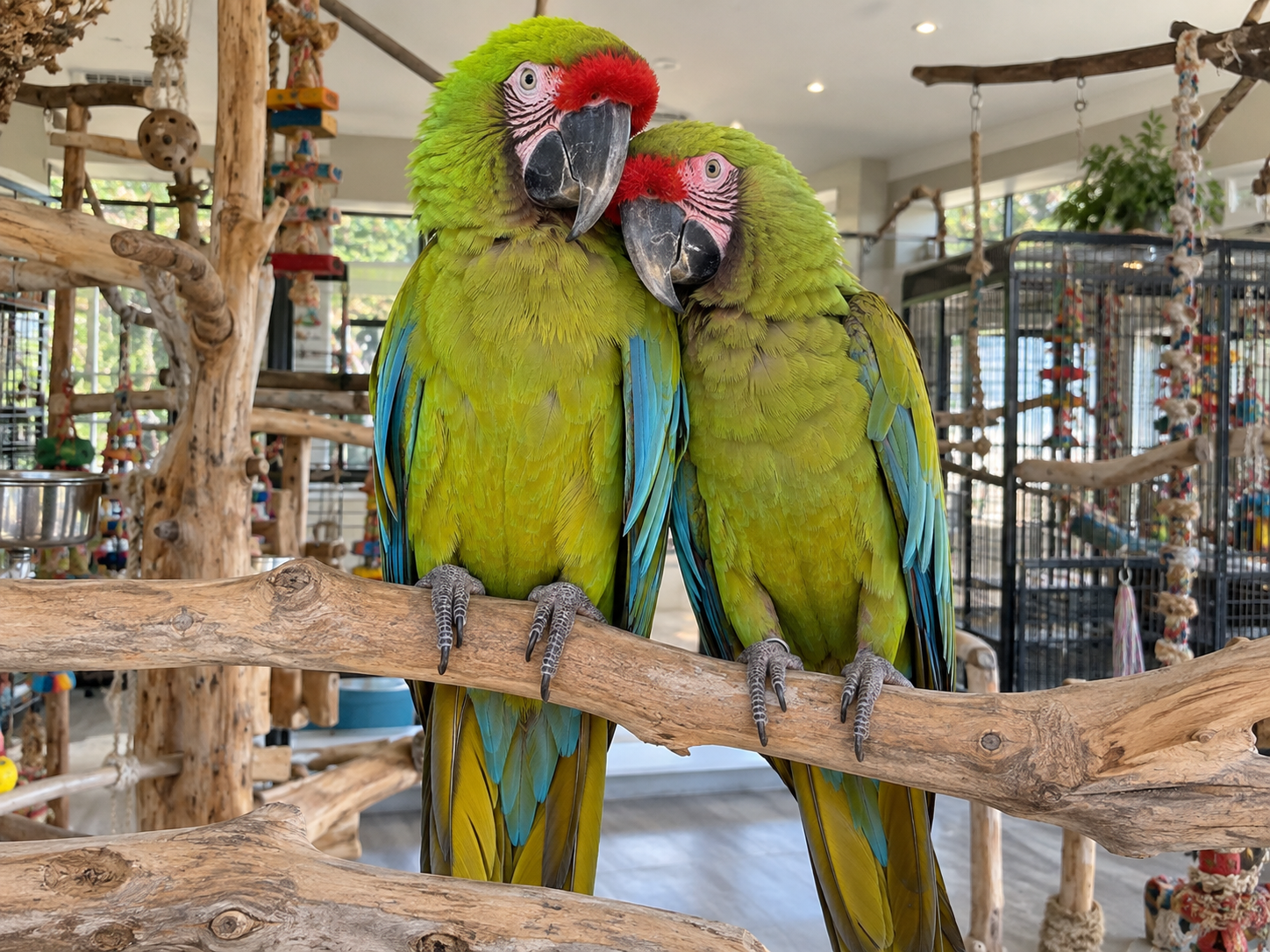
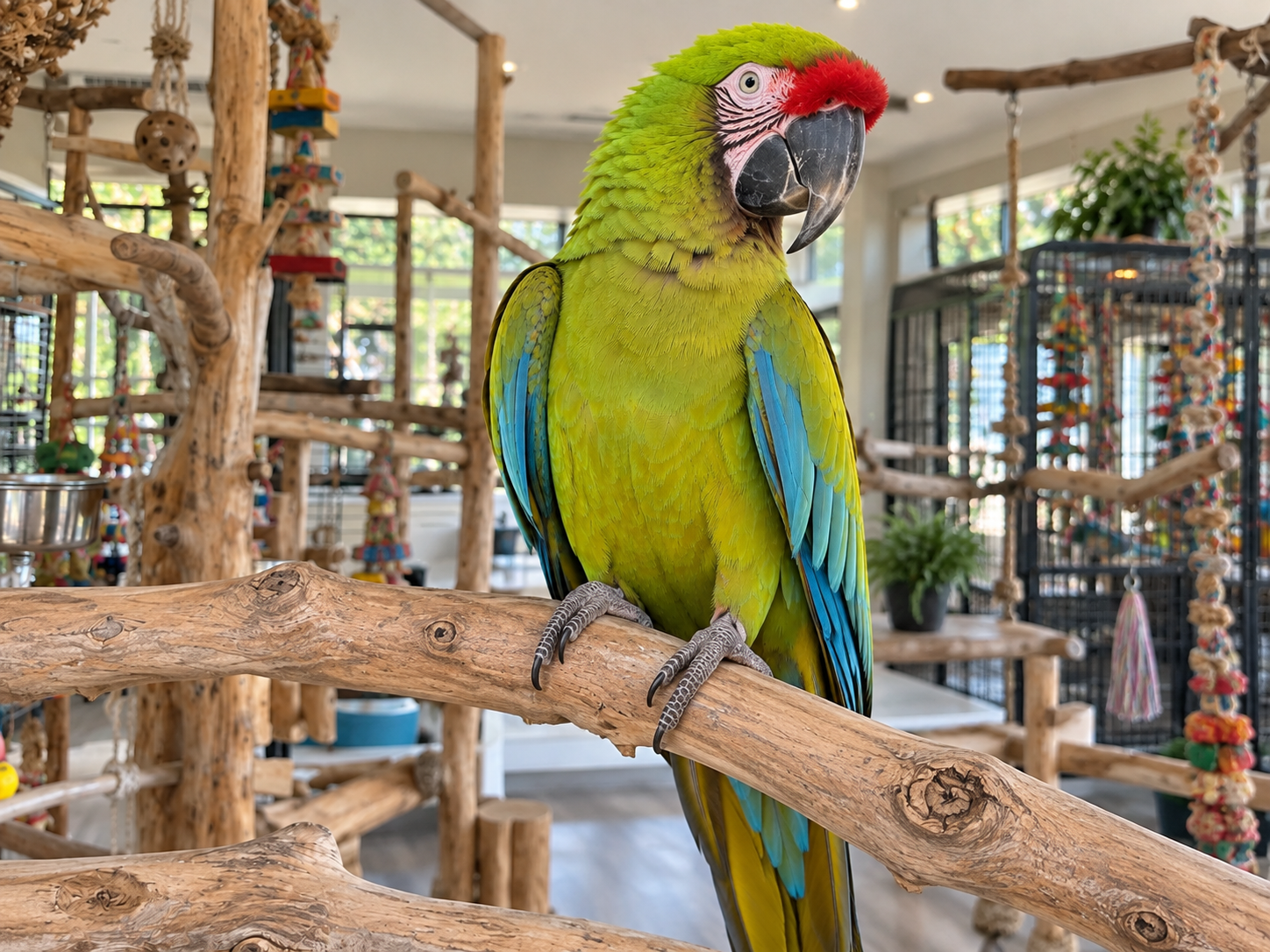
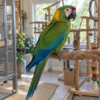
The Great Green Macaw, scientifically known as Ara ambiguus, is one of the largest green macaws. Adults reach approximately 30–33 inches in length and can weigh around 1.3 kg. Its plumage is mainly yellow-green with a red forehead, blue-tipped tail and pale facial skin marked by fine feather lines. The species has a reported lifespan of about 60 years and requires substantial housing, enrichment and professional avian care.
Out of stock
The Great Green Macaw is a large, predominantly green macaw scientifically classified as Ara ambiguus. It is also known as Buffon’s Macaw, Grand Green Macaw and Guayaquil Green Macaw.
This bird is considerably larger and heavier than many other macaws. The World Parrot Trust lists adults at approximately 77–85 cm, or 30–33 inches, with a reported weight of approximately 1,300 grams.
Its large build, powerful bill and long tail make it visually impressive, but these same characteristics mean the species requires substantial space and long-term planning.
The Great Green Macaw should not be confused with the Military Macaw. The two species can appear similar, but Ara ambiguus is generally larger and heavier.
The Great Green Macaw Details
- Common Name: Great Green Macaw
- Scientific Name: Ara ambiguus
- Alternative Names: Buffon’s Macaw, Grand Green Macaw, Guayaquil Green Macaw
- Bird Type: Macaw
- Adult Size: Approximately 30–33 inches
- Adult Weight: Approximately 1,300 g
- Reported Lifespan: About 60 years
- Primary Colour: Yellow-green
- Sounds: Loud squawks, growls and other vocal calls
- Conservation Status: Critically Endangered
- CITES Listing: Appendix I
What Does the Great Green Macaw Look Like?
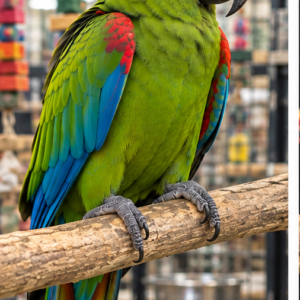
The Great Green Macaw is primarily yellow-green.
Adults have a red forehead and red feather lines around the lores. The throat can carry an olive-brown tone, while portions of the tail are orange-red with dull blue tips.
The bill is dark grey with a lighter tip.
The exposed facial skin is pale pink to white and contains fine feather lines.
The eyes of adult birds are dull yellow.
One recognized subspecies, Ara ambiguus guayaquilensis, is similar in colour but has a somewhat smaller and narrower bill.
These features give the Great Green Macaw a more subdued colour palette than bright red or blue macaws, but its large size makes it unmistakable.
Male and Female Great Green Macaws
Male and female Great Green Macaws look broadly similar externally.
Because of that, sex should not be guessed solely from body size or plumage.
Where confirmed sex is important, appropriate documentation or veterinary testing should be used.
Behaviour should also be assessed individually rather than assuming all males or females will share the same temperament.
The Great Green Macaw Size
The Great Green Macaw is one of the heavier macaw species.
Adults typically measure around 30–33 inches in length and weigh around 1.3 kg.
This body size creates substantial housing requirements.
The bird needs enough room for:
- Wing stretching
- Climbing
- Movement between perches
- Chewing
- Foraging
- Bathing
- Supervised activity
The World Parrot Trust recommends access to a very large enclosure and notes that keeping this species permanently indoors is not recommended in avicultural settings.
Great Green Macaw Lifespan
The reported Great Green Macaw lifespan is approximately 60 years.
That makes ownership or long-term care a major commitment.
Actual lifespan can vary based on genetics, nutrition, environmental quality, activity and veterinary care.
A potential 60-year lifespan means owners or professional keepers should plan for decades of consistent husbandry.
Vocal Behaviour
The Great Green Macaw is a loud bird.
Its calls include:
- Loud squawks
- Growls
- Creaking sounds
- Groaning vocalizations
These sounds are normal forms of communication.
Prospective owners should therefore consider whether their environment is appropriate for a large, powerful and vocal macaw.
Housing the Great Green Macaw
This species requires substantial physical space.
The World Parrot Trust recommends a large flight enclosure approximately 15 metres, or 50 feet, long during the non-breeding season in avicultural settings.
Household environments may differ, but the principle is important: this is not a bird suited to a small enclosure.
Housing should include:
- Large natural perches
- Strong climbing structures
- Heavy-duty feeding stations
- Bird-safe chew materials
- Foraging enrichment
- Bathing opportunities
- Space for movement
The enclosure and equipment should also be strong enough to withstand a powerful macaw bill.
Enrichment and Activity
The Great Green Macaw benefits from substantial environmental enrichment.
The World Parrot Trust recommends fresh branches, large macaw-safe chew toys and overhead misting or bathing opportunities.
Enrichment should encourage natural behaviours such as:
- Chewing
- Climbing
- Foraging
- Exploring
- Bathing
- Manipulating objects
Large parrots can become under-stimulated if their environment remains unchanged.
Rotating safe enrichment can help create a more engaging daily routine.
Diet and Nutrition
Wild Great Green Macaws consume a variety of plant foods.
Recorded foods include seeds, nuts, fruits, flowers, bulbs, roots and bark. Seeds from the almendro tree (Dipteryx panamensis) are especially important in parts of their natural range.
Under professional captive care, nutrition should be developed according to the bird’s health, activity and veterinary guidance.
The Association of Avian Veterinarians provides professional companion-bird resources:
Association of Avian Veterinarians
Natural Range of the Great Green Macaw
The Great Green Macaw occurs naturally across parts of Central and northern South America.
The nominate subspecies ranges through areas including eastern Honduras, Nicaragua, Costa Rica, Panama and northwestern Colombia.
Another subspecies occurs in western Ecuador.
Typical habitats include:
- Humid lowland evergreen forest
- Primary forest
- Deciduous forest
- Forested lowlands near important food trees
The species may also travel considerable distances in search of feeding areas.
Conservation Status
The conservation status of the Great Green Macaw is a major part of understanding this bird.
The World Parrot Trust currently lists the species as Critically Endangered, with an estimated 500–1,000 mature individuals remaining and a decreasing population trend. It is also listed under CITES Appendix I.
Major threats include habitat destruction, hunting and capture for the bird trade.
Because the population is so small, legitimate captive-origin documentation and legal transfer records are particularly important where applicable.
Great Green Macaw Recovery Efforts
Conservation programs are working to rebuild wild populations.
The World Parrot Trust reports that reintroduction and nest-support programs in Costa Rica have contributed to a growing free-flying population.
By 2023, more than 60 chicks fledged from artificial nest sites during that breeding season, and approximately 120 reintroduced macaws were reported flying free and reproducing in the wild in one recovery area.
In 2026, the World Parrot Trust also established a range-wide technical training network involving conservation practitioners from several countries.
These efforts show why habitat protection and responsible management remain essential.
The Great Green Macaw vs Military Macaw
The Great Green Macaw is often confused with the Military Macaw because both species are largely green with red forehead markings and blue wing or tail feathers.
However, the Great Green Macaw is generally larger.
The Military Macaw reaches about 27.3–29.3 inches and weighs around 900 grams, while the Great Green Macaw reaches about 30–33 inches and around 1,300 grams.
Scientific names also clearly distinguish them:
- Great Green Macaw: Ara ambiguus
- Military Macaw: Ara militaris
Veterinary Care
A large macaw should have access to a qualified avian veterinarian.
Routine care can help establish baseline information about:
- Body weight
- Plumage
- Beak condition
- Feet
- Nutrition
- Respiratory health
- General physical condition
The Association of Avian Veterinarians provides bird-care resources and professional guidance:
Association of Avian Veterinarians – Pet Bird Care
Preparing for Great Green Macaw Care
Anyone responsible for a Great Green Macaw should prepare the bird’s environment before arrival.
The setup should include substantial housing, heavy-duty perches, feeding stations, enrichment and professional veterinary access.
Noise and physical space should also be considered.
A 30–33 inch macaw with a powerful bill and potential 60-year lifespan requires far more planning than a small companion bird.
Why the Great Green Macaw Is Distinctive
The Great Green Macaw combines very large body size with primarily green plumage and striking red and blue accents.
At around 1.3 kg, it is one of the heavier parrots, while its approximately 60-year potential lifespan creates a major long-term care commitment.
Its Critically Endangered conservation status makes responsible sourcing and conservation awareness especially important.
For anyone researching Ara ambiguus, accurate species identification, appropriate housing, enrichment and professional veterinary care should all be central considerations.
Frequently Asked Questions
What is the scientific name of the Great Green Macaw?
The scientific name is Ara ambiguus.
How large is the Great Green Macaw?
Adults measure approximately 77–85 cm, or 30–33 inches.
How much does the Great Green Macaw weigh?
Adults weigh approximately 1,300 grams, or about 45.5 ounces.
What is the Great Green Macaw lifespan?
The reported lifespan is approximately 60 years.
What colour is the Great Green Macaw?
The species is mainly yellow-green with a red forehead, blue-tipped tail and orange-red colouring through parts of the tail.
Is the Great Green Macaw endangered?
Yes. The species is currently Critically Endangered, with an estimated 500–1,000 mature birds remaining in the wild.
Is the Great Green Macaw the same as the Military Macaw?
No. They are different species. The Great Green Macaw is Ara ambiguus, while the Military Macaw is Ara militaris.
Where can I learn more about macaw care?
The Association of Avian Veterinarians provides professional companion-bird resources:
Be the first to review “The Great Green Macaw”
Related products


Macaw Parrots


Macaw Parrots

Macaw Parrots
Macaw Parrots


Macaw Parrots
Macaw Parrots
Macaw Parrots

Macaw Parrots
Reviews
There are no reviews yet.