

Scarlet Macaw for Sale


Original price was: $2,300.00.$2,000.00Current price is: $2,000.00.
Male and female Scarlet Macaws are represented in this listing. Scientifically known as Ara macao, this large macaw is famous for brilliant red plumage combined with yellow and blue wing feathers, a long colourful tail and a powerful curved bill. Adults reach approximately 33 inches and weigh around 1.06–1.12 kg. The reported Scarlet Macaw lifespan is up to approximately 60 years, making suitable housing, enrichment, nutrition and avian veterinary care essential.
Scarlet Macaw for Sale – Male & Female
For buyers researching a scarlet macaw for sale, the Scarlet Macaw is one of the most recognizable parrots in the world.
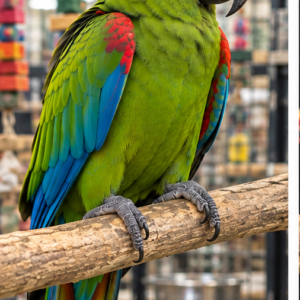
Scientifically classified as Ara macao, this large macaw is known for its vivid red body plumage, bright yellow wing coverts, contrasting blue flight feathers and extremely long tail.
The World Parrot Trust lists adults at approximately 85 cm, or 33.1 inches, in length and 1,060–1,123 grams, or approximately 37–39 ounces, in weight.
Both male and female Scarlet Macaws can display the same brilliant colour pattern, so sex should not be guessed from appearance alone.
Scarlet Macaw Details
- Common Name: Scarlet Macaw
- Scientific Name: Ara macao
- Bird Type: Macaw
- Sex Represented: Male and Female
- Adult Size: Approximately 33.1 inches
- Adult Weight: Approximately 1.06–1.12 kg
- Reported Lifespan: Up to approximately 60 years
- Primary Colours: Red, yellow and blue
- CITES Listing: Appendix I
- Current Global Status: Least Concern
- Population Trend: Decreasing
Two subspecies are generally recognized: Ara macao macao and Ara macao cyanoptera.
What Does a Scarlet Macaw Look Like?
The Scarlet Macaw is dominated by intense red plumage.
Adults have red across most of the head, neck, chest and body. Yellow covers much of the middle and secondary wing coverts, while blue appears through the lower back, flight feathers and portions of the tail.
Some birds may show green between the yellow and blue wing areas depending on subspecies and individual variation.
The face is mostly bare white skin with fine red feather lines.
The upper portion of the bill is horn-coloured, while the lower mandible and portions near the base are darker grey or black.
Adult eyes are yellow.
This combination of red, yellow and blue makes the Scarlet Macaw visually distinct from most other large macaws.
Male and Female Scarlet Macaws
Male and female Scarlet Macaws look very similar externally.
For buyers specifically looking for either a male or female bird, appropriate documentation or veterinary sex testing is more reliable than visual estimation.
Sex should also not be treated as a guarantee of temperament.
Individual behaviour can vary according to:
- Socialization
- Handling history
- Age
- Environment
- Previous experience
- Daily routine
A prospective buyer should evaluate the individual bird rather than choosing only according to sex.
Scarlet Macaw Lifespan
The scarlet macaw lifespan is one of the most important ownership considerations.
The World Parrot Trust reports longevity of up to approximately 60 years.
That means a Scarlet Macaw can represent a commitment extending across several decades.
Actual lifespan varies according to:
- Genetics
- Nutrition
- Exercise
- Housing
- Veterinary care
- Environmental quality
- Long-term husbandry
Potential owners should plan for long-term care rather than treating the bird as a short-term pet.
Scarlet Macaw Price
People researching scarlet macaw price should look beyond a generic market figure.
The price of an individual bird can vary according to:
- Age
- Sex
- Handling history
- Documentation
- Health information
- Geographic location
- Individual condition
- Availability
Because no exact selling price has been provided for this listing, the actual current product price should be displayed directly rather than inventing a number.
The initial purchase price is also only one part of the cost of ownership.
Large housing, strong perches, quality food, enrichment and avian veterinary care all create ongoing expenses.
Scarlet Macaw Facts
Several Scarlet Macaw facts help explain why this species is so distinctive.
Scarlet Macaws belong to the genus Ara and are native to parts of Central and South America.
The World Parrot Trust lists their natural range across areas including Mexico, Central America, Colombia, Venezuela, Ecuador, Peru, Bolivia, Brazil and the Guianas depending on subspecies.
Wild birds often occur in:
- Pairs
- Small groups of three or four
- Larger flocks
Groups of up to around 30 individuals may sometimes be observed, and communal roosting occurs in tall trees.
Scarlet Macaw Sounds
Scarlet Macaws are naturally vocal.
Their calls are described as loud, harsh and drawn out, including screeches, guttural squawks and growling sounds.
Anyone considering a Scarlet Macaw should therefore think carefully about household noise tolerance.
A macaw should not be expected to remain consistently quiet.
Housing a Scarlet Macaw
The Scarlet Macaw is a large, active parrot that requires substantial space.
The World Parrot Trust recommends access to a large flight enclosure measuring approximately 15 metres, or 49 feet, for at least part of the year.
A companion-bird environment should include:
- Strong natural perches
- Large climbing areas
- Heavy-duty feeding stations
- Macaw-safe toys
- Chewing materials
- Foraging opportunities
- Bathing access
- Space for regular movement
Housing materials should also be strong enough to withstand a large macaw’s powerful bill.
Enrichment and Activity
Scarlet Macaws benefit from regular environmental enrichment.
The World Parrot Trust recommends:
- Large macaw toys
- Bird-safe branches
- Heat-sterilized pine cones
- Large perches
- Swings
- Ladders
- Regular access to bathing
Foraging and chewing opportunities are particularly useful because they encourage natural activity.
Enrichment should be rotated periodically so the environment remains stimulating.
Scarlet Macaw Diet
A varied feeding program is important for macaw health.
World Parrot Trust husbandry information references nuts, suitable fruits, corn and complete formulated macaw food among feeding options under captive care.
However, an individual bird’s diet should always be adjusted according to age, health, body condition and professional veterinary guidance.
The Association of Avian Veterinarians provides professional bird-owner resources and recommends regular veterinary checkups for companion birds.
Association of Avian Veterinarians – Bird Owner Resources
Natural Range and Habitat
Scarlet Macaws occur across a broad portion of the Neotropics.
Depending on the subspecies, their range extends from Mexico through Central America and into northern and central South America.
Habitats include:
- Lowland rainforest
- Savanna
- Gallery forest
- Deciduous forest
- Humid forest
- Riverine forest
They are often associated with forested areas near rivers.
Conservation Status
The Scarlet Macaw is currently classified as Least Concern, but its global population trend is decreasing.
The World Parrot Trust estimates a worldwide population of roughly 50,000–500,000 individuals and lists the species under CITES Appendix I.
Threats include:
- Habitat loss
- Illegal trapping
- Hunting
- Local population decline
Some regional populations have disappeared entirely, especially in parts of Central America.
Scarlet Macaw Conservation Work
Conservation programs continue to restore Scarlet Macaw populations in areas where they have declined.
In July 2026, the World Parrot Trust reported the release of Scarlet Macaws into the Cangrejal River basin near La Ceiba, Honduras. This built on a reintroduction program that began in 2011 in Copán Ruinas.
Released birds from that longer-running program have established a free-flying population and are breeding successfully in the wild.
Scarlet Macaw vs Green-Winged Macaw
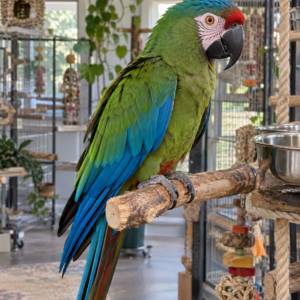
The Scarlet Macaw is sometimes confused with the Green-winged, or Red-and-green, Macaw because both have predominantly red plumage.
The most obvious distinction is in the wings.
Scarlet Macaw: strong yellow wing coverts with blue farther down the wing.
Green-winged Macaw: green across the central wing area rather than extensive yellow.
The Green-winged Macaw also tends to have a somewhat deeper body and different facial feather pattern.
Veterinary Care
An avian veterinarian should be identified before bringing home a Scarlet Macaw.
Routine examinations can help establish baseline information about:
- Body weight
- Plumage
- Beak
- Feet
- Nutrition
- Respiratory health
- Overall body condition
The Association of Avian Veterinarians states that an avian veterinarian can play an important role in supporting the health of long-lived companion birds and recommends regular checkups.
Association of Avian Veterinarians
Preparing for Scarlet Macaw Ownership
Anyone considering a Scarlet Macaw for sale should prepare the bird’s environment before bringing it home.
The setup should include:
- Large, secure housing
- Strong perches
- Feeding and water stations
- Heavy-duty enrichment
- Chewing materials
- A suitable feeding plan
- Access to avian veterinary care
Noise, lifespan and daily interaction requirements should also be considered.
A parrot approaching 33 inches in length with a potential 60-year lifespan requires substantial long-term planning.
Why the Scarlet Macaw Is Distinctive
The Scarlet Macaw combines spectacular colour with the physical presence of a large macaw.
Its brilliant red body, yellow and blue wings, long tail and approximately 33-inch adult length make Ara macao immediately recognizable.
For buyers researching a Scarlet Macaw for sale, appearance should be only one part of the decision.
Appropriate housing, enrichment, veterinary planning, documentation and responsible long-term care should all be considered before ownership.
Frequently Asked Questions
What is the scientific name of the Scarlet Macaw?
The scientific name is Ara macao.
How big is a Scarlet Macaw?
Adults reach approximately 85 cm, or 33.1 inches, in length.
How much does a Scarlet Macaw weigh?
Adults generally weigh approximately 1,060–1,123 grams.
What is the Scarlet Macaw lifespan?
The reported Scarlet Macaw lifespan is up to approximately 60 years.
What colours does a Scarlet Macaw have?
Adults are primarily bright red with yellow and blue across the wings and blue through portions of the lower back and tail.
What is the Scarlet Macaw price?
The Scarlet Macaw price varies according to age, sex, documentation, condition, location and availability. The actual current product price should be displayed directly on the listing.
Are male and female Scarlet Macaws different in colour?
Both sexes share the same general red, yellow and blue plumage. Confirmed sex should rely on documentation or appropriate testing rather than appearance alone.
Are Scarlet Macaws loud?
Yes. Their natural calls include loud screeches, squawks and growls.
What is the conservation status of the Scarlet Macaw?
The species is currently classified as Least Concern, but the global population is decreasing and it is listed under CITES Appendix I.
Where can I learn more about macaw care?
The Association of Avian Veterinarians provides professional resources for bird owners:
Be the first to review “Scarlet Macaw for Sale”
Related products


Macaw Parrots


Macaw Parrots

Macaw Parrots


Macaw Parrots


Macaw Parrots

Macaw Parrots
Macaw Parrots

Macaw Parrots
Reviews
There are no reviews yet.