


Puerto Rican Amazon Parrot
$750.00
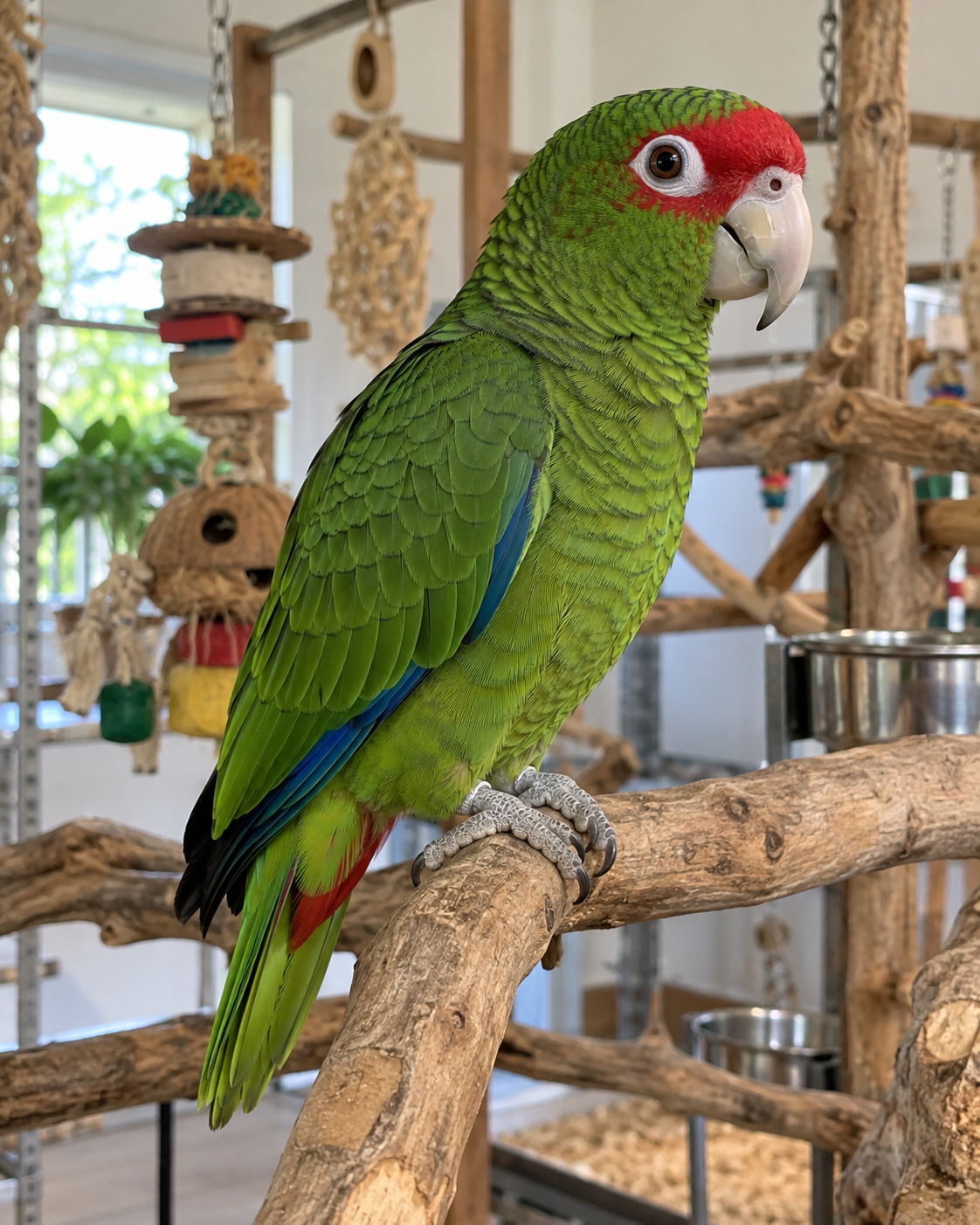
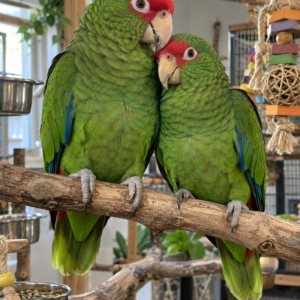
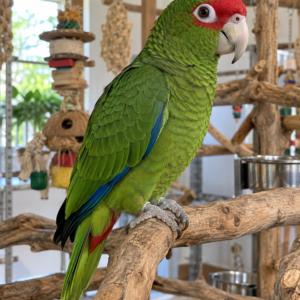
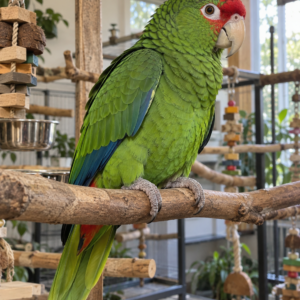
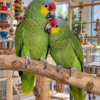
The Puerto Rican Amazon parrot, scientifically known as Amazona vittata, is an exceptionally rare Amazon native to Puerto Rico. Also known as the Puerto Rican Parrot or Iguaca, adults are predominantly green with a red forehead, blue flight feathers and distinctive pale facial details. Adults measure approximately 11.3 inches and weigh around 320 grams.
Puerto Rican Amazon Parrot – Amazona vittata
The Puerto Rican Amazon parrot is one of the most important conservation stories within the Amazon parrot group. Scientifically classified as Amazona vittata, this medium-sized green parrot is native to Puerto Rico and is also commonly called the Puerto Rican Parrot, Red-fronted Amazon or Iguaca.
The name “Iguaca” comes from the name traditionally associated with the bird in Puerto Rico and remains strongly connected with the species’ cultural and conservation significance.
The World Parrot Trust lists the Puerto Rican Amazon at approximately 29 cm, or 11.3 inches, in length and approximately 320 grams, or 11.2 ounces, in weight.
Although relatively compact compared with some of the larger Amazon parrots, Amazona vittata has enormous conservation importance because it came extremely close to extinction during the twentieth century.
Puerto Rican Amazon Parrot Details
- Common Name: Puerto Rican Amazon
- Alternative Name: Puerto Rican Parrot
- Traditional Name: Iguaca
- Scientific Name: Amazona vittata
- Bird Type: Amazon Parrot
- Adult Length: Approximately 29 cm / 11.3 inches
- Adult Weight: Approximately 320 g / 11.2 oz
- Natural Range: Puerto Rico
- Conservation Status: Critically Endangered
- CITES Listing: Appendix I
The currently surviving form is Amazona vittata vittata. A second historical subspecies, A. v. gracilipes, is considered extinct.
What Does a Puerto Rican Amazon Look Like?
The Puerto Rican Amazon parrot is primarily green, but closer examination reveals several distinctive colour features.
Adult birds have green body plumage with yellowish colouring across portions of the underparts. Many feathers show subtle dark scalloping, giving the plumage additional texture.
One of the most recognizable markings is the red frontal band and lores across the front of the head.
The wings include dark blue primary coverts and primary flight feathers, creating noticeable blue colouring when the bird moves or opens its wings.
The tail is primarily green with red present toward the base. Adults have a pale horn-yellow bill, a white eye ring and brown eyes.
These markings distinguish the Puerto Rican Amazon from Amazon species characterized by extensive yellow or blue head plumage.
Male and Female Puerto Rican Amazons
Male and female Puerto Rican Amazons have broadly similar external appearances.
For that reason, sex should not be determined solely by looking at plumage or body shape.
Where confirmed sex identification is needed, professional documentation or appropriate veterinary testing is more reliable.
Individual personality should also not be predicted simply according to sex. Behaviour can be influenced by age, genetics, social development, environment and previous experiences.
Where Does the Puerto Rican Amazon Live?
The species is endemic to Puerto Rico.
Historically, Puerto Rican Amazons occupied a much broader range of habitats across the island. Severe habitat loss eventually restricted surviving wild populations to only a small portion of their original distribution.
Today, recovery work is concentrated around several population areas, including El Yunque National Forest, Río Abajo State Forest and Maricao State Forest.
Current wild populations occupy forest environments where mature trees provide suitable feeding and nesting opportunities.
Historically, the species occurred in habitats ranging from mangroves and dry forests to mountain forests.
Puerto Rican Amazon Conservation Recovery
The conservation history of the Puerto Rican Amazon is remarkable.
By 1975, the wild population had fallen to only about 13 birds. Intensive captive breeding, habitat protection, nest management, scientific research and reintroduction programs were required to prevent the species from disappearing completely.
As of 2026, the World Parrot Trust reports approximately 500 Puerto Rican Amazons in captive conservation breeding programs and about 500 in the wild.
That means the total managed population has recovered to around 1,000 individuals, although the species remains Critically Endangered.
The recovery effort continues because a population of this size remains vulnerable to hurricanes, habitat damage, predators and reproductive challenges.
Threats Facing Amazona vittata
The Puerto Rican Amazon continues to face several significant threats.
Historical deforestation was one of the major causes of population collapse. Extensive clearing for agriculture and development eliminated much of the mature forest that the species depended on.
Severe hurricanes have become another major concern. Hurricane Maria in 2017 caused the loss of approximately 70–80 wild Puerto Rican Amazons, demonstrating how a single extreme weather event can dramatically affect a small population.
Additional challenges include introduced predators, competition for nesting cavities and parasites affecting young birds.
Pearly-eyed Thrashers can interfere with nests, introduced honeybees may occupy nesting cavities and botflies can parasitize nestlings.
Puerto Rican Amazon Diet
Wild Puerto Rican Amazons consume plant-based foods from a wide variety of native species.
The World Parrot Trust reports that their natural diet includes seeds, fruits, flowers and leaves from nearly 60 plant species.
Palms and other fruiting plants form part of their natural food resources.
For any Amazon parrot under professional captive care, the diet should be developed according to individual health requirements rather than attempting to reproduce a wild diet exactly.
A balanced feeding plan should be established with professional avian veterinary guidance.
The Association of Avian Veterinarians provides an Amazon-specific care guide through its Pet Bird Care Series:
Association of Avian Veterinarians – Amazon Parrot Care
The AAV currently provides dedicated educational materials for Amazon parrots alongside resources for other companion bird groups.
Breeding and Nesting Behaviour
Puerto Rican Amazons naturally use tree cavities for nesting.
According to current conservation information from the Association of Avian Veterinarians, reproductive age averages approximately 3–4 years, while typical clutch size ranges from 2–4 eggs.
The reproductive season generally extends from around January through July, and incubation lasts approximately 28 days.
Young parrots typically leave the nest at around 8–9 weeks of age.
Because natural nesting cavities are limited, conservation teams also use managed nest boxes to support breeding and recovery.
Housing and Environmental Enrichment
Any Amazon parrot under human care requires an environment that encourages normal movement and activity.
Suitable housing should provide adequate room for climbing, wing movement and movement between perches.
Safe natural branches, climbing structures and appropriate enrichment can provide opportunities for exploration.
Foraging enrichment is particularly valuable because it encourages the bird to search for food rather than receiving every meal from an open bowl.
Rotating safe enrichment materials can also provide additional environmental variety.
Professional guidance on Amazon husbandry is available through the Association of Avian Veterinarians:
Veterinary Care
Professional avian veterinary care is an essential part of managing any parrot.
Routine examinations can help establish baseline information about body condition, weight, nutrition and overall health.
Owners or professional keepers should become familiar with the normal behaviour of each individual bird so meaningful changes in appetite, activity or appearance can be detected promptly.
The Association of Avian Veterinarians provides professional bird-care information as well as veterinary resources:
Why the Puerto Rican Amazon Is Exceptional
The Puerto Rican Amazon parrot represents one of the clearest examples of how coordinated conservation can prevent the extinction of a species.
Its population fell to only around 13 wild birds in the 1970s, yet decades of conservation work have helped rebuild the combined wild and managed population to approximately 1,000 birds by 2026.
That recovery does not mean the species is secure.
The Puerto Rican Amazon remains Critically Endangered and is listed under CITES Appendix I.
Its future continues to depend on habitat protection, scientific breeding programs, careful reintroductions and management of threats.
For anyone researching Amazona vittata, conservation awareness should therefore be central to understanding the species.
Frequently Asked Questions
What is the scientific name of the Puerto Rican Amazon parrot?
The scientific name is Amazona vittata.
How big is a Puerto Rican Amazon?
Adults measure approximately 29 cm, or 11.3 inches, in length.
How much does a Puerto Rican Amazon weigh?
The World Parrot Trust lists an adult weight of approximately 320 grams, or 11.2 ounces.
What colour is a Puerto Rican Amazon parrot?
Adults are mainly green with a red forehead and lores, dark blue flight feathers and red colouring toward the base of the tail.
What does Iguaca mean?
“Iguaca” is a traditional name associated with the Puerto Rican Amazon and is widely used in Puerto Rican conservation and cultural contexts. The Association of Avian Veterinarians also uses the name when discussing the species.
Is the Puerto Rican Amazon critically endangered?
Yes. The species remains Critically Endangered and is listed under CITES Appendix I.
How many Puerto Rican Amazons remain?
As of 2026, the World Parrot Trust reports approximately 500 birds in the wild and another 500 in captive conservation breeding programs.
Where can I learn more about Puerto Rican Amazon conservation?
The Association of Avian Veterinarians provides a detailed article on the species, its biology and current recovery work:
Association of Avian Veterinarians – Iguaca, the Puerto Rican Amazon
Where can I learn about Amazon parrot care?
The Association of Avian Veterinarians provides dedicated Amazon care resources:
Be the first to review “Puerto Rican Amazon Parrot”
Related products

Amazon Parrots
Amazon Parrots

Amazon Parrots
Amazon Parrots

Amazon Parrots

Amazon Parrots

Amazon Parrots
Amazon Parrots
Reviews
There are no reviews yet.