

Cuban Amazon Parrot for Sale
Original price was: $1,700.00.$1,500.00Current price is: $1,500.00.
Male and female Cuban Amazon parrots are represented in this listing for buyers searching for Amazona leucocephala. This distinctive Amazon parrot is predominantly green with white, pink-red and maroon markings and reaches approximately 12.5 inches in length. Prospective owners should prepare for long-term housing, enrichment, nutrition and professional avian veterinary care.
Cuban Amazon Parrot for Sale – Male & Female
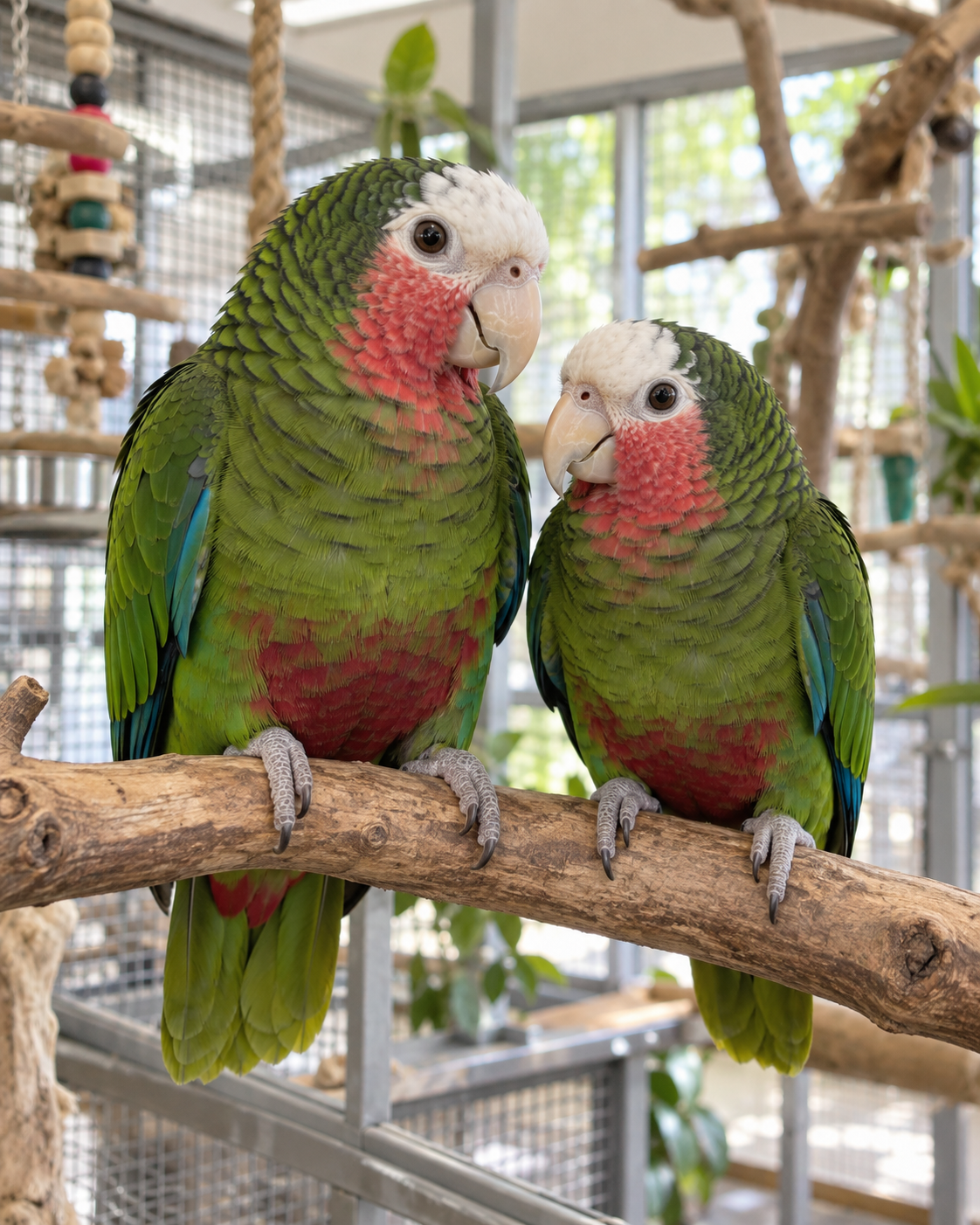
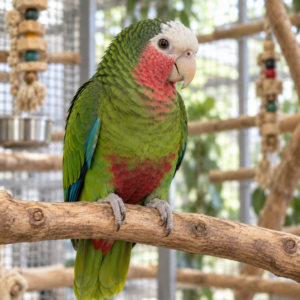
For buyers specifically searching for a Cuban Amazon parrot for sale, this listing represents both male and female Amazona leucocephala. The Cuban Amazon is a distinctive member of the Amazon parrot family, recognized by its green body plumage, contrasting pale forehead and characteristic red to pink facial colouring.
Although many Amazon parrots appear predominantly green, the Cuban Amazon has a combination of facial, abdominal and tail markings that helps distinguish it from related species.
Its scientific name is Amazona leucocephala.
The World Parrot Trust lists the Cuban Amazon at approximately 32 cm, or 12.5 inches, in length and reports a typical weight range of approximately 240–262 grams.
For anyone comparing a Cuban Amazon for sale with other Amazon species, understanding these physical characteristics and long-term care requirements is an important part of making an informed decision.
Cuban Amazon Parrot Details
- Common Name: Cuban Amazon
- Alternative Name: Cuban Parrot
- Scientific Name: Amazona leucocephala
- Sex Represented: Male and Female
- Bird Type: Amazon Parrot
- Adult Length: Approximately 32 cm / 12.5 inches
- Reported Weight: Approximately 240–262 g
- Reported Longevity: Potentially 50–60 years under suitable care
What Does a Cuban Amazon Look Like?
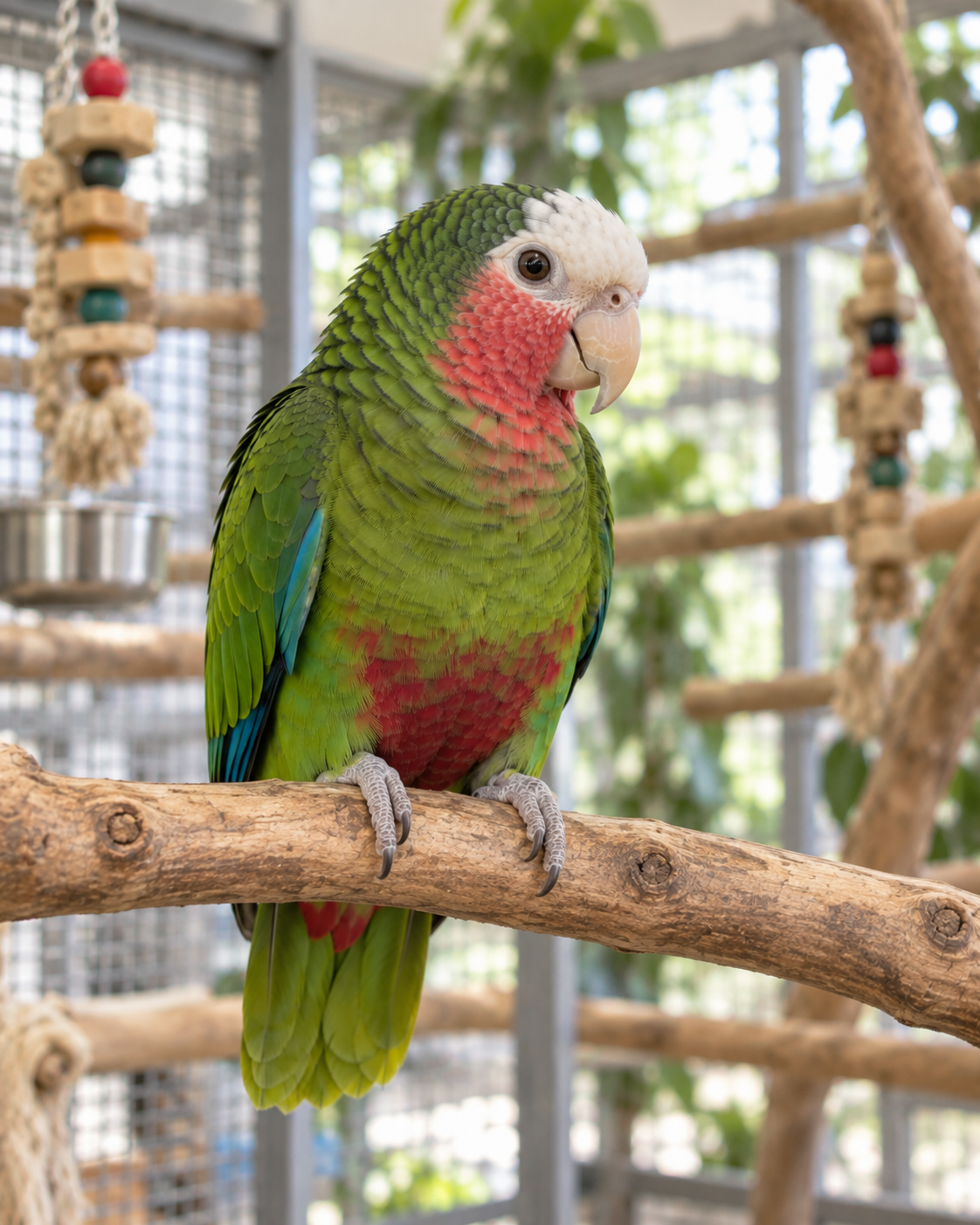
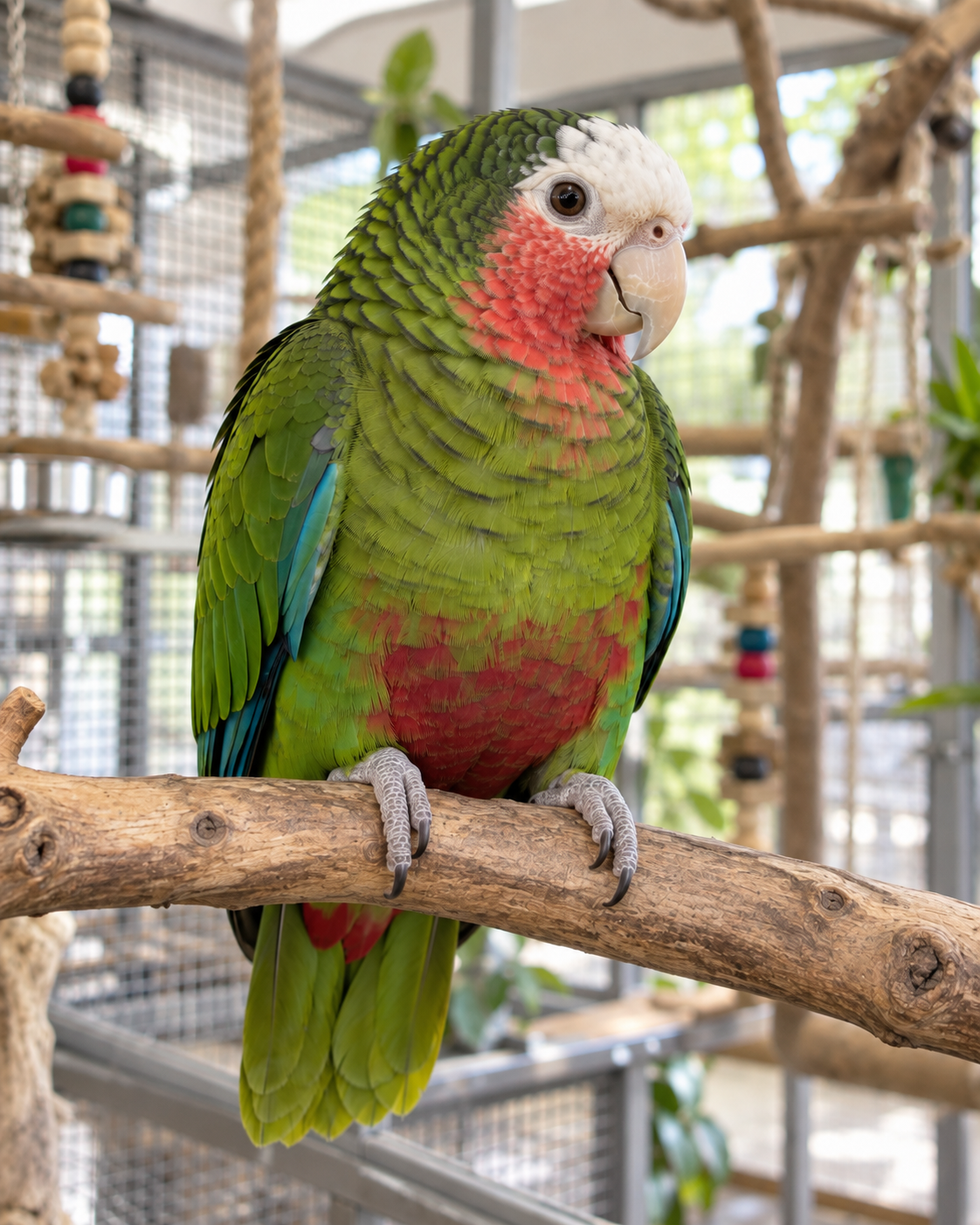
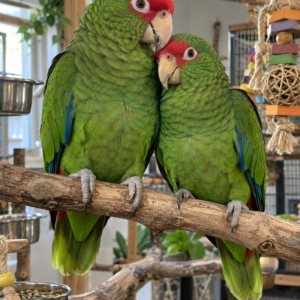
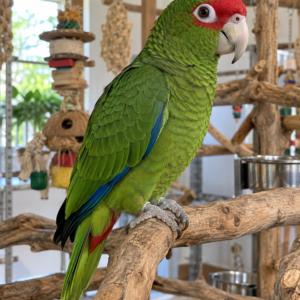
The Cuban Amazon parrot is predominantly green, but its head and body feature several distinctive colour markings.
According to the World Parrot Trust, adult Amazona leucocephala generally have green plumage with darker scalloping across portions of the feathers. The forehead, forecrown and area around the eyes can appear white, while the lores, cheeks and throat display pink to red colouring.
A maroon patch may also occur across the abdominal area, while the tail is predominantly green with red toward its base. The bill is described as horn-coloured, and adults have a pale eye ring.
These markings give the Cuban Amazon a noticeably different appearance from species such as the Blue Front Amazon or Black-Billed Amazon.
Individual appearance can vary, particularly among the different recognized subspecies, so buyers should always evaluate photographs of the actual individual bird.
Male and Female Cuban Amazon Parrots
Both male and female Cuban Amazon parrots are represented in this listing.
Male and female birds can look broadly similar. Therefore, buyers who specifically require a male or female bird should rely on appropriate sex-identification documentation rather than trying to determine sex based only on plumage.
Sex should also not be treated as the sole predictor of temperament.
Each parrot is an individual, and behaviour can be influenced by previous handling, socialization, age, environment and daily routine.
When comparing male and female Cuban Amazons, prospective owners should therefore consider the complete profile of each bird rather than simply choosing according to sex.
Understanding Amazona Leucocephala
The scientific name Amazona leucocephala is particularly useful when researching this parrot because several common names may be encountered online.
Searches may include:
- Cuban Amazon
- Cuban Amazon Parrot
- Cuban Parrot
- Amazona leucocephala
- Cuban Amazon for sale
These terms refer to the same species group.
The World Parrot Trust currently recognizes five subspecies, including populations associated with Cuba, the Cayman Islands and the Bahamas.
Natural Range of the Cuban Amazon
Despite the common name, the wider Amazona leucocephala species complex is not restricted solely to mainland Cuba.
Different subspecies occur across Cuba, Isla de la Juventud, Grand Cayman, Cayman Brac and parts of the Bahamas.
Wild Cuban Amazons occupy habitats that can include limestone forest, dry broadleaf woodland, pine areas, palm stands, mangroves, plantations and gardens.
They are generally observed foraging in smaller groups, although larger gatherings can occur where food is abundant.
This information describes wild populations and does not establish the origin of any particular captive bird.
Cuban Amazon Lifespan and Long-Term Commitment
A Cuban Amazon should be considered a long-term companion bird.
The World Parrot Trust reports potential longevity of approximately 50–60 years.
However, lifespan is never guaranteed. Genetics, nutrition, veterinary care, housing, exercise and environmental conditions can all influence an individual bird’s longevity.
Anyone searching for a Cuban Amazon parrot for sale should therefore think beyond the initial purchase and consider whether they are prepared to provide appropriate care for many years.
Housing a Cuban Amazon
Appropriate housing should allow the bird to move comfortably, climb and interact with different areas of its environment.
A Cuban Amazon should have access to appropriate perches of varying safe textures and sizes, feeding and water stations, and space for enrichment.
The World Parrot Trust’s avicultural information recommends substantial aviary dimensions for this species, emphasizing the need for adequate movement and activity.
For companion parrots living inside a home, the exact setup should reflect the individual bird’s needs while also allowing suitable supervised activity outside the primary enclosure where appropriate.
Cuban Amazon Diet and Nutrition
Diet should be varied and nutritionally appropriate.
The World Parrot Trust’s husbandry information references fruits, fresh vegetables, leafy greens, pulses and complete formulated food among components used when caring for Cuban Amazons.
A companion bird’s diet should nevertheless be determined according to its individual health and veterinary guidance rather than copying a generic feeding list exactly.
The Association of Avian Veterinarians provides educational resources specifically for Amazon parrots and companion-bird owners:
Association of Avian Veterinarians – Amazon Parrot Care
Their resources cover subjects including general husbandry, diet, enrichment and maintaining the health of companion birds.
Enrichment for Cuban Amazon Parrots
Environmental enrichment is an important part of keeping an intelligent parrot.
The World Parrot Trust lists bathing opportunities, bird-safe chew toys, foot toys, foraging activities, different perch textures and other interactive objects among possible forms of enrichment for Cuban Amazons.
Enrichment does not need to mean simply filling the enclosure with toys.
Instead, owners can rotate appropriate activities so that the bird receives opportunities to climb, explore, manipulate objects and search for food.
The Association of Avian Veterinarians also provides bird-owner resources that include information about foraging for parrots and general companion-bird care:
Avian Veterinary Care
Before obtaining a Cuban Amazon, owners should establish access to an avian veterinarian.
Routine veterinary examinations can provide baseline information concerning weight, general condition, nutrition and ongoing healthcare requirements.
Bird owners should not wait until an obvious problem occurs before identifying an appropriate veterinarian.
The Association of Avian Veterinarians provides a searchable directory that can help owners locate veterinary professionals:
AAV Find an Avian Veterinarian
The AAV notes that its directory can be searched by location and other criteria.
Conservation Status of the Cuban Amazon
The conservation background of this species deserves particular attention.
The World Parrot Trust currently lists the Cuban Amazon as Near Threatened, with an estimated 16,000–27,000 mature individuals remaining in the wild and a decreasing population trend. It is also listed under CITES Appendix I.
Habitat loss, hurricanes affecting nesting habitat and trapping for the wild-bird trade have all contributed to pressure on wild populations.
Because of this conservation background, buyers should pay careful attention to legitimate captive-origin and transfer documentation where applicable.
Wild conservation status and the legal status of a particular captive bird are not the same thing, so prospective owners should confirm any federal, state and local requirements applicable to their location.
Preparing for Cuban Amazon Ownership
Anyone considering a Cuban Amazon for sale should prepare the bird’s environment before purchase.
This preparation can include appropriate housing, safe perches, feeding equipment, enrichment, a plan for daily interaction and access to an avian veterinarian.
Potential owners should also consider their daily schedule.
A parrot requires consistent care, observation, cleaning and engagement. Purchasing one based only on appearance without considering these ongoing responsibilities can lead to an unsuitable match.
Why the Cuban Amazon Is Distinctive
The Cuban Amazon combines classic Amazon-parrot body shape and predominantly green plumage with a particularly striking combination of white, pink-red and maroon markings.
Its approximately 12.5-inch adult size also makes it somewhat more compact than some larger Amazon species.
For buyers specifically searching for a Cuban Amazon parrot for sale, correct identification of Amazona leucocephala, appropriate documentation and an understanding of the bird’s long-term care needs should take priority over generic sales claims.
Frequently Asked Questions
What is the scientific name of the Cuban Amazon?
The Cuban Amazon’s scientific name is Amazona leucocephala.
How large is a Cuban Amazon parrot?
The World Parrot Trust lists an adult size of approximately 32 cm or 12.5 inches.
What does a Cuban Amazon look like?
Adults are predominantly green with a pale or white forehead, pink-red facial and throat markings and a maroon abdominal patch.
Are male and female Cuban Amazons available?
Yes. This listing represents both male and female Cuban Amazon parrots.
How long can a Cuban Amazon live?
The World Parrot Trust reports potential longevity of approximately 50–60 years, although actual lifespan varies between individual birds.
Where does the Cuban Amazon naturally occur?
Different subspecies occur across Cuba, Isla de la Juventud, the Cayman Islands and parts of the Bahamas.
What is the conservation status of the Cuban Amazon?
The species is currently listed as Near Threatened, with a declining wild population, and is included under CITES Appendix I.
Where can owners learn more about Amazon parrot care?
The Association of Avian Veterinarians provides dedicated companion-bird care information:
AAV Amazon Parrot Care Resources
How can I find an avian veterinarian?
The Association of Avian Veterinarians provides a veterinarian directory:
Be the first to review “Cuban Amazon Parrot for Sale”
Related products

Amazon Parrots

Amazon Parrots

Amazon Parrots
Amazon Parrots
Amazon Parrots


Amazon Parrots

Amazon Parrots
Amazon Parrots
Reviews
There are no reviews yet.