



Orange Winged Amazon for Sale

$800.00
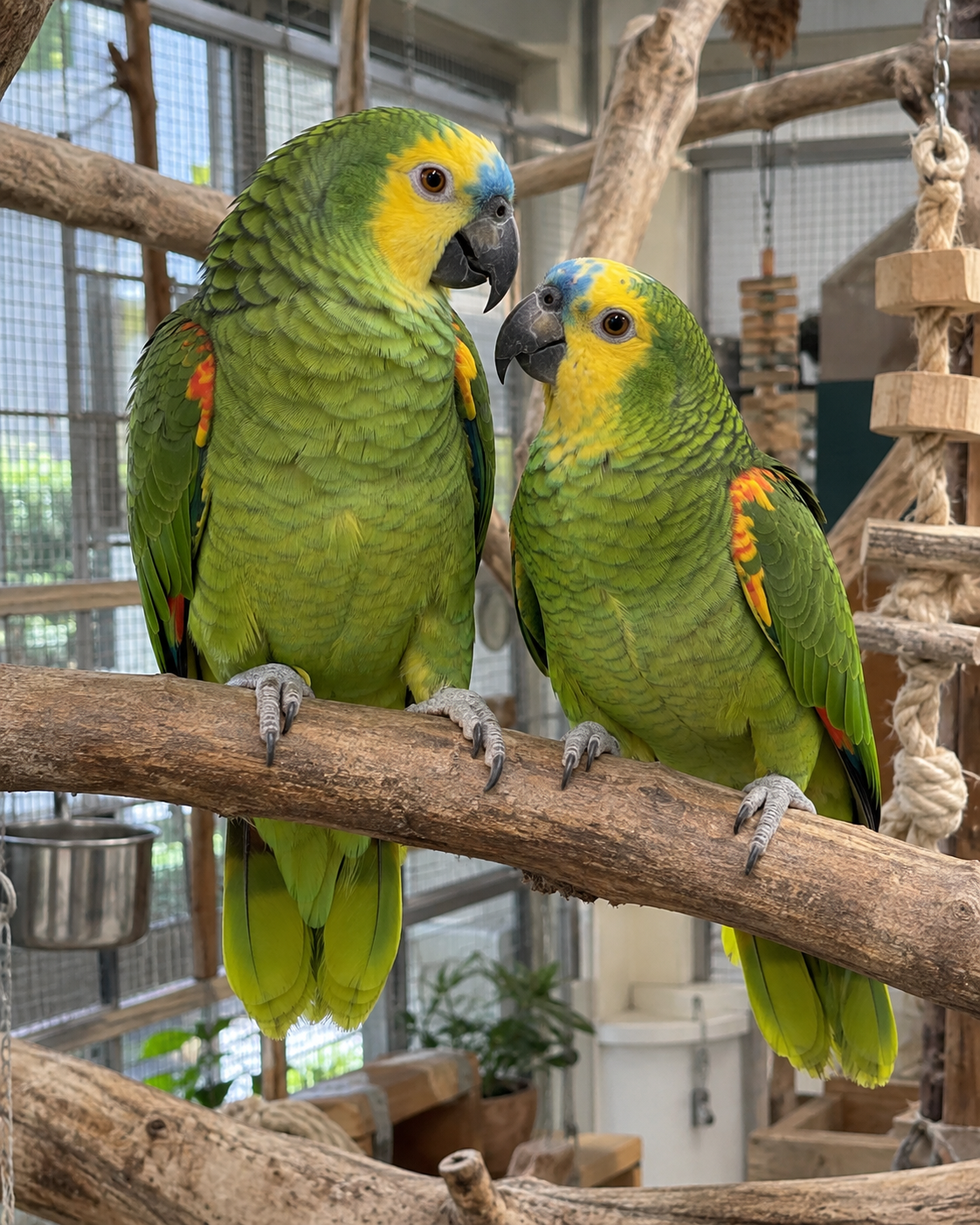
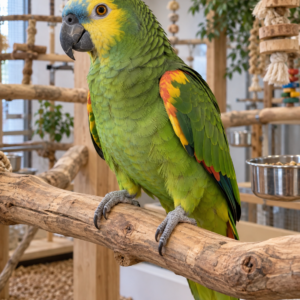
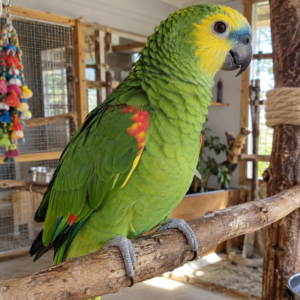
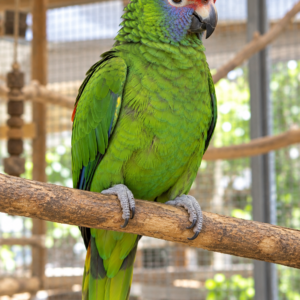
The Orange Winged Amazon parrot is a medium-sized Amazon species scientifically known as Amazona amazonica. Adults are predominantly green with yellow facial colouring, violet-blue markings around the forehead and eyes, and characteristic orange-red colour at the bases of several wing feathers. Adults reach approximately 12 inches in length, while the reported Orange Winged Amazon lifespan is around 50–60 years.
Orange Winged Amazon for Sale – Amazona amazonica
For buyers searching for an orange winged amazon for sale, correct species identification is an important starting point. The Orange Winged Amazon is scientifically classified as Amazona amazonica and is also commonly called the Orange-winged Parrot.
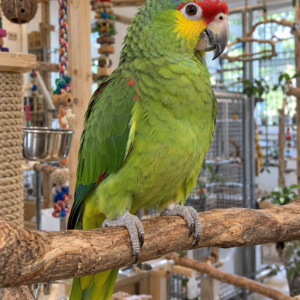
At first glance, this species has the classic predominantly green appearance associated with many Amazon parrots. Closer inspection reveals considerably more colour, including yellow across parts of the forehead, crown and cheeks, violet-blue facial markings and the orange-red wing coloration that gives the species its common name.
The World Parrot Trust currently lists the Orange-winged Amazon at approximately 31 cm, or 12 inches, in length, with a reported adult weight of approximately 298–470 grams.
Its manageable medium size should not be confused with low-maintenance ownership. Amazon parrots require appropriate housing, nutrition, enrichment, social interaction and professional avian veterinary care throughout their lives.
Orange Winged Amazon Details
- Common Name: Orange Winged Amazon
- Alternative Name: Orange-winged Parrot
- Scientific Name: Amazona amazonica
- Bird Type: Amazon Parrot
- Adult Length: Approximately 31 cm / 12 inches
- Reported Adult Weight: Approximately 298–470 g
- Reported Lifespan: Approximately 50–60 years
- CITES Listing: Appendix II
Two subspecies are currently recognized by the World Parrot Trust: Amazona amazonica amazonica and Amazona amazonica tobagensis.
What Does an Orange Winged Amazon Parrot Look Like?
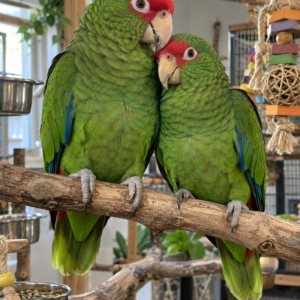
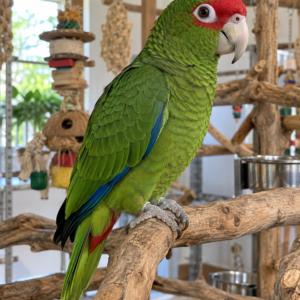
The orange winged amazon parrot is primarily green, but several contrasting colours help distinguish it from similar Amazon species.
Adult Amazona amazonica have yellow colouring across the forehead, crown and forecheeks. A violet-blue band appears around the lores and between the eyes, while the throat is generally yellow-green with some blue tones.
The feature responsible for the bird’s common name is found in the wings.
Several secondary flight feathers have orange bases, producing flashes of orange-red when the wings are moved or opened. Additional blue colouring appears on some portions of the wings.
The tail is largely green, with yellow-green tips on the side feathers and orange-red colouring on portions of the inner feather webs.
The bill is generally horn-coloured with darker grey near the tip, while adult eyes are orange.
These details help differentiate Amazona amazonica from other predominantly green parrots.
Orange Winged Amazon Lifespan
The orange winged amazon lifespan is an important consideration for anyone thinking about acquiring one.
The World Parrot Trust reports a longevity of approximately 50–60 years for this species.
That potential lifespan means ownership can extend across several decades.
A lifespan figure should not be treated as a guarantee. Genetics, nutrition, veterinary care, exercise, housing, stress and overall husbandry can all influence how long an individual bird lives.
Prospective owners should therefore think well beyond the initial purchase and consider whether they can provide consistent care over the long term.
Natural Range of the Orange Winged Amazon
The Orange Winged Amazon has a broad natural distribution across northern and central areas of South America.
The nominate subspecies occurs from eastern Colombia through Venezuela and the Guianas, extending south through eastern Ecuador and Peru into northeastern Bolivia and across large portions of Brazil.
The subspecies A. a. tobagensis occurs in Trinidad and Tobago.
Wild birds inhabit a variety of wooded environments, particularly areas near water.
Habitats can include tropical rainforest, savanna woodland, gallery forest, mangroves, palm swamp forests and cultivated landscapes containing trees. They are most commonly found below about 600 metres but have been recorded at higher elevations.
This natural distribution describes wild populations and should not be used to determine the origin of an individual captive parrot.
Housing an Orange Winged Amazon
Anyone considering an orange winged amazon for sale should have the bird’s housing prepared before acquisition.
The World Parrot Trust recommends an aviary or suspended enclosure with a minimum length of approximately 3 metres, or 9.8 feet, in avicultural settings.
For companion parrots kept indoors, the practical setup will differ, but the principle remains the same: the bird needs adequate space for comfortable movement and activity.
The environment should include appropriately sized natural or bird-safe perches, feeding stations, clean water, climbing opportunities and safe enrichment.
Perches of different appropriate diameters and textures can encourage movement and reduce reliance on one foot position.
Diet and Nutrition
A varied and nutritionally appropriate diet is essential for Amazon parrot care.
The World Parrot Trust’s husbandry information for the Orange Winged Amazon references a combination of suitable fruits, vegetables, leafy greens, cooked beans or pulses and complete formulated food, while limiting higher-fat seeds.
However, a generic species feeding list should not replace individualized veterinary advice.
Age, body condition, health and activity can all influence nutritional requirements.
The Association of Avian Veterinarians provides professional educational resources for owners of Amazon parrots and other companion birds:
Association of Avian Veterinarians – Pet Bird Care
Enrichment and Activity
The Orange Winged Amazon benefits from an environment that provides regular opportunities for exploration and problem-solving.
The World Parrot Trust recommends enrichment such as bird-safe wood and leather chew items, puzzle toys, food-foraging toys, swings and ladders. Bathing opportunities and appropriate companionship are also listed as important forms of enrichment.
Foraging activities can be particularly useful because they encourage the bird to work and explore in order to locate food rather than simply eating everything from one bowl.
Enrichment should be changed periodically.
Leaving exactly the same arrangement indefinitely can reduce novelty, whereas rotating suitable items provides the bird with different forms of interaction.
Social Behaviour and Daily Routine
Wild Orange Winged Amazons are social birds.
The World Parrot Trust reports that several pairs can combine into loose flocks, with groups of around 50 birds being common in some areas and gatherings of 200 or more occurring as well. They may also roost communally in groups of trees, bamboo or palms.
A household companion parrot is not living under wild conditions, but this natural social background helps explain why regular interaction and environmental stimulation are important.
Owners should establish a consistent daily routine that includes feeding, cleaning, enrichment and appropriate social interaction.
Veterinary Care
Avian veterinary care should be arranged before bringing an Orange Winged Amazon home.
Routine examinations allow an avian veterinarian to establish baseline information regarding body weight, physical condition and overall health.
They also provide an opportunity to discuss diet, enrichment, housing and preventative care.
The Association of Avian Veterinarians provides educational information for bird owners:
Prospective owners can also use the organization’s veterinarian directory:
AAV Find an Avian Veterinarian
Responsible Orange Winged Amazon Ownership
The Orange Winged Amazon is currently listed by the World Parrot Trust as Least Concern, but its wild population trend is decreasing. The species is included under CITES Appendix II.
Wild birds have faced significant pressure from capture for the bird trade, along with hunting and habitat loss.
The World Parrot Trust reports that more than 268,000 wild-caught Orange Winged Amazons have been recorded in international trade since 1981.
This history makes responsible sourcing important.
Buyers should review available captive-origin, identification and transfer documentation and verify the requirements that apply to their jurisdiction.
Conservation status and the legal status of an individual captive bird are separate issues.
Preparing Your Home
Before bringing home an Orange Winged Amazon, the bird’s environment should already contain the essential equipment required for daily care.
Preparation should include suitable housing, appropriate perches, clean feeding and water stations and safe enrichment.
The surrounding environment also needs to be evaluated for potential hazards.
Prospective owners should consider how the bird will fit into their regular routine and whether they can provide consistent interaction, cleaning, feeding and veterinary care over many years.
Why the Orange Winged Amazon Is Distinctive
The Orange Winged Amazon parrot combines the familiar green appearance of an Amazon parrot with several distinctive colour features.
Yellow facial plumage, violet-blue markings and bright orange-red wing feathers make the species visually recognizable once these characteristics are understood.
Its approximately 12-inch adult size places it among the medium-sized Amazon parrots, while its potential 50–60 year lifespan means ownership remains a substantial long-term commitment.
For anyone researching an orange winged amazon for sale, correct species identification, responsible sourcing, suitable housing and access to qualified veterinary care should all be considered before ownership.
Frequently Asked Questions
What is the scientific name of the Orange Winged Amazon?
The scientific name is Amazona amazonica.
How large is an Orange Winged Amazon?
Adults reach approximately 31 cm, or 12 inches, in length.
How much does an Orange Winged Amazon weigh?
The World Parrot Trust reports a weight range of approximately 298–470 grams.
What is the Orange Winged Amazon lifespan?
The reported Orange Winged Amazon lifespan is approximately 50–60 years. Actual longevity varies according to individual health and care.
Why is it called an Orange Winged Amazon?
Orange-red colouring occurs at the bases of several secondary wing feathers, becoming particularly noticeable when the bird moves or opens its wings.
What colour is an Orange Winged Amazon parrot?
Adults are predominantly green with yellow facial colouring, violet-blue markings around parts of the forehead and eyes, and orange-red wing markings.
Where does the Orange Winged Amazon naturally occur?
Its natural range extends across large areas of northern South America, including Colombia, Venezuela, the Guianas, Ecuador, Peru, Bolivia and Brazil, with another subspecies occurring in Trinidad and Tobago.
Where can I learn more about Amazon parrot care?
The Association of Avian Veterinarians provides educational resources for companion-bird owners:
AAV Amazon Parrot Care Resources
How can I find an avian veterinarian?
The Association of Avian Veterinarians provides a veterinarian directory:
Be the first to review “Orange Winged Amazon for Sale”
Related products

Amazon Parrots


Amazon Parrots
Amazon Parrots
Amazon Parrots
Amazon Parrots

Amazon Parrots
Amazon Parrots

Amazon Parrots
Reviews
There are no reviews yet.