


Double Yellow Headed Amazon for Sale

$800.00
The Double Yellow Headed Amazon is a striking Amazon parrot recognized for its predominantly green plumage and extensive yellow colouring across the head and neck. Scientifically classified as Amazona oratrix, adults reach approximately 14–15 inches in length. The reported Double Yellow Headed Amazon lifespan is around 50–60 years, making this species a substantial long-term commitment for prospective owners.
Double Yellow Headed Amazon for Sale
For buyers searching for a Double Yellow Headed Amazon for sale, understanding the species before purchase is essential. The Double Yellow Headed Amazon is one of the best-known members of the Amazona genus and is recognized particularly for the extensive yellow colouring that develops across the head and neck of adults.
Its scientific name is Amazona oratrix, although the bird may also be listed online as the Yellow-headed Amazon, Double Yellow-headed Amazon, Double Yellow-headed Parrot or Mexican Yellow-headed Amazon.
The World Parrot Trust lists adult Amazona oratrix at approximately 36–38 cm, or 14–15 inches, in length with a reported weight of about 500 grams.
Anyone considering this parrot should look beyond appearance alone. Housing, enrichment, nutrition, veterinary care and the bird’s potentially lengthy lifespan all need to be considered before ownership.
Double Yellow Headed Amazon Details
- Common Name: Double Yellow Headed Amazon
- Alternative Name: Double Yellow-headed Amazon Parrot
- Scientific Name: Amazona oratrix
- Bird Type: Amazon Parrot
- Adult Size: Approximately 36–38 cm / 14–15 inches
- Reported Adult Weight: Approximately 500 g
- Reported Lifespan: Approximately 50–60 years
The species is currently classified as Endangered and is listed under CITES Appendix I, making responsible sourcing and appropriate documentation particularly important.
What Does a Double Yellow Headed Amazon Look Like?
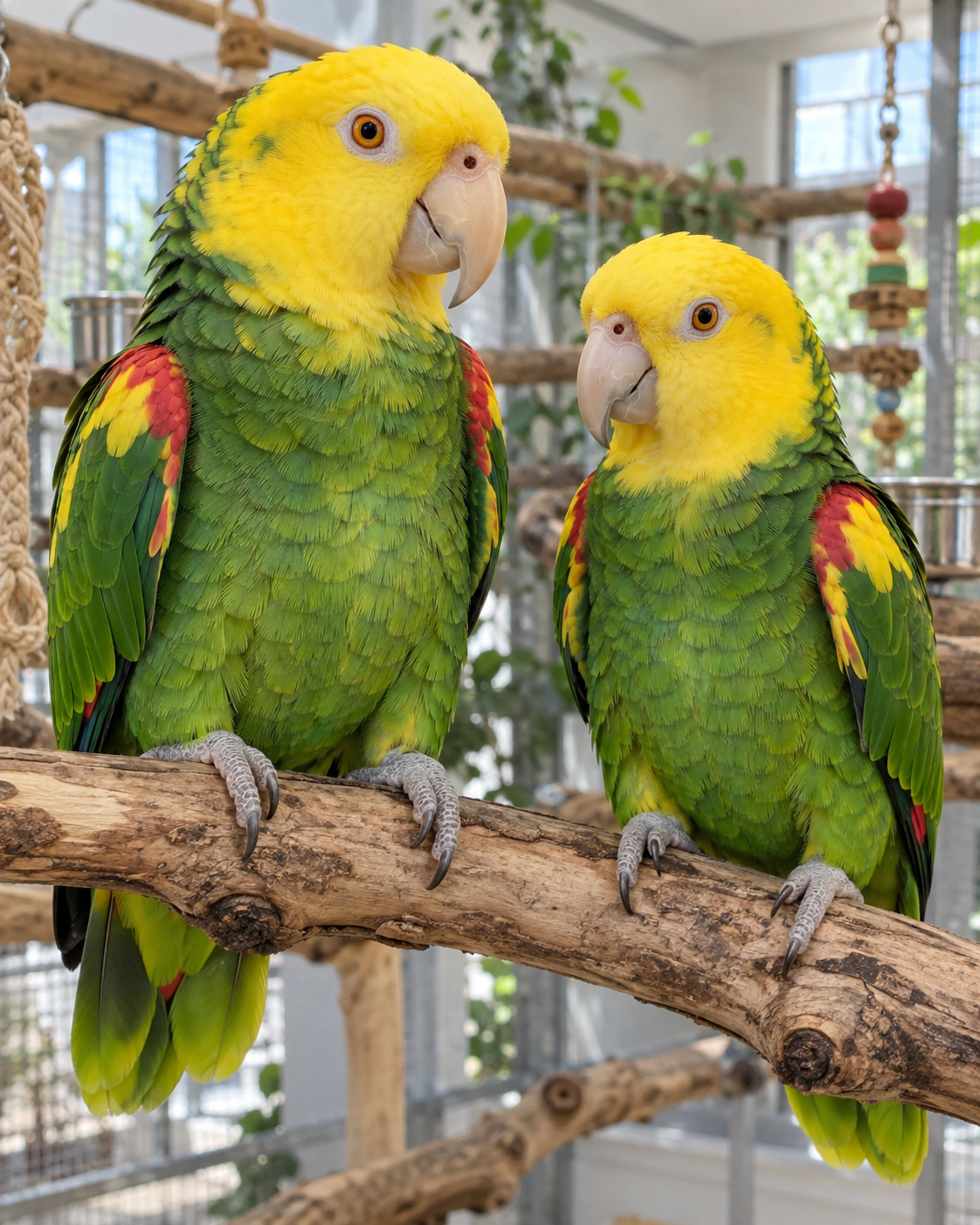
The adult Double Yellow Headed Amazon parrot is predominantly green, but its yellow head and neck make it particularly distinctive.
For the nominate Amazona oratrix oratrix, the World Parrot Trust describes adults as generally green with lightly dark-edged feathers across portions of the neck, back, breast and abdomen. The head and neck are extensively yellow, although some individuals may retain scattered green feathers around the neck.
Additional colouring includes orange-red around the bend of the wing and portions of the wing coverts. Red also occurs at the base of several secondary flight feathers.
The bill is typically pale horn-yellow, while adults have a white eye ring and orange-coloured iris.
Young birds do not immediately display the same amount of yellow as mature adults. Juveniles generally have yellow concentrated around the crown and lores, with more extensive yellow developing as the bird matures.
Double Yellow Headed Amazon Lifespan
The Double Yellow Headed Amazon lifespan is one of the most important considerations for prospective owners.
The World Parrot Trust reports a potential lifespan of approximately 50–60 years for Amazona oratrix.
This means acquiring one of these parrots can represent a commitment lasting several decades.
However, a 50–60 year lifespan should not be interpreted as a guarantee for every individual bird. Longevity can be affected by genetics, nutrition, veterinary care, exercise, environmental conditions and other factors.
Prospective owners should therefore prepare for long-term responsibility rather than viewing a Double Yellow Headed Amazon as a short-term pet.
Male Double Yellow Headed Amazon
People searching specifically for a male Double Yellow Headed Amazon should avoid relying solely on plumage to determine sex.
Male and female Amazona oratrix are visually similar enough that appearance should not be treated as a dependable method of determining whether an individual bird is male or female.
Where sex matters to a buyer, appropriate sex-identification documentation should be reviewed.
Sex should also not be used as the sole predictor of personality. Behaviour varies significantly between individual parrots and can be influenced by socialization, handling, environment, previous experience and daily routine.
A prospective buyer comparing male and female Double Yellow Headed Amazons should therefore evaluate the individual bird rather than relying on broad assumptions about sex.
Housing a Double Yellow Headed Amazon
A Double Yellow Headed Amazon needs enough space to move, climb and interact with its environment.
The World Parrot Trust’s avicultural guidance recommends substantial housing, including an aviary or suspended enclosure with a minimum length of approximately 3 metres or 9.8 feet in an aviary setting.
For companion birds living in a household environment, housing should still provide ample space for comfortable movement and include appropriately sized perches, food and water stations and enrichment opportunities.
The surrounding room should also be evaluated for hazards before the bird is allowed supervised activity outside its main enclosure.
Diet and Nutrition
A nutritionally appropriate diet is fundamental to long-term Amazon parrot care.
The World Parrot Trust describes an avicultural diet for this species that can incorporate fruits, fresh vegetables, green leaves, cooked or sprouted pulses, limited seed and complete formulated food.
However, prospective owners should not simply copy a generic feeding list.
An individual bird’s nutritional requirements can vary according to age, activity, body condition and health status. An avian veterinarian can help develop an appropriate feeding plan.
For additional professional bird-care information, the Association of Avian Veterinarians provides a dedicated educational resource for Amazon parrots:
Association of Avian Veterinarians – Amazon Parrot Care
The AAV’s Pet Bird Care Series includes a specific resource for Amazons as well as information for owners of other companion-bird species.
Enrichment and Daily Activity
A Double Yellow Headed Amazon for Sale should have regular opportunities for mental and physical activity.
Suitable enrichment can include safe chewing opportunities, different perch textures, foraging activities, bathing opportunities and toys designed for manipulation.
The World Parrot Trust specifically lists enrichment such as shallow bathing areas or misting, foot toys, bird-safe chewable wood, food-finding toys, preening toys, different hanging perch textures and safe natural branches.
Enrichment should be appropriate for the individual bird and changed periodically rather than remaining exactly the same indefinitely.
The goal is to create an environment in which the bird can explore, forage, climb and interact rather than simply sitting on one perch for most of the day.
Veterinary Care
Access to an avian veterinarian should be arranged before bringing an Amazon parrot home.
Routine veterinary care can help establish baseline information about body condition, weight, diet and overall health.
Owners should also learn the normal behaviour and appearance of their individual bird so changes can be recognized early.
The Association of Avian Veterinarians provides professional bird-owner resources and a member directory that can help owners locate veterinary professionals with avian experience.
Conservation and Responsible Ownership
Anyone searching for a Double Yellow Headed Amazon for sale should understand the conservation status of this species.
The World Parrot Trust currently lists Amazona oratrix as Endangered, with an estimated wild population of approximately 4,700 mature individuals and a decreasing population trend. The species is also listed under CITES Appendix I.
Major threats include extensive habitat loss and illegal trapping for the wild-bird trade.
Because of these conservation concerns, buyers should pay careful attention to legitimate captive-origin and transfer documentation where required.
Wild conservation status and the legal status of a particular captive bird are separate matters. Prospective owners should verify the federal, state and local requirements that apply to their location and transaction.
Preparing for Double Yellow Headed Amazon Ownership
Before purchasing a Double Yellow Headed Amazon, the bird’s living environment should already be prepared.
That means having appropriate housing, safe perches, feeding stations, enrichment materials and access to professional avian veterinary care.
Prospective owners should also consider the practical impact of caring for a parrot over several decades.
Daily cleaning, feeding, interaction, enrichment and observation all require ongoing time and attention.
The bird’s visual appeal should therefore be only one part of the decision.
Why the Double Yellow Headed Amazon Is Distinctive
Few Amazon parrots have a head pattern as immediately recognizable as an adult Amazona oratrix.
The combination of extensive yellow head and neck plumage, bright green body feathers, orange-red wing markings and substantial 14–15 inch adult size creates the classic appearance associated with the Double Yellow Headed Amazon.
Its potential 50–60 year lifespan and endangered conservation status also make responsible ownership especially important.
For anyone considering this species, accurate identification, appropriate documentation, quality long-term care and access to an avian veterinarian should be considered alongside the initial decision to purchase.
Frequently Asked Questions
What is the scientific name of the Double Yellow Headed Amazon?
The scientific name is Amazona oratrix.
How big is a Double Yellow Headed Amazon?
Adults are approximately 36–38 cm, or 14–15 inches, long.
What is the Double Yellow Headed Amazon lifespan?
The World Parrot Trust reports a lifespan of approximately 50–60 years. Actual longevity varies between individual birds.
What does a Double Yellow Headed Amazon look like?
Adults are predominantly green with extensive yellow across the head and neck, plus orange-red colouring around portions of the wings.
Can you tell a male Double Yellow Headed Amazon by appearance?
Male and female birds can look very similar. Buyers who need a confirmed male should rely on appropriate sex-identification documentation rather than appearance alone.
Is the Double Yellow Headed Amazon endangered?
Yes. The World Parrot Trust currently lists Amazona oratrix as Endangered, with a decreasing wild population.
How long can a Double Yellow Headed Amazon live as a companion bird?
Reported longevity is approximately 50–60 years, meaning ownership should be viewed as a major long-term commitment.
Where can I learn more about Amazon parrot care?
The Association of Avian Veterinarians provides professional educational information for Amazon owners:
Be the first to review “Double Yellow Headed Amazon for Sale”
Related products

Amazon Parrots
Amazon Parrots

Amazon Parrots
Amazon Parrots

Amazon Parrots

Amazon Parrots

Amazon Parrots
Amazon Parrots
Reviews
There are no reviews yet.