


Black-Billed Amazon for Sale | Male & Female


Original price was: $1,200.00.$999.00Current price is: $999.00.
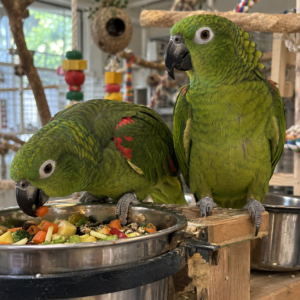
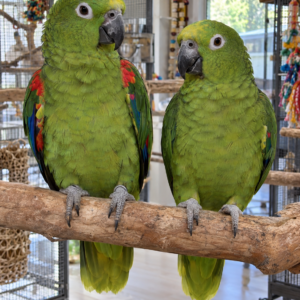
Male and female Black-Billed Amazon parrots are featured in this listing for buyers searching for the distinctive Amazona agilis. Known for predominantly green plumage and its characteristic dark bill, the Black-Billed Amazon is a smaller member of the Amazon parrot group and is native to Jamaica.
Black-Billed Amazon for Sale – Male & Female Parrots
This listing features male and female Black-Billed Amazon parrots for prospective owners specifically interested in Amazona agilis. The Black-Billed Amazon is an easily recognizable member of the Amazon parrot family because of its predominantly green plumage and distinctly dark bill.
For buyers comparing different Amazon parrots for sale, identifying the exact species is important. The Black-Billed Amazon should not be confused with other green Amazon species simply because their overall colouring can appear similar at first glance.
Its scientific name is Amazona agilis, and the species is naturally associated with Jamaica. The World Parrot Trust identifies it as a Jamaican endemic and describes it as one of the smaller Amazon parrots, measuring around 25 cm, or roughly 9.75 inches.
Black-Billed Amazon Details
- Common Name: Black-Billed Amazon
- Alternative Name: Black-Billed Parrot
- Scientific Name: Amazona agilis
- Sex Available: Male and Female
- Bird Type: Amazon Parrot
- Natural Range: Jamaica
- Adult Size: Approximately 25 cm / 9.75 inches
Recognizing the Black-Billed Amazon Parrot
The Black-Billed Amazon has a predominantly green appearance. However, closer examination reveals additional colouring that makes the species distinctive.
Adult males are described as green with more yellow-green colouring on the underparts. The neck feathers can have darker edging, while red colouring occurs on the primary coverts of the wings. Blue can also appear through portions of the flight feathers.
The bill is characteristically dark grey to almost black, which provides the feature reflected in the bird’s common name.
Females are broadly similar to males in general appearance, although some primary coverts may be green rather than red.
Because male and female birds can look similar, buyers should rely on the individual bird’s documented sex rather than attempting to determine sex from appearance alone.
Male and Female Black-Billed Amazons
Both male and female Black-Billed Amazon parrots are represented in this listing.
A prospective owner should not select an individual based solely on sex. Each parrot should be considered individually, particularly when evaluating temperament, handling history, socialization and compatibility with the intended home.
While there can be small visual differences between adult males and females, the overall appearance of both sexes remains predominantly green with the characteristic dark bill.
For buyers specifically searching for either a male Black-Billed Amazon or female Black-Billed Amazon, identifying the requested sex before purchase can make the selection process clearer.
Natural Origin of Amazona Agilis
The Black-Billed Amazon is endemic to Jamaica, meaning its natural wild distribution is associated specifically with the island.
The species occurs particularly in wet limestone forests and forest-edge habitats. Jamaica’s National Environment and Planning Agency describes the bird as inhabiting mountain forests and wet limestone areas, where it feeds on fruits, blossoms, nuts and berries.
The World Parrot Trust also identifies its range from Jamaica’s Cockpit Country eastward toward Mount Diablo and the eastern slopes of the John Crow Mountains.
This natural-history information describes the wild species and should not be interpreted as documentation of the origin of any particular captive bird.
Diet and Daily Care
Keeping an Amazon parrot requires considerably more than providing a cage and food.
A companion parrot needs an appropriate diet, secure housing, clean water, suitable perches, opportunities for movement and ongoing enrichment.
The Association of Avian Veterinarians provides a dedicated Amazon parrot care resource for bird owners, which can be useful when preparing for responsible Amazon ownership:
Association of Avian Veterinarians – Amazon Parrot Care
The AAV also provides resources covering basic companion-bird care, nutrition, foraging, environmental safety, signs of illness and veterinary care.
A prospective owner should use qualified avian veterinary guidance when determining the appropriate diet and healthcare program for an individual bird.
Enrichment for a Black-Billed Amazon
Parrots benefit from an environment that gives them opportunities to climb, explore, forage and interact with suitable objects.
The World Parrot Trust lists bird-safe branches, wood, suitable chew items, ladders, swings and foraging toys among enrichment options for the Black-Billed Amazon.
Enrichment should be rotated and adapted to the individual bird rather than simply filling an enclosure with permanent toys.
The Association of Avian Veterinarians identifies several forms of enrichment for pet birds, including sensory, nutritional, manipulative, environmental and behavioural enrichment.
Veterinary Care for an Amazon Parrot
Prospective owners should establish access to an avian veterinarian rather than waiting until a health concern develops.
The Association of Avian Veterinarians recommends regular veterinary checkups for companion birds and provides a Find-A-Vet service that allows owners to search for avian veterinarians.
For additional guidance:
AAV Find an Avian Veterinarian
Regular professional veterinary care is particularly important because birds may not always display obvious signs of illness early.
Responsible Black-Billed Amazon Ownership
Anyone considering a Black-Billed Amazon for sale should treat the purchase as a significant long-term responsibility.
Before selecting either a male or female bird, prospective owners should consider their available space, daily schedule, ability to provide enrichment and access to appropriate veterinary care.
Housing should provide enough room for comfortable movement while allowing appropriate perches and enrichment. The surrounding environment should also be assessed for household hazards that could affect a companion bird.
Because Amazona agilis is a species with conservation concerns in the wild, responsible buyers should pay particular attention to legitimate captive-bird documentation and applicable regulations.
The World Parrot Trust currently lists the Black-Billed Amazon as Endangered and under CITES Appendix II, while also describing captive birds as very rare.
Wild conservation status and the legal status of an individual captive bird are separate matters. Buyers should therefore ensure that any documentation required for their particular transaction and location is available.
Why Buyers Consider the Black-Billed Amazon
The Black-Billed Amazon stands apart from many other Amazon parrots because of its smaller size, dark bill and Jamaican origin.
For buyers deliberately searching for Amazona agilis rather than a general Amazon parrot, this listing provides the species identification and the availability of both male and female birds directly.
Prospective owners should research the species carefully, understand the commitment involved and prepare their home and veterinary-care arrangements before bringing an Amazon parrot home.
Frequently Asked Questions
What is the scientific name of the Black-Billed Amazon?
The scientific name is Amazona agilis.
Are male and female Black-Billed Amazon parrots available?
Yes. This listing includes male and female Black-Billed Amazon parrots.
Where does the Black-Billed Amazon originate?
The Black-Billed Amazon is endemic to Jamaica.
How big is a Black-Billed Amazon?
The World Parrot Trust lists the species at approximately 25 cm, or 9.75 inches, in length.
Why is it called a Black-Billed Amazon?
The species has a characteristically dark grey to almost black bill, which distinguishes it from several other Amazon parrots.
What colour is a Black-Billed Amazon?
The plumage is predominantly green, with yellow-green tones underneath and additional red and blue colouring in portions of the wings.
Do male and female Black-Billed Amazons look different?
They are similar overall. The World Parrot Trust notes that females can have some green primary coverts where males show red.
Where can I learn more about caring for an Amazon parrot?
The Association of Avian Veterinarians provides species-specific Amazon care materials and broader bird-owner resources covering veterinary care, diet, enrichment and household safety.
Be the first to review “Black-Billed Amazon for Sale | Male & Female”
Related products

Amazon Parrots


Amazon Parrots
Amazon Parrots
Amazon Parrots

Amazon Parrots
Amazon Parrots

Amazon Parrots

Amazon Parrots
Reviews
There are no reviews yet.