


Military Macaw for Sale

Original price was: $5,000.00.$3,000.00Current price is: $3,000.00.
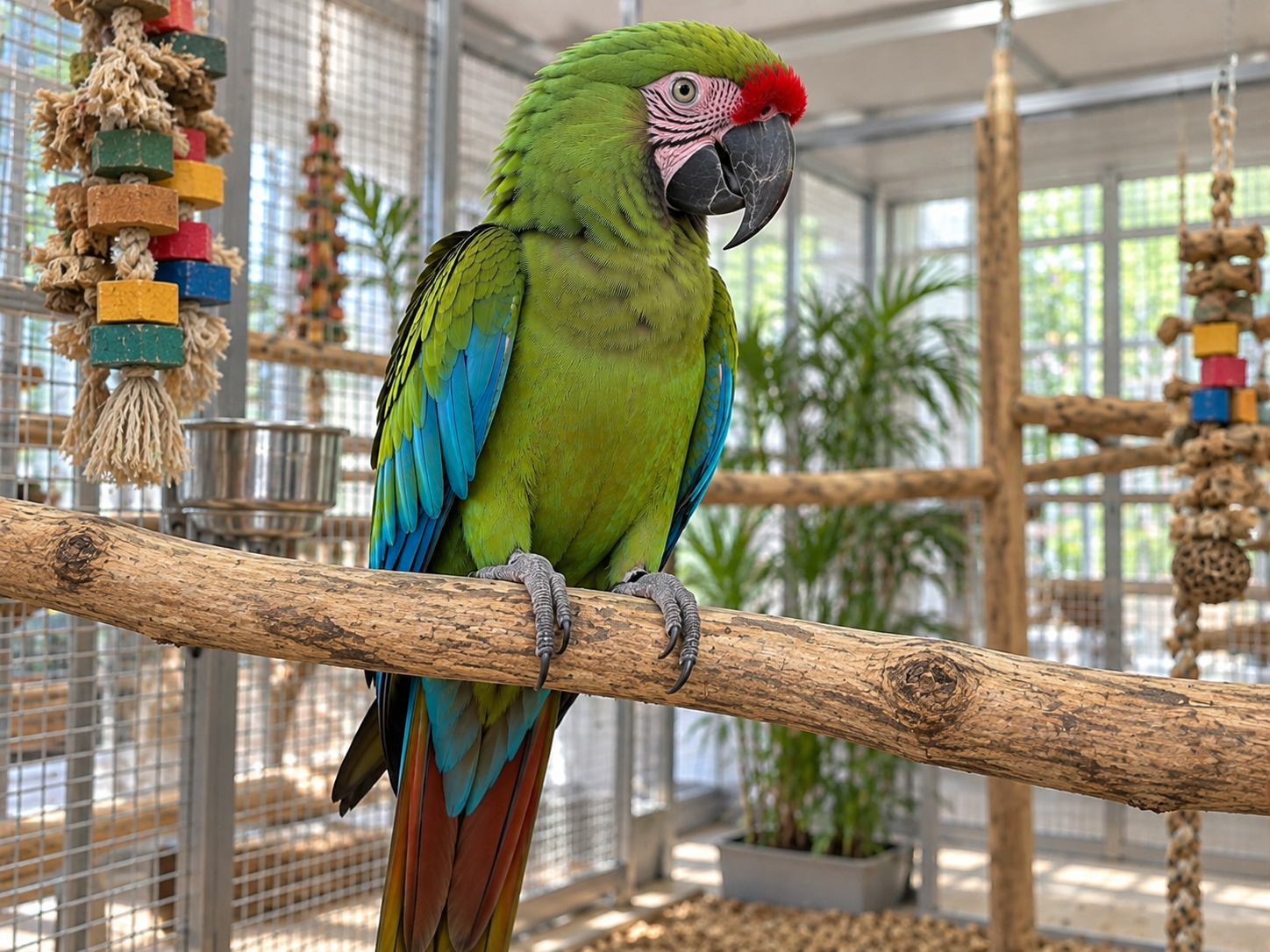
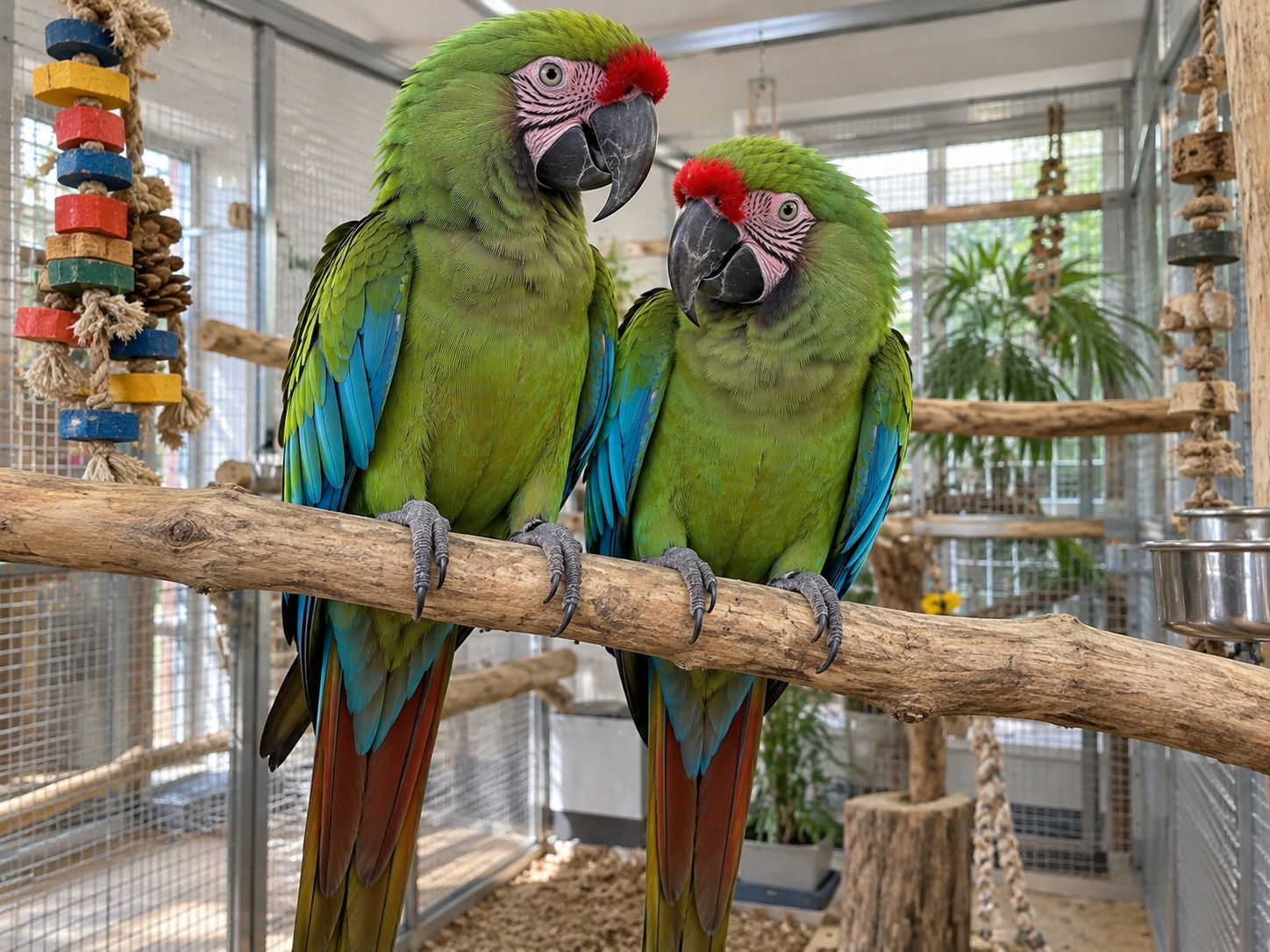
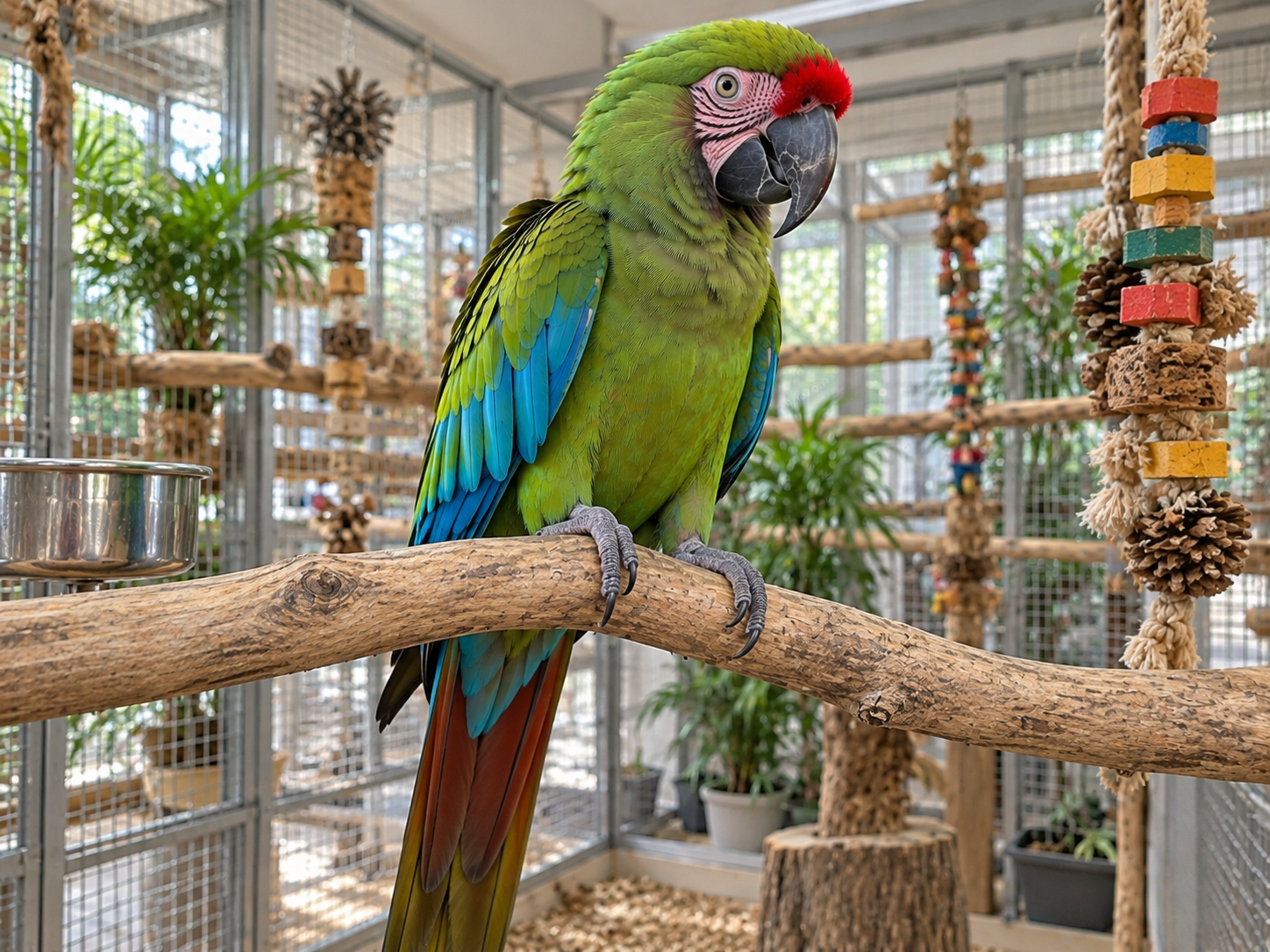
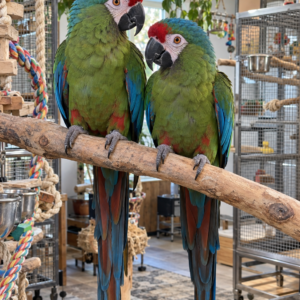
Male and female Military Macaws are represented in this listing. Scientifically known as Ara militaris, this large green macaw is recognized by its bright red forehead, blue flight feathers, sky-blue rump and pale facial skin with fine dark feather lines. Adults reach approximately 27.3–29.3 inches and weigh around 900 grams. The reported Military Macaw lifespan is approximately 50–60 years, making suitable housing, enrichment, nutrition and professional avian care essential.
Military Macaw for Sale – Male & Female
For buyers researching a military macaw for sale, the Military Macaw is a large green parrot scientifically classified as Ara militaris.
The species is sometimes called the Green Macaw or Blue-green Macaw, although these common names can create confusion with other green macaw species.
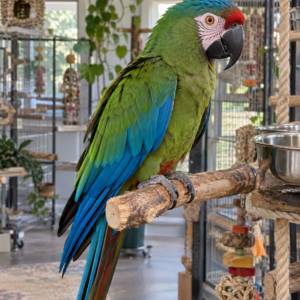
Adults are predominantly green with a vivid red forehead, blue flight feathers and a bright sky-blue rump. Their large curved bill, long tail and pale facial skin give them the unmistakable profile of a true Ara macaw.
The World Parrot Trust lists adult Military Macaws at approximately 70–75 cm, or 27.3–29.3 inches, in length with a reported weight of approximately 900 grams, or 31.5 ounces.
Military Macaw Details
- Common Name: Military Macaw
- Alternative Names: Green Macaw, Blue-green Macaw
- Scientific Name: Ara militaris
- Sex Represented: Male and Female
- Bird Type: Macaw
- Adult Size: Approximately 27.3–29.3 inches
- Adult Weight: Approximately 900 g
- Reported Lifespan: Approximately 50–60 years
- Primary Colour: Green
- Conservation Status: Vulnerable
- CITES Listing: Appendix I
There are three recognized subspecies: A. m. militaris, A. m. mexicanus and A. m. bolivianus.
What Does a Military Macaw Look Like?
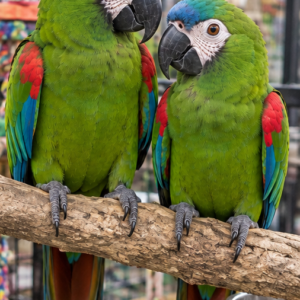
The Military Macaw is predominantly green.
Adult birds have a bright red patch across the forehead, while the crown and neck can show a subtle blue wash.
The wings contain blue flight feathers, while the rump is a much brighter sky blue.
The facial area is pale pink to white and contains fine lines of dark green or black feathers.
The bill is grey-black, and adults have yellow eyes.
The tail contains darker red-brown colouring with blue toward the tips.
These markings create a distinctive combination of green, red and blue without the extensive bright red body plumage seen in Scarlet Macaws.
Male and Female Military Macaws
Male and female Military Macaws look broadly similar.
Colour should therefore not be used as the primary method for determining sex.
Where a buyer specifically requires a male or female bird, appropriate sex-identification records or veterinary testing provide a more dependable answer.
Personality also varies by individual.
Factors such as socialization, handling, environment, age and previous experience can influence behaviour more than sex alone.
Military Macaw Size
The Military Macaw reaches approximately 27.3–29.3 inches in length.
At around 900 grams, it is a substantial parrot but generally smaller than the Great Green Macaw, which can exceed 30 inches and weigh significantly more.
Its size means appropriate housing needs to provide room for:
- Wing stretching
- Climbing
- Movement between perches
- Large toys
- Foraging
- Bathing
- Supervised activity
Large macaws should not be treated like small cage birds.
Military Macaw Lifespan
The reported Military Macaw lifespan is approximately 50–60 years.
That potential longevity makes this bird a major long-term commitment.
Actual lifespan can vary according to:
- Genetics
- Nutrition
- Veterinary care
- Exercise
- Housing
- Environmental safety
- Long-term husbandry
Anyone considering a Military Macaw should plan for decades of care rather than focusing only on the initial purchase.
Military Macaw Price
People researching Military Macaw price should understand that there is no single universal price for every bird.
The amount can vary according to:
- Age
- Sex
- Documentation
- Health information
- Handling history
- Geographic location
- Individual condition
- Current availability
Because no exact price has been supplied for this listing, the actual current selling price should be displayed rather than inserting a generic market figure.
Long-term costs are also important.
Housing, food, large toys, replacement perches and veterinary care can represent substantial ongoing expenses.
Military Macaw Sounds
Military Macaws are vocal parrots.
The World Parrot Trust describes their calls as loud, harsh, raucous, drawn-out and sometimes shrieking. These calls can be audible over considerable distances.
Noise tolerance should therefore be considered before ownership.
A macaw should never be expected to remain quiet throughout the day.
Housing a Military Macaw
The Military Macaw requires substantial housing.
The World Parrot Trust recommends access to a large enclosure of at least 15 metres, or approximately 49 feet, for at least part of the year and advises against keeping the species permanently indoors.
A companion setting should provide:
- Strong natural perches
- Large climbing areas
- Heavy-duty feeding stations
- Macaw-safe toys
- Chewing opportunities
- Foraging activities
- Bathing opportunities
The bird’s powerful bill should also be considered when choosing housing materials.
Enrichment and Chewing
Military Macaws are strong chewers.
The World Parrot Trust recommends safe woods including fir, elder, pine and willow, along with sterilized pine cones and large wooden or vegetable-tanned leather toys.
Appropriate enrichment can include:
- Large chew toys
- Natural branches
- Swings
- Climbing structures
- Puzzle feeders
- Foraging toys
- Bathing
- Training activities
Rotating suitable enrichment periodically can prevent the environment from becoming too repetitive.
Diet and Nutrition
A varied feeding program is important for macaw care.
The World Parrot Trust references nuts, vegetables, fruits, corn, palm fruits where available and complete formulated macaw food as possible components of captive nutrition.
However, a generic diet should not replace individual veterinary advice.
Age, weight, activity and health all affect nutritional requirements.
For professional companion-bird information, the Association of Avian Veterinarians provides educational resources for macaw owners:
Association of Avian Veterinarians – Pet Bird Care
Natural Range of the Military Macaw
Military Macaws occur naturally across several separated regions of Latin America.
Populations occur in:
- Mexico
- Colombia
- Venezuela
- Ecuador
- Peru
- Bolivia
- Northern Argentina
Different subspecies occupy different parts of this range.
The species occurs in wooded foothills, valleys, dry woodland, humid forest and other forested habitats depending on the region.
Wild birds are often observed in pairs or small groups, while larger numbers may gather at communal roosts.
Military Macaw Conservation Status
Responsible sourcing is particularly important for this species.
The World Parrot Trust currently lists the Military Macaw as Vulnerable, with approximately 2,000–7,000 mature individuals remaining and a decreasing population trend. The species is included under CITES Appendix I.
Major threats include:
- Habitat loss
- Fragmentation
- Illegal trapping
- Destruction of nest cavities
- Domestic bird trade
In Mexico alone, habitat loss is reported at approximately 32%.
Buyers should therefore pay close attention to legitimate captive-origin and transfer documentation where applicable.
Military Macaw Conservation Efforts
Current conservation work includes population surveys, nest monitoring, nest-box programs, habitat restoration and anti-poaching measures.
At one conservation site in Mexico, 30 artificial nest boxes have been installed and 70 chicks have successfully hatched and fledged. Thousands of native pine trees had also been planted by the end of 2025 as part of habitat restoration work.
These projects highlight the importance of protecting both breeding habitat and wild populations.
Military Macaw vs Great Green Macaw
The Military Macaw is frequently confused with the Great Green Macaw because their colour patterns are similar.
The World Parrot Trust specifically notes that the two can be difficult to distinguish visually.
However, size provides one useful distinction.
Military Macaw:
Approximately 27.3–29.3 inches and 900 g.
Great Green Macaw:
Generally larger and heavier.
Both species are predominantly green with red forehead markings and blue portions of the wings or tail.
Scientific names provide the clearest distinction:
- Military Macaw: Ara militaris
- Great Green Macaw: Ara ambiguus
Veterinary Care
Access to an avian veterinarian should be established before bringing home a large macaw.
Routine examinations can help establish baseline information concerning:
- Weight
- Body condition
- Plumage
- Beak
- Feet
- Nutrition
- Respiratory health
- General wellbeing
The Association of Avian Veterinarians provides professional bird-care information:
Association of Avian Veterinarians
Preparing for Military Macaw Ownership
Anyone considering a Military Macaw for sale should prepare the bird’s environment beforehand.
This means having:
- Large, durable housing
- Strong perches
- Feeding stations
- Chewable enrichment
- Foraging activities
- A suitable feeding plan
- Access to avian veterinary care
Noise and lifespan should also be considered.
A large, vocal macaw capable of living for 50–60 years requires significant long-term planning.
Why the Military Macaw Is Distinctive
The Military Macaw combines a predominantly green body with a bright red forehead, blue wings and sky-blue rump.
Its approximately 27–29 inch adult size gives it the presence of a large macaw without reaching the extreme size of species such as the Hyacinth Macaw.
For buyers researching a Military Macaw for sale, correct identification, appropriate housing, responsible sourcing, veterinary planning and long-term care should all be considered alongside the initial purchase.
Frequently Asked Questions
What is the scientific name of the Military Macaw?
The scientific name is Ara militaris.
How large is a Military Macaw?
Adults measure approximately 70–75 cm, or 27.3–29.3 inches.
How much does a Military Macaw weigh?
Adults weigh approximately 900 grams, or 31.5 ounces.
What is the Military Macaw lifespan?
The reported lifespan is approximately 50–60 years.
What colour is a Military Macaw?
Adults are mainly green with a bright red forehead, blue flight feathers and a bright sky-blue rump.
What is the Military Macaw price?
Price varies according to age, sex, documentation, location, handling history, condition and availability. The actual current product price should be displayed directly on the listing.
Are male and female Military Macaws different in colour?
Male and female birds look very similar externally. Sex should be confirmed through appropriate records or testing rather than plumage alone.
Is the Military Macaw endangered?
The species is currently classified as Vulnerable, with approximately 2,000–7,000 mature birds estimated to remain.
Is a Military Macaw the same as a Great Green Macaw?
No. The Military Macaw is Ara militaris, while the Great Green Macaw is Ara ambiguus.
Where can I learn more about macaw care?
The Association of Avian Veterinarians provides professional bird-care resources:
Be the first to review “Military Macaw for Sale”
Related products
Macaw Parrots


Macaw Parrots

Macaw Parrots

Macaw Parrots
Macaw Parrots

Macaw Parrots


Macaw Parrots
Macaw Parrots
Reviews
There are no reviews yet.