
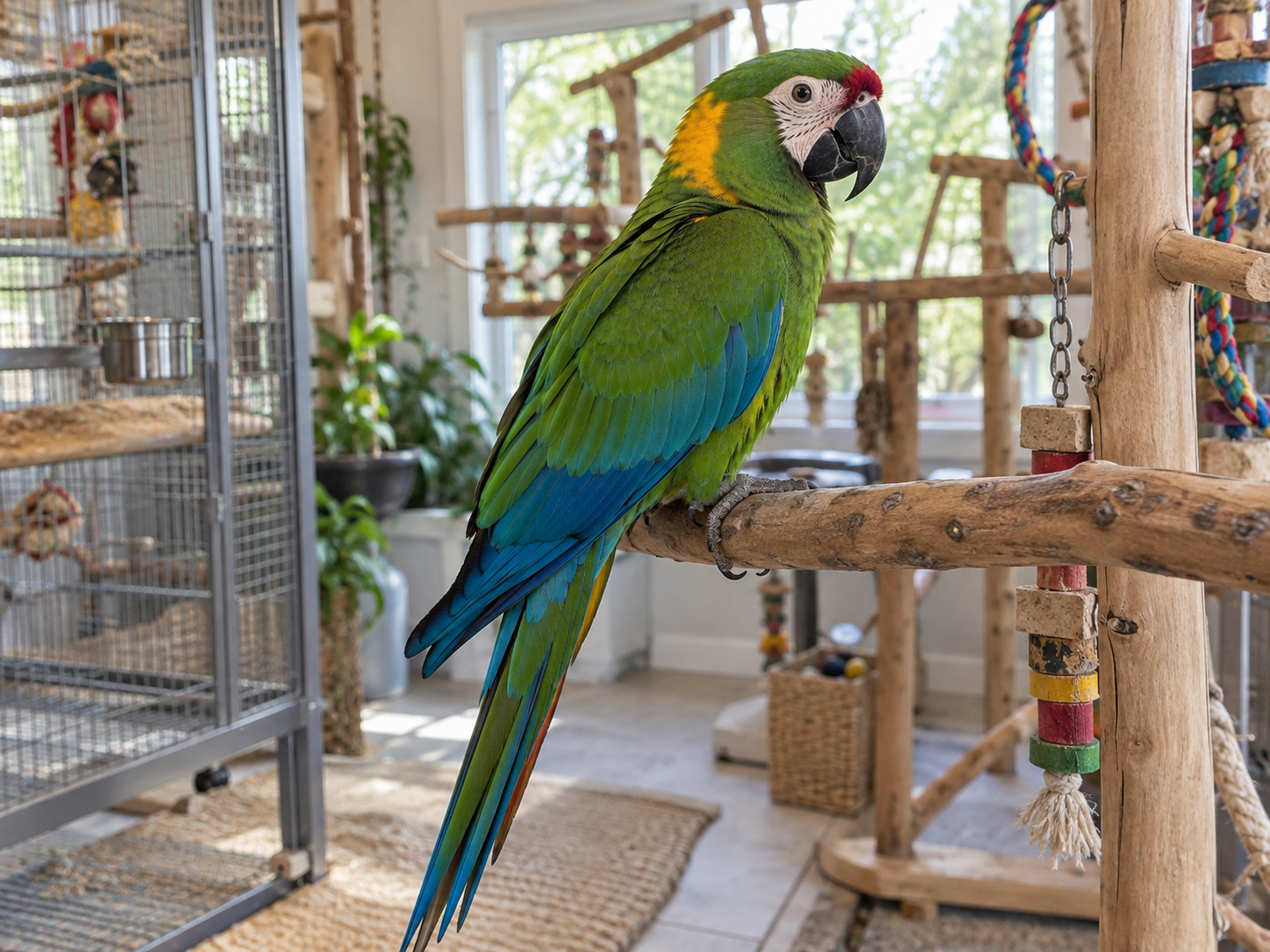


Golden-Collared Macaw
Original price was: $2,500.00.$2,000.00Current price is: $2,000.00.
The Golden-Collared Macaw is a compact macaw scientifically known as Primolius auricollis. Also called the Yellow-Collared Macaw, it is recognized for predominantly green plumage, a distinctive golden-yellow collar around the back of the neck, blue wing and tail feathers and a red frontal area. This active, intelligent macaw requires suitable space, enrichment and long-term avian veterinary care.
Golden-Collared Macaw – Primolius auricollis
The Golden-Collared Macaw is a smaller macaw species known for the bright yellow band around the back of its neck that gives the bird its common name.
Scientifically classified as Primolius auricollis, the species is also widely called the Yellow-Collared Macaw.
Compared with much larger macaws such as the Blue and Gold Macaw or Hyacinth Macaw, the Golden-Collared Macaw has a more compact build while still retaining the strong bill, long tail and active nature associated with macaws.
Its combination of green, yellow, blue and red plumage makes it visually distinctive while its smaller size can appeal to buyers who want a macaw but do not have the physical space required for the largest species.
Golden-Collared Macaw Details
- Common Name: Golden-Collared Macaw
- Alternative Name: Yellow-Collared Macaw
- Scientific Name: Primolius auricollis
- Bird Type: Macaw
- Primary Colours: Green, yellow, blue and red
- Body Type: Small to medium macaw
- Interaction: Social, active and intelligent
- Sounds: Vocal communicator
- Care Needs: Housing, enrichment, varied diet and avian veterinary care
What Does a Golden-Collared Macaw Look Like?
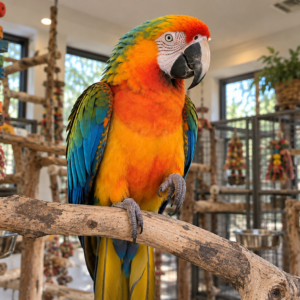
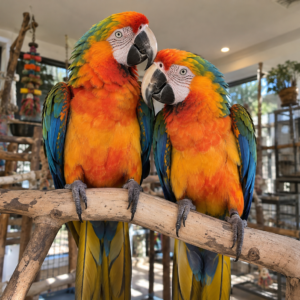
The Golden-Collared Macaw is predominantly green.
Its most recognizable feature is the bright yellow collar around the back and sides of the neck.
This yellow band contrasts sharply with the otherwise green head and body.
The forehead can contain red colouring, while the flight feathers and portions of the tail display blue.
The facial area contains pale exposed skin with fine dark feather lines, a characteristic feature common among many macaws.
The strong curved bill is primarily dark and is designed for manipulating food, climbing and interacting with objects.
The long tail helps give the bird the characteristic macaw profile despite its smaller overall body size.
Why It Is Called the Golden-Collared Macaw
The species gets its name directly from the bright golden-yellow band around the neck.
This collar can be especially noticeable when the bird turns sideways or moves its head.
The alternative name Yellow-Collared Macaw refers to the same physical feature.
Using both names on the page is useful for SEO because prospective owners may search for either variation when researching this species.
Golden-Collared Macaw Size
The Golden-Collared Macaw is much smaller than the largest macaw species.
Its more compact body makes it physically easier to house than birds such as the Hyacinth Macaw, but it still needs far more room than a small parrot.
A suitable environment should allow for:
- Climbing
- Wing stretching
- Movement between perches
- Chewing
- Foraging
- Supervised activity outside the enclosure
Its smaller size should not be interpreted as meaning it can live comfortably in a cramped cage.
Golden-Collared Macaw Lifespan
The Golden-Collared Macaw lifespan can extend for several decades with appropriate care.
As with other parrots, actual longevity depends on factors such as:
- Genetics
- Nutrition
- Exercise
- Veterinary care
- Housing quality
- Environmental safety
- Long-term husbandry
A prospective owner should therefore consider the bird a long-term responsibility rather than a short-term pet.
Social Behaviour
Golden-Collared Macaws are social parrots.
They benefit from regular interaction and a predictable daily routine.
A bird that receives little stimulation may not have enough opportunities to express normal behaviour.
Social interaction can include supervised time with familiar people, training and participation in daily activities where appropriate.
Each bird should still be allowed to choose when to engage rather than being forced into constant handling.
Vocal Behaviour
Like other macaws, the Golden-Collared Macaw is a vocal bird.
Its calls can be sharp and noticeable, particularly when excited or communicating with people or other birds.
Potential owners should consider household noise tolerance before bringing home any macaw.
Smaller body size does not automatically mean a silent or quiet bird.
Housing a Golden-Collared Macaw
Housing should provide enough room for the bird to move freely and comfortably.
The enclosure should contain strong perches of different safe diameters and textures.
Feeding and water stations should be positioned where they remain easy to clean.
The bird should also have access to suitable enrichment.
Useful housing features can include:
- Natural branches
- Climbing ropes
- Swings
- Large perches
- Food-searching activities
- Bird-safe chewable materials
Where appropriate and safe, supervised activity outside the main enclosure can provide additional physical and mental stimulation.
Enrichment and Play
The Golden-Collared Macaw is an active parrot that benefits from regular enrichment.
Suitable enrichment can include:
- Wooden chew toys
- Foraging toys
- Natural branches
- Climbing structures
- Puzzle feeders
- Bathing opportunities
- Training sessions
Enrichment should be changed periodically to prevent the environment from becoming repetitive.
The Association of Avian Veterinarians provides professional educational resources for companion-bird owners:
Association of Avian Veterinarians – Pet Bird Care
Diet and Nutrition
A Golden-Collared Macaw should receive a balanced and varied diet.
A formulated parrot diet may form part of the feeding plan, together with suitable vegetables and other foods recommended by an avian veterinarian.
A diet based too heavily on seeds can create nutritional imbalance over time.
The exact feeding program should consider the bird’s age, activity level, weight and health status.
Professional guidance is particularly useful when establishing a long-term feeding routine.
Veterinary Care
An avian veterinarian should be identified before acquiring a macaw.
Routine examinations can help establish baseline information about:
- Weight
- Body condition
- Plumage
- Beak and feet
- Nutrition
- Respiratory health
- General wellbeing
The Association of Avian Veterinarians provides professional bird-care information and veterinary resources:
Association of Avian Veterinarians
Golden-Collared Macaw vs Blue-Winged Macaw
The Golden-Collared Macaw and Blue-Winged Macaw are both smaller macaws in the genus Primolius.
The easiest visible difference is the neck.
The Golden-Collared Macaw has the distinctive yellow band around the back of the neck, while the Blue-Winged Macaw does not.
The Blue-Winged Macaw instead shows a stronger combination of blue wing colouring and a red forehead.
Both species are active parrots that require enrichment and long-term care.
Golden-Collared Macaw vs Blue and Gold Macaw
The Blue and Gold Macaw is substantially larger than the Golden-Collared Macaw.
Both species can show blue and yellow colouring, but their overall appearance is very different.
The Blue and Gold Macaw has a bright golden chest and extensive blue upper plumage.
The Golden-Collared Macaw is primarily green with a narrow golden-yellow collar around the neck.
Their housing and physical space requirements also differ significantly because of the size difference.
Preparing for Golden-Collared Macaw Ownership
Before bringing home a Golden-Collared Macaw, the living environment should already be prepared.
That means having:
- Appropriate housing
- Strong perches
- Feeding equipment
- Safe enrichment
- A suitable diet plan
- Access to an avian veterinarian
Noise, lifespan and daily interaction requirements should also be considered.
Even though this species is smaller than many macaws, it still requires substantial time and environmental stimulation.
Why the Golden-Collared Macaw Is Distinctive
The Golden-Collared Macaw combines a compact macaw body with a very recognizable yellow neck collar.
Its green body, blue flight feathers and red frontal colouring create a colourful appearance without the much larger body size of giant macaw species.
For buyers researching this bird, accurate identification, suitable housing, enrichment and long-term veterinary care should all be considered before ownership.
Frequently Asked Questions
What is the scientific name of the Golden-Collared Macaw?
The scientific name is Primolius auricollis.
Is the Golden-Collared Macaw the same as the Yellow-Collared Macaw?
Yes. Yellow-Collared Macaw is another common name for the same species.
What colour is a Golden-Collared Macaw?
The species is mainly green with a golden-yellow neck collar, blue wing and tail feathers and red around the forehead.
Is the Golden-Collared Macaw a large macaw?
No. It is smaller than major macaw species such as the Blue and Gold Macaw and Hyacinth Macaw.
Are Golden-Collared Macaws social?
Yes. They are active, social parrots that benefit from regular interaction and environmental enrichment.
Are Golden-Collared Macaws vocal?
Yes. Like other macaws, they communicate with noticeable calls and vocalizations.
Do Golden-Collared Macaws need enrichment?
Yes. They benefit from climbing, chewing, foraging, training and interaction with safe toys and natural materials.
Where can I learn more about macaw care?
The Association of Avian Veterinarians provides companion-bird care information:
Be the first to review “Golden-Collared Macaw”
Related products

Macaw Parrots


Macaw Parrots

Macaw Parrots

Macaw Parrots

Macaw Parrots
Macaw Parrots


Macaw Parrots
Macaw Parrots
Reviews
There are no reviews yet.