


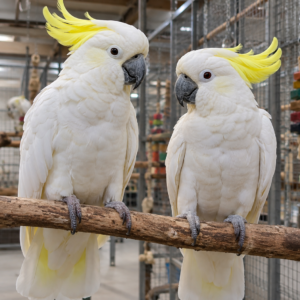

Sulphur Crested Cockatoo for Sale


Original price was: $1,000.00.$900.00Current price is: $900.00.
Male and female Sulphur Crested Cockatoos are represented in this listing. Scientifically known as Cacatua galerita, this large Australasian cockatoo is recognized for predominantly white plumage, a bright yellow erectile crest, pale yellow colouring around the ear coverts and a strong slate-grey beak. Adults reach approximately 19.5 inches and generally weigh around 815–975 grams. With a reported lifespan of 65 years or more, Sulphur Crested Cockatoos require substantial housing, regular enrichment, strong chewing materials, balanced nutrition and long-term avian veterinary care.
Sulphur Crested Cockatoo for Sale – Male & Female
For buyers researching a sulphur crested cockatoo for sale, this large white cockatoo is immediately recognizable by its dramatic bright yellow crest.
Scientifically classified as Cacatua galerita, the species is also known as the Greater Sulphur-crested Cockatoo and White Cockatoo.
Adults reach approximately 19.5 inches in total length and weigh around 815–975 grams. Five recognized subspecies are currently listed.
The body is predominantly white, while pale yellow colouring appears around the ear coverts and at the bases of feathers around the cheeks and throat.
Sulphur Crested Cockatoo Details
- Common Name: Sulphur Crested Cockatoo
- Scientific Name: Cacatua galerita
- Bird Type: Cockatoo
- Sex Represented: Male and Female
- Adult Size: Approximately 19.5 inches
- Adult Weight: Approximately 815–975 g
- Reported Lifespan: 65 years or more
- Primary Colour: White
- Crest Colour: Bright yellow
- Natural Range: Australia, New Guinea and nearby islands
- Recognized Subspecies: Five
- Conservation Status: Least Concern
- CITES Listing: Appendix II
These measurements, longevity figures and conservation details are consistent with current World Parrot Trust species information.
What Does a Sulphur Crested Cockatoo Look Like?
The adult Sulphur Crested Cockatoo is predominantly white.
Its most distinctive feature is the long yellow crest on top of the head.
When the bird is relaxed, the crest lies flat against the head. When alert, excited or displaying, the feathers rise into a prominent yellow fan.
Other identifying characteristics include:
- White body plumage
- Bright yellow crest
- Pale yellow ear-coverts
- Slate-grey beak
- Strong grey feet
- Broad rounded wings
The contrast between the white body and yellow crest makes the species particularly easy to identify.
Male Sulphur Crested Cockatoo
Adult males typically have dark brown eyes.
Their plumage remains predominantly white with the same bright yellow crest seen in females.
Typical male characteristics include:
- Dark brown eyes
- White body
- Yellow crest
- Slate-grey beak
- Strong grey feet
Body colour alone is not a reliable method of sexing the bird.
Female Sulphur Crested Cockatoo
Adult females typically have red-brown eyes.
Otherwise, their body plumage closely resembles that of adult males.
Typical female characteristics include:
- Red-brown eyes
- White body
- Yellow crest
- Slate-grey beak
- Strong grey feet
Eye colour can provide a useful visual clue in mature birds, although proper breeder records or DNA testing provide stronger confirmation.
Sulphur Crested Cockatoo Size
The typical Sulphur Crested Cockatoo size is approximately 19.5 inches, or 50 cm.
Adults weigh around 815–975 grams.
This makes the species substantially larger than conures, ringnecks and Pionus parrots.
Housing should provide enough space for:
- Full wing extension
- Horizontal movement
- Climbing
- Chewing
- Bathing
- Foraging
- Comfortable resting
Professional avicultural guidance recommends a walk-in enclosure approximately 14.7 feet long.
Sulphur Crested Cockatoo Lifespan
The reported Sulphur Crested Cockatoo lifespan is 65 years or more under suitable captive conditions.
Actual longevity can depend on:
- Genetics
- Nutrition
- Veterinary care
- Exercise
- Housing
- Body condition
- Mental stimulation
- Environmental safety
Anyone considering this species should be prepared for several decades of care.
Sulphur Crested Cockatoo Price
The Sulphur Crested Cockatoo price varies according to the individual bird.
Factors that may influence price include:
- Age
- Sex
- Socialization
- Handling history
- Health information
- Documentation
- Captive-bred origin
- Geographic location
- Availability
Because no exact selling price has been supplied for this listing, the live product page should display the actual current price rather than inserting an unsupported generic estimate.
Sulphur Crested Cockatoo Personality
Sulphur Crested Cockatoos are highly intelligent and inquisitive birds.
They are naturally social and benefit from regular interaction and environmental stimulation.
A suitable daily routine may include:
- Foraging
- Training
- Climbing
- Chewing
- Bathing
- Puzzle activities
- Social interaction
Individual temperament varies according to age, socialization, handling history and environment.
Are Sulphur Crested Cockatoos Loud?
Yes.
Sulphur Crested Cockatoos are naturally very loud.
Their calls can include:
- Raucous screeches
- Harsh alarm calls
- Shrill squawks
- Whistles
- Low murmuring sounds
Immature birds can also produce quieter whining or creaking calls.
Potential owners should consider household noise tolerance before acquiring this species.
Housing a Sulphur Crested Cockatoo
Large, durable housing is essential.
World Parrot Trust guidance lists a walk-in enclosure with a minimum length of approximately 14.7 feet.
A suitable setup should provide:
- Strong metal construction
- Natural wooden perches
- Different perch diameters
- Horizontal flight space
- Climbing structures
- Heavy-duty toys
- Feeding and water stations
- Bathing opportunities
- Foraging areas
Their strong beaks mean lightweight toys and wooden structures may be damaged quickly.
Sulphur Crested Cockatoo Enrichment
These birds are highly active and inquisitive.
Suitable enrichment can include:
- Bird-safe wooden toys
- Pine cones
- Fir branches
- Pine branches
- Willow branches
- Puzzle toys
- Foraging toys
- Heavy-duty chew materials
- Bathing opportunities
Regular access to safe chewing materials is particularly important because chewing is a normal part of cockatoo behaviour.
Sulphur Crested Cockatoo Diet
A managed captive diet can include appropriate formulated cockatoo food together with suitable seeds, vegetables, leafy greens, legumes, fruit and nuts.
Fresh foods may include:
- Carrot
- Celery
- Zucchini
- Green beans
- Peas
- Fresh corn
- Swiss chard
- Dandelion greens
- Apple
- Pear
- Orange
- Banana
Nuts such as walnuts, hazelnuts and pecans can also be incorporated appropriately.
Diet should be adjusted according to the bird’s age, weight, activity and veterinary recommendations.
Natural Range
The Sulphur Crested Cockatoo occurs across Australia, New Guinea and nearby islands.
Different subspecies occupy different regions.
Populations occur across:
- Eastern Australia
- Southeastern Australia
- Northern Australia
- Tasmania
- New Guinea
- West Papuan islands
- Aru Islands
Introduced populations also occur in some regions outside their original range.
Natural Habitat
Sulphur Crested Cockatoos occupy a wide range of environments.
These include:
- Woodland
- Riverine forest
- Mangroves
- Savanna
- Agricultural land
- Rice fields
- Palm plantations
- Suburban areas
- Secondary growth
Their adaptability allows them to live near human settlements as well as in natural woodland.
Wild Behaviour
Sulphur Crested Cockatoos are highly social.
Wild birds may gather in large groups, with flocks of up to around 2,000 birds feeding together.
When groups feed on the ground, sentinel birds can remain alert for predators.
The species is generally most active shortly after dawn.
Wild Diet
Wild Sulphur Crested Cockatoos consume a varied diet.
Foods can include:
- Grass seeds
- Herbs
- Fruits
- Roots
- Rhizomes
- Nuts
- Berries
- Flowers
- Blossoms
- Insect larvae
They may also feed on agricultural crops such as sprouting maize and wheat.
Sulphur Crested Cockatoo Breeding
Sulphur Crested Cockatoos nest in tree hollows.
A typical clutch contains approximately two to three eggs, and young generally fledge at around 11 weeks.
Responsible breeding requires suitable experience with:
- Pair compatibility
- Nutrition
- Health screening
- Nest management
- Chick development
- Weaning
- Veterinary support
Housing a male and female together should not automatically be treated as a complete breeding setup.
Sulphur Crested Cockatoo vs Umbrella Cockatoo
These two species are both large white cockatoos but are easy to distinguish by crest colour.
Sulphur Crested Cockatoo
- Bright yellow crest
- White body
- Approximately 19.5 inches
- Around 815–975 g
Umbrella Cockatoo
- White crest
- White body
- Approximately 18 inches
- Around 550 g
The Sulphur Crested Cockatoo is generally heavier and has the unmistakable yellow crest.
Sulphur Crested Cockatoo vs Yellow Crested Cockatoo
These names can easily cause confusion.
The Sulphur Crested Cockatoo is Cacatua galerita.
The Yellow-crested Cockatoo, sometimes called the Lesser Sulphur-crested Cockatoo, is Cacatua sulphurea.
The Yellow-crested Cockatoo is considerably smaller, reaching about 12.8 inches and weighing around 308–380 grams, whereas the Sulphur Crested Cockatoo reaches about 19.5 inches and weighs around 815–975 grams.
These names should not be used interchangeably on product listings.
Sulphur Crested Cockatoo Conservation Status
The Sulphur Crested Cockatoo is currently classified as Least Concern and listed under CITES Appendix II.
The global population is considered to be decreasing overall.
Threats include:
- Habitat loss
- Trapping for the bird trade
- Culling in some areas
Responsible captive sourcing remains important.
Veterinary Care
An avian veterinarian should be identified before bringing home a Sulphur Crested Cockatoo.
Routine examinations can help monitor:
- Body weight
- Body condition
- Plumage
- Beak
- Feet
- Diet
- Respiratory health
- General wellbeing
Long-lived cockatoos require ongoing preventive care throughout their lives.
Preparing for Sulphur Crested Cockatoo Ownership
Before choosing a sulphur crested cockatoo for sale, suitable housing and a long-term care plan should already be prepared.
A suitable setup should provide:
- Strong secure housing
- Large natural perches
- Adequate movement space
- Heavy-duty chewing materials
- Foraging enrichment
- Bathing access
- Balanced nutrition
- Daily social stimulation
- Avian veterinary support
The species’ powerful beak, loud vocalization and potential lifespan of 65 years or more should all be considered before ownership.
Why the Sulphur Crested Cockatoo Is Distinctive
The Sulphur Crested Cockatoo combines a large white body with one of the most recognizable crests in the parrot family.
Its bright yellow crest, strong build and highly social behaviour distinguish it from many other companion parrots.
For buyers researching a sulphur crested cockatoo for sale, health, documented origin, housing, socialization, noise tolerance and decades of long-term care should all be considered alongside price.
Frequently Asked Questions
What is the scientific name of the Sulphur Crested Cockatoo?
The scientific name is Cacatua galerita.
How big is a Sulphur Crested Cockatoo?
Adults reach approximately 19.5 inches, or 50 cm.
How much does a Sulphur Crested Cockatoo weigh?
Adults generally weigh approximately 815–975 grams.
What is the Sulphur Crested Cockatoo lifespan?
The reported lifespan is 65 years or more under suitable captive conditions.
What colour is a Sulphur Crested Cockatoo?
Adults are predominantly white with a bright yellow crest and pale yellow colouring around portions of the head and under-feathering.
How can you tell a male from a female Sulphur Crested Cockatoo?
Adult males generally have dark brown eyes, while mature females usually have red-brown eyes. DNA testing or reliable documentation provides stronger confirmation.
Are Sulphur Crested Cockatoos loud?
Yes. Their calls include loud, raucous screeches, whistles and harsh alarm vocalizations.
How much space does a Sulphur Crested Cockatoo need?
Professional avicultural guidance recommends a walk-in enclosure approximately 14.7 feet long.
What does a Sulphur Crested Cockatoo eat?
A managed diet can include appropriate formulated food, vegetables, leafy greens, legumes, controlled seeds, suitable fruit and nuts.
Is a Sulphur Crested Cockatoo the same as a Yellow-crested Cockatoo?
No. The Sulphur Crested Cockatoo is Cacatua galerita, while the smaller Yellow-crested Cockatoo is Cacatua sulphurea.
Are Sulphur Crested Cockatoos endangered?
They are currently classified as Least Concern and listed under CITES Appendix II.
Be the first to review “Sulphur Crested Cockatoo for Sale”
Related products
Cockatoo Parrots
Cockatoo Parrots


Cockatoo Parrots


Cockatoo Parrots


Cockatoo Parrots

Cockatoo Parrots


Cockatoo Parrots
Cockatoo Parrots
Reviews
There are no reviews yet.