


Bare-Eyed Cockatoo

Original price was: $4,500.00.$3,000.00Current price is: $3,000.00.
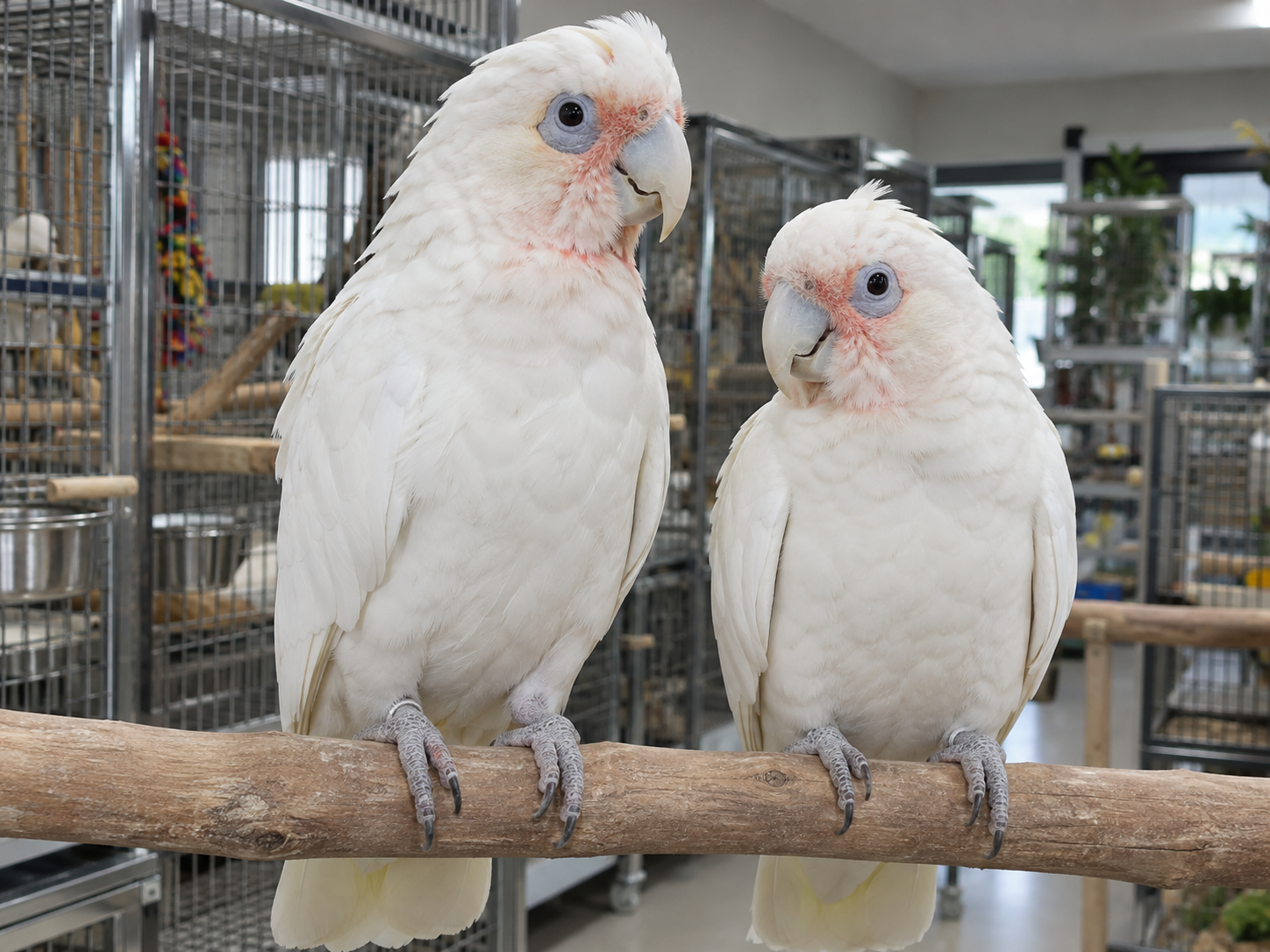
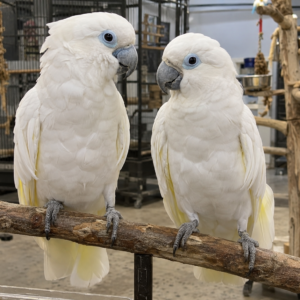
Male and female Bare-Eyed Cockatoos are represented in this listing. Scientifically known as Cacatua sanguinea, this Australian cockatoo is recognized for predominantly white plumage, a short white crest, a pale horn-coloured bill and a distinctive blue-grey bare eye ring. Adults are medium-sized cockatoos and require appropriate housing, regular enrichment, strong chewing materials, balanced nutrition and long-term avian veterinary care.
Bare-Eyed Cockatoo – Male & Female
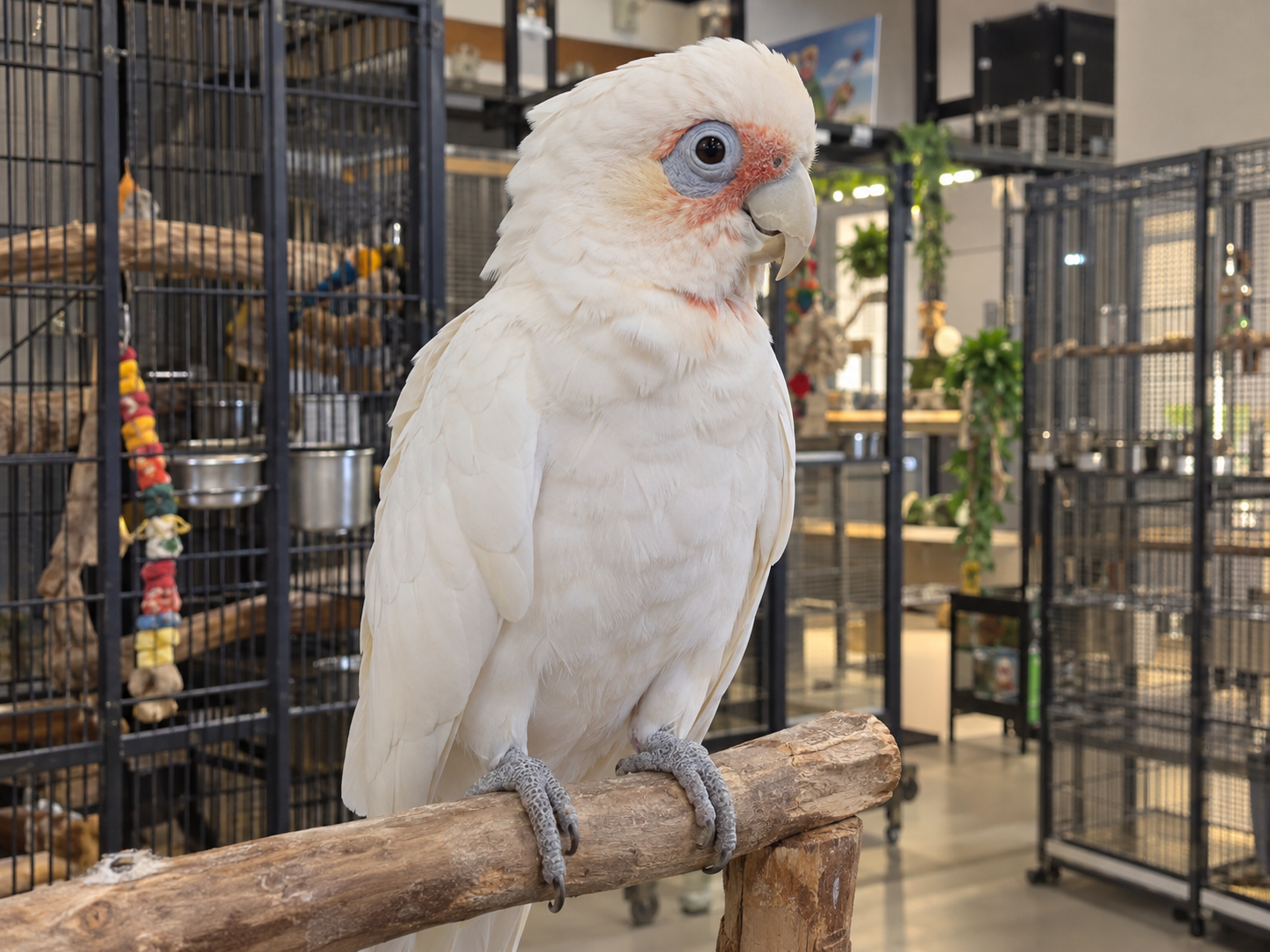
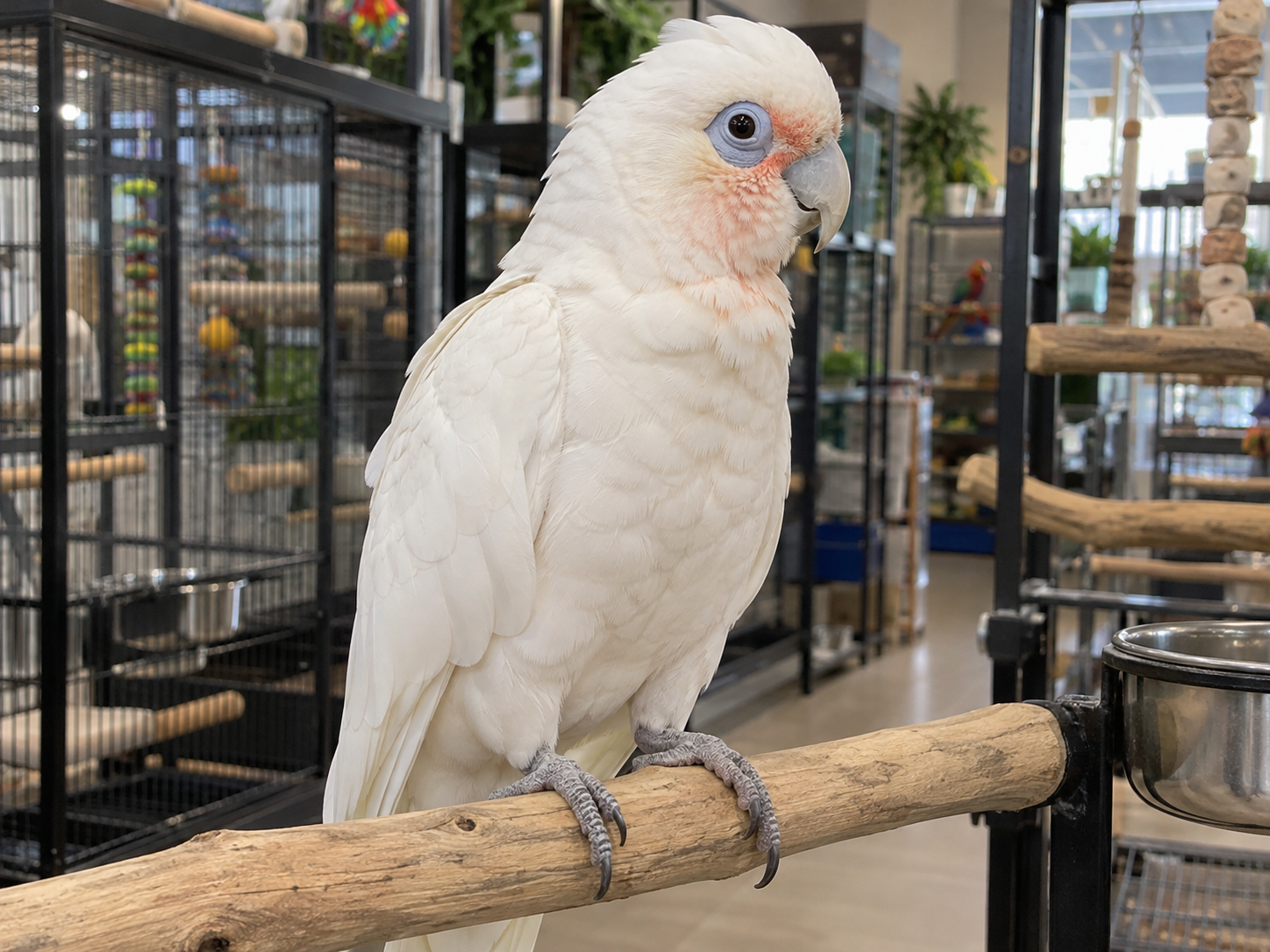
The Bare-Eyed Cockatoo is a medium-sized Australian cockatoo best recognized by the prominent bare blue-grey skin surrounding its eyes.
Scientifically classified as Cacatua sanguinea, the species is also widely known as the Little Corella.
Its body is predominantly white, with subtle salmon-pink colouring around the face and lores in many individuals. The short crest gives the bird a smoother head profile than larger crested cockatoos such as the Umbrella or Sulphur Crested Cockatoo.
Bare-Eyed Cockatoo Details
- Common Name: Bare-Eyed Cockatoo
- Alternative Name: Little Corella
- Scientific Name: Cacatua sanguinea
- Bird Type: Cockatoo
- Sex Represented: Male and Female
- Primary Colour: White
- Facial Colouring: Pale pink to salmon around the lores
- Eye Ring: Blue-grey
- Natural Range: Australia and southern New Guinea
What Does a Bare-Eyed Cockatoo Look Like?
The adult Bare-Eyed Cockatoo is predominantly white.
Its most distinctive feature is the broad ring of exposed blue-grey skin surrounding each eye.
Other identifying features include:
- White body plumage
- Short white crest
- Pale pink or salmon facial wash
- Pale horn-coloured bill
- Blue-grey eye ring
- Strong grey feet
The combination of a white body and large bare eye ring gives the species a very different facial appearance from most other cockatoos.
Male and Female Bare-Eyed Cockatoos
Male and female Bare-Eyed Cockatoos look very similar externally.
There is no dramatic plumage difference between the sexes.
Where confirmed sex is required, DNA testing or appropriate breeder documentation is preferable to visual estimation.
Individual personality should also not be predicted solely from sex.
Bare-Eyed Cockatoo Size
The Bare-Eyed Cockatoo is smaller than large species such as the Umbrella, Moluccan and Sulphur Crested Cockatoos.
Its medium-sized build still requires enough housing space for:
- Full wing stretching
- Horizontal movement
- Climbing
- Foraging
- Chewing
- Bathing
- Comfortable resting
A smaller cockatoo should not be kept in cramped housing simply because it occupies less physical space than larger species.
Bare-Eyed Cockatoo Lifespan
Bare-Eyed Cockatoos can be long-lived parrots.
Actual lifespan varies according to:
- Genetics
- Nutrition
- Veterinary care
- Housing
- Exercise
- Environmental safety
- Body condition
- Long-term husbandry
Prospective owners should therefore prepare for a long-term commitment rather than viewing the species as a short-term pet.
Bare-Eyed Cockatoo Price
The Bare-Eyed Cockatoo price varies according to the individual bird and current availability.
Factors that may influence price include:
- Age
- Sex
- Socialization
- Handling history
- Health information
- Documentation
- Captive-bred origin
- Geographic location
- Availability
Because no exact selling price has been supplied for this listing, the live product page should display the actual current price rather than an unsupported generic estimate.
Bare-Eyed Cockatoo Personality
Bare-Eyed Cockatoos are intelligent and highly active parrots.
They benefit from regular opportunities to interact, explore and manipulate objects.
A suitable daily routine can include:
- Foraging
- Training
- Climbing
- Safe chewing
- Bathing
- Play
- Social interaction
Individual temperament varies significantly.
Are Bare-Eyed Cockatoos Loud?
Yes.
Bare-Eyed Cockatoos are naturally vocal.
Their calls can include:
- Sharp screeches
- Contact calls
- Alarm calls
- Social chatter
- Excited vocalizations
Potential owners should expect normal cockatoo noise.
Housing a Bare-Eyed Cockatoo
Suitable housing should be strong and spacious.
A proper setup should provide:
- Natural wooden perches
- Different perch diameters
- Horizontal movement space
- Climbing structures
- Feeding and water stations
- Safe chewing materials
- Foraging toys
- Bathing access
Cockatoos are strong chewers, so enclosure fittings and toys should be inspected regularly.
Bare-Eyed Cockatoo Enrichment
Mental and physical enrichment are important.
Suitable options include:
- Bird-safe branches
- Wooden chew toys
- Foraging toys
- Puzzle feeders
- Swings
- Climbing ropes
- Foot toys
- Bathing opportunities
Rotating enrichment can help maintain interest and reduce environmental repetition.
Bare-Eyed Cockatoo Diet
A balanced feeding program may include appropriate formulated cockatoo food together with vegetables, leafy greens, legumes, controlled seeds, suitable fruit and nuts.
Fresh foods may include:
- Carrot
- Bell pepper
- Green beans
- Peas
- Fresh corn
- Leafy greens
- Apple
- Pear
- Berries
- Pomegranate
The exact diet should be adjusted according to the bird’s age, weight, activity and veterinary recommendations.
Natural Range of the Bare-Eyed Cockatoo
The species is native to Australia and parts of southern New Guinea.
It occupies a broad range of environments and is especially well adapted to open landscapes.
Wild populations can occur in:
- Woodland
- Grassland
- Agricultural areas
- River systems
- Urban environments
- Open country
Wild Behaviour
Bare-Eyed Cockatoos are highly social.
Wild birds often gather in large flocks.
They may forage together on the ground and move between feeding and roosting areas in noisy groups.
Daily behaviour can include:
- Flying
- Ground foraging
- Socializing
- Preening
- Chewing
- Resting
Captive environments should provide suitable opportunities for social and physical activity.
Bare-Eyed Cockatoo Breeding
Bare-Eyed Cockatoos are cavity-nesting parrots.
Responsible captive breeding requires suitable knowledge of:
- Pair compatibility
- Nutrition
- Health screening
- Nest management
- Genetics
- Chick development
- Weaning
Simply housing a male and female together should not be treated as a complete breeding setup.
Bare-Eyed Cockatoo vs Ducorps Cockatoo
Both are relatively compact white cockatoos, but they differ in facial appearance.
Bare-Eyed Cockatoo
- Large blue-grey bare eye ring
- White body
- Short crest
- Pale pink facial wash
Ducorps Cockatoo
- Pale blue eye ring
- White body
- Shorter, smoother crest
- More uniform white facial appearance
The Bare-Eyed Cockatoo generally has a more pronounced exposed eye area.
Bare-Eyed Cockatoo vs Umbrella Cockatoo
These species differ considerably in size and crest shape.
Bare-Eyed Cockatoo
- Medium-sized
- Short crest
- Blue-grey bare eye ring
- White body
Umbrella Cockatoo
- Much larger
- Large fan-shaped white crest
- Heavier build
- White body
The Umbrella Cockatoo is substantially larger and has a much more dramatic crest.
Veterinary Care
An avian veterinarian should be identified before bringing home a Bare-Eyed Cockatoo.
Routine examinations can help monitor:
- Body weight
- Body condition
- Plumage
- Beak
- Feet
- Diet
- Respiratory health
- General wellbeing
Preventive veterinary care should form part of the bird’s long-term ownership plan.
Preparing for Bare-Eyed Cockatoo Ownership
Before choosing a Bare-Eyed Cockatoo, the bird’s environment should already be prepared.
A suitable setup should include:
- Secure housing
- Natural perches
- Adequate movement space
- Safe chewing materials
- Foraging enrichment
- Bathing access
- Balanced nutrition
- Social stimulation
- Avian veterinary support
The bird’s individual health, socialization and documented origin should be considered before purchase.
Why the Bare-Eyed Cockatoo Is Distinctive
The Bare-Eyed Cockatoo combines classic white cockatoo plumage with one of the most distinctive facial features in the group: a broad blue-grey bare eye ring.
Its compact build and smooth crest separate it visually from larger white cockatoos while retaining the intelligence, social behaviour and strong chewing needs typical of the family.
For prospective owners, health, socialization, housing, enrichment and long-term veterinary care should all be considered before bringing home a Bare-Eyed Cockatoo.
Frequently Asked Questions
What is the scientific name of the Bare-Eyed Cockatoo?
The scientific name is Cacatua sanguinea.
Is the Bare-Eyed Cockatoo also called the Little Corella?
Yes. Little Corella is another widely used common name.
What colour is a Bare-Eyed Cockatoo?
Adults are predominantly white with a blue-grey eye ring and subtle pink or salmon colouring around the face.
Can male and female Bare-Eyed Cockatoos be distinguished visually?
The sexes look very similar externally. DNA testing or reliable breeder documentation is preferable where confirmed sex is required.
Are Bare-Eyed Cockatoos loud?
Yes. They can produce sharp screeches, contact calls and other typical cockatoo vocalizations.
What does a Bare-Eyed Cockatoo eat?
A managed diet can include appropriate formulated food, vegetables, leafy greens, legumes, moderate fruit and controlled nuts or seeds.
Where does the Bare-Eyed Cockatoo come from?
The species is native to Australia and parts of southern New Guinea.
Do Bare-Eyed Cockatoos need enrichment?
Yes. They benefit from climbing, foraging, chewing, puzzle toys, bathing and regular social interaction
Be the first to review “Bare-Eyed Cockatoo”
Related products


Cockatoo Parrots


Cockatoo Parrots


Cockatoo Parrots
Cockatoo Parrots

Cockatoo Parrots
Cockatoo Parrots
Cockatoo Parrots

Cockatoo Parrots
Reviews
There are no reviews yet.