




Black Palm Cockatoo for Sale


Original price was: $15,000.00.$12,000.00Current price is: $12,000.00.
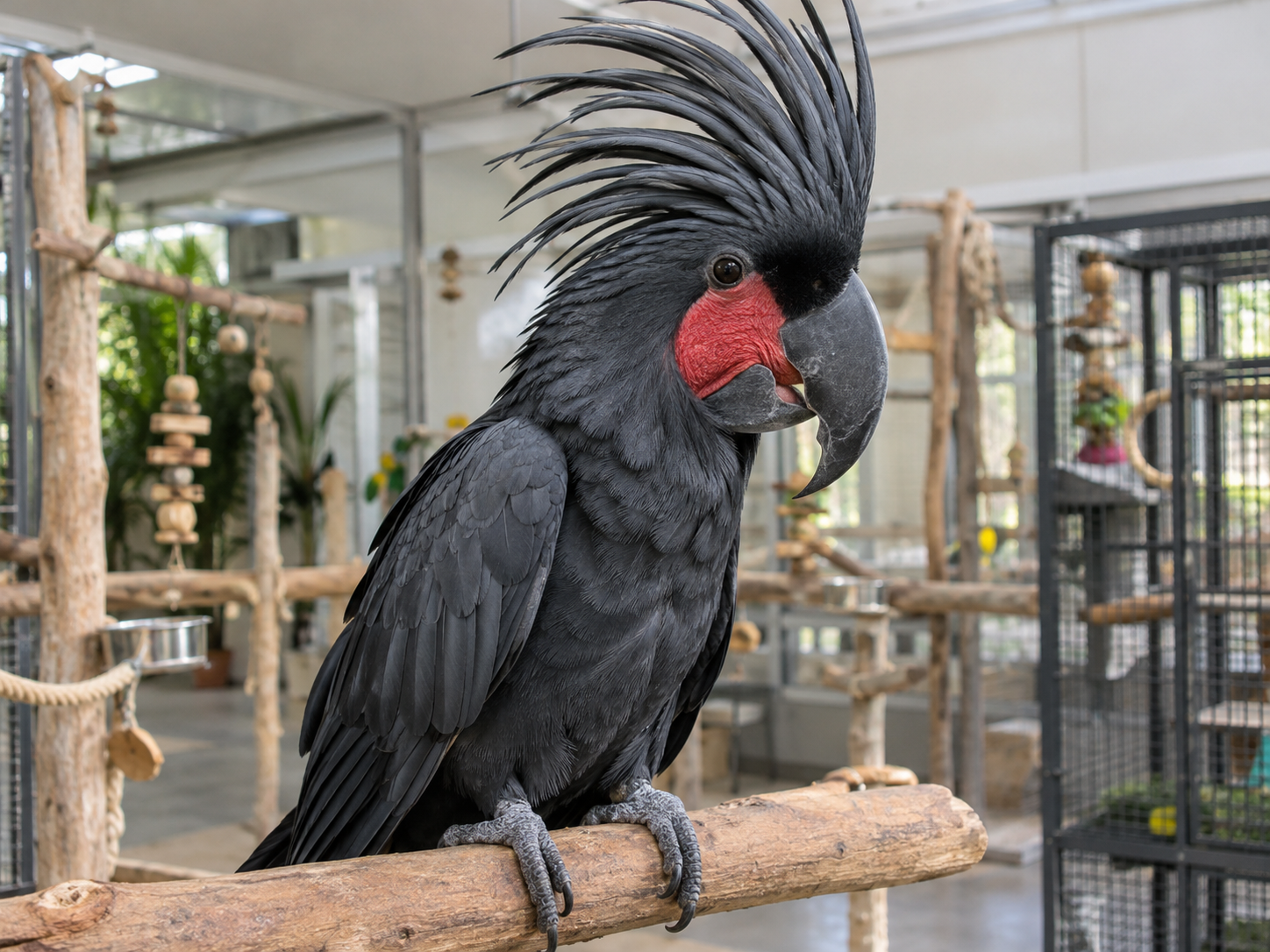
Male and female Black Palm Cockatoos are represented in this listing. Scientifically known as Probosciger aterrimus, this exceptionally large dark cockatoo is distinguished by black-grey plumage, an elongated crest, an enormous black bill and prominent bare crimson cheek patches. Adults measure approximately 20–25 inches and weigh around 910–1,200 grams. With a reported Black Palm Cockatoo lifespan of approximately 40–60 years, these uncommon parrots require substantial housing, specialised enrichment, appropriate nutrition and long-term avian veterinary care.
Out of stock
Black Palm Cockatoo for Sale – Male & Female
For buyers researching a black palm cockatoo for sale, the Palm Cockatoo is one of the largest and most distinctive members of the cockatoo family.
Scientifically classified as Probosciger aterrimus, it is also known as the Palm Cockatoo, Great Palm Cockatoo, Great Black Cockatoo, Goliath Cockatoo and Cape York Cockatoo.
Adult birds reach approximately 20–25 inches, or 51–64 cm, and weigh around 910–1,200 grams.
Unlike white cockatoos with bright yellow or salmon crests, the Black Palm Cockatoo is predominantly dark grey-black and has striking crimson bare cheek patches. Its exceptionally large bill and long crest create an unmistakable appearance.
Black Palm Cockatoo Details
- Common Name: Black Palm Cockatoo
- Accepted Common Name: Palm Cockatoo
- Scientific Name: Probosciger aterrimus
- Bird Type: Cockatoo
- Sex Represented: Male and Female
- Adult Size: Approximately 20–25 inches
- Adult Weight: Approximately 910–1,200 g
- Reported Lifespan: Approximately 40–60 years
- Primary Colour: Black to charcoal grey
- Facial Colour: Bare crimson cheek patches
- Natural Range: New Guinea, nearby Indonesian islands and northern Australia
- Recognized Subspecies: Four
- Conservation Status: Near Threatened
- CITES Listing: Appendix I
What Does a Black Palm Cockatoo Look Like?
The Black Palm Cockatoo has predominantly black plumage that can appear charcoal or grey because of powder produced by specialised down feathers.
Its most distinctive features include:
- Large recurved black crest
- Massive black bill
- Bare red or crimson cheek patches
- Dark brown eyes
- Grey eye ring
- Strong grey feet
- Large, heavy body
The bright red facial patches create a dramatic contrast with the otherwise dark plumage.
Male Black Palm Cockatoo
Adult males and females look generally similar.
Males typically have a somewhat larger bill.
Typical male features include:
- Dark grey-black plumage
- Large black bill
- Crimson cheek patches
- Tall black crest
- Dark brown eyes
Because external differences can be subtle, confirmed sex should rely on breeder documentation or appropriate testing rather than appearance alone.
Female Black Palm Cockatoo
Adult females have the same overall dark plumage and crimson facial patches.
The female bill is generally somewhat smaller than the male’s.
Typical female features include:
- Dark grey-black plumage
- Slightly smaller bill
- Crimson cheek patches
- Long dark crest
- Dark brown eyes
Black Palm Cockatoo Size
The typical Black Palm Cockatoo size is approximately 20–25 inches, or 51–64 cm.
Adults weigh around 910–1,200 grams.
This makes the species one of the largest cockatoos.
The bird’s powerful body and oversized beak require substantial room for:
- Full wing extension
- Horizontal movement
- Climbing
- Foraging
- Chewing
- Bathing
- Comfortable resting
Professional avicultural guidance recommends a walk-in aviary with a minimum length of approximately 23 feet.
Black Palm Cockatoo Lifespan
The reported Black Palm Cockatoo lifespan is approximately 40–60 years under suitable captive conditions.
Actual longevity can vary according to:
- Genetics
- Nutrition
- Veterinary care
- Housing
- Exercise
- Environmental safety
- Body condition
- Mental enrichment
Ownership should therefore be considered a multi-decade commitment.
Black Palm Cockatoo Price
The Black Palm Cockatoo price varies considerably.
This species is uncommon in aviculture, and legitimate captive availability can be limited.
Factors that may influence price include:
- Age
- Sex
- Captive-bred origin
- Documentation
- Socialization
- Health information
- Geographic location
- Legal availability
Because no exact selling price has been supplied for this listing, the actual current price should be displayed directly on the product page rather than inserting an unsupported market figure.
Black Palm Cockatoo Cost
The Black Palm Cockatoo cost extends well beyond the initial purchase price.
Long-term expenses can include:
- Large heavy-duty housing
- Natural perches
- Durable enrichment
- Replacement chewing materials
- Appropriate nutrition
- Routine veterinary care
- Emergency veterinary treatment
- Transport equipment
With a potential lifespan of several decades, buyers should consider lifetime ownership costs rather than the purchase price alone.
Black Palm Cockatoo Personality
Palm Cockatoos are intelligent and behaviourally complex birds.
Individual temperament varies, but suitable captive environments should provide opportunities for:
- Foraging
- Climbing
- Manipulating objects
- Chewing
- Bathing
- Exploration
- Social interaction
Their specialised natural behaviour means environmental enrichment is particularly important.
Black Palm Cockatoo Vocalizations
Palm Cockatoos have a broad vocal repertoire.
Calls can include:
- Loud whistles
- Contact calls
- Display calls
- Alarm sounds
- Harsh vocalizations
Wild birds are especially conspicuous when displaying.
Potential owners should expect substantial vocal communication.
Housing a Black Palm Cockatoo
Large, strong housing is essential.
Professional avicultural guidance recommends a walk-in enclosure with a minimum length of approximately 23 feet.
A suitable environment should provide:
- Heavy-duty construction
- Large natural wooden perches
- Multiple perch diameters
- Horizontal flight space
- Large climbing structures
- Heavy-duty toys
- Feeding stations
- Bathing access
- Foraging areas
The bird’s exceptionally powerful bill means weak fixtures can be damaged quickly.
Black Palm Cockatoo Enrichment
Useful enrichment can include:
- Bird-safe wood
- Heat-sterilised pine cones
- Fir branches
- Large ladders
- Durable swings
- Strong plastic chains designed for birds
- Foraging activities
- Bathing opportunities
Enrichment should be selected with the bird’s strength and large bill in mind.
Black Palm Cockatoo Diet
Professional avicultural references list a varied diet that can include:
- Walnuts
- Almonds
- Pine nuts
- Suitable formulated parrot food
- Fresh corn
- Wheat
- Appropriate seeds
- Green leaves
- Suitable fruits where accepted
Individual birds may have dietary preferences.
The exact feeding plan should be adjusted according to age, activity, body condition and advice from an avian veterinarian.
Natural Range of the Black Palm Cockatoo
The Black Palm Cockatoo occurs across parts of:
- New Guinea
- West Papuan islands
- Aru Islands
- Cape York Peninsula in northern Australia
More than 95% of the global population occurs in New Guinea.
Different subspecies occupy different regions within this range.
Natural Habitat
Palm Cockatoos inhabit:
- Tropical rainforest
- Forest edges
- Monsoon woodland
- Tall secondary growth
- Lowland forests
They have been recorded at elevations up to approximately 1,350 metres.
Wild Black Palm Cockatoo Diet
Wild birds forage for:
- Seeds
- Nuts
- Fruits
- Berries
- Leaf buds
Their heavy bill allows them to manipulate tough natural foods.
Wild Behaviour
Wild Palm Cockatoos may occur:
- In pairs
- In small groups
They are conspicuous birds with distinctive display behaviour.
One particularly unusual characteristic is their use of sticks and branches during displays.
Palm Cockatoos are among the few non-human animals known to manufacture and use sound-producing tools during social displays.
Unique Drumming Behaviour
The Palm Cockatoo is famous for an unusual behaviour sometimes described as drumming.
A bird can modify a branch or stick and strike it against a tree during display behaviour.
This behaviour is particularly notable because the bird deliberately prepares the object before using it.
It is one of the features that makes the species behaviourally distinctive among parrots.
Black Palm Cockatoo Nesting
Palm Cockatoos have unusual nesting behaviour.
They build a platform of twigs inside a nesting cavity before laying.
The typical clutch contains only one egg.
Young generally fledge at approximately 80 days.
The species has a particularly slow reproductive rate.
This slow breeding strategy increases the impact of habitat loss and trapping on wild populations.
Black Palm Cockatoo Conservation Status
The Palm Cockatoo is currently classified as Near Threatened and listed under CITES Appendix I.
The estimated wild population is approximately 260,000–640,000 mature individuals, with the overall population decreasing.
Important threats include:
- Habitat loss
- Loss of nesting cavities
- Mining-related clearing
- Changing fire patterns
- Severe storms
- Trapping for bird trade
The Australian macgillivrayi population is estimated at only around 3,000 birds.
Documented captive origin should therefore be treated as an important part of responsible sourcing.
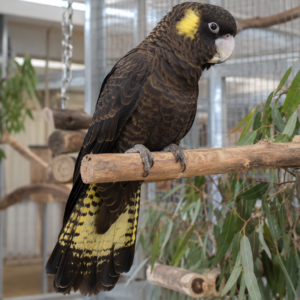
Black Palm Cockatoo vs Yellow Tailed Black Cockatoo
Both species have dark plumage but look very different.
Black Palm Cockatoo
- Massive black bill
- Crimson bare cheeks
- Long black crest
- Approximately 20–25 inches
- 910–1,200 g
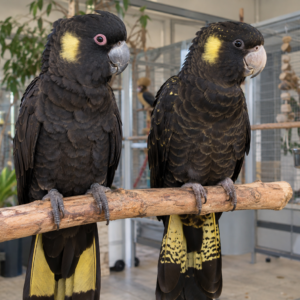
Yellow Tailed Black Cockatoo
- Yellow ear patches
- Broad yellow tail panels
- Smaller bill
- Approximately 26 inches
- 750–900 g
The crimson face and enormous bill make the Palm Cockatoo immediately identifiable.
Black Palm Cockatoo vs Red Tailed Black Cockatoo
The two species also differ substantially.
Black Palm Cockatoo
- Red bare cheek patches
- Entirely dark tail
- Very large bill
- Long crest
Red Tailed Black Cockatoo
- Red or orange-red tail panels
- Different facial markings
- Smaller bill
- No prominent bare red cheek patch
The red areas occur on completely different parts of the birds.
Veterinary Care
An avian veterinarian should be identified before bringing home a Black Palm Cockatoo.
Routine examinations can help monitor:
- Body weight
- Body condition
- Plumage
- Beak condition
- Feet
- Nutrition
- Respiratory health
- General wellbeing
Because these birds may live for decades, preventive care should form part of the long-term ownership plan.
Preparing for Black Palm Cockatoo Ownership
Before choosing a black palm cockatoo for sale, suitable large-scale housing and long-term care arrangements should already be established.
A suitable setup should provide:
- Heavy-duty secure housing
- Large natural perches
- Extensive movement space
- Strong enrichment
- Safe chewing materials
- Foraging opportunities
- Bathing access
- Appropriate nutrition
- Avian veterinary support
The species’ size, exceptional bill strength, behavioural complexity, conservation status and potential 40–60 year lifespan should all be considered before ownership.
Why the Black Palm Cockatoo Is Distinctive
The Black Palm Cockatoo is one of the most distinctive cockatoos in the world.
Its combination of charcoal-black plumage, enormous beak, crimson cheeks and long dark crest gives it an appearance unlike white, pink or yellow-crested cockatoos.
Its unusual tool-assisted drumming behaviour and exceptionally slow reproductive rate further distinguish the species.
For buyers researching a black palm cockatoo for sale, documented captive origin, health, socialization, housing requirements and long-term veterinary planning should all be considered alongside the Black Palm Cockatoo price and total lifetime Black Palm Cockatoo cost.
Frequently Asked Questions
What is the scientific name of the Black Palm Cockatoo?
The scientific name is Probosciger aterrimus.
Is the Black Palm Cockatoo the same as the Palm Cockatoo?
Yes. Palm Cockatoo is the accepted common name for Probosciger aterrimus.
What is the Black Palm Cockatoo size?
Adults measure approximately 20–25 inches.
How much does a Black Palm Cockatoo weigh?
Adults weigh approximately 910–1,200 grams.
What is the Black Palm Cockatoo lifespan?
The reported Black Palm Cockatoo lifespan is approximately 40–60 years.
What is the Black Palm Cockatoo price?
The Black Palm Cockatoo price varies according to age, sex, captive origin, documentation, health, socialization, location and legal availability.
What does a Black Palm Cockatoo cost to keep?
Long-term Black Palm Cockatoo cost includes large housing, appropriate food, enrichment, replacement equipment and avian veterinary care in addition to the initial purchase price.
What colour is a Black Palm Cockatoo?
Adults are black to charcoal grey with bright crimson bare cheek patches.
How can you tell a male from a female Black Palm Cockatoo?
The sexes look similar, although males generally have larger bills. DNA testing or breeder documentation is preferable when confirmed sex is required.
Do Black Palm Cockatoos really drum?
Yes. Wild Palm Cockatoos have been documented preparing sticks or branches and striking them against surfaces during display behaviour.
How much space does a Black Palm Cockatoo need?
Professional avicultural guidance recommends a walk-in aviary with a minimum length of approximately 23 feet.
Are Black Palm Cockatoos endangered?
The species is currently classified as Near Threatened and listed under CITES Appendix I, with the global population decreasing.
Be the first to review “Black Palm Cockatoo for Sale”
Related products

Cockatoo Parrots

Cockatoo Parrots


Cockatoo Parrots
Cockatoo Parrots


Cockatoo Parrots
Cockatoo Parrots
Cockatoo Parrots


Cockatoo Parrots
Reviews
There are no reviews yet.