


Dusky-Headed Parakeet

Original price was: $1,500.00.$1,200.00Current price is: $1,200.00.
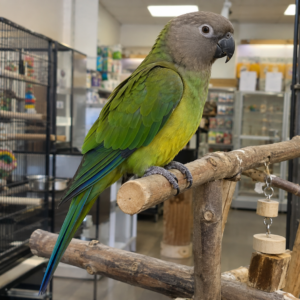
Male and female Dusky-Headed Parakeets are represented in this listing. Scientifically known as Aratinga weddellii, this South American conure is recognized for its soft brown-grey head, predominantly green body, yellow-green underparts, pale eye ring and long green tail tipped with blue. Adults reach approximately 11 inches and generally weigh around 95–115 grams. Dusky-Headed Parakeets are active, social parrots that require appropriate flight space, balanced nutrition, enrichment, bathing opportunities and routine avian veterinary care.
Dusky-Headed Parakeet – Male & Female
The Dusky-Headed Parakeet is a medium-small South American conure distinguished by its understated brown-grey head and predominantly green body.
Scientifically classified as Aratinga weddellii, this species is also commonly known as the Dusky-headed Conure, Dusky Conure and Weddell’s Conure.
Adults reach approximately 28 cm, or 11 inches, and usually weigh between 95 and 115 grams.
Unlike conures with intensely red, yellow or orange heads, the Dusky-Headed Parakeet has a more subtle colour palette. Its grey-brown head, green body and blue-tipped tail create an appearance that is particularly easy to recognize once the species is familiar.
Dusky-Headed Parakeet Details
- Common Name: Dusky-Headed Parakeet
- Alternative Names: Dusky-headed Conure, Dusky Conure, Weddell’s Conure
- Scientific Name: Aratinga weddellii
- Bird Type: Conure
- Sex Represented: Male and Female
- Adult Size: Approximately 11 inches
- Adult Weight: Approximately 95–115 g
- Primary Colours: Green, grey-brown, yellow-green and blue
- Natural Region: South America
- Beak Colour: Black
- Eye Ring: Bare white
- Eye Colour: Pale yellow in adults
What Does a Dusky-Headed Parakeet Look Like?
The adult Dusky-Headed Parakeet is generally green across the body.
The head is brown-grey, with individual feathers ending in dull grey-blue tips. This creates the soft, dusky appearance responsible for the species’ common name.
The underparts are yellow-green rather than the deeper green seen across much of the back and wings.
The tail is predominantly green with a broad blue tip.
Adults have a black beak, a clearly visible bare white eye ring and pale yellow eyes.
This combination of a muted head and brighter green body separates the species visually from many other conures.
Male and Female Dusky-Headed Parakeets
Male and female Dusky-Headed Parakeets look very similar externally.
There is no dramatic difference in plumage between mature males and females.
Where confirmed sex is important, professional DNA testing or appropriate breeder documentation is preferable to visual estimation.
Individual personality should also not be predicted purely from sex.
Factors influencing behaviour can include:
- Age
- Handling history
- Socialization
- Previous environment
- Daily routine
- Individual temperament
Dusky-Headed Parakeet Size
The adult Dusky-Headed Parakeet reaches approximately 11 inches in total length.
Adults typically weigh around 95–115 grams.
The species has a relatively lightweight body combined with a long conure-style tail.
Even though the bird is substantially smaller than large parrots, housing should still provide enough room for:
- Wing stretching
- Climbing
- Movement between perches
- Exercise
- Foraging
- Bathing
- Exploration
Body size alone should never be used to justify cramped housing.
Dusky-Headed Parakeet Personality
Dusky-Headed Parakeets are naturally social birds.
Wild individuals frequently occur in pairs, family groups or flocks, and captive birds likewise benefit from appropriate social and environmental stimulation.
A suitable daily routine can include opportunities for:
- Foraging
- Climbing
- Safe chewing
- Training
- Bathing
- Playing
- Social interaction
Individual birds can differ substantially in confidence and handling tolerance.
A calm bird should be allowed to approach interaction gradually rather than being forced.
Dusky-Headed Parakeet Sounds
The species is vocal.
Wild Dusky-Headed Parakeets often produce calls consisting of four or five notes in a continuous shriek, particularly when multiple members of a flock call together.
They may also produce softer social calls while interacting.
Potential owners should therefore expect normal parrot vocalization rather than choosing this species under the assumption that it will remain consistently quiet.
Housing a Dusky-Headed Parakeet
Suitable housing should prioritize usable movement space.
The enclosure should provide:
- Natural wooden perches
- Different perch diameters
- Horizontal movement room
- Safe climbing structures
- Feeding and water stations
- Foraging activities
- Chewing materials
- Bathing access
The tail should be able to remain clear of cage walls during normal movement.
The enclosure should also not be overloaded with toys to the point that movement becomes difficult.
Enrichment and Daily Activity
Environmental enrichment is an important part of long-term parrot care.
Suitable options can include:
- Natural branches
- Wooden chew toys
- Swings
- Ladders
- Climbing ropes
- Puzzle toys
- Foraging toys
- Bathing dishes
- Foot toys
Food can also be presented through safe foraging activities rather than always being placed in an open bowl.
Changing the placement of suitable enrichment occasionally can help keep the bird’s environment engaging.
Dusky-Headed Parakeet Diet
A nutritionally balanced feeding plan is important.
Suitable captive diets may combine appropriate formulated parrot food with vegetables and moderate portions of suitable fruit.
Fresh foods can include:
- Carrots
- Bell peppers
- Peas
- Green beans
- Fresh corn
- Leafy greens
- Apple
- Pear
- Papaya
- Berries
- Pomegranate
Appropriately prepared legumes may also be incorporated.
The exact feeding plan should be adapted to the individual bird’s age, body condition, activity level and veterinary recommendations.
Fresh Foods and Foraging
Fresh foods can provide both nutritional and behavioural variety.
Produce should be washed before serving.
Food presentation can also be used as enrichment.
For example, appropriate foods can be placed inside safe foraging toys or offered in several locations so the bird spends more time searching and manipulating food.
This helps recreate some of the activity associated with natural feeding behaviour.
Natural Range of the Dusky-Headed Parakeet
The Dusky-Headed Parakeet is native to South America.
Its range extends through portions of the western Amazon Basin and neighbouring regions.
Populations occur in areas associated with countries including:
- Peru
- Bolivia
- Brazil
- Colombia
- Ecuador
The species occupies tropical environments associated with rivers, forests and open woodland.
Natural Habitat
Dusky-Headed Parakeets inhabit several habitat types.
These can include:
- Humid tropical forest
- Forest edges
- Riverine woodland
- Secondary vegetation
- Palm-rich environments
- Open woodland
The species can adapt to a range of environments where suitable feeding and nesting opportunities remain available.
Wild Behaviour
Wild Dusky-Headed Parakeets are highly social.
Birds may occur in pairs during breeding periods and larger groups at other times.
Flocks travel between feeding locations while maintaining contact through vocal calls.
Daily behaviour naturally includes:
- Flying
- Foraging
- Socializing
- Preening
- Resting
- Exploring vegetation
Captive environments should provide appropriate opportunities for several of these behaviours.
Dusky-Headed Parakeet Nesting
One particularly interesting fact about the Dusky-Headed Parakeet is that it can use several types of nesting locations.
Wild birds have been recorded nesting in:
- Tree cavities
- Old woodpecker holes
- Arboreal termite nests
This flexibility distinguishes the species from parrots that rely heavily on one particular type of nesting cavity.
Captive breeding still requires appropriate knowledge of nutrition, health screening, pair compatibility and chick development.
Juvenile Dusky-Headed Parakeets
Young birds differ slightly from mature adults.
Juveniles generally have:
- Greener heads
- Less grey colouring
- Darker green underparts
- Reduced yellow colouring
- Narrower eye rings
- Brown eyes
As the bird matures, the head becomes greyer and the adult pale-yellow eye colour develops.
Dusky-Headed Parakeet vs Green Cheek Conure
These species are both relatively compact South American conures, but their appearance differs considerably.
Dusky-Headed Parakeet
- Approximately 11 inches
- 95–115 g
- Grey-brown head
- Green body
- Blue-tipped green tail
- Black beak
Green Cheek Conure
- Approximately 10 inches
- Roughly 60–80 g
- Brownish crown
- Bright green cheeks
- Scalloped breast
- Maroon or brown-red tail
The Dusky-Headed Parakeet is generally larger and has a much more uniformly grey-brown head.
Dusky-Headed Parakeet vs Black Capped Conure
The two species can also be separated easily by their head patterns.
Dusky-Headed Parakeet
- Brown-grey head
- Green body
- Yellow-green underparts
- Green tail with blue tip
Black Capped Conure
- Black crown
- Green cheeks
- Strong scalloped breast
- Red wing markings
The Black Capped Conure has considerably stronger contrast around the crown and breast.
Responsible Parrot Ownership
Parrots require significantly more than food and an enclosure.
Long-term ownership involves providing:
- Appropriate housing
- Social interaction
- Mental stimulation
- Exercise
- Balanced nutrition
- Veterinary care
- Regular cleaning
- Safe environmental conditions
The World Parrot Trust notes that parrots can thrive in companion care when their physical, social and medical needs are understood and properly provided for.
Veterinary Care
An avian veterinarian should be identified before bringing home a Dusky-Headed Parakeet.
Routine examinations can help monitor:
- Body weight
- Body condition
- Plumage
- Beak
- Feet
- Nutrition
- Respiratory health
- General wellbeing
For professional companion-bird health and care information:
Association of Avian Veterinarians
Preparing for Dusky-Headed Parakeet Ownership
Before choosing a Dusky-Headed Parakeet, its environment should already be prepared.
A suitable setup should include:
- Secure housing
- Natural perches
- Horizontal movement space
- Safe climbing structures
- Chewable enrichment
- Foraging opportunities
- Bathing access
- Balanced nutrition
- Avian veterinary support
Potential owners should also consider daily interaction requirements and normal parrot vocalization.
Why the Dusky-Headed Parakeet Is Distinctive
The Dusky-Headed Parakeet offers a noticeably different appearance from the brighter conures commonly seen in aviculture.
Its brown-grey head contrasts softly with the green body, yellow-green underparts and blue-tipped tail.
At approximately 11 inches and 95–115 grams, it remains a relatively compact parrot while still requiring substantial movement, enrichment and social opportunities.
For prospective owners, individual health, age, socialization, captive origin and long-term husbandry needs should all be evaluated before bringing home a Dusky-Headed Parakeet.
Frequently Asked Questions
What is the scientific name of the Dusky-Headed Parakeet?
The scientific name is Aratinga weddellii.
Is the Dusky-Headed Parakeet also called the Dusky Conure?
Yes. Dusky-headed Conure, Dusky Conure and Weddell’s Conure are alternative common names.
How big is a Dusky-Headed Parakeet?
Adults reach approximately 11 inches in total length.
How much does a Dusky-Headed Parakeet weigh?
Adults generally weigh approximately 95–115 grams.
What colours does a Dusky-Headed Parakeet have?
Adults are mainly green with a brown-grey head, yellow-green underparts and a green tail tipped broadly with blue.
Can male and female Dusky-Headed Parakeets be distinguished visually?
Males and females look very similar externally. DNA testing or suitable breeder documentation is preferable when confirmed sex is required.
Are Dusky-Headed Parakeets vocal?
Yes. Wild birds produce repeated shrieking calls, particularly when members of a flock call together.
What does a Dusky-Headed Parakeet eat?
A managed companion diet can include appropriate formulated parrot food, vegetables, leafy greens, legumes and moderate amounts of suitable fruit.
Where does the Dusky-Headed Parakeet come from?
The species is native to portions of tropical South America, particularly areas of the western Amazon Basin.
Where do Dusky-Headed Parakeets nest?
Wild birds can nest in tree cavities, abandoned woodpecker holes and arboreal termite nests.
Where can I learn more about professional conure care?
The Association of Avian Veterinarians provides professional companion-bird information:
Be the first to review “Dusky-Headed Parakeet”
Related products

Conure Parrots
Conure Parrots

Conure Parrots

Conure Parrots

Conure Parrots

Conure Parrots
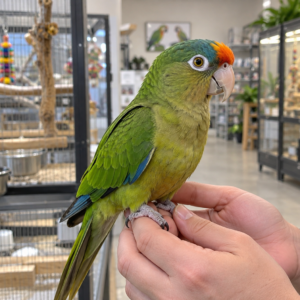
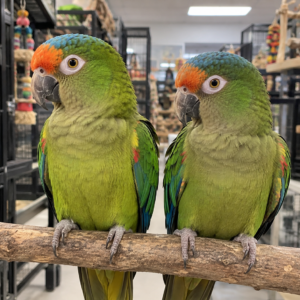
Conure Parrots
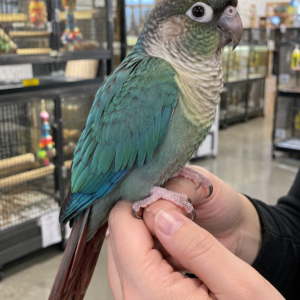
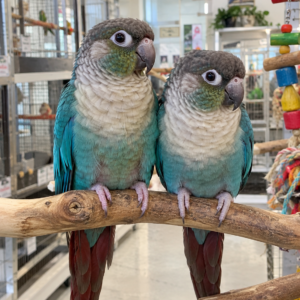
Conure Parrots
Reviews
There are no reviews yet.