



Blue Crowned Conure for Sale


$800.00
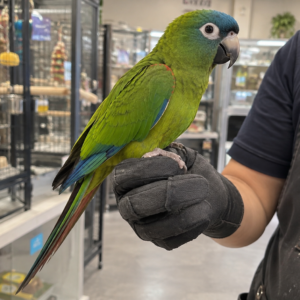
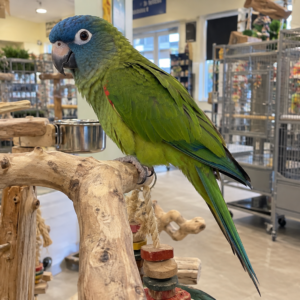
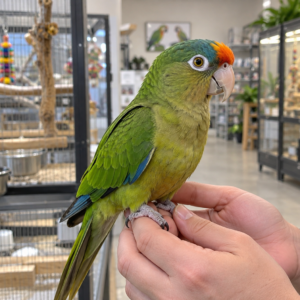
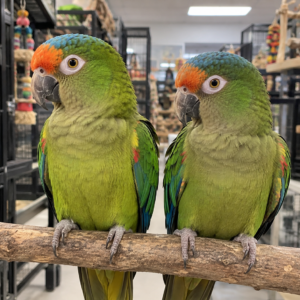
Male and female Blue Crowned Conures are represented in this listing. Scientifically known as Thectocercus acuticaudatus, this medium-sized South American conure is recognized for its predominantly green body, distinctive blue forehead and crown, pale eye ring and long tapered tail. Adults reach approximately 14.4 inches and weigh around 165 grams. With a reported Blue Crowned Conure lifespan of approximately 30–40 years, these parrots require suitable housing, balanced nutrition, regular enrichment and long-term avian veterinary care.
Blue Crowned Conure for Sale – Male & Female
For buyers researching a blue crowned conure for sale, the Blue Crowned Conure is a medium-sized, long-tailed parrot recognized for its green body and contrasting blue head.
Scientifically classified as Thectocercus acuticaudatus, it is also commonly known as the Blue-crowned Parakeet and Sharp-tailed Conure.
One particularly interesting taxonomic fact is that the Blue Crowned Conure is the only species currently placed in the genus Thectocercus.
Adults reach approximately 14.4 inches in total length and weigh around 165 grams.
Its size places it above smaller Pyrrhura conures such as the Green Cheek and Black Capped Conure while remaining considerably smaller than large macaws and Amazon parrots.
Blue Crowned Conure Details
- Common Name: Blue Crowned Conure
- Alternative Names: Blue-crowned Parakeet, Sharp-tailed Conure
- Scientific Name: Thectocercus acuticaudatus
- Bird Type: Conure
- Sex Represented: Male and Female
- Adult Size: Approximately 14.4 inches
- Adult Weight: Approximately 165 g
- Reported Lifespan: Approximately 30–40 years
- Primary Colours: Green and blue
- Natural Region: South America
- Conservation Status: Least Concern
- CITES Listing: Appendix II
Five recognized subspecies are generally listed, and the amount of blue on the head and body can vary somewhat between them.
What Does a Blue Crowned Conure Look Like?
The adult Blue Crowned Conure is predominantly green.
Its most recognizable feature is the dull to rich blue colouring extending from the forehead across portions of the crown, cheeks and ear area.
Depending on the subspecies, the blue may extend farther toward the back of the head and may also create a slight blue wash across parts of the breast.
The tail is mainly green on the upper surface but can show brown-red colouring underneath, with lighter yellow or olive tips.
The upper beak is horn-coloured with a grey tip, while the lower mandible is darker grey-brown.
A pale cream-coloured bare eye ring surrounds orange eyes in mature birds.
The overall effect is an elegant green conure with a contrasting blue head rather than a heavily multicoloured parrot.
Male and Female Blue Crowned Conures
Male and female Blue Crowned Conures look very similar externally.
There is no reliable plumage feature that allows every adult male to be distinguished visually from every adult female.
Where confirmed sex matters, appropriate breeder documentation or DNA testing is preferable.
Individual temperament should also not be predicted solely from sex.
Behaviour can be influenced by:
- Age
- Socialization
- Handling history
- Environment
- Previous experience
- Daily routine
Blue Crowned Conure Size
The typical Blue Crowned Conure size is approximately 14.4 inches in total length.
Adults weigh around 165 grams.
A significant portion of the bird’s length comes from its long, tapered tail.
Housing therefore needs to provide enough room for the bird to turn, climb and stretch its wings without repeatedly brushing its tail against enclosure walls.
This species also benefits from horizontal movement space rather than simply having a tall but narrow cage.
Blue Crowned Conure Lifespan
The reported Blue Crowned Conure lifespan is approximately 30–40 years under suitable captive care.
This makes ownership a substantial long-term commitment.
Actual longevity can vary according to:
- Genetics
- Nutrition
- Veterinary care
- Exercise
- Body condition
- Environmental safety
- Housing
- Daily enrichment
Anyone considering a Blue Crowned Conure should therefore plan for decades of care rather than focusing only on the initial purchase.
Blue Crowned Conure Price
The Blue Crowned Conure price varies according to the individual bird and current availability.
Factors that may influence pricing include:
- Age
- Sex
- Socialization
- Handling history
- Health information
- Documentation
- Geographic location
- Breeder availability
Because no exact selling price has been provided for this listing, the live product page should display your actual current price rather than inserting an unsupported generic estimate.
Long-term expenses should also be considered, including housing, food, replacement toys, enrichment and veterinary care.
Blue Crowned Conure Personality
Blue Crowned Conures are active, intelligent parrots.
They benefit from regular interaction but also need opportunities to occupy themselves through safe enrichment.
A suitable daily routine can include:
- Foraging
- Climbing
- Training
- Exploring
- Chewing
- Bathing
- Social interaction
Individual personality varies considerably.
Some birds may become confident and interactive quickly, while others may require more gradual socialization.
Are Blue Crowned Conures Loud?
Yes.
Blue Crowned Conures are naturally vocal birds.
Their flight calls are described as loud and repetitive.
They can also produce:
- Babbling sounds
- Musical notes
- Contact calls
- Excited vocalizations
- Alarm calls
Potential owners should therefore consider household noise tolerance before acquiring the species.
They should not be marketed as silent parrots.
Housing a Blue Crowned Conure
Adequate movement space is important.
Professional avicultural guidance recommends an aviary or suspended enclosure with a minimum length of approximately 9.8 feet.
A suitable companion environment should provide:
- Natural wooden perches
- Several perch diameters
- Horizontal movement space
- Climbing opportunities
- Safe feeding stations
- Chewable enrichment
- Foraging activities
- Bathing access
The enclosure should not be overcrowded with toys to the point that movement becomes restricted.
Enrichment for a Blue Crowned Conure
Blue Crowned Conures benefit from regular environmental enrichment.
Suitable options include:
- Ladders
- Swings
- Puzzle toys
- Foraging toys
- Bird-safe chew toys
- Natural branches
- Climbing ropes
- Bathing opportunities
- Social interaction
Foraging toys are particularly useful because they encourage the bird to work for some of its food rather than receiving every meal in an open bowl.
Blue Crowned Conure Diet
A varied feeding program is important for long-term health.
A managed captive diet can include appropriate formulated parrot food together with suitable vegetables and moderate portions of fruit.
Fresh foods may include:
- Apple
- Orange
- Banana
- Carrot
- Celery
- Green beans
- Peas
- Fresh corn
Cooked beans and pulses may also be incorporated appropriately.
Seeds such as sunflower can be included in controlled amounts, but a seed-heavy diet should not automatically be treated as nutritionally complete.
Diet should be adjusted according to the bird’s age, weight, health and veterinary recommendations.
Natural Range of the Blue Crowned Conure
The Blue Crowned Conure occurs across a broad portion of South America.
Depending on subspecies, populations occur in countries including:
- Brazil
- Bolivia
- Paraguay
- Argentina
- Uruguay
- Venezuela
- Colombia
Different populations occupy different ecological regions, which helps explain some variation in size and plumage.
Natural Habitat
Blue Crowned Conures use a variety of open and semi-open environments.
Habitats can include:
- Dry woodland
- Savanna
- Scrub
- Gallery forest
- Forest edges
- Agricultural landscapes
- Semi-open countryside
They are generally less dependent on dense rainforest than some other South American parrots.
Wild Behaviour
Wild Blue Crowned Conures are social.
They may travel in pairs, family groups or larger flocks depending on season and food availability.
Their loud calls help flock members maintain contact while moving between feeding and roosting areas.
Much of their natural daily activity involves:
- Flying
- Foraging
- Socializing
- Resting
- Exploring vegetation
Captive environments should provide appropriate opportunities for movement and behavioural stimulation.
Blue Crowned Conure Breeding
Blue Crowned Conures are cavity-nesting parrots.
A typical clutch contains approximately three eggs, with young generally fledging at around seven to eight weeks.
Responsible captive breeding requires knowledge of:
- Pair compatibility
- Genetics
- Nutrition
- Health screening
- Nest management
- Chick development
- Weaning
Simply housing a male and female together should not automatically be treated as a complete breeding setup.
Blue Crowned Conure Conservation
The Blue Crowned Conure is currently classified as Least Concern and is listed under CITES Appendix II.
Responsible sourcing remains important even for species that are not currently considered globally threatened.
Buyers should favour legitimately captive-bred birds with appropriate origin information.
Blue Crowned Conure vs Green Cheek Conure
The Blue Crowned Conure and Green Cheek Conure differ significantly in size and appearance.
Blue Crowned Conure
- Approximately 14.4 inches
- Around 165 g
- Blue forehead and crown
- Predominantly green body
- Long tapered tail
Green Cheek Conure
- Approximately 10 inches
- Around 60–80 g
- Brownish crown
- Green cheeks
- Scalloped breast
- Dark red or maroon tail
The Blue Crowned Conure is therefore considerably larger and has much more obvious blue colouring around the head.
Blue Crowned Conure vs Black Capped Conure
The Blue Crowned and Black Capped Conure can also be separated easily by head colour.
Blue Crowned Conure
- Blue forehead and crown
- Larger body
- Approximately 14.4 inches
- Around 165 g
Black Capped Conure
- Black crown
- Green cheeks
- Heavily scalloped chest
- Approximately 9.75 inches
- Around 70 g
The Blue Crowned Conure is both longer and substantially heavier.
Juvenile Blue Crowned Conures
Young birds generally have less blue than mature adults.
Juveniles may show:
- Blue confined mainly to the forehead
- Greener cheeks and head
- No strong blue wash across the breast
- Shorter tail
- Brown rather than orange eyes
The adult colour pattern becomes more developed as the bird matures.
Veterinary Care
An avian veterinarian should be identified before bringing home a Blue Crowned Conure.
Routine examinations can help monitor:
- Body weight
- Plumage
- Beak
- Feet
- Nutrition
- Respiratory health
- Activity
- General condition
Because a Blue Crowned Conure may live for several decades, preventive care is an important part of responsible ownership.
For professional companion-bird care information:
Association of Avian Veterinarians
Preparing for Blue Crowned Conure Ownership
Before choosing a blue crowned conure for sale, the bird’s environment should already be prepared.
A suitable setup should include:
- Secure housing
- Adequate movement space
- Natural perches
- Climbing areas
- Chewable enrichment
- Foraging opportunities
- Bathing access
- Balanced nutrition
- Avian veterinary support
Owners should also consider daily interaction, noise and the bird’s potential 30–40 year lifespan.
Why the Blue Crowned Conure Is Distinctive
The Blue Crowned Conure combines a streamlined conure body with one of the most recognizable head patterns in the group.
Its blue forehead, crown and cheeks stand out against a predominantly green body, while the long tapered tail creates a more substantial profile than smaller conures.
For buyers researching a blue crowned conure for sale, age, sex, socialization, health, housing requirements and long-term care should all be considered alongside the Blue Crowned Conure price.
Frequently Asked Questions
What is the scientific name of the Blue Crowned Conure?
The scientific name is Thectocercus acuticaudatus.
How big is a Blue Crowned Conure?
The typical Blue Crowned Conure size is approximately 14.4 inches.
How much does a Blue Crowned Conure weigh?
Adults weigh approximately 165 grams.
What is the Blue Crowned Conure lifespan?
The reported Blue Crowned Conure lifespan is approximately 30–40 years under suitable captive care.
What is the Blue Crowned Conure price?
The Blue Crowned Conure price varies according to age, sex, socialization, health, documentation, geographic location and availability. The actual selling price should be displayed directly on the product page.
What colours does a Blue Crowned Conure have?
Adults are mainly green with blue across the forehead, crown, cheeks and portions of the head and neck.
Can male and female Blue Crowned Conures be distinguished visually?
Males and females look similar externally. DNA testing or reliable breeder documentation is preferable when confirmed sex is required.
Are Blue Crowned Conures loud?
Yes. Their natural calls can be loud and repetitive, although they can also produce babbling and musical vocalizations.
What does a Blue Crowned Conure eat?
A managed diet can include appropriate formulated parrot food, vegetables, legumes and moderate amounts of suitable fruit.
How much flight space does a Blue Crowned Conure need?
Professional avicultural guidance commonly recommends an enclosure approximately 9.8 feet long.
Where can I learn more about professional conure care?
The Association of Avian Veterinarians provides professional companion-bird care information:
Be the first to review “Blue Crowned Conure for Sale”
Related products
Conure Parrots


Conure Parrots

Conure Parrots

Conure Parrots
Conure Parrots

Conure Parrots
Conure Parrots

Conure Parrots
Reviews
There are no reviews yet.