




Green Cheek Conure for Sale


$650.00
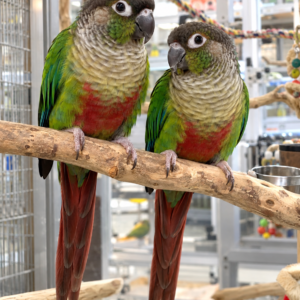
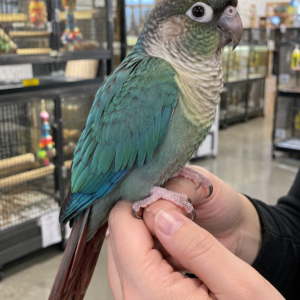
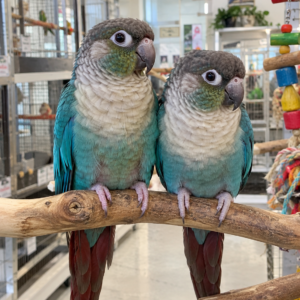
Male and female Green Cheek Conures are represented in this listing. Scientifically known as Pyrrhura molinae, this compact South American parrot is recognized for its bright green cheeks, brown crown, scalloped chest, red abdominal colouring and long maroon-red tail. Adults reach approximately 10.1 inches and generally weigh around 60–80 grams. Green Cheek Conures are active companion parrots that require appropriate housing, regular enrichment, a balanced diet, bathing opportunities and routine avian veterinary care.
Green Cheek Conure for Sale – Male & Female
For buyers researching a green cheek conure for sale, the Green Cheek Conure is a compact member of the Pyrrhura group recognized for its green cheeks, patterned chest and long reddish tail.
Scientifically classified as Pyrrhura molinae, the species is also commonly called the Green-cheeked Parakeet.
Adults reach approximately 10.1 inches in total length and generally weigh around 60–80 grams.
The natural form combines several understated colours rather than one dominant bright shade. Captive breeding has also produced several well-known colour forms, including birds commonly described as pineapple, yellow sided and turquoise Green Cheek Conures.
Green Cheek Conure Details
- Common Name: Green Cheek Conure
- Scientific Name: Pyrrhura molinae
- Bird Type: South American Conure
- Sex Represented: Male and Female
- Adult Size: Approximately 10.1 inches
- Adult Weight: Approximately 60–80 g
- Natural Colours: Green, brown, grey, cream and red
- Natural Range: South America
- Recognized Subspecies: Six
- Captive Status: Fairly common
What Does a Green Cheek Conure Look Like?
The natural Green Cheek Conure has a brown crown extending toward the back of the head.
As its name suggests, the cheeks are bright green.
The chest is pale brown and patterned with grey-white or muted yellow barring. Darker feather tips create the characteristic scalloped appearance associated with Pyrrhura conures.
A brown-red patch is visible across the abdomen.
Blue feathers may appear around the hindneck, sometimes creating the appearance of a faint collar.
The tail is primarily brown-red with blue colouring near the tips.
This combination makes the natural Green Cheek visually distinct from brighter yellow or orange conure species.
Male and Female Green Cheek Conures
Male and female Green Cheek Conures look very similar externally.
There is no reliable adult plumage feature that consistently separates males from females.
Where confirmed sex is required, DNA testing or appropriate breeder documentation is preferable.
Individual temperament should also be evaluated separately from sex.
Behaviour can be influenced by:
- Age
- Socialization
- Handling history
- Environment
- Daily routine
- Previous experiences
Green Cheek Conure Size
The typical adult Green Cheek Conure measures approximately 10.1 inches.
Adults generally weigh around 60–80 grams.
Despite their compact body, these birds remain active and require sufficient room for normal movement.
Suitable housing should allow:
- Full wing stretching
- Movement between perches
- Climbing
- Foraging
- Bathing
- Exercise
- Safe play
Professional avicultural guidance commonly recommends an enclosure approximately 6.5 feet in length where dedicated flight housing is being provided.
Green Cheek Conure Lifespan
People researching green cheek conure lifespan should prepare for a long-term commitment.
Published longevity figures vary, and individual lifespan depends heavily on genetics, nutrition, housing, veterinary care and overall husbandry.
Factors that can influence longevity include:
- Balanced nutrition
- Regular exercise
- Appropriate body weight
- Routine veterinary care
- Safe housing
- Mental enrichment
- Environmental quality
Rather than treating any lifespan figure as a guarantee, prospective owners should plan for many years of care.
Green Cheek Conure Price
The green cheek conure price can vary significantly.
Factors that may influence price include:
- Age
- Sex
- Colour mutation
- Socialization
- Handling history
- Health information
- Documentation
- Geographic location
- Current availability
Certain captive colour mutations may also be priced differently from the natural form.
Because no exact selling price has been supplied for this listing, the actual product price should be displayed directly rather than inserting an unsupported market estimate.
Green Cheek Conure Colors
Natural green cheek conure colors include green, brown, grey, cream, blue and red.
Selective captive breeding has produced additional colour varieties.
Commonly discussed forms include:
- Natural or wild type
- Pineapple
- Yellow sided
- Turquoise
- Cinnamon
- Combination mutations
Mutation terminology should only be applied when the bird’s colour genetics or breeding history are properly identified.
A bird should not be labelled as a particular mutation solely because it looks similar in photographs.
Pineapple Green Cheek Conure
The pineapple green cheek conure is one of the best-known captive colour forms.
Pineapple birds typically display a warmer overall appearance than the natural form, often combining yellow and red across the chest and abdomen with lighter head colouring.
The pineapple appearance results from established mutation genetics rather than representing a separate species.
A Pineapple Green Cheek Conure remains Pyrrhura molinae.
If you offer confirmed pineapple birds, a dedicated product page can target this keyword more precisely.
Yellow Sided Green Cheek Conure
The yellow sided green cheek conure is another established captive colour form.
Compared with the natural Green Cheek, yellow-sided birds generally display stronger yellow and red colouring through portions of the chest and abdomen.
The exact appearance can vary between individuals.
The term should only be used where the bird’s mutation is properly identified.
Turquoise Green Cheek Conure
The turquoise green cheek conure has a cooler colour palette than the natural form.
Turquoise birds may display increased blue-green or turquoise colouring with reduced warm red or yellow tones across some areas.
Like pineapple and yellow-sided birds, the turquoise form is still the same Green Cheek Conure species.
Colour mutation does not create a separate species.
Green Cheek Conure Care
Good green cheek conure care requires more than feeding the bird and providing a cage.
Daily husbandry should address:
- Nutrition
- Exercise
- Social interaction
- Enrichment
- Bathing
- Sleep
- Housing cleanliness
- Veterinary care
Owners should also provide opportunities for natural behaviours such as climbing, chewing and foraging.
The environment should be structured so the bird has both activity areas and comfortable resting locations.
Green Cheek Conure Diet
A suitable green cheek conure diet should provide nutritional variety.
Professional avicultural references describe diets containing suitable fruits, vegetables, leafy greens, legumes, controlled seed mixtures and complete formulated foods.
Fresh foods may include:
- Apple
- Pear
- Banana
- Pomegranate
- Carrot
- Celery
- Green beans
- Peas
- Fresh corn
- Swiss chard
- Dandelion greens
Cooked beans and pulses may also be incorporated appropriately.
Individual dietary requirements should be adjusted according to the bird’s health, weight and veterinary guidance.
Fruit in a Green Cheek Conure Diet
Fruit can be included as part of a varied diet.
Suitable options can include:
- Apple
- Pear
- Banana
- Pomegranate
Fresh produce should be washed thoroughly before serving.
Fruit should remain part of a balanced feeding program rather than becoming the entire fresh-food portion of the diet.
Vegetables and leafy greens should also be incorporated appropriately.
Foraging and Feeding Enrichment
Food does not always need to be presented in a simple bowl.
Safe foraging activities can encourage a Green Cheek Conure to:
- Search
- Climb
- Manipulate objects
- Solve simple problems
- Spend more time obtaining food
Foraging provides both physical activity and mental stimulation.
The Association of Avian Veterinarians includes nutritional and behavioural enrichment among the major enrichment categories for companion birds.
Bathing
Green Cheek Conures are known as enthusiastic bathers.
Fresh bathing water should be offered regularly.
Depending on individual preference, birds may enjoy:
- A shallow bathing bowl
- A suitable bird bath
- Gentle misting
Bathing supports normal feather maintenance and also provides behavioural enrichment.
Housing a Green Cheek Conure
Suitable housing should prioritize movement.
The enclosure should include:
- Natural wooden perches
- Different perch diameters
- Climbing opportunities
- Feeding stations
- Fresh water
- Safe chewing materials
- Foraging toys
- Bathing access
Where aviary-style housing is used, approximately 6.5 feet of length is a professional reference point.
The enclosure should not be so crowded with toys that the bird cannot move comfortably.
Green Cheek Conure Enrichment
Green Cheek Conures are active birds and benefit from varied enrichment.
Suitable options include:
- Foraging toys
- Swings
- Ladders
- Bird-safe wooden toys
- Natural branches
- Safe leather toys
- Foot toys
- Climbing ropes
- Bathing opportunities
Toy condition should be checked regularly.
Damaged items should be repaired or replaced where they could create entanglement or ingestion hazards.
Green Cheek Conure Personality
Green Cheek Conures are social parrots.
Individual behaviour varies, so a single personality description should never be treated as universal.
A bird’s temperament can be influenced by:
- Early experiences
- Socialization
- Training
- Handling history
- Environment
- Daily routine
Regular, respectful interaction and positive training can help owners develop predictable routines with their birds.
Are Green Cheek Conures Vocal?
Yes.
Green Cheek Conures communicate through a variety of calls.
They can produce contact calls, excited vocalizations and sharper alarm sounds.
Noise level varies between individual birds.
Although they are smaller than many large parrots, they should not be marketed as silent companion birds.
Natural Range of the Green Cheek Conure
The Green Cheek Conure is native to South America.
Its natural range includes portions of:
- Bolivia
- Brazil
- Paraguay
- Argentina
Different subspecies occupy different parts of this broader region.
Natural Habitat
Wild Green Cheek Conures occur in several forest environments.
Habitats can include:
- Woodland
- Forest
- Forest edges
- Secondary vegetation
- Mountain and foothill environments
They spend substantial time moving through vegetation in search of food and suitable roosting locations.
Wild Green Cheek Conure Behaviour
Green Cheek Conures are naturally social.
Wild birds may travel in small flocks while foraging.
Normal activities include:
- Flying
- Searching for food
- Social interaction
- Preening
- Resting
- Exploring branches and vegetation
Captive care should provide appropriate opportunities for similar forms of physical and mental activity.
Green Cheek Conure Nesting
Green Cheek Conures naturally nest in cavities in mature trees.
Cavity nesting is typical of many conure species.
Captive breeding requires appropriate experience with:
- Pair compatibility
- Nutrition
- Genetics
- Veterinary screening
- Nest management
- Chick development
- Weaning
Simply housing a male and female together should not automatically be considered a complete breeding setup.
Green Cheek Conure vs Black Capped Conure
These species belong to the same genus and can look similar.
Green Cheek Conure
- Approximately 10.1 inches
- Approximately 60–80 g
- Brown crown
- Bright green cheeks
- Scalloped chest
- Brown-red tail
Black Capped Conure
- Approximately 9.75 inches
- Approximately 70 g
- Distinct black crown
- Green cheeks
- Dark scalloped chest
- Red wing markings
The crown is one of the easiest features for separating them.
Green Cheek Conure vs Sun Conure
These are dramatically different birds.
Green Cheek Conure
- Predominantly green
- Brown crown
- Scalloped chest
- Compact body
- Muted natural colouring
Sun Conure
- Extensive yellow and orange
- Red-orange facial colouring
- Green and blue wing feathers
- Much brighter overall appearance
The Green Cheek belongs to Pyrrhura, while the Sun Conure belongs to Aratinga.
Choosing Between Green Cheek Conure Colors
Colour preference should not replace evaluation of the individual bird.
Whether considering:
- Natural Green Cheek
- Pineapple Green Cheek
- Yellow Sided Green Cheek
- Turquoise Green Cheek
buyers should also consider:
- Health
- Age
- Socialization
- Documentation
- Individual temperament
- Long-term care requirements
Colour mutation does not eliminate the normal behavioural or husbandry needs of the species.
Veterinary Care
An avian veterinarian should be identified before bringing home a Green Cheek Conure.
Routine examinations can help monitor:
- Weight
- Body condition
- Plumage
- Beak
- Feet
- Nutrition
- Respiratory health
- General wellbeing
The Association of Avian Veterinarians recommends regular veterinary checkups for companion birds and provides resources covering diet, foraging, basic bird care and signs of illness.
Association of Avian Veterinarians
Preparing for Green Cheek Conure Ownership
Before choosing a green cheek conure for sale, the bird’s environment should already be prepared.
A suitable setup should provide:
- Secure housing
- Natural perches
- Adequate movement space
- Climbing opportunities
- Safe chewable materials
- Foraging activities
- Bathing access
- Balanced nutrition
- Avian veterinary support
The bird’s individual condition, socialization and history should be considered alongside colour and price.
Why the Green Cheek Conure Is Distinctive
The Green Cheek Conure combines a compact body with detailed natural colouring and a wide variety of established captive mutations.
Its green cheeks, patterned chest and red tail make the natural form readily recognizable, while pineapple, yellow sided and turquoise Green Cheek Conures provide additional colour variation within the same species.
For buyers researching a green cheek conure for sale, health, age, socialization, mutation identification, housing, diet and long-term veterinary care should all be evaluated alongside the Green Cheek Conure price.
Frequently Asked Questions
What is the scientific name of the Green Cheek Conure?
The scientific name is Pyrrhura molinae.
How big is a Green Cheek Conure?
Adults reach approximately 10.1 inches in overall length.
How much does a Green Cheek Conure weigh?
Adults generally weigh approximately 60–80 grams.
What is the Green Cheek Conure lifespan?
Green Cheek Conures can live for many years under appropriate captive care. Individual longevity varies with genetics, nutrition, veterinary care, housing and overall husbandry.
What is the Green Cheek Conure price?
The green cheek conure price varies according to age, sex, mutation, socialization, health, documentation, location and availability. The actual selling price should be displayed directly on the product listing.
What colours can Green Cheek Conures have?
The natural form combines green, brown, grey, cream, blue and red. Captive colour forms include pineapple, yellow sided, turquoise, cinnamon and combination mutations.
What is a Pineapple Green Cheek Conure?
The pineapple green cheek conure is a captive colour form generally displaying warmer yellow and red colouring than the natural Green Cheek.
What is a Yellow Sided Green Cheek Conure?
The yellow sided green cheek conure is a colour form characterized by increased yellow and red colouring through parts of the chest and abdomen.
What is a Turquoise Green Cheek Conure?
The turquoise green cheek conure is a captive colour form with cooler blue-green or turquoise colouring and reduced warm tones in some areas.
What should a Green Cheek Conure eat?
A suitable green cheek conure diet can include appropriate formulated food, vegetables, leafy greens, legumes and moderate portions of suitable fruit.
Do Green Cheek Conures like bathing?
Yes. Green Cheek Conures are known to be enthusiastic bathers, and fresh bathing water should be offered regularly.
Can male and female Green Cheek Conures be distinguished visually?
Males and females look similar externally. DNA testing or suitable breeder documentation is preferable where confirmed sex is required.
Where can I learn more about Green Cheek Conure care?
The Association of Avian Veterinarians provides professional companion-bird resources covering basic care, nutrition, foraging and veterinary health:
Be the first to review “Green Cheek Conure for Sale”
Related products

Conure Parrots

Conure Parrots
Conure Parrots
Conure Parrots


Conure Parrots

Conure Parrots

Conure Parrots
Conure Parrots
Reviews
There are no reviews yet.