
Turquoise Green Cheek Conure for Sale
$650.00
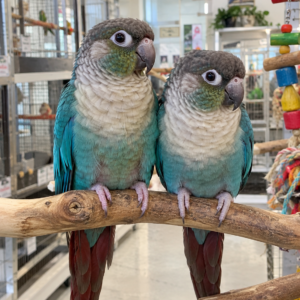
Male and female Turquoise Green Cheek Conures are represented in this listing. This colour mutation belongs to the Green-cheeked Conure species, Pyrrhura molinae, and is known for cooler blue-green and turquoise plumage compared with the natural form. Adults typically reach about 10 inches and generally weigh around 60–80 grams. Like other Green Cheek Conures, they require appropriate housing, regular enrichment, balanced nutrition, bathing opportunities and routine avian veterinary
Out of stock
Turquoise Green Cheek Conure for Sale – Male & Female
For buyers researching a turquoise green cheek conure for sale, the turquoise mutation offers a cooler colour palette than the natural Green Cheek Conure while retaining the same compact body shape and species characteristics.
The Turquoise Green Cheek Conure is not a separate species.
It remains Pyrrhura molinae, but selective captive breeding has produced birds with reduced warm yellow and red pigmentation and stronger blue-green or turquoise tones.
Depending on the individual bird and genetic combination, colouring can range from muted blue-green through deeper teal and turquoise shades.
Turquoise Green Cheek Conure Details
- Common Name: Turquoise Green Cheek Conure
- Species: Green-cheeked Conure
- Scientific Name: Pyrrhura molinae
- Bird Type: South American Conure
- Colour Type: Captive colour mutation
- Sex Represented: Male and Female
- Adult Size: Approximately 10 inches
- Adult Weight: Approximately 60–80 g
- Primary Colours: Turquoise, blue-green, green, grey and muted red
- Natural Species Range: South America
What Does a Turquoise Green Cheek Conure Look Like?
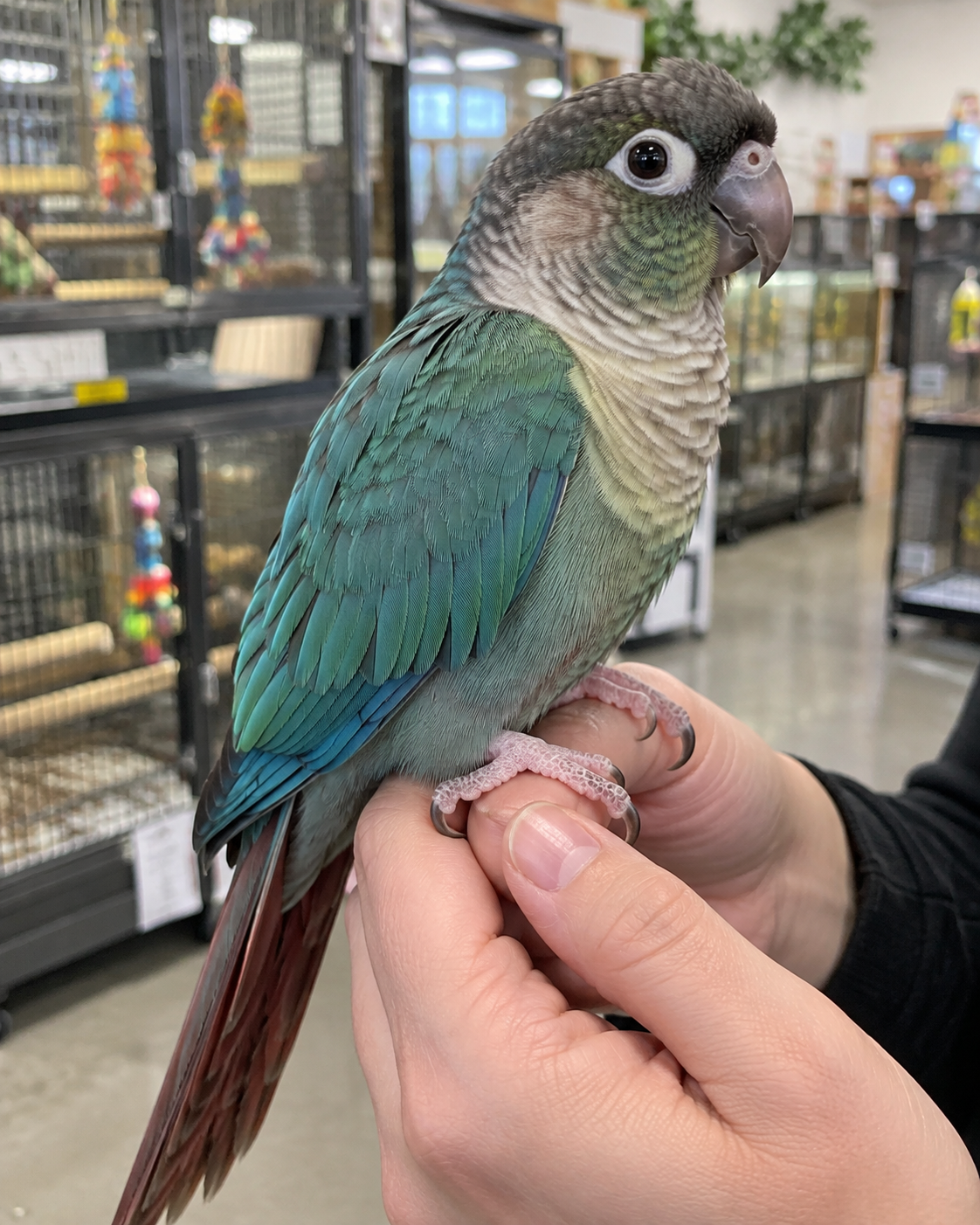
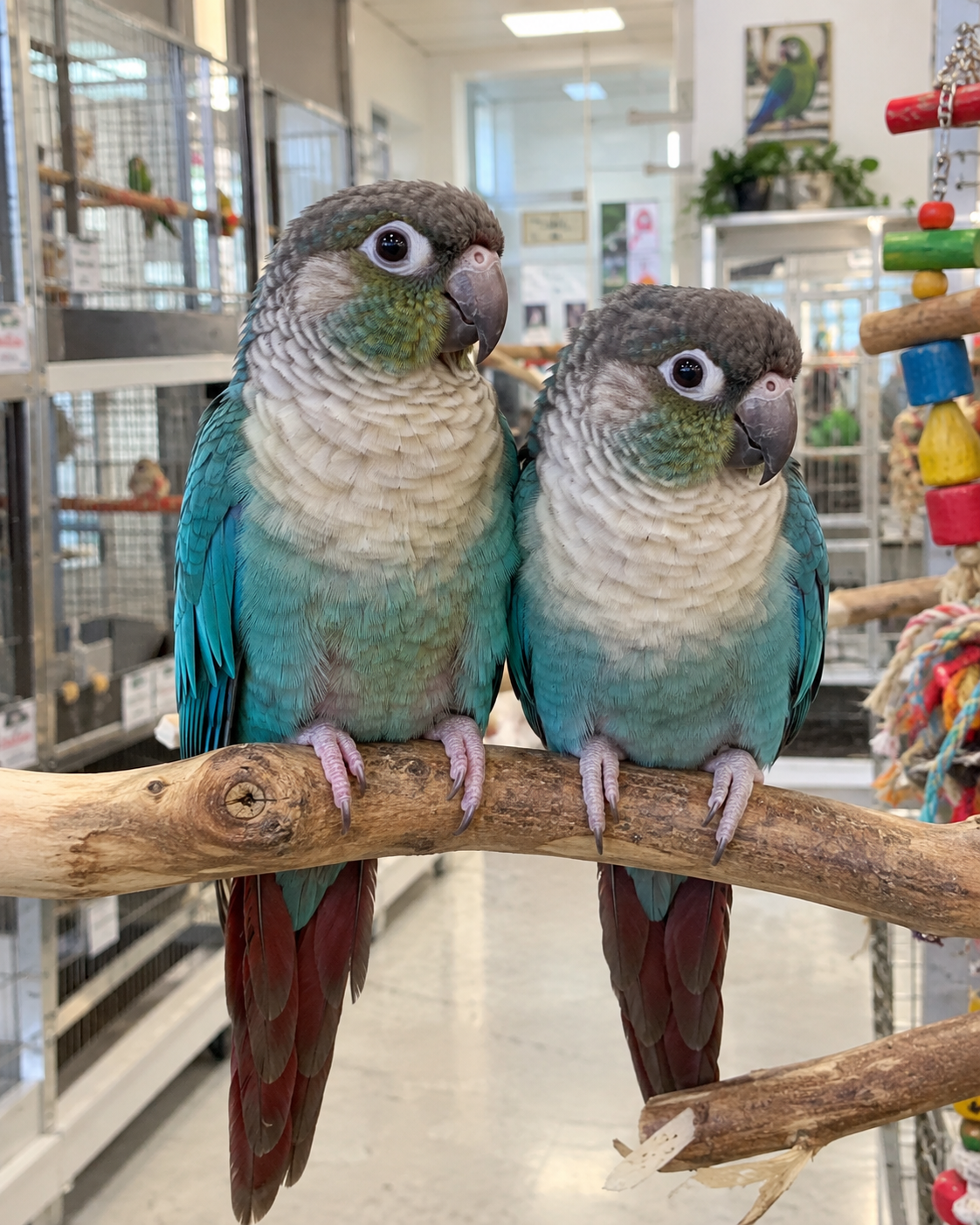
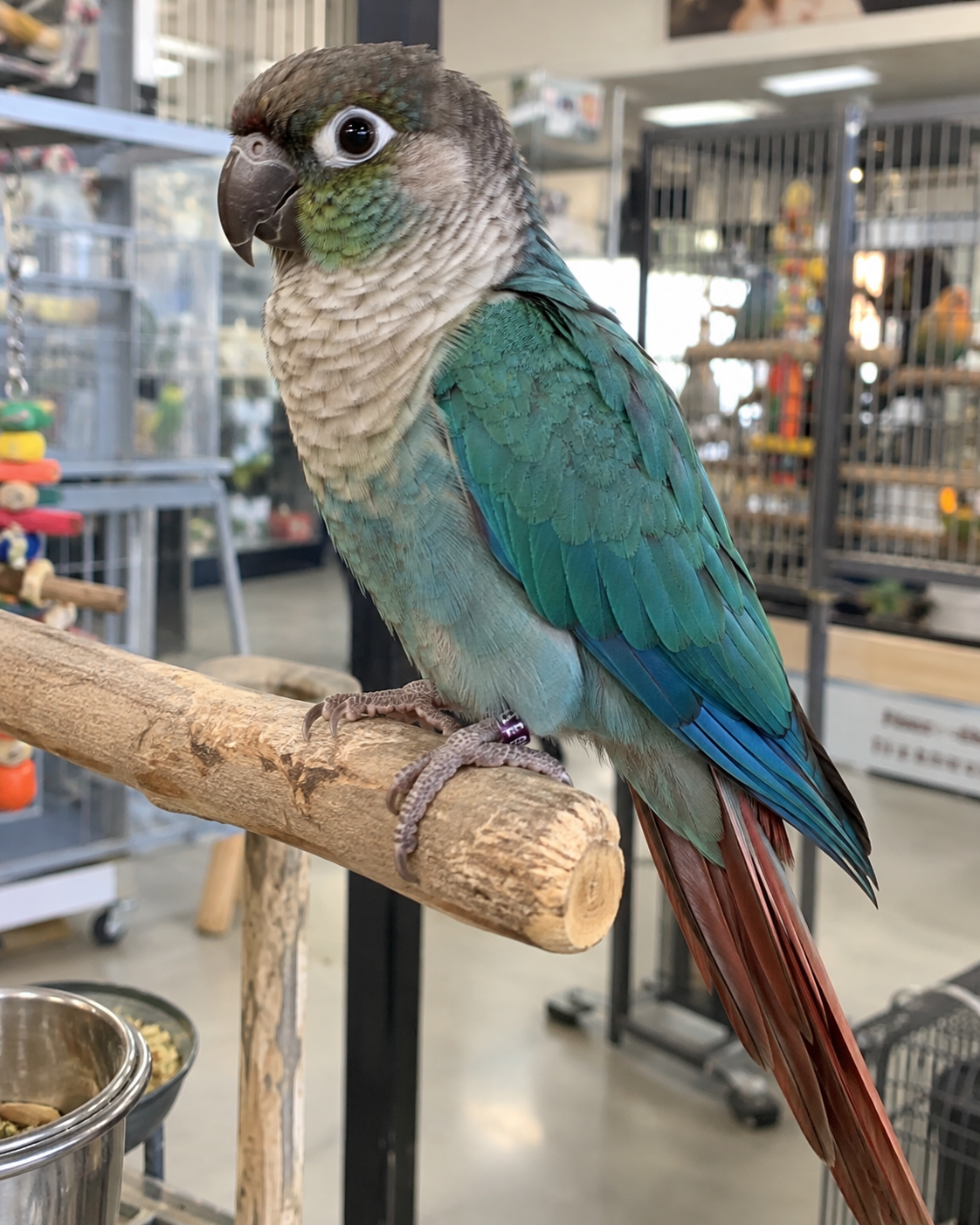
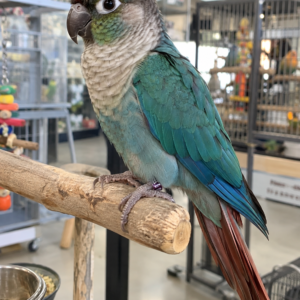
The Turquoise Green Cheek Conure generally has a cooler appearance than the natural Green Cheek.
Common visual characteristics may include:
- Blue-green or turquoise breast
- Cooler green wing feathers
- Grey or brown-grey head
- Muted facial colouring
- Reduced red across the abdomen
- Dark reddish or maroon tail
- Blue-green tones along the wings
Colour intensity varies between individual birds.
Some turquoise birds appear strongly blue-green, while others retain more green or warmer undertones.
This natural variation should not automatically be interpreted as a separate mutation.
Male and Female Turquoise Green Cheek Conures
Male and female Turquoise Green Cheek Conures look very similar externally.
Colour mutation does not create a reliable visible difference between the sexes.
Where confirmed sex is required, DNA testing or suitable breeder documentation is preferable.
Individual temperament should also not be predicted solely from sex.
Turquoise Green Cheek Conure Size
Adult Turquoise Green Cheek Conures are approximately the same size as other Green Cheek Conures.
They typically reach around 10 inches in total length and weigh approximately 60–80 grams.
Their compact body should not be confused with low activity requirements.
Suitable housing should still provide room for:
- Wing stretching
- Climbing
- Moving between perches
- Foraging
- Bathing
- Exercise
- Play
Turquoise Green Cheek Conure Price
The turquoise green cheek conure price can vary according to several factors.
These may include:
- Age
- Sex
- Mutation combination
- Socialization
- Handling history
- Health information
- Documentation
- Geographic location
- Availability
Some mutation combinations may be less common than standard turquoise birds and may therefore be priced differently.
Because no exact selling price has been supplied for this listing, the live product page should display the actual current price rather than an unsupported generic market estimate.
Turquoise Green Cheek Conure Personality
Turquoise Green Cheek Conures have the same general species behaviour as other Pyrrhura molinae.
Individual birds may be:
- Active
- Curious
- Social
- Playful
- Alert
- Interested in climbing and foraging
Personality varies between individuals.
Colour mutation does not reliably determine temperament.
Socialization, training, environment and handling history all influence behaviour.
Turquoise Green Cheek Conure Care
Good care should address both physical and behavioural needs.
A suitable routine should provide:
- Balanced nutrition
- Regular exercise
- Social interaction
- Foraging
- Safe chewing
- Bathing
- Sleep
- Veterinary care
The bird should also have opportunities to climb, explore and manipulate toys.
Turquoise Green Cheek Conure Diet
A suitable diet can include appropriate formulated parrot food combined with vegetables, leafy greens, legumes and moderate portions of suitable fruit.
Fresh foods may include:
- Carrot
- Bell pepper
- Peas
- Green beans
- Fresh corn
- Leafy greens
- Apple
- Pear
- Berries
- Pomegranate
The exact diet should be adjusted according to the bird’s age, body condition and veterinary guidance.
Yellow Sided Turquoise Green Cheek Conure
The yellow sided turquoise green cheek conure combines turquoise genetics with yellow-sided characteristics.
This combination can produce birds with:
- Blue-green or turquoise body tones
- Increased yellow or warm colouring on portions of the breast
- Red or peach tones around the lower chest and abdomen
- Green wings
- Dark reddish tail feathers
The exact appearance can vary considerably depending on genetics.
A bird should only be advertised as a Yellow Sided Turquoise Green Cheek when the mutation combination is properly known.
Cinnamon Turquoise Green Cheek Conure
The cinnamon turquoise green cheek conure combines turquoise and cinnamon mutation genetics.
These birds often display softer, lighter colouring than a standard turquoise bird.
Possible visual characteristics include:
- Lighter head colouring
- Softer brown or beige tones
- Pale blue-green body
- Reduced dark pigmentation
- Muted reddish tail colouring
Again, the exact appearance depends on the individual bird’s genetics.
A product listing should only use the cinnamon turquoise label when that combination is confirmed.
Turquoise vs Natural Green Cheek Conure
The biggest difference is colour.
Turquoise Green Cheek Conure
- Cooler blue-green appearance
- Reduced yellow and red tones
- Turquoise or teal breast
- Same species as natural Green Cheek
Natural Green Cheek Conure
- Bright green cheeks
- Brown crown
- Cream and grey scalloped chest
- Stronger red abdominal colouring
- Maroon tail
Both remain Pyrrhura molinae.
Turquoise vs Pineapple Green Cheek Conure
These two mutation types look very different.
Turquoise Green Cheek Conure
- Cooler blue-green colours
- Reduced warm pigmentation
- Muted chest
Pineapple Green Cheek Conure
- Warmer yellow and red colouring
- Lighter head
- Brighter chest and abdomen
Mutation names describe genetic colour combinations, not separate species.
Housing a Turquoise Green Cheek Conure
A suitable enclosure should prioritize movement and enrichment.
The setup should include:
- Natural wooden perches
- Different perch diameters
- Climbing opportunities
- Feeding and water stations
- Safe chewing materials
- Foraging toys
- Bathing access
- Open movement space
The enclosure should not be so crowded that normal movement becomes difficult.
Enrichment
Suitable enrichment can include:
- Foraging toys
- Swings
- Ladders
- Natural branches
- Foot toys
- Bird-safe wooden toys
- Climbing ropes
- Bathing opportunities
Rotating toys periodically can help keep the environment varied.
Bathing
Green Cheek Conures often enjoy bathing.
A Turquoise Green Cheek can be offered:
- A shallow water dish
- A bird bath
- Gentle misting
Fresh bathing water should be provided regularly.
Veterinary Care
An avian veterinarian should be identified before bringing home a Turquoise Green Cheek Conure.
Routine examinations can help monitor:
- Weight
- Plumage
- Beak
- Feet
- Diet
- Respiratory health
- General body condition
Professional companion-bird care information is available from:
Association of Avian Veterinarians
Preparing for Turquoise Green Cheek Conure Ownership
Before choosing a turquoise green cheek conure for sale, the bird’s environment should already be prepared.
A suitable setup should include:
- Secure housing
- Natural perches
- Climbing areas
- Chewable enrichment
- Foraging opportunities
- Bathing access
- Balanced nutrition
- Avian veterinary support
Mutation colour should not be treated as more important than health, temperament and long-term care requirements.
Why the Turquoise Green Cheek Conure Is Distinctive
The Turquoise Green Cheek Conure stands out because of its cool blue-green colour palette.
Compared with the natural Green Cheek, it generally shows reduced warm red and yellow tones and stronger turquoise colouring across the body.
Combination mutations such as yellow sided turquoise green cheek conure and cinnamon turquoise green cheek conure can produce additional colour variation.
For buyers researching a turquoise green cheek conure for sale, confirmed mutation identity, health, socialization, housing, nutrition and long-term veterinary care should all be considered alongside the Turquoise Green Cheek Conure price.
Frequently Asked Questions
What species is a Turquoise Green Cheek Conure?
It is a colour mutation of the Green-cheeked Conure, Pyrrhura molinae.
Is a Turquoise Green Cheek Conure a separate species?
No. It is a captive colour mutation of the standard Green Cheek Conure.
How big is a Turquoise Green Cheek Conure?
Adults typically reach around 10 inches in total length.
How much does a Turquoise Green Cheek Conure weigh?
Adults generally weigh approximately 60–80 grams.
What is the Turquoise Green Cheek Conure price?
The turquoise green cheek conure price varies according to age, sex, mutation combination, socialization, documentation, location and availability.
What colours does a Turquoise Green Cheek Conure have?
Typical colours include turquoise, blue-green, green, grey and muted red or maroon.
What is a Yellow Sided Turquoise Green Cheek Conure?
It is a Green Cheek Conure carrying both turquoise and yellow-sided colour genetics, usually producing cooler body tones with increased warm yellow or red areas.
What is a Cinnamon Turquoise Green Cheek Conure?
It combines turquoise and cinnamon genetics, generally producing lighter, softer blue-green and brownish colouring.
Can male and female Turquoise Green Cheek Conures be distinguished visually?
No reliable plumage difference separates the sexes. DNA testing or proper documentation is preferable when confirmed sex is required.
Does the turquoise mutation change personality?
No reliable evidence suggests that colour mutation alone determines temperament. Personality depends more on genetics, socialization, handling and environment.
Where can I learn more about professional conure care?
The Association of Avian Veterinarians provides professional companion-bird care information:
Be the first to review “Turquoise Green Cheek Conure for Sale”
Related products
Conure Parrots

Conure Parrots

Conure Parrots
Conure Parrots

Conure Parrots


Conure Parrots

Conure Parrots

Conure Parrots
Reviews
There are no reviews yet.