
Blue-Winged Macaw

Original price was: $4,000.00.$3,500.00Current price is: $3,500.00.
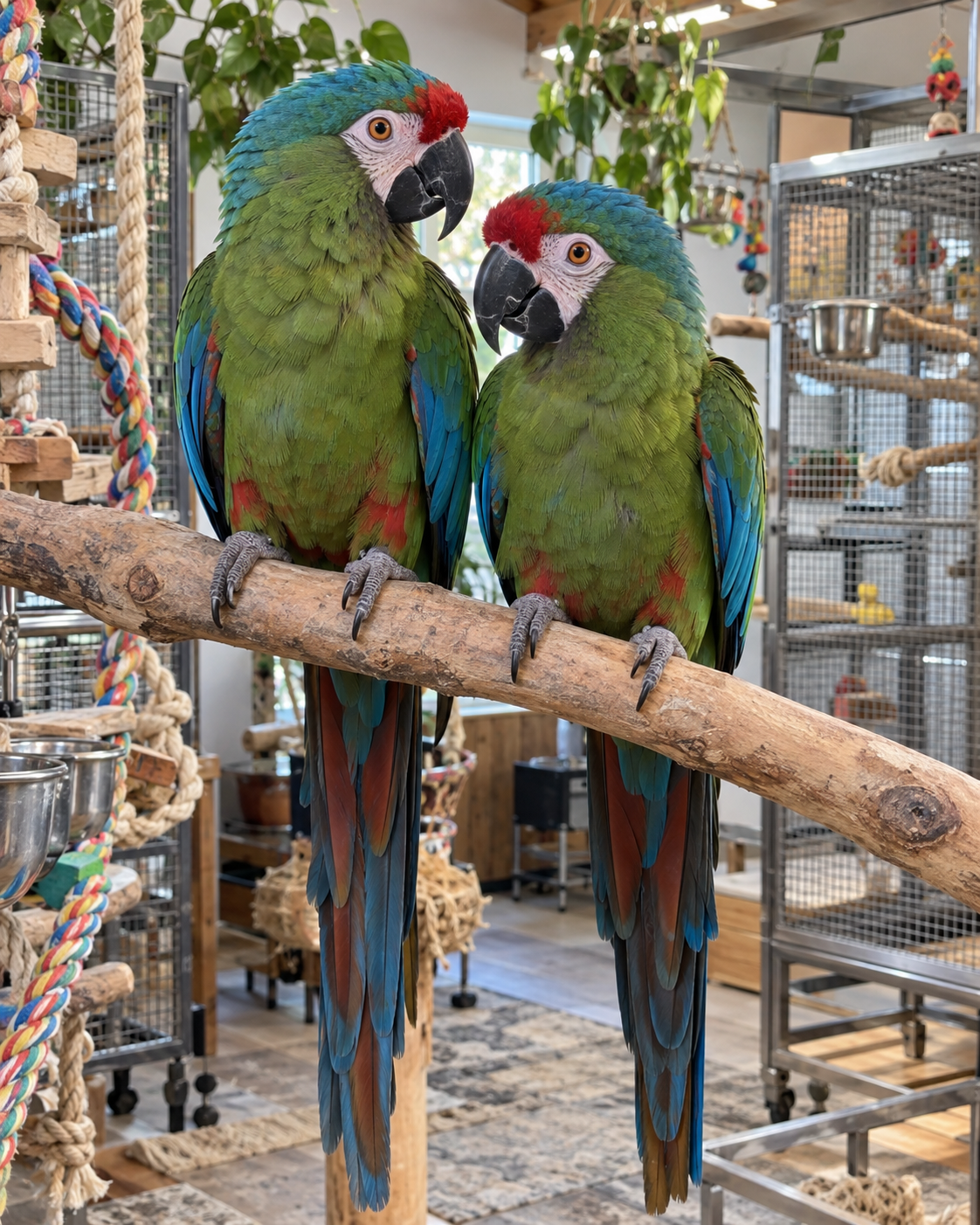
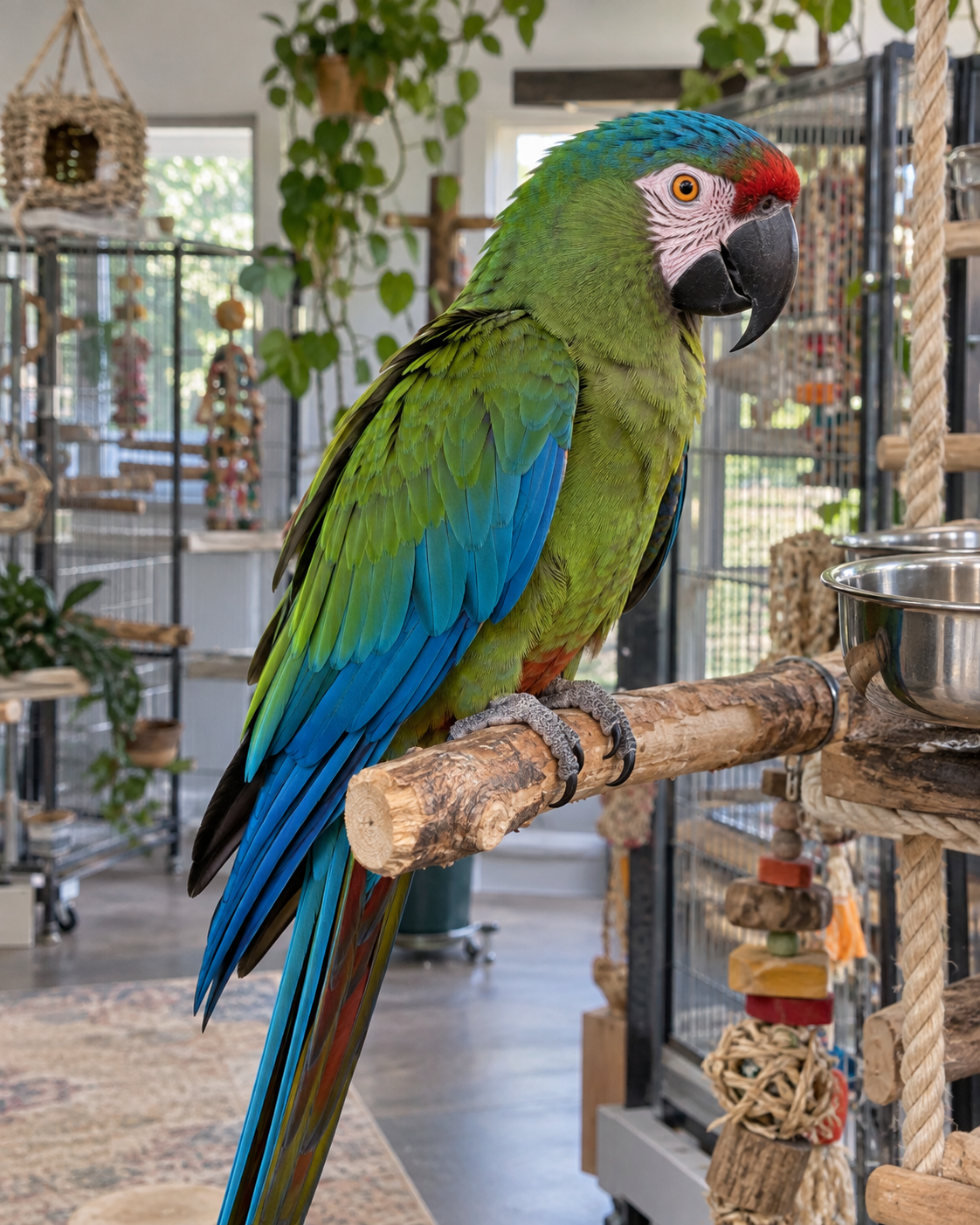
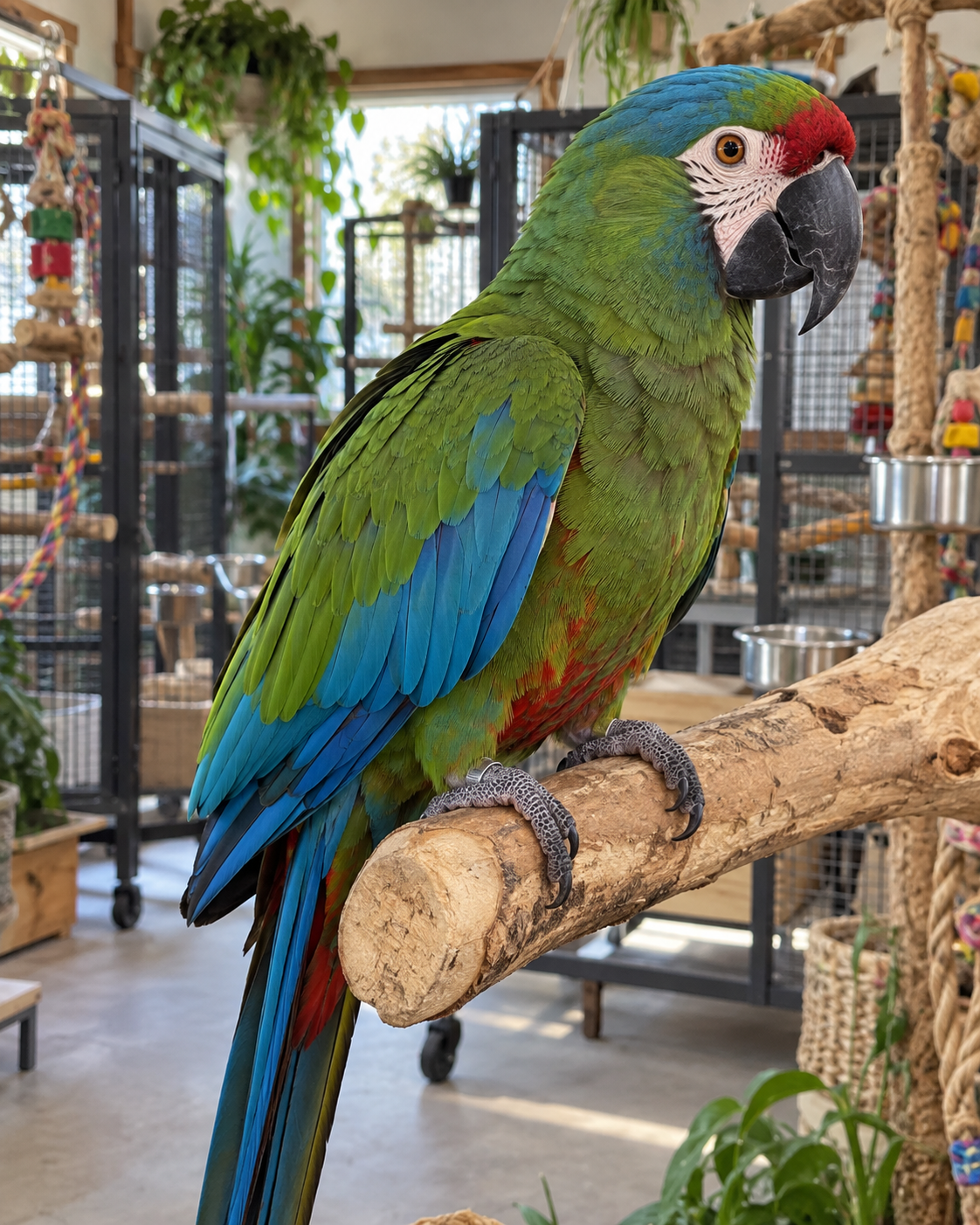
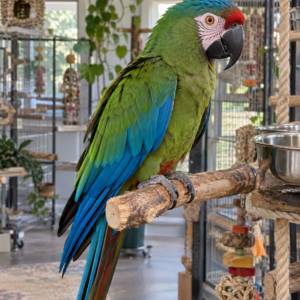
The Blue-Winged Macaw, scientifically known as Primolius maracana, is a compact macaw recognized for green plumage, blue wings and crown, a red forehead and distinctive red markings around the lower body. Also called Illiger’s Macaw, adults reach approximately 16.8 inches and weigh around 265 grams. The reported Blue-Winged Macaw lifespan is approximately 50–60 years, making this intelligent parrot a substantial long-term commitment.
Blue-Winged Macaw – Primolius maracana
The Blue-Winged Macaw is a smaller macaw species with a colourful combination of green, blue and red plumage. Scientifically classified as Primolius maracana, it is also widely known as Illiger’s Macaw.
Unlike the much larger Blue and Gold or Hyacinth Macaws, the Blue-Winged Macaw has a more compact body while retaining the long tail, strong curved bill and active behaviour associated with macaws.
Adults measure approximately 43 cm, or 16.8 inches, and weigh around 265 grams, or 9.2 ounces.
For people researching this species, correct identification is particularly useful because “blue-winged” can easily be confused with other blue-coloured macaws.
Blue-Winged Macaw Details
- Common Name: Blue-Winged Macaw
- Alternative Name: Illiger’s Macaw
- Scientific Name: Primolius maracana
- Bird Type: Macaw
- Adult Size: Approximately 43 cm / 16.8 inches
- Adult Weight: Approximately 265 g / 9.2 oz
- Reported Lifespan: Approximately 50–60 years
- Primary Colours: Green, blue and red
- Sounds: Loud, vocal and capable of raucous calls
- Interaction: Active, social and playful
- CITES Listing: Appendix I
What Does a Blue-Winged Macaw Look Like?
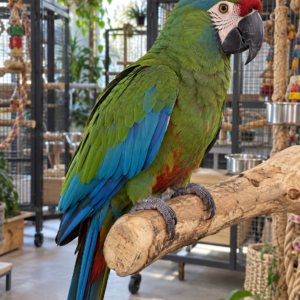
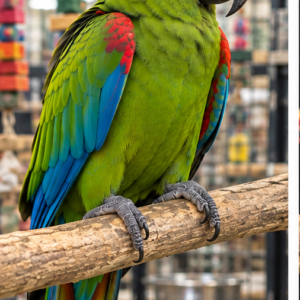
The Blue-Winged Macaw is predominantly green, but several contrasting colours give the species its distinctive appearance.
Adults have a red forehead, while the crown, nape and lower cheeks contain green mixed with blue. Blue is especially visible through portions of the wings and tail.
Red also appears on the lower back and around the middle of the abdomen.
The tail is primarily blue with reddish-brown colouring toward the base, while the bill is black. The exposed facial skin and cere are pale yellow, and adult eyes are orange.
This combination of a red forehead, green body and blue wing and tail feathers distinguishes Primolius maracana from many larger macaws.
Blue-Winged Macaw Size
At approximately 16.8 inches, the Blue-Winged Macaw is considerably smaller than many well-known large macaw species.
For comparison, a Blue and Gold Macaw may exceed 30 inches because of its much larger body and long tail.
The more compact size of the Blue-Winged Macaw does not mean it requires minimal space.
It remains an active macaw that benefits from room to climb, move and fly.
The World Parrot Trust recommends access to substantial flight space and notes that permanent indoor confinement is not considered ideal for this species.
Blue-Winged Macaw Lifespan
The reported Blue-Winged Macaw lifespan is approximately 50–60 years.
That potential longevity should be considered carefully before ownership.
A bird capable of living for several decades requires long-term planning for:
- Appropriate nutrition
- Veterinary care
- Housing
- Environmental enrichment
- Social interaction
- Daily cleaning and maintenance
The 50–60 year figure represents potential longevity rather than a guaranteed lifespan.
Individual lifespan can vary according to genetics, nutrition, exercise, veterinary care and overall husbandry.
Personality and Social Behaviour
Wild Blue-Winged Macaws generally occur in pairs or small groups and tend to remain within familiar areas rather than constantly travelling over open landscapes.
This social background is relevant when considering the needs of a bird under human care.
Regular interaction, predictable routines and opportunities for exploration can form important parts of a stimulating environment.
Macaws are intelligent parrots and benefit from activities that involve problem-solving, climbing and manipulating safe objects.
Individual personality varies, so behaviour should be assessed bird by bird rather than assuming every Blue-Winged Macaw will behave identically.
Sounds and Vocal Behaviour
The Blue-Winged Macaw is a vocal bird.
The species’ natural calls are described as loud screeches and other raucous vocalizations.
Prospective owners should therefore consider noise tolerance before bringing a macaw into a household.
Although it is smaller than many large Ara macaws, its compact size does not mean it will necessarily be quiet.
Macaws use vocal communication naturally, so sound should be expected as part of normal behaviour.
Housing a Blue-Winged Macaw
Appropriate housing should allow the bird to move, climb and use its wings comfortably.
The World Parrot Trust recommends that Blue-Winged Macaws have access to a large flight enclosure, with substantial outdoor flight space where possible. For breeding birds, a suspended enclosure approximately 3 metres, or 9.8 feet, long is referenced.
Companion-bird environments may differ, but sufficient space remains important.
Housing should include:
- Strong natural perches
- Bird-safe climbing structures
- Feeding and water stations
- Chewing opportunities
- Foraging toys
- Space for movement
- Bathing opportunities
The surrounding environment should also be checked for hazards before supervised activity outside the main enclosure.
Enrichment and Play
The Blue-Winged Macaw is described as a bird that enjoys climbing and playing.
Appropriate enrichment can include bird-safe wooden chew toys, vegetable-tanned leather toys, natural branches and food-searching activities.
Safe materials that can be chewed are particularly useful because chewing is a normal parrot behaviour.
The environment should not remain completely unchanged for long periods.
Rotating enrichment items can introduce novelty while giving the bird different opportunities to explore and manipulate objects.
Diet and Nutrition
The nutritional needs of an individual Blue-Winged Macaw should be determined according to health, age, body condition and professional avian guidance.
Species husbandry references mention a varied feeding program incorporating suitable nuts, fresh corn, fruits and complete formulated macaw food.
However, a general feeding list should not replace individualized veterinary advice.
For professional companion-bird nutrition and husbandry information, owners can consult the Association of Avian Veterinarians:
Association of Avian Veterinarians – Pet Bird Care
Veterinary Care
An avian veterinarian should be identified before acquiring a macaw.
Routine examinations can help establish baseline information about:
- Weight
- Body condition
- Plumage
- Nutrition
- Beak and feet
- Respiratory health
- General wellbeing
An established relationship with an avian veterinarian is particularly valuable for a bird with a potential lifespan of 50–60 years.
Additional professional bird-care resources are available through:
Association of Avian Veterinarians
Natural Range of the Blue-Winged Macaw
The Blue-Winged Macaw is naturally associated with South America.
Current records place the species across portions of northeastern, central and southeastern Brazil and eastern Paraguay. Historically, it was also found in northeastern Argentina, although recent records there are lacking.
The species occurs in tropical and subtropical forests, Atlantic rainforest, cerrado savanna and forest-edge habitats, often near water.
Blue-Winged Macaws generally avoid crossing large open areas and instead prefer moving through trees.
Conservation and Responsible Ownership
Current World Parrot Trust information lists the Blue-Winged Macaw as Least Concern, with the population thought to be stable. The species is nevertheless included under CITES Appendix I.
Threats have historically included habitat degradation, habitat loss, trapping for the bird trade and persecution.
Anyone dealing with a protected macaw species should therefore pay careful attention to legitimate captive-origin and transfer documentation where required.
Wild conservation status and the legal status of an individual captive bird are separate matters.
Blue-Winged Macaw vs Blue-Headed Macaw
The Blue-Winged Macaw should not be confused with the Blue-headed Macaw.
The Blue-Winged Macaw is Primolius maracana, while the Blue-headed Macaw is Primolius couloni.
The Blue-headed Macaw generally has a much more extensively blue head, whereas the Blue-Winged Macaw has a red forehead combined with green and blue across the crown and cheeks.
Correct scientific names are useful when comparing these similar common names.
Preparing for Blue-Winged Macaw Ownership
Before bringing a Blue-Winged Macaw into a home or aviary, the environment should be prepared in advance.
That includes suitable housing, strong perches, feeding stations, enrichment materials and access to an avian veterinarian.
Noise, longevity and daily interaction requirements should also be considered.
Although this macaw is more compact than many other macaw species, it still requires substantial environmental stimulation and long-term care.
Why the Blue-Winged Macaw Is Distinctive
The Blue-Winged Macaw combines a relatively compact macaw body with colourful red, green and blue plumage.
Its red forehead, blue wing and tail feathers, playful climbing behaviour and potential 50–60 year lifespan give Primolius maracana a distinctive profile among macaws.
For anyone considering this species, appropriate space, enrichment, veterinary support and responsible sourcing should be planned before ownership.
Frequently Asked Questions
What is the scientific name of the Blue-Winged Macaw?
The scientific name is Primolius maracana.
Is the Blue-Winged Macaw also called Illiger’s Macaw?
Yes. Illiger’s Macaw is another common name for the Blue-Winged Macaw.
How big is a Blue-Winged Macaw?
Adults reach approximately 43 cm, or 16.8 inches, in length.
How much does a Blue-Winged Macaw weigh?
Adults weigh approximately 265 grams, or 9.2 ounces.
What is the Blue-Winged Macaw lifespan?
The reported lifespan is approximately 50–60 years.
What colours does a Blue-Winged Macaw have?
Adults are mainly green with a red forehead, blue through parts of the head, wings and tail, and additional red markings around the lower back and abdomen.
Are Blue-Winged Macaws vocal?
Yes. Their natural calls include loud screeches and other raucous vocalizations.
Do Blue-Winged Macaws need enrichment?
Yes. They enjoy climbing and playing and benefit from safe chew toys, natural branches and other enrichment activities.
Where can I learn more about macaw care?
The Association of Avian Veterinarians provides professional resources for bird owners:
Be the first to review “Blue-Winged Macaw”
Related products


Macaw Parrots
Macaw Parrots

Macaw Parrots

Macaw Parrots

Macaw Parrots

Macaw Parrots


Macaw Parrots

Macaw Parrots
Reviews
There are no reviews yet.