


Black Capped Conure for Sale

$550.00
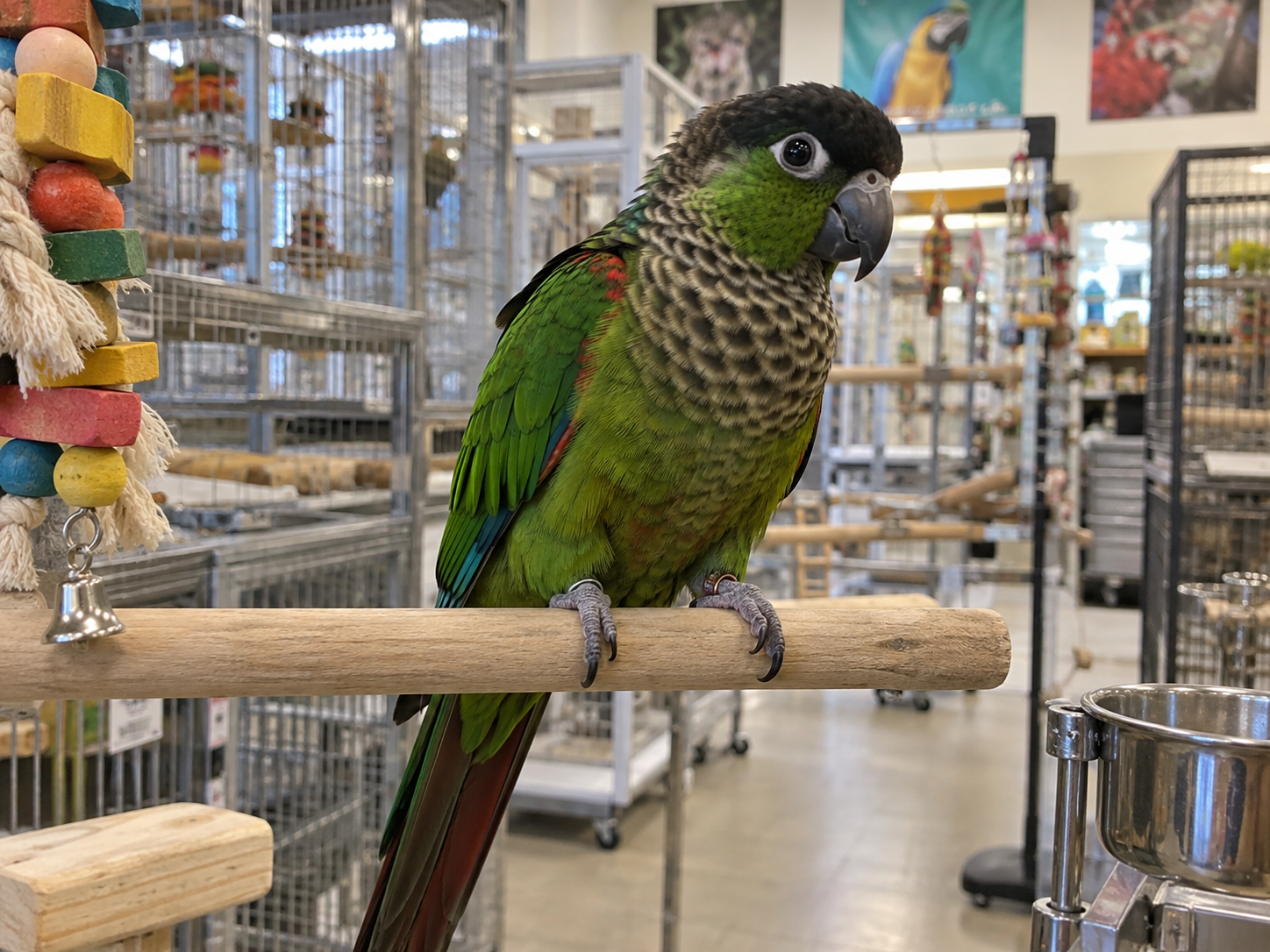
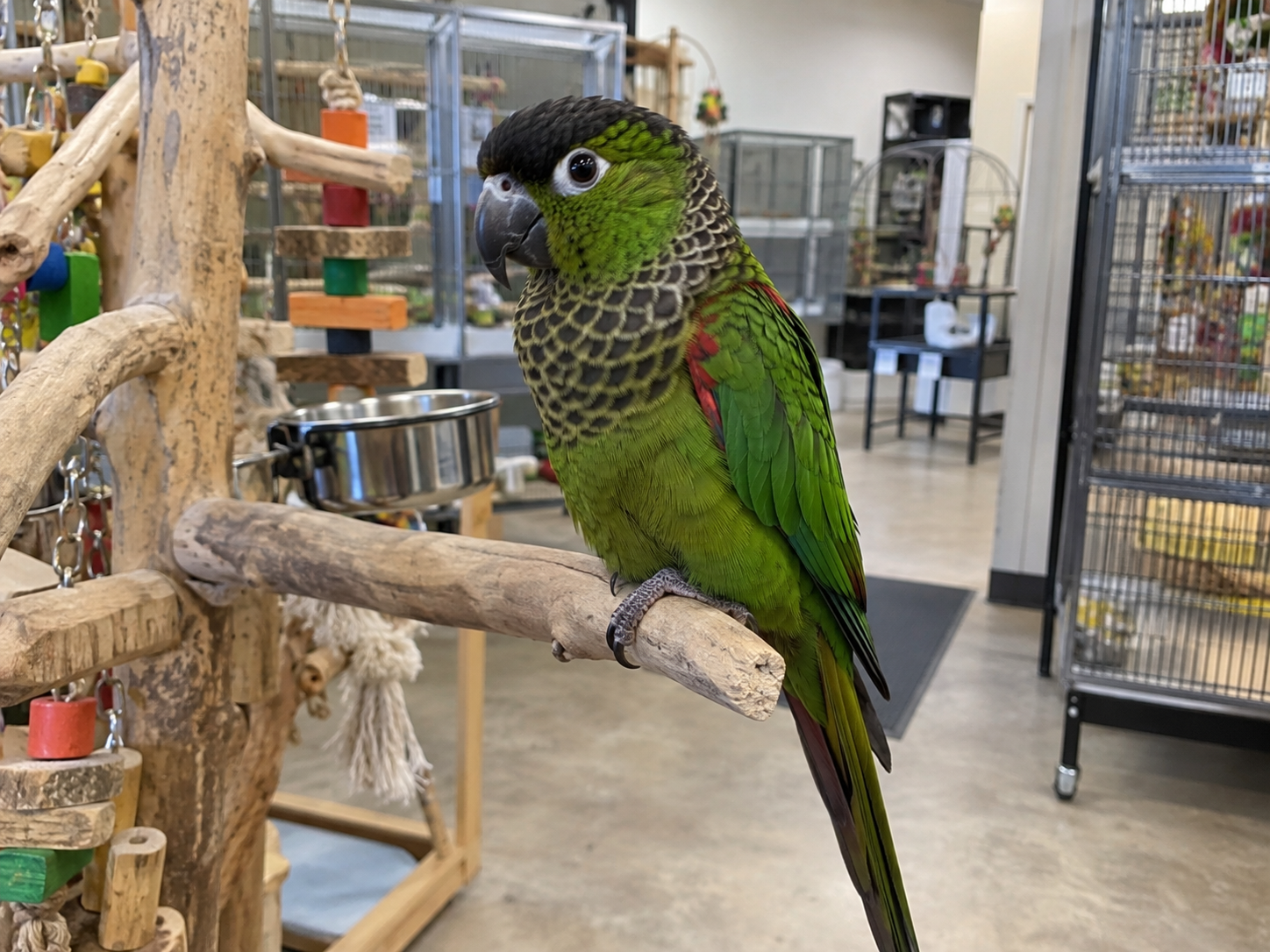
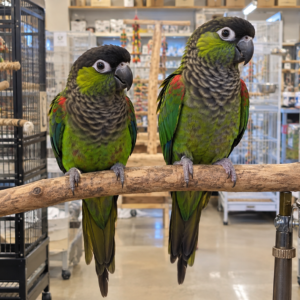
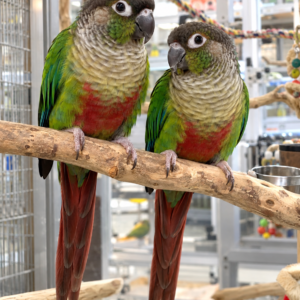
Male and female Black Capped Conures are represented in this listing. Scientifically known as Pyrrhura rupicola, this compact South American conure is recognized for its black crown, green cheeks, scalloped chest, red wing markings and predominantly green tail. Adults reach approximately 9.75 inches and weigh around 70 grams. Black Capped Conures are active parrots that require adequate movement space, regular enrichment, suitable nutrition, bathing opportunities and long-term avian veterinary care.
Black Capped Conure for Sale – Male & Female
For buyers researching a black capped conure for sale, Pyrrhura rupicola is a small South American conure with a distinctive dark crown and heavily scalloped breast.
Also known as the Black-capped Parakeet or Rock Conure, this species belongs to the Pyrrhura group, which includes several compact, long-tailed South American parrots.
Adults measure approximately 9.75 inches in overall length and weigh around 70 grams.
Their compact body is predominantly green, but close inspection reveals a much more detailed combination of black, cream, brown, yellow and red.
Black Capped Conure Details
- Common Name: Black Capped Conure
- Alternative Name: Black-capped Parakeet, Rock Conure
- Scientific Name: Pyrrhura rupicola
- Bird Type: Conure
- Sex Represented: Male and Female
- Adult Size: Approximately 9.75 inches
- Adult Weight: Approximately 70 g
- Primary Colours: Green, black, cream, brown and red
- Natural Region: South America
- Conservation Status: Least Concern
- CITES Listing: Appendix II
Two recognized forms are generally listed: P. r. rupicola and P. r. sandiae.
What Does a Black Capped Conure Look Like?
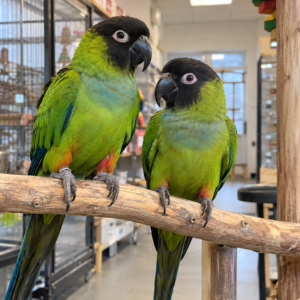
The Black Capped Conure gets its name from the dark plumage extending from the forehead across the crown toward the back of the head.
The cheeks and ear area are predominantly green.
The hindneck is dark with pale scalloping across individual feathers, giving the neck a textured appearance.
The breast is dark brown with cream or off-white scalloped markings. Lower on the breast, some feathers can show a muted yellow wash.
Bright red appears on portions of the wing, particularly around the primary coverts and wrist area.
The tail is predominantly green.
Adults have a black beak, a grey bare eye ring and brown eyes.
Male and Female Black Capped Conures
Male and female Black Capped Conures look very similar externally.
There is no dependable plumage feature that allows every mature male to be distinguished from every mature female visually.
Where confirmed sex matters, DNA testing or reliable breeder documentation is preferable.
Individual behaviour should also not be predicted purely from sex.
Factors that can influence temperament include:
- Early socialization
- Age
- Handling history
- Previous environment
- Daily routine
- Individual personality
Black Capped Conure Size
Adult Black Capped Conures reach approximately 9.75 inches in length and weigh around 70 grams.
Their relatively small size does not mean they should be housed in a cramped enclosure.
These birds are active and benefit from room for:
- Wing stretching
- Climbing
- Moving between perches
- Foraging
- Playing
- Bathing
- Exploring
A professional aviary reference for this species uses approximately 6.5 feet of enclosure length.
Black Capped Conure Price
The black capped conure price can vary according to the individual bird and current availability.
Relevant factors may include:
- Age
- Sex
- Handling history
- Tameness
- Health information
- Documentation
- Colour or confirmed mutation
- Geographic location
- Breeder availability
Because no exact selling price has been supplied for this listing, the current product price should be displayed directly rather than inserting an unsupported generic market figure.
Long-term ownership expenses should also be considered, including appropriate housing, food, enrichment and avian veterinary care.
Black Capped Conure Personality
Black Capped Conures are active parrots.
They naturally live in social groups and benefit from environments that allow regular movement, exploration and mental stimulation.
A suitable daily routine can provide opportunities for:
- Foraging
- Climbing
- Safe chewing
- Training
- Bathing
- Play
- Social interaction
Individual personality varies considerably.
A well-socialized bird may become comfortable around familiar people, while another individual may need more time and gradual interaction.
Black Capped Conure Sounds
Black Capped Conures are vocal birds.
Their flight calls are typically high-pitched and can have a rapid yapping quality.
They should therefore not be marketed as silent parrots.
Prospective owners should expect normal daily vocalization, particularly during periods of activity, excitement or communication.
Black Capped Conure vs Green Cheek
The search “black capped conure vs green cheek” is especially relevant because the species are closely related and can look similar at first glance.
A Black Capped Conure is Pyrrhura rupicola, while the Green-cheeked Conure is Pyrrhura molinae.
Black Capped Conure
- Approximately 9.75 inches
- Around 70 g
- Black crown
- Green cheeks
- Dark scalloped chest
- Green tail
- Red wing markings
Green Cheek Conure
- Approximately 10.1 inches
- Around 60–80 g
- Brownish crown
- Bright green cheeks
- Pale barred or scalloped chest
- Brown-red tail
The most immediately useful distinction is the head. A Black Capped Conure has a much darker black crown, whereas the Green Cheek generally has a brown or green-tinted crown.
The species are closely related enough that Black Capped and Green-cheeked Conures have even been reported hybridizing in the wild.
Opaline Black Capped Conure
The phrase opaline black capped conure appears in searches relating to captive colour breeding.
Mutation terminology should be used carefully.
“Opaline” is a genetic colour term used in several parrot breeding communities, but a bird should only be advertised specifically as an Opaline Black Capped Conure when its mutation and breeding background are properly known.
Do not identify a bird as opaline simply because its red, yellow or green colouring appears different from the standard form.
For SEO, this keyword works best as a dedicated informational section unless the actual bird being listed has verified opaline genetics.
Housing a Black Capped Conure
Black Capped Conures need enough horizontal room for active movement.
A suitable enclosure should include:
- Natural wooden perches
- Different perch diameters
- Climbing opportunities
- Feeding and water stations
- Foraging toys
- Chewing materials
- Bathing access
- Open movement space
Professional avicultural guidance recommends an aviary or suspended enclosure with a minimum length of approximately 6.5 feet.
Even in a companion setting, movement should remain a priority.
Black Capped Conures Are Strong Chewers
Despite their relatively small body size, Black Capped Conures can be vigorous chewers.
Suitable bird-safe materials can include untreated branches from appropriate woods such as:
- Willow
- Fir
- Elder
- Pine
Other enrichment can include:
- Vegetable-tanned leather toys
- Natural wood blocks
- Foraging toys
- Climbing ropes
- Swings
- Puzzle activities
Toys should be inspected frequently for damage.
Bathing
Conures commonly enjoy bathing.
A shallow bowl of clean water can allow the bird to bathe voluntarily.
Some individuals may prefer misting or other safe bathing arrangements.
Bathing can support normal feather maintenance while also providing behavioural enrichment.
Fresh bathing water should be replaced regularly.
What Does a Black Capped Conure Eat?
A managed captive diet can incorporate nutritionally appropriate formulated parrot food together with suitable vegetables and moderate amounts of fruit.
Fresh foods may include:
- Apple
- Pear
- Banana
- Orange
- Carrot
- Celery
- Peas
- Green beans
- Fresh corn
- Kale
- Swiss chard
- Dandelion greens
Appropriately prepared legumes and sprouted foods may also be incorporated depending on the bird’s nutritional requirements.
Diet should be adjusted according to age, weight, activity and veterinary recommendations.
Natural Range
The Black Capped Conure is native to South America.
The nominate form occurs in central-eastern Peru.
The sandiae form occurs from southeastern Peru through parts of western Brazil and northern Bolivia.
Natural Habitat
Wild Black Capped Conures primarily inhabit humid tropical lowland forest.
Habitats include:
- Terra firme forest
- Seasonally flooded várzea forest
- Tropical lowland woodland
- Some eastern Andean foothill environments
The species generally occurs at relatively low elevations, reaching approximately 300 metres.
Wild Behaviour
During the breeding season, Black Capped Conures may occur as pairs or small family groups.
Outside breeding periods, larger flocks can develop, sometimes containing approximately 30 individuals.
The birds usually forage in the forest canopy.
Communal roosting also occurs.
These behaviours emphasize the social nature of the species and the importance of providing adequate activity and stimulation under captive care.
Wild Diet
Recorded wild foods include fruits, including those produced by Cecropia trees.
Captive feeding cannot simply duplicate a few recorded wild foods, however.
A companion bird requires a nutritionally managed diet suited to long-term captive health.
Black Capped Conure Breeding
Black Capped Conures are cavity-nesting parrots.
In captivity, clutch sizes of approximately five to seven eggs have been recorded.
Young birds typically fledge at approximately seven to eight weeks.
Responsible breeding requires planning for:
- Pair compatibility
- Appropriate nutrition
- Health screening
- Nest management
- Chick development
- Weaning
- Veterinary support
Black Capped Conure Conservation Status
The Black Capped Conure is currently classified as Least Concern and listed under CITES Appendix II.
The estimated wild population is approximately 100,000–500,000 mature birds, and the overall population trend is considered stable.
Although it is not currently globally threatened, the species has a relatively restricted natural distribution.
Responsible sourcing should therefore remain part of any purchase decision.
Veterinary Care
An avian veterinarian should be identified before bringing home a Black Capped Conure.
Routine examinations can help assess:
- Body weight
- Plumage
- Beak
- Feet
- Nutrition
- Activity
- Respiratory health
- General physical condition
Professional care information is available from the Association of Avian Veterinarians:
Association of Avian Veterinarians
Preparing for Black Capped Conure Ownership
Before choosing a black capped conure for sale, the bird’s environment should already be prepared.
A suitable setup should provide:
- Secure housing
- Natural perches
- Adequate movement space
- Safe chewing materials
- Foraging opportunities
- Bathing access
- Balanced nutrition
- Veterinary support
The bird’s individual condition, socialization and history should be considered alongside appearance and price.
Why the Black Capped Conure Is Distinctive
The Black Capped Conure combines the compact body of a Pyrrhura conure with a distinctive black crown, green cheeks, scalloped chest and bright red wing markings.
Its colouring provides one of the easiest ways to distinguish it from the closely related Green-cheeked Conure.
For buyers researching a black capped conure for sale, accurate species identification, health, sex documentation, socialization, housing and long-term care should all be evaluated alongside the black capped conure price.
Frequently Asked Questions
What is the scientific name of the Black Capped Conure?
The scientific name is Pyrrhura rupicola.
How big is a Black Capped Conure?
Adults reach approximately 9.75 inches.
How much does a Black Capped Conure weigh?
Adults weigh approximately 70 grams.
What colours does a Black Capped Conure have?
Adults have a black crown, green cheeks, a dark scalloped breast, green body and tail, and red markings on portions of the wings.
What is the Black Capped Conure price?
The black capped conure price varies according to age, sex, socialization, health information, documentation, mutation status, location and availability.
What is the difference between a Black Capped Conure and Green Cheek?
The Black Capped Conure has a distinctly black crown. Green-cheeked Conures generally have a brownish crown, bright green cheeks and a brown-red tail.
What is an Opaline Black Capped Conure?
“Opaline” refers to mutation terminology used in captive parrot breeding. A bird should only be marketed as an opaline black capped conure when its mutation is properly identified rather than based solely on unusual colouring.
Can male and female Black Capped Conures be distinguished visually?
Males and females look similar externally. DNA testing or appropriate breeder documentation is preferable where confirmed sex is required.
Are Black Capped Conures active?
Yes. They benefit from climbing, foraging, chewing, bathing and regular opportunities for movement.
Where can I learn more about professional conure care?
The Association of Avian Veterinarians provides professional companion-bird care information:
Be the first to review “Black Capped Conure for Sale”
Related products

Conure Parrots
Conure Parrots


Conure Parrots

Conure Parrots
Conure Parrots
Conure Parrots

Conure Parrots

Conure Parrots
Reviews
There are no reviews yet.