



Yellow Tailed Black Cockatoo

$6,500.00
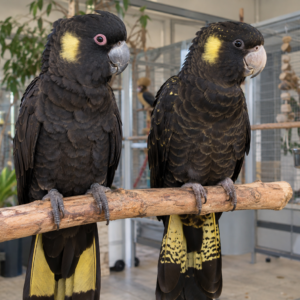
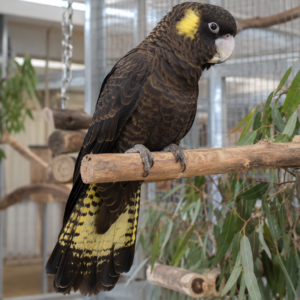
Male and female Yellow Tailed Black Cockatoos are represented in this listing. Scientifically known as Zanda funerea, this large Australian cockatoo is recognized for its dark brown-black plumage, yellow ear patches and broad yellow bands across the side tail feathers. Adults reach approximately 26.1 inches and weigh around 750–900 grams. With a reported lifespan of up to approximately 50 years, these large cockatoos require substantial flight space, strong housing, regular chewing and foraging enrichment, appropriate nutrition and long-term avian veterinary care.
Yellow Tailed Black Cockatoo – Male & Female
The Yellow Tailed Black Cockatoo is a large Australian cockatoo distinguished by dark plumage, prominent yellow ear patches and broad yellow markings across the tail.
Scientifically classified as Zanda funerea, the species is also known as the Yellow-eared Black Cockatoo, Yellow-tailed Cockatoo and Funereal Cockatoo.
Adults reach approximately 26.1 inches in total length and generally weigh between 750 and 900 grams.
Unlike white cockatoos with large erectile crests, the Yellow Tailed Black Cockatoo has a more restrained crest and a heavier, elongated body profile.
Its large size, strong bill and specialized natural behaviour mean that suitable housing and long-term care require considerably more space and planning than for smaller companion parrots.
Yellow Tailed Black Cockatoo Details
- Common Name: Yellow Tailed Black Cockatoo
- Alternative Names: Yellow-eared Black Cockatoo, Funereal Cockatoo, Yellow-tailed Cockatoo
- Scientific Name: Zanda funerea
- Bird Type: Black Cockatoo
- Sex Represented: Male and Female
- Adult Size: Approximately 26.1 inches
- Adult Weight: Approximately 750–900 g
- Potential Lifespan: Up to approximately 50 years
- Primary Colours: Brown-black and yellow
- Natural Range: Australia
- Recognized Subspecies: Three
- Conservation Status: Least Concern
- CITES Listing: Appendix II
These measurements, longevity figures and conservation details are consistent with current World Parrot Trust species information.
What Does a Yellow Tailed Black Cockatoo Look Like?
The Yellow Tailed Black Cockatoo has predominantly dark brown-black plumage.
Individual feathers can carry subtle yellow edging, giving parts of the body a finely patterned appearance when viewed closely.
The most recognizable markings are:
- Yellow ear patches
- Broad yellow bands across the side tail feathers
- Brown-black body plumage
- Large grey or horn-coloured bill
- Strong grey feet
- Short dark crest
The yellow tail markings become particularly obvious when the bird spreads its tail or takes flight.
Male Yellow Tailed Black Cockatoo
Adult males are generally dark brown-black.
Their ear-covering feathers are a softer yellow than those of adult females.
The side tail feathers contain broad yellow bands marked with darker spotting.
Adult males typically have:
- Slate-grey bill
- Pink eye ring
- Dark brown eyes
- Dark brown-black body
- Yellow ear patch
- Yellow tail panels
These features become useful when comparing mature males with females.
Female Yellow Tailed Black Cockatoo
Adult females tend to have brighter yellow ear patches.
Their yellow tail bands usually contain more dark brown or black spotting than those of males.
Females generally show:
- Brighter yellow ear-coverts
- More heavily spotted yellow tail bands
- Horn-coloured bill
- Grey eye ring
- Dark body plumage
The differences are subtle compared with species where male and female plumage is dramatically different, but mature birds can often be distinguished visually.
Yellow Tailed Black Cockatoo Male vs Female
Adult males and females differ mainly in facial markings, bill colour and tail pattern.
Male
- Softer yellow ear patch
- Slate-grey bill
- Pink eye ring
- Less heavily spotted yellow tail bands
Female
- Brighter yellow ear patch
- Horn-coloured bill
- Grey eye ring
- More strongly spotted yellow tail bands
Juvenile birds resemble females, so age should be considered before using visual characteristics for sex identification.
Yellow Tailed Black Cockatoo Size
The typical Yellow Tailed Black Cockatoo size is approximately 26.1 inches, or 67 cm.
Adults generally weigh between 750 and 900 grams.
This makes the species substantially larger than most conures, Pionus parrots and ringneck parakeets.
Its size requires enough room for:
- Full wing extension
- Horizontal flight
- Climbing
- Chewing
- Foraging
- Bathing
- Comfortable turning and resting
Professional aviary guidance recommends a walk-in enclosure around 23 feet long.
Yellow Tailed Black Cockatoo Lifespan
The reported Yellow Tailed Black Cockatoo lifespan can reach approximately 50 years.
Actual longevity can depend on:
- Genetics
- Nutrition
- Veterinary care
- Exercise
- Housing
- Environmental safety
- Enrichment
- Overall husbandry
Anyone considering this species should therefore prepare for a very long-term commitment.
Yellow Tailed Black Cockatoo Personality
Yellow Tailed Black Cockatoos are intelligent and highly active birds.
In the wild they can form large, noisy flocks and travel considerable distances in response to food availability and seasonal conditions.
A suitable captive environment should provide regular opportunities for:
- Chewing
- Foraging
- Climbing
- Flight
- Exploration
- Social interaction
- Bathing
Individual temperament varies according to age, socialization, environment and previous experience.
Yellow Tailed Black Cockatoo Sounds
The species has a highly distinctive call.
In flight, Yellow Tailed Black Cockatoos produce a long, loud whistle.
They can also produce harsher alarm calls.
Young birds may use a persistent rough or rasping call when communicating.
Their large size and natural flock communication mean prospective keepers should expect significant vocalization.
Housing a Yellow Tailed Black Cockatoo
Large-scale housing is essential.
Professional avicultural guidance recommends a walk-in enclosure with a minimum length of approximately 23 feet.
Suitable housing should provide:
- Heavy-duty construction
- Large natural perches
- Different perch diameters
- Substantial horizontal flight space
- Chewing opportunities
- Feeding stations
- Bathing access
- Foraging areas
- Durable enrichment
These birds have strong bills and are enthusiastic chewers, so lightweight toys and fragile cage fittings may not last.
Chewing and Enrichment
Yellow Tailed Black Cockatoos naturally use their powerful bills to investigate wood and obtain food.
Useful enrichment can include:
- Bird-safe wood
- Eucalyptus branches
- Pine branches
- Fir branches
- Large wood blocks
- Heavy-duty chew toys
- Vegetable-tanned leather toys
- Foraging activities
Professional guidance specifically notes that the species is an avid chewer and benefits from a regular supply of safe wood.
Yellow Tailed Black Cockatoo Diet
A managed captive diet should be varied and nutritionally balanced.
Professional avicultural diets may include:
- Suitable formulated parrot food
- Walnuts
- Almonds
- Pine nuts
- Fresh corn
- Peas
- Appropriate seeds
- Fresh green leaves
- Suitable fruit
The exact feeding program should be adapted according to the bird’s age, weight, activity and veterinary guidance.
High-fat foods such as nuts and seeds should be incorporated appropriately rather than becoming the entire diet.
Natural Range
The Yellow Tailed Black Cockatoo is native to Australia.
Its range extends across parts of:
- Queensland
- New South Wales
- Victoria
- South Australia
- Tasmania
- Bass Strait islands
Different subspecies occupy different regions.
Natural Habitat
The species occurs in higher-rainfall environments including:
- Eucalyptus woodland
- Coastal habitats
- Pine plantations
- Heathland
- Orchards
- Farmland
Availability of suitable mature hollow trees remains especially important because these cockatoos rely on tree cavities for nesting.
Wild Yellow Tailed Black Cockatoo Diet
Wild birds consume seeds from several Australian trees and shrubs.
Recorded foods include seeds from:
- Pine
- Eucalyptus
- Hakea
- Casuarina
- Banksia
- Acacia
The birds also consume fungus and wood-boring larvae.
One particularly distinctive behaviour involves gripping tree trunks while using the bill to extract larvae hidden inside wood.
Wild Behaviour
Yellow Tailed Black Cockatoos are highly visible social birds.
They can gather in flocks containing 300 birds or more.
The species can be nomadic, moving between inland hills and coastal areas depending on breeding conditions and food availability.
Their large body, slow wingbeats and long whistling calls make flying flocks particularly distinctive.
Yellow Tailed Black Cockatoo Breeding
Wild birds nest in large tree hollows.
The clutch generally contains one or two eggs.
Young typically fledge at approximately 12–13 weeks.
Responsible captive breeding requires knowledge of:
- Pair compatibility
- Nutrition
- Genetics
- Large nesting facilities
- Veterinary screening
- Chick development
- Weaning
The requirement for substantial nesting cavities should be considered before attempting breeding.
Yellow Tailed Black Cockatoo Conservation Status
The species is currently classified as Least Concern and listed under CITES Appendix II.
Its overall population is considered stable, although declines have occurred in some areas.
Long-term survival depends heavily on continued availability of large hollow-bearing trees used for nesting.
Responsible captive sourcing and accurate documentation remain important.
Yellow Tailed Black Cockatoo vs Red Tailed Black Cockatoo
Both are Australian black cockatoos, but their tail markings differ significantly.
Yellow Tailed Black Cockatoo
- Yellow ear patches
- Yellow tail panels
- Brown-black body
- Approximately 26.1 inches
Red Tailed Black Cockatoo
- Red or orange-red tail panels depending on sex
- Different facial markings
- Dark body
- Different geographic distribution
The tail colour is one of the easiest features for distinguishing the species.
Veterinary Care
An avian veterinarian should be identified before bringing home a Yellow Tailed Black Cockatoo.
Routine examinations can help monitor:
- Body weight
- Body condition
- Plumage
- Beak
- Feet
- Nutrition
- Respiratory health
- General wellbeing
Large parrots require long-term preventive care as well as planning for emergency veterinary treatment.
Preparing for Yellow Tailed Black Cockatoo Ownership
Before acquiring a Yellow Tailed Black Cockatoo, suitable large-scale housing and care arrangements should already be established.
A suitable setup should provide:
- Strong secure housing
- Large natural perches
- Extensive flight space
- Heavy-duty chewing materials
- Foraging opportunities
- Bathing access
- Balanced nutrition
- Social enrichment
- Avian veterinary support
The bird’s size, powerful beak, potentially 50-year lifespan and considerable space requirements should all be considered before ownership.
Why the Yellow Tailed Black Cockatoo Is Distinctive
The Yellow Tailed Black Cockatoo combines a massive cockatoo build with dark brown-black plumage, prominent yellow ear patches and spectacular yellow tail panels.
Its appearance differs dramatically from the white cockatoos commonly kept as companion birds.
The species is also notable for its wild feeding behaviour, especially its ability to extract wood-boring larvae from tree trunks.
For prospective owners, health, documented origin, substantial housing needs, social behaviour, nutrition and decades of long-term veterinary care should all be considered before acquiring a Yellow Tailed Black Cockatoo.
Frequently Asked Questions
What is the scientific name of the Yellow Tailed Black Cockatoo?
The scientific name is Zanda funerea.
How big is a Yellow Tailed Black Cockatoo?
Adults reach approximately 26.1 inches, or 67 cm.
How much does a Yellow Tailed Black Cockatoo weigh?
Adults generally weigh approximately 750–900 grams.
How long does a Yellow Tailed Black Cockatoo live?
The species may live up to approximately 50 years under suitable captive care.
What colours does a Yellow Tailed Black Cockatoo have?
Adults are primarily brown-black with yellow ear patches and broad yellow bands across the side tail feathers.
How can you tell a male from a female Yellow Tailed Black Cockatoo?
Adult males generally have softer yellow ear patches, slate-grey bills and pink eye rings. Females usually have brighter yellow ear patches, horn-coloured bills and more strongly spotted yellow tail bands.
Where does the Yellow Tailed Black Cockatoo come from?
The species is native to southeastern and eastern Australia, Tasmania and associated islands.
What do Yellow Tailed Black Cockatoos eat?
Wild birds eat tree and shrub seeds as well as wood-boring larvae. Captive diets require a balanced combination of appropriate formulated foods, plant foods, nuts and other foods based on veterinary guidance.
Do Yellow Tailed Black Cockatoos need large housing?
Yes. Professional avicultural guidance recommends a walk-in enclosure approximately 23 feet long.
Are Yellow Tailed Black Cockatoos endangered?
The species is currently classified as Least Concern, although some regional populations have declined and continued availability of nesting trees is important.
Be the first to review “Yellow Tailed Black Cockatoo”
Related products
Cockatoo Parrots
Cockatoo Parrots

Cockatoo Parrots


Cockatoo Parrots


Cockatoo Parrots


Cockatoo Parrots


Cockatoo Parrots

Cockatoo Parrots
Reviews
There are no reviews yet.