

Imperial Amazon

Original price was: $1,200.00.$1,000.00Current price is: $1,000.00.
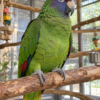
The Imperial Amazon (Amazona imperialis) is a large and exceptionally rare Amazon parrot native to Dominica. Also known as the Sisserou, this species is distinguished by deep green upperparts, purple and maroon colouring across the head and breast, and a substantial adult size reaching approximately 18.7 inches. The species is Critically Endangered and requires exceptional attention to conservation, legal documentation and responsible care.
Imperial Amazon Parrot – Amazona imperialis
The Imperial Amazon is one of the most distinctive and rare members of the Amazon parrot group. Scientifically known as Amazona imperialis, it is also commonly called the Sisserou, Dominican Amazon or August Amazon.
Unlike the predominantly bright green appearance associated with many Amazon parrots, the Imperial Amazon combines dark green plumage with rich purple, lilac, maroon and burgundy colouring across the head, neck and chest.
It is also one of the largest Amazon parrots. The World Parrot Trust currently lists the species at approximately 48 cm, or 18.7 inches, in length. Male birds may reach approximately 900 grams, while females are reported at around 650 grams.
Its striking appearance is only one part of the species’ importance. The Imperial Amazon is classified as Critically Endangered, with the World Parrot Trust reporting only about 50 mature individuals remaining in the wild.
Imperial Amazon Details
- Common Name: Imperial Amazon
- Alternative Name: Sisserou
- Other Names: Dominican Amazon, August Amazon
- Scientific Name: Amazona imperialis
- Bird Type: Amazon Parrot
- Adult Length: Approximately 48 cm / 18.7 inches
- Male Weight: Approximately 900 g
- Female Weight: Approximately 650 g
- Reported Lifespan: Approximately 50–60 years
- Natural Range: Dominica
- Conservation Status: Critically Endangered
- CITES Listing: Appendix I
What Does an Imperial Amazon Look Like?
The Imperial Amazon parrot has a much darker and more complex colour pattern than many other members of the Amazona genus.
Adult birds have a brownish-purple forehead and lores, while the cheeks and ear-coverts become browner. The crown and neck display deep burgundy and maroon tones with green-blue washes and dark feather edging.
The breast and abdomen are particularly distinctive, showing dark lilac to purple colouring with darker feather margins.
Lower portions of the body become more olive-green, while the upperparts remain dark green with black edging. Burgundy colouring can also occur at the base of several secondary flight feathers, and the wing carries a red carpal edge.
The tail includes red-brown colouring, while the bill is grey to horn-coloured.
These characteristics give Amazona imperialis a darker and more dramatic appearance than Amazon parrots with predominantly yellow or blue facial markings.
Male and Female Imperial Amazons
Male and female Imperial Amazons share broadly similar plumage.
One noticeable difference reported by the World Parrot Trust is average body weight, with males around 900 grams and females around 650 grams.
However, body size or visual appearance alone should not be used as a reliable method of determining sex in an individual bird.
Where sex identification is required, appropriate documentation or veterinary testing should be relied upon.
Prospective owners should also remember that personality cannot be predicted simply from sex. Handling history, environment, individual temperament and previous experiences can all affect behaviour.
Imperial Amazon Lifespan
The reported Imperial Amazon lifespan is approximately 50–60 years.
This makes the species a potentially decades-long commitment.
Actual lifespan can vary according to genetics, diet, exercise, environment, veterinary care and other individual factors. A lifespan figure should therefore be viewed as an estimate rather than a guarantee.
Anyone responsible for a long-lived Amazon parrot should plan for consistent care well beyond the initial purchase or adoption period.
Where Does the Imperial Amazon Come From?
The Imperial Amazon is native to Dominica in the Lesser Antilles.
The species is strongly associated with mountainous rainforest, particularly around the Morne Diablotin region. Populations have also been recorded in Dominica’s Northern and Central Forest Reserves and within Morne Trois Pitons National Park.
Wild Imperial Amazons primarily occupy forest canopy at elevations around 600–1,300 metres, although they may move to lower elevations when food becomes scarce or following major storms.
This restricted natural range makes the species particularly vulnerable to habitat loss and severe weather events.
Imperial Amazon Conservation Status
Conservation is central to any discussion of the Imperial Amazon.
The World Parrot Trust currently reports approximately 50 mature individuals, with a decreasing population trend. The species is classified as Critically Endangered and is included in CITES Appendix I.
Historical pressures have included habitat destruction, hunting and trapping.
More recently, severe hurricanes have also affected the species dramatically. The destruction of mountain rainforest can remove feeding areas, nesting trees and shelter while also directly harming birds.
Because the species is exceptionally rare, anyone dealing with an Imperial Amazon should pay close attention to legal origin, identification and transfer documentation.
Conservation status and the legality of a specific captive bird are separate matters, so documentation should always be evaluated individually.
Housing an Imperial Amazon
The Imperial Amazon is a large parrot and requires substantial space.
The World Parrot Trust recommends large aviary-style housing where appropriate, including an outdoor flight of approximately 10 × 3 × 2.5 metres and an indoor enclosure around 3 × 3 × 2.5 metres in avicultural settings.
These recommendations emphasize how much room a large Amazon parrot may need for comfortable movement.
Housing should also contain safe perches, feeding stations and opportunities for climbing and exploration.
The surrounding environment should be secure, clean and free from avoidable household hazards.
Imperial Amazon Diet
The exact wild diet includes a range of flowers, fruits, nuts and young plant shoots.
For birds under professional captive care, the World Parrot Trust notes that husbandry diets may resemble those used for other Amazon parrots while avoiding excessive fat.
Examples can include suitable fruits, vegetables, leafy greens, fresh corn, lower-fat seed mixtures and complete formulated foods.
An individual bird’s nutritional needs should always be assessed according to its health, body condition, age and veterinary guidance.
For professional bird-care information, the Association of Avian Veterinarians provides educational resources for Amazon owners:
Association of Avian Veterinarians – Pet Bird Care
Enrichment and Activity
An Imperial Amazon requires more than adequate physical space.
Environmental enrichment encourages movement, exploration, chewing, foraging and other natural behaviours.
The World Parrot Trust recommends providing bird-safe wood, wooden toys, safe natural materials, foraging opportunities and access to bathing through shallow water or misting.
Enrichment should be changed periodically rather than leaving the environment exactly the same for extended periods.
Different perch positions and textures can also encourage regular movement within the enclosure.
The Association of Avian Veterinarians provides additional educational information on companion-bird husbandry and enrichment:
Avian Veterinary Care
Professional veterinary support is essential for any Amazon parrot.
Routine examinations can establish baseline information about body weight, condition, nutrition and overall health.
Owners should also learn what normal behaviour looks like for the individual bird so that changes in appetite, activity or appearance can be recognized quickly.
The Association of Avian Veterinarians provides a searchable directory for finding veterinarians with avian expertise:
AAV Find an Avian Veterinarian
Responsible Imperial Amazon Ownership
The rarity of the Imperial Amazon makes responsible ownership and documentation particularly important.
The species is described by the World Parrot Trust as extremely rare in captivity.
Prospective buyers should never assume that an advertised bird is legitimately sourced solely because the listing uses the correct species name.
Where applicable, documentation should establish the bird’s legal captive origin and transfer history.
Buyers should also verify all relevant federal, state and local requirements before attempting to acquire, transport or keep a protected exotic bird.
Why the Imperial Amazon Is Exceptional
The Imperial Amazon stands apart from other Amazon parrots in several ways.
It is unusually large, with adults approaching 18.7 inches in length. Its purple, lilac, burgundy and dark green plumage is also substantially different from the brighter green-and-yellow colour patterns associated with many other Amazon species.
Most importantly, it is one of the world’s rarest Amazon parrots.
Its extremely limited population and restricted natural range make conservation a central part of the species’ future.
For anyone researching the Imperial Amazon, accurate species information, legitimate documentation, professional veterinary guidance and conservation awareness should take priority over purely commercial considerations.
Frequently Asked Questions
What is an Imperial Amazon?
The Imperial Amazon is a large Amazon parrot scientifically known as Amazona imperialis. It is also called the Sisserou and is native to Dominica.
How large is an Imperial Amazon?
The World Parrot Trust lists adults at approximately 48 cm, or 18.7 inches, making it one of the largest Amazon parrots.
How much does an Imperial Amazon weigh?
Reported weights are approximately 900 grams for males and 650 grams for females.
What is the Imperial Amazon lifespan?
The reported lifespan is approximately 50–60 years.
Where is the Imperial Amazon found naturally?
The species is native to Dominica, particularly mountainous rainforest areas including the Morne Diablotin region.
Is the Imperial Amazon endangered?
Yes. The species is currently classified as Critically Endangered, with the World Parrot Trust reporting only about 50 mature individuals.
Is the Imperial Amazon common in captivity?
No. The World Parrot Trust describes the Imperial Amazon as extremely rare in captivity.
Where can I learn more about Amazon parrot care?
The Association of Avian Veterinarians provides companion-bird care resources:
Where can I find an avian veterinarian?
The Association of Avian Veterinarians provides a veterinarian directory:
Be the first to review “Imperial Amazon”
Related products

Amazon Parrots
Amazon Parrots

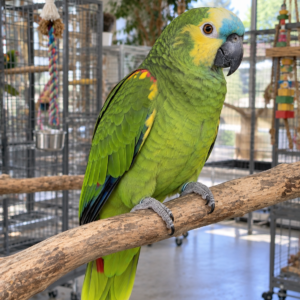
Amazon Parrots
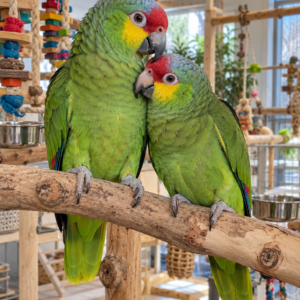
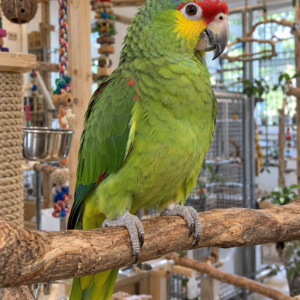
Amazon Parrots

Amazon Parrots
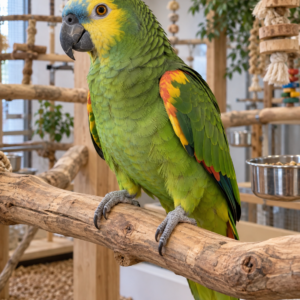

Amazon Parrots


Amazon Parrots

Amazon Parrots
Reviews
There are no reviews yet.