


Crimson Rosella for Sale
Original price was: $1,200.00.$999.00Current price is: $999.00.
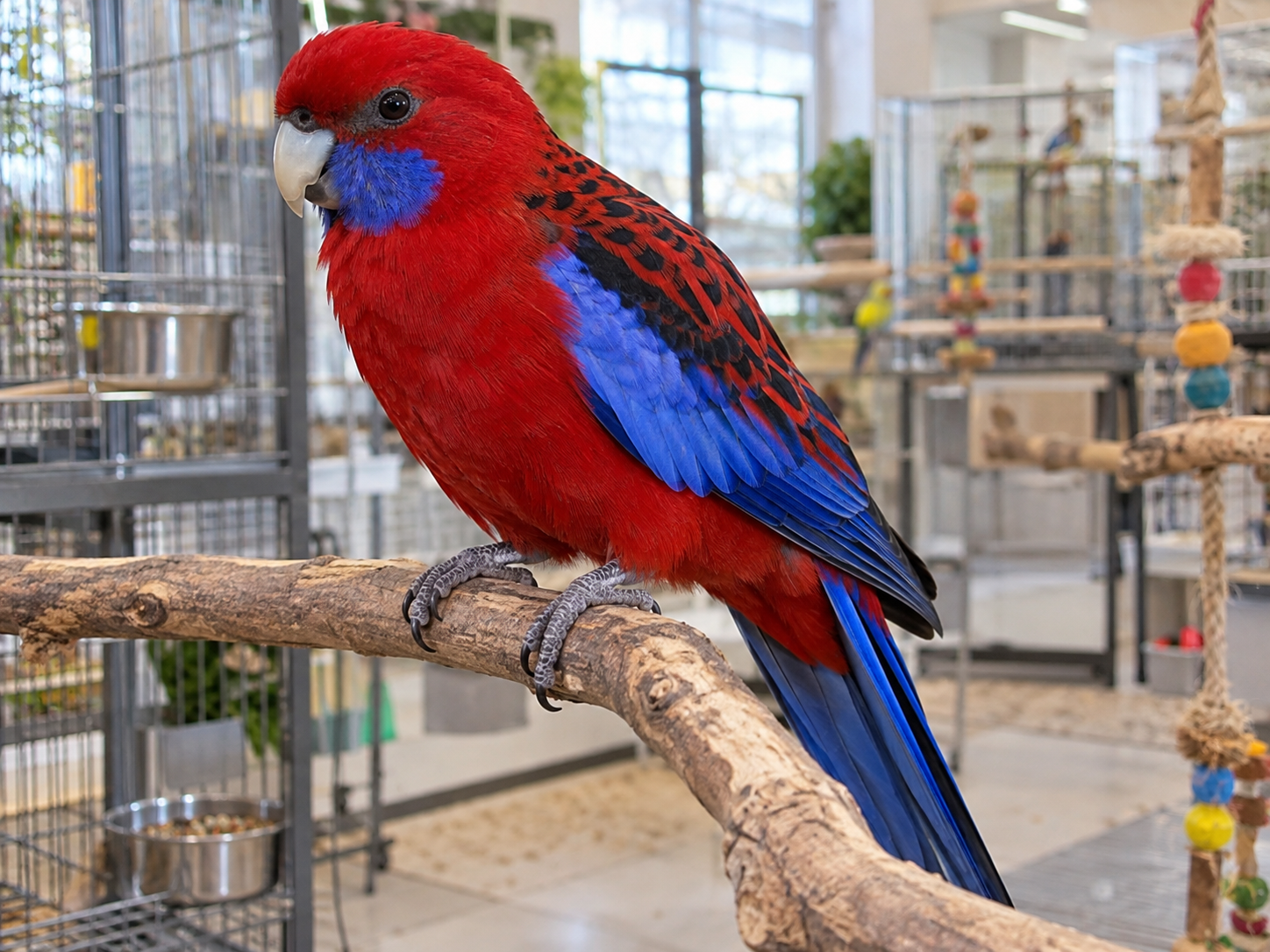
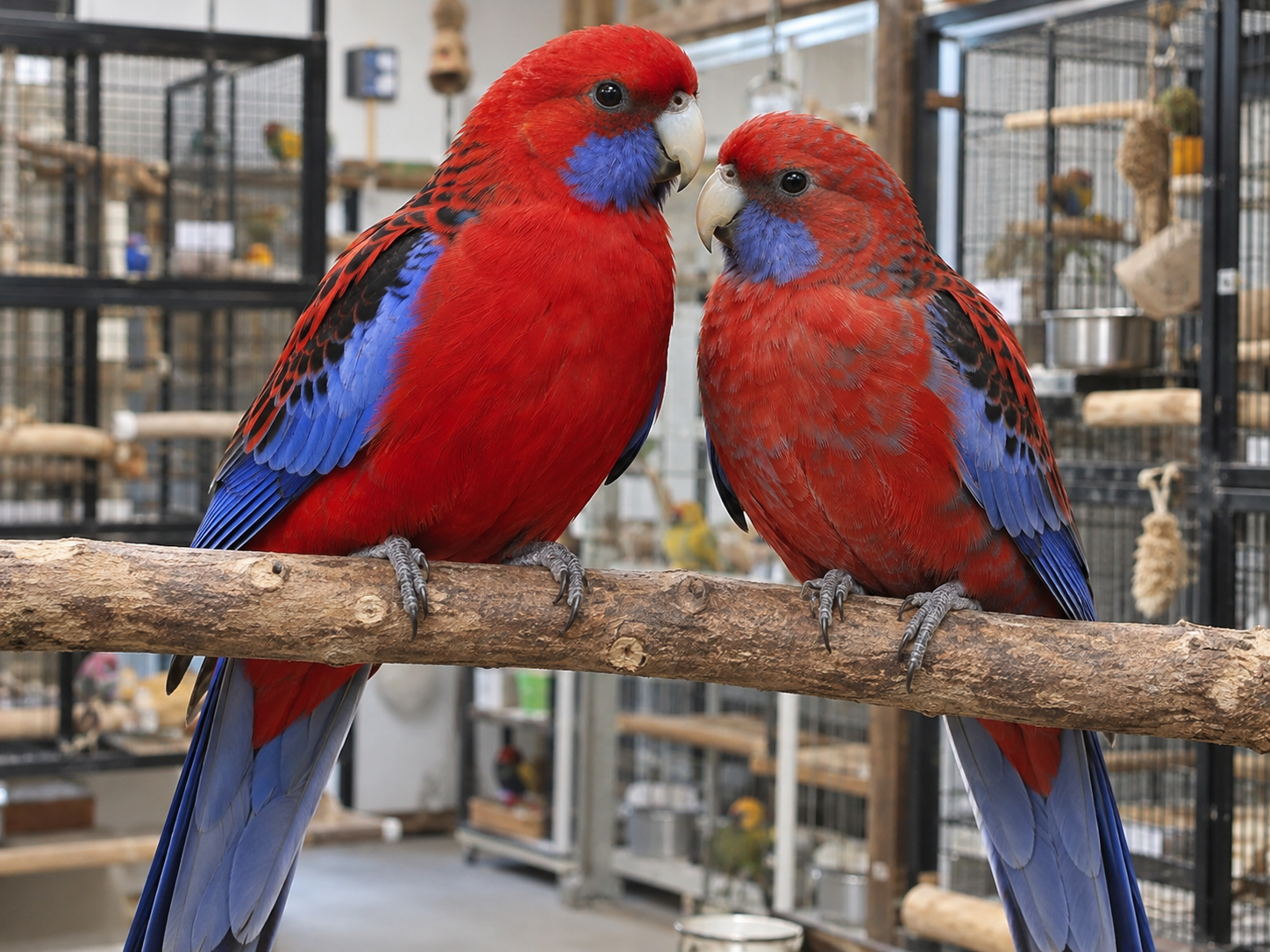
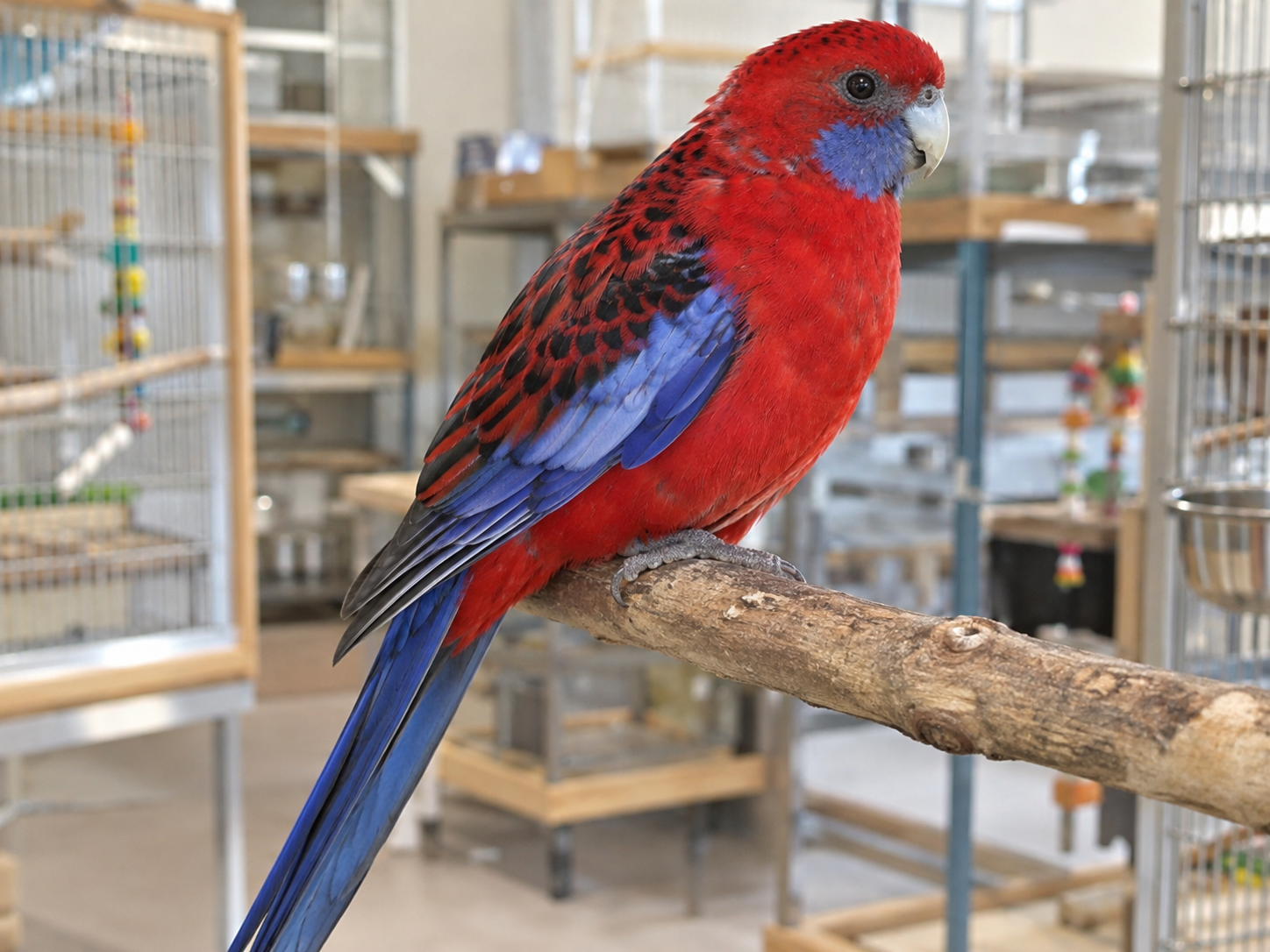
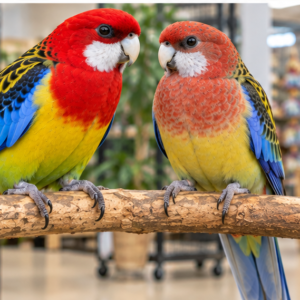
Male and female Crimson Rosellas are represented in this listing. Scientifically known as Platycercus elegans, this Australian parakeet is recognized for vivid crimson-red plumage, blue-purple cheek patches, blue wing feathers and a long dark blue tail. Adults reach approximately 14 inches and weigh around 115–170 grams. Blue Crimson Rosellas also occur as a captive colour mutation in which the usual red and yellow pigments are greatly reduced or absent.
Crimson Rosella for Sale – Male & Female
Male and female Crimson Rosellas are represented in this listing. Scientifically known as Platycercus elegans, this Australian parakeet is recognized for vivid crimson-red plumage, blue-purple cheek patches, blue wing feathers and a long dark blue tail. Adults reach approximately 14 inches and weigh around 115–170 grams. Blue Crimson Rosellas also occur as a captive colour mutation in which the usual red and yellow pigments are greatly reduced or absent.
Crimson Rosella for Sale – Male and Female
For buyers researching a crimson rosella for sale, the Crimson Rosella is an Australian parakeet known for its intense red body colouring, contrasting blue facial patches and long elegant tail.
Scientifically classified as Platycercus elegans, adults measure approximately 36 cm, or 14 inches, and weigh around 115–170 grams.
The species occurs naturally in several colour and geographic forms across Australia, while selective aviculture has also produced colour mutations such as the Blue Crimson Rosella.
Both male and female birds can display the characteristic crimson-and-blue appearance, although subtle differences may occur between the sexes.
Crimson Rosella Details
- Common Name: Crimson Rosella
- Scientific Name: Platycercus elegans
- Bird Type: Australian Parakeet
- Sex Represented: Male and Female
- Adult Size: Approximately 14 inches
- Adult Weight: Approximately 115–170 g
- Reported Lifespan: Approximately 10–15 years
- Natural Colours: Crimson red, blue-purple and black
- CITES Listing: Appendix II
- IUCN Status: Least Concern
The World Parrot Trust currently recognizes seven subspecies of Platycercus elegans.
What Does a Crimson Rosella Look Like?
The standard adult Crimson Rosella has a rich dark-red body.
Its cheeks contain striking purple-blue patches, while the bend of the wings and several flight and wing-cover feathers display vivid blue.
The mantle and back are darker, with black feathers edged or spotted with crimson.
The tail is predominantly dark blue with broader pale blue or whitish tips.
Adult birds have a grey-white bill and dark brown eyes.
This combination of deep crimson and electric blue makes the species visually distinctive among Australian parrots.
Male and Female Crimson Rosellas
Adult males and females look broadly similar.
The World Parrot Trust describes the female as generally similar to the male but notes that the tail can have a dull green wash. Females can also have a somewhat smaller bill with a narrower upper mandible.
These visual differences are subtle.
If confirmed sex is important, appropriate documentation or professional testing is more reliable than judging appearance alone.
Blue Crimson Rosella
The phrase blue crimson rosella refers to a colour mutation rather than a separate species.
The blue mutation is recessive. In this mutation, pigments responsible for much of the normal red and yellow colouring are absent, while the existing blue and dark pigment areas remain. This can give the bird a dramatically different pale, blue-grey or whitish appearance compared with the standard crimson form.
Blue Crimson Rosellas have been bred in captivity, although they are not considered as common as standard-coloured birds.
For product listings, a blue bird should therefore be identified specifically as a Blue Crimson Rosella mutation, rather than suggesting that blue is the standard wild colour of the species.
Crimson Rosella Size
Adult Crimson Rosellas reach approximately 14 inches in overall length.
Their relatively long tails account for a significant portion of this measurement.
They weigh approximately 115–170 grams, placing them well below the size of large parrots such as macaws but still requiring adequate flight and exercise space.
Crimson Rosella Lifespan
The World Parrot Trust reports a captive longevity of approximately 10–15 years for the Crimson Rosella.
Individual longevity can vary depending on:
- Genetics
- Nutrition
- Veterinary care
- Housing
- Exercise
- Environmental safety
- Overall husbandry
Prospective owners should therefore prepare for a long-term commitment rather than focusing only on the initial purchase.
Crimson Rosella Price
People researching crimson rosella price should understand that there is no single universal price for every bird.
Pricing may vary according to:
- Age
- Sex
- Colour mutation
- Individual condition
- Handling history
- Documentation
- Geographic location
- Availability
Rare colour mutations, including a Blue Crimson Rosella, may also be priced differently from standard-coloured birds.
Because no exact selling price has been supplied for this listing, the current product price should be displayed directly rather than inserting an unsupported market estimate.
Crimson Rosella Personality and Behaviour
Wild Crimson Rosellas may occur alone, in pairs or in groups depending on age and season.
Young birds are more likely to gather in flocks, while large groups of adults are less common. Wild Crimson Rosellas can be relatively approachable when feeding.
Birds under human care still require appropriate space, predictable routines and environmental enrichment.
Individual temperament varies, so behaviour should be evaluated bird by bird.
Crimson Rosella Sounds
Crimson Rosellas produce several different vocalizations.
Flight calls can include two-syllable notes and mellow piping sounds. When perched, they may make soft twitters and clucking sounds.
When frightened or threatened, calls can become sharper, including metallic notes and shrieks.
Prospective owners should therefore expect normal parrot vocalization.
Housing a Crimson Rosella
The World Parrot Trust recommends a walk-in enclosure with a minimum length of approximately 3 metres, or 9.8 feet, in avicultural settings.
Suitable housing should provide:
- Adequate flight space
- Natural perches
- Multiple perch positions
- Clean feeding stations
- Bathing opportunities
- Bird-safe branches
- Areas for exploration
Crimson Rosellas also like scratching around on the ground, so an appropriate clean substrate can provide additional behavioural enrichment.
Enrichment
Crimson Rosellas benefit from bird-safe branches that can be chewed and explored.
The World Parrot Trust recommends materials such as willow, elder and pine branches, along with access to bathing areas.
A varied environment can also include:
- Foraging opportunities
- Safe natural branches
- Swings
- Flight space
- Different perch sizes
- Bathing dishes
Enrichment should be rotated periodically to keep the environment engaging.
Diet and Nutrition
A varied diet is important for Crimson Rosella health.
The World Parrot Trust references appropriately managed seed mixtures, sprouted foods, legumes, leafy greens, vegetables, fruits, nuts and complete formulated foods in captive husbandry.
Diet should still be adapted to the individual bird’s age, condition and veterinary recommendations.
For additional professional bird-care guidance, the Association of Avian Veterinarians provides educational resources for bird owners:
Association of Avian Veterinarians
Natural Range of the Crimson Rosella
The Crimson Rosella is native to Australia.
Different subspecies occur across eastern and southeastern Australia, northeastern Queensland, South Australia and other localized regions.
Habitats vary considerably and include:
- Rainforest
- Eucalyptus forest
- Open woodland
- Cultivated areas
- Parks
- Suburban gardens
- Riverine woodland
Some populations have also been introduced outside their original range.
Crimson Rosella Conservation Status
The Crimson Rosella is currently classified as Least Concern and listed under CITES Appendix II.
However, the World Parrot Trust reports that the overall population trend is decreasing. Habitat clearance has affected some populations even though the species remains generally common or abundant across much of its range.
Responsible sourcing remains important for any captive parrot.
Preparing for Crimson Rosella Ownership
Before choosing a Crimson Rosella for sale, the bird’s environment should already be prepared.
That means having suitable housing, perches, feeding equipment, enrichment and access to appropriate veterinary care.
Prospective owners should also consider:
- Available flight space
- Daily care
- Noise
- Diet
- Enrichment
- Long-term costs
The purchase itself is only the beginning of responsible bird ownership.
Why the Crimson Rosella Is Distinctive
The Crimson Rosella combines striking colour with the elegant shape of an Australian parakeet.
Its deep red plumage, purple-blue cheek patches and blue wings create an immediately recognizable appearance.
The existence of captive colour mutations such as the Blue Crimson Rosella provides additional variety while still belonging to the same species, Platycercus elegans.
For buyers searching for a Crimson Rosella for sale, accurate identification, suitable housing, veterinary planning and responsible sourcing should all be considered alongside price and colour.
Frequently Asked Questions
What is the scientific name of the Crimson Rosella?
The scientific name is Platycercus elegans.
How big is a Crimson Rosella?
Adults reach approximately 36 cm, or 14 inches, in length.
How much does a Crimson Rosella weigh?
Adults weigh approximately 115–170 grams.
How long does a Crimson Rosella live?
The World Parrot Trust reports approximately 10–15 years in captivity.
What is a Blue Crimson Rosella?
A Blue Crimson Rosella is a recessive colour mutation of the Crimson Rosella in which the normal red and yellow pigments are greatly reduced or absent. It is not a separate species.
What is the Crimson Rosella price?
The Crimson Rosella price can vary according to age, sex, colour mutation, location, documentation, condition and availability. The current listing should display the actual selling price.
Are male and female Crimson Rosellas different?
The sexes look similar. Females may show a dull green wash on the tail and can have a somewhat smaller bill.
What colours does a normal Crimson Rosella have?
Adults are primarily dark crimson-red with purple-blue cheeks and blue wings and tail feathers.
Where can I learn more about professional bird care?
The Association of Avian Veterinarians provides professional bird-care information:
Be the first to review “Crimson Rosella for Sale”
Related products
Australian Parakeets


Australian Parakeets

Australian Parakeets
Australian Parakeets
Reviews
There are no reviews yet.