


Bourke’s Parrot for Sale
$550.00
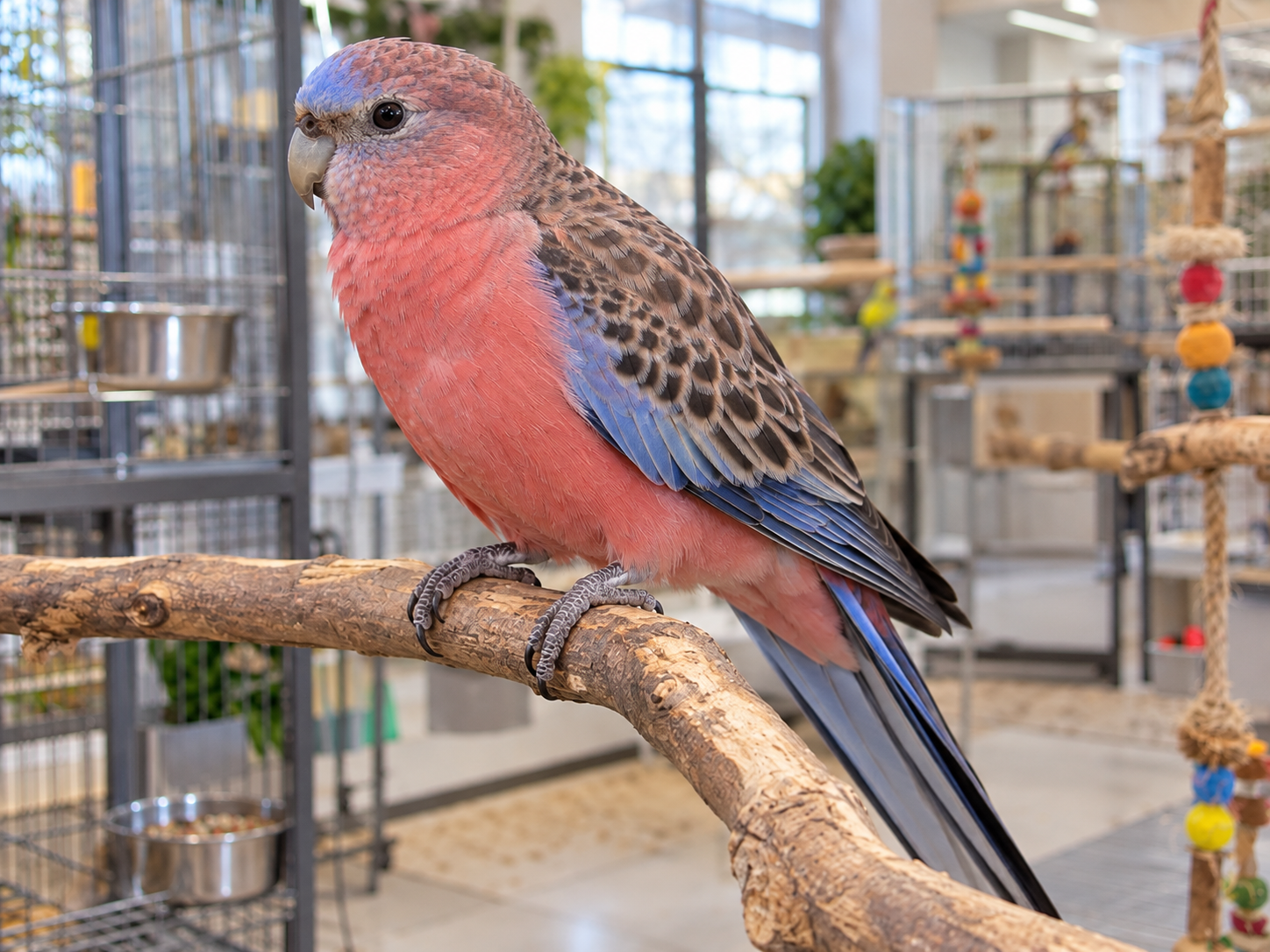
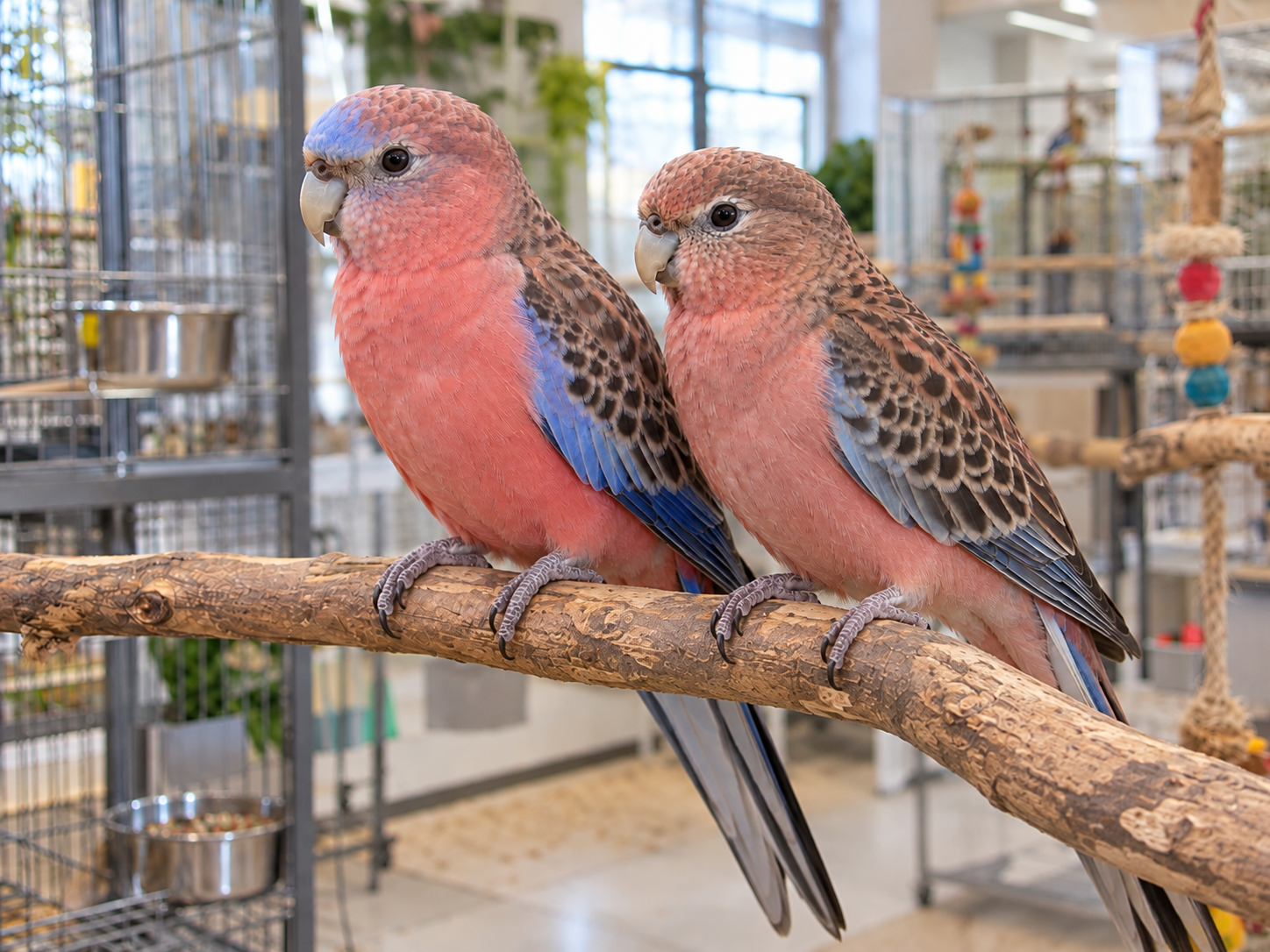
Male and female Bourke’s Parrots are represented in this listing. Scientifically known as Neopsephotus bourkii, this small Australian parakeet is recognized for its soft pink breast, brown-grey upper plumage and blue markings around the forehead, wings, rump and tail. Adults reach approximately 7.5 inches and weigh around 40–50 grams. Bourke’s Parrots are particularly active around dawn and dusk and require suitable flight space, enrichment, balanced nutrition and regular avian veterinary care.
Bourke’s Parrot for Sale – Male & Female
For buyers researching a Bourke’s Parrot for sale, this Australian parakeet stands apart from many brightly coloured companion parrots through its softer pink, brown and blue plumage.
Scientifically classified as Neopsephotus bourkii, the species is also known as the Bourke’s Parakeet, Bourke’s Grass-Parakeet, Pink-bellied Parakeet, Blue-vented Parakeet and Sundown Parrot.
The World Parrot Trust lists adult Bourke’s Parrots at approximately 19 cm, or 7.5 inches, with an adult weight of around 40–50 grams.
Their relatively compact size makes them physically different from larger parrots, but they still require adequate flight space, social interaction and appropriate daily care.
Bourke’s Parrot Details
- Common Name: Bourke’s Parrot
- Alternative Name: Bourke’s Parakeet
- Scientific Name: Neopsephotus bourkii
- Bird Type: Australian Parakeet
- Sex Represented: Male and Female
- Adult Size: Approximately 7.5 inches
- Adult Weight: Approximately 40–50 g
- Reported Longevity: Around 12 years
- Natural Colours: Pink, brown, grey and blue
- Natural Range: Australia
- Conservation Status: Least Concern
The World Parrot Trust describes the wild population as fairly common and increasing.
What Does a Bourke’s Parrot Look Like?
The Bourke’s Parrot has a subtle colour palette compared with many other parakeets.
Adult males have olive-brown upperparts combined with a blue forehead and blue line extending above the eyes.
The throat and lower cheeks contain grey-pink colouring, while the abdomen develops a stronger rose-pink appearance.
Blue is also visible across the rump, tail coverts and portions of the wings.
The upper wing feathers are primarily brown with lighter edging, while the tail combines dark brown with blue and lighter tips.
This mixture of dusty pink, earthy brown and soft blue gives the bird its distinctive appearance.
Male and Female Bourke’s Parrots
Male and female Bourke’s Parrots are similar in general appearance, but there are useful visual differences.
The male typically has a more pronounced blue frontal band extending across the forehead and above the eyes.
Females usually show a reduced frontal band or may lack the strong blue forehead marking entirely. Females also tend to be slightly smaller than males.
Because individual colouring varies, confirmed sex should rely on appropriate records or professional testing where certainty is required.
Bourke’s Parrot Size
The typical Bourke’s Parrot reaches approximately 7.5 inches according to the World Parrot Trust. Other zoological references report an overall range of roughly 7–9 inches depending on the individual.
Adults generally weigh around 40–50 grams.
Despite this small body size, the species is an active flier.
Housing should therefore prioritize horizontal flight space rather than simply providing a tall but narrow enclosure.
Bourke’s Parrot Lifespan
Reliable longevity records vary somewhat between sources.
The World Parrot Trust reports approximately 12 years, while the AnAge longevity database documents a captive individual reaching 12.6 years.
Actual lifespan depends on factors including:
- Genetics
- Diet
- Exercise
- Veterinary care
- Housing
- Environmental safety
- General husbandry
A lifespan figure should therefore be treated as an estimate rather than a guarantee.
Bourke’s Parrot Price
People researching Bourke’s Parrot price should consider the individual bird rather than relying on a single generic figure.
Price can vary depending on:
- Age
- Sex
- Colour mutation
- Handling history
- Health information
- Documentation
- Location
- Current availability
Because no selling price has been provided for this listing, the product page should display your actual current price rather than using an unsupported market estimate.
Colour mutations may also be priced differently from standard-coloured Bourke’s Parrots.
Rosy Bourke Parakeet
The Rosy Bourke Parakeet is a well-known captive colour form associated with stronger pink colouring than the natural wild-type bird.
Selective breeding has produced several visually distinctive Bourke’s Parrot colour varieties.
When listing a particular mutation, the product title and photographs should identify the actual colour form accurately rather than presenting every Bourke’s Parrot as having the same colouring.
This also gives you an opportunity to create separate SEO pages later for specific mutations instead of forcing all colour-related keywords into one product page.
Bourke’s Parrot Behaviour
One of the most interesting features of the Bourke’s Parrot is its daily activity pattern.
Unlike many parrots that are highly active throughout daylight hours, Bourke’s Parrots are especially active around dawn and dusk.
This is why “Sundown Parrot” is among the common names used for the species.
Wild birds may occur in small groups of around four to six individuals, although considerably larger flocks can develop under some environmental conditions.
Owners may therefore notice increased flying, calling and social activity during the early morning and evening.
Sounds and Vocal Behaviour
Bourke’s Parrots are generally less intense vocally than many larger parrots.
Their vocalizations are usually softer and more melodic than the powerful calls associated with macaws or Amazon parrots.
However, they remain parrots and should not be advertised as completely silent.
Individual birds may communicate more frequently during their naturally active periods around sunrise and sunset.
Housing a Bourke’s Parrot
Bourke’s Parrots need adequate horizontal flight space.
The World Parrot Trust recommends a walk-in enclosure with a minimum length of approximately 2.1 metres, or 6.9 feet, or an indoor suspended aviary approximately 1.8 metres, or 6 feet, long.
A suitable environment should include:
- Natural wooden perches
- Clear flight paths
- Multiple perch positions
- Clean feeding stations
- Bathing opportunities
- Safe climbing branches
- Bird-safe enrichment
Length is particularly valuable because these birds naturally fly horizontally.
Enrichment and Daily Activity
The World Parrot Trust recommends providing safe seeding grasses, climbing branches and bathing opportunities for Bourke’s Parrots.
Other suitable enrichment can include:
- Natural perches
- Foraging opportunities
- Safe shreddable materials
- Swings
- Bathing dishes
- Flight time
- Simple bird-safe toys
The environment should allow movement rather than being crowded with unnecessary accessories that restrict flight.
Bourke’s Parrot Diet
A varied feeding program is important.
The World Parrot Trust lists small seed mixtures containing foods such as canary seed and millet, together with leafy greens, seeding grasses, suitable fruits and complete formulated foods as components used in captive husbandry.
Nutrition should nevertheless be adjusted according to the individual bird’s health, weight and veterinary guidance.
Owners should avoid assuming that seed alone automatically provides a complete long-term diet.
For professional companion-bird guidance, the Association of Avian Veterinarians provides bird-care resources:
Association of Avian Veterinarians
Natural Range of Bourke’s Parrot
Bourke’s Parrots are native to Australia.
They inhabit dry inland regions and are associated with environments including:
- Open woodland
- Grassland
- Shrubland
- Mulga habitat
- Semi-arid regions
Their muted brown and pink natural colouring can provide effective camouflage against dry soil and vegetation.
Wild birds may also visit watering points around dawn or dusk.
Bourke’s Parrot Conservation Status
The Bourke’s Parrot is currently classified as Least Concern.
The World Parrot Trust describes the species as fairly common with an increasing population, although an exact global population estimate is not provided.
Responsible captive sourcing remains important even for species that are not currently threatened.
Veterinary Care
Access to an avian veterinarian should be arranged before acquiring any companion parrot.
Routine examinations can help establish baseline information regarding:
- Weight
- Plumage
- Feet
- Beak
- Nutrition
- Activity
- General physical condition
Professional guidance is also helpful when adjusting diet and husbandry.
The Association of Avian Veterinarians provides bird-owner education and avian veterinary resources:
Association of Avian Veterinarians
Preparing for Bourke’s Parrot Ownership
Before choosing a Bourke’s Parrot for sale, the bird’s environment should already be prepared.
A suitable setup should provide:
- Horizontal flight space
- Safe natural perches
- Food and water stations
- Bathing opportunities
- Enrichment
- A balanced feeding plan
- Access to avian veterinary care
Buyers should also consider whether they want a single bird or have the space and experience to provide an appropriate social arrangement.
Why the Bourke’s Parrot Is Distinctive
The Bourke’s Parrot combines an unusual dusty-pink appearance with soft blue markings and an active dawn-and-dusk lifestyle.
At only about 7.5 inches and 40–50 grams, it is considerably smaller than many popular companion parrots while still requiring adequate flight space and enrichment.
For buyers searching for a Bourke’s Parrot for sale, the bird’s individual sex, colour form, condition, housing requirements and long-term veterinary needs should all be considered alongside purchase price.
Frequently Asked Questions
What is the scientific name of Bourke’s Parrot?
The scientific name is Neopsephotus bourkii.
Is Bourke’s Parrot the same as Bourke’s Parakeet?
Yes. Bourke’s Parakeet is another common name for the same species.
How big is a Bourke’s Parrot?
Adults measure approximately 19 cm, or 7.5 inches, according to the World Parrot Trust.
How much does a Bourke’s Parrot weigh?
Adults generally weigh around 40–50 grams.
How long does a Bourke’s Parrot live?
Reliable captive records indicate roughly 12 years, with AnAge documenting a maximum recorded captive longevity of 12.6 years.
What colour is a Bourke’s Parrot?
Wild-type adults combine olive-brown and brown plumage with pink across the breast and abdomen and blue around the forehead, rump, wings and tail.
How can you tell a male Bourke’s Parrot from a female?
Males generally have a more prominent blue band across the forehead. Females usually have reduced or absent blue frontal colouring and may be slightly smaller.
What is the Bourke’s Parrot price?
Price varies according to age, sex, colour mutation, location, documentation, condition and availability. The individual listing should display the actual current selling price.
When are Bourke’s Parrots most active?
They are particularly active around dawn and dusk, which is one reason the species is sometimes called the Sundown Parrot.
Where can I learn more about professional bird care?
The Association of Avian Veterinarians provides professional companion-bird information:
Be the first to review “Bourke’s Parrot for Sale”
Related products

Australian Parakeets
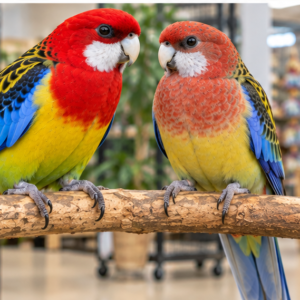
Australian Parakeets


Australian Parakeets


Australian Parakeets
Reviews
There are no reviews yet.