


Bronze Winged Pionus for Sale

Original price was: $900.00.$850.00Current price is: $850.00.
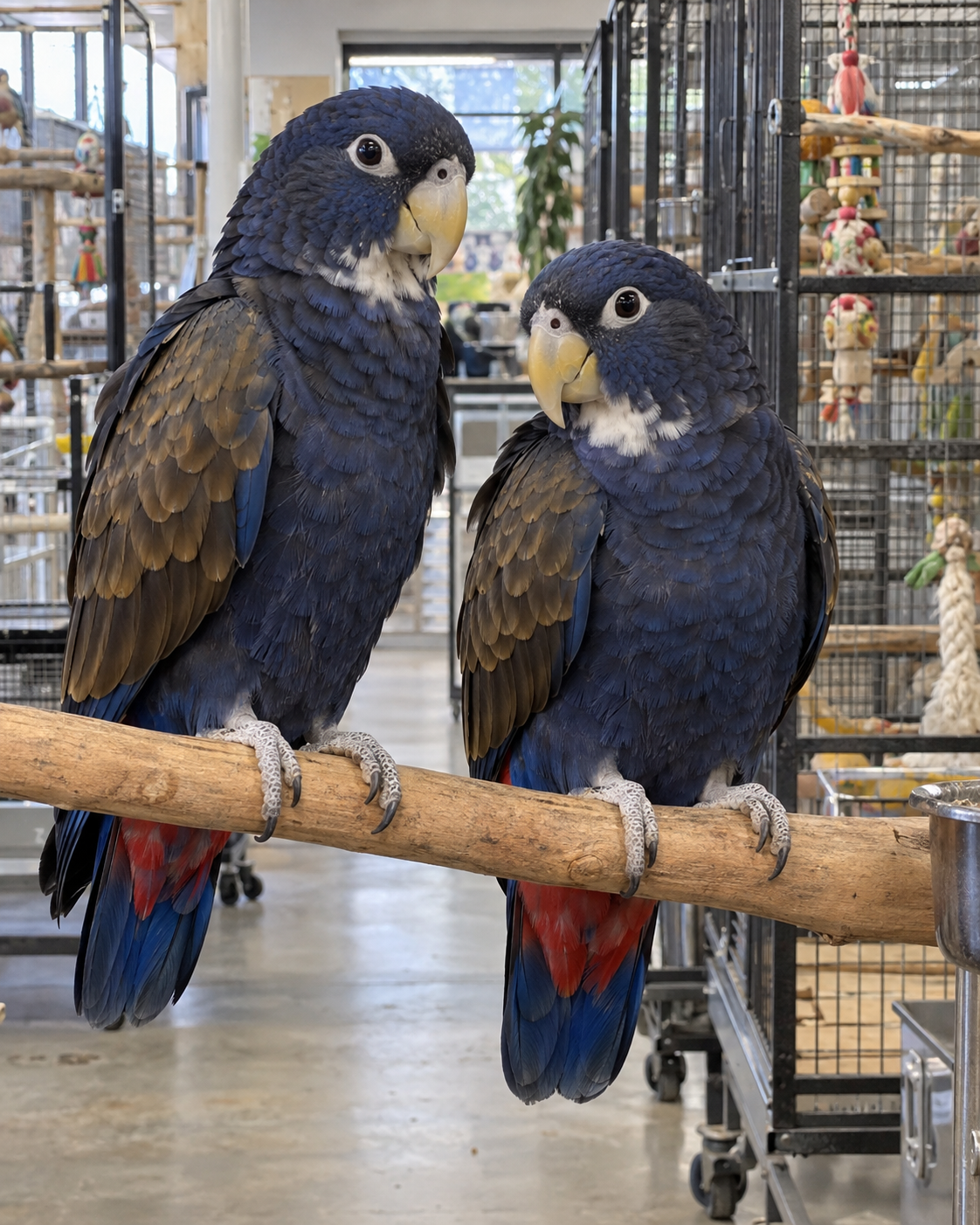
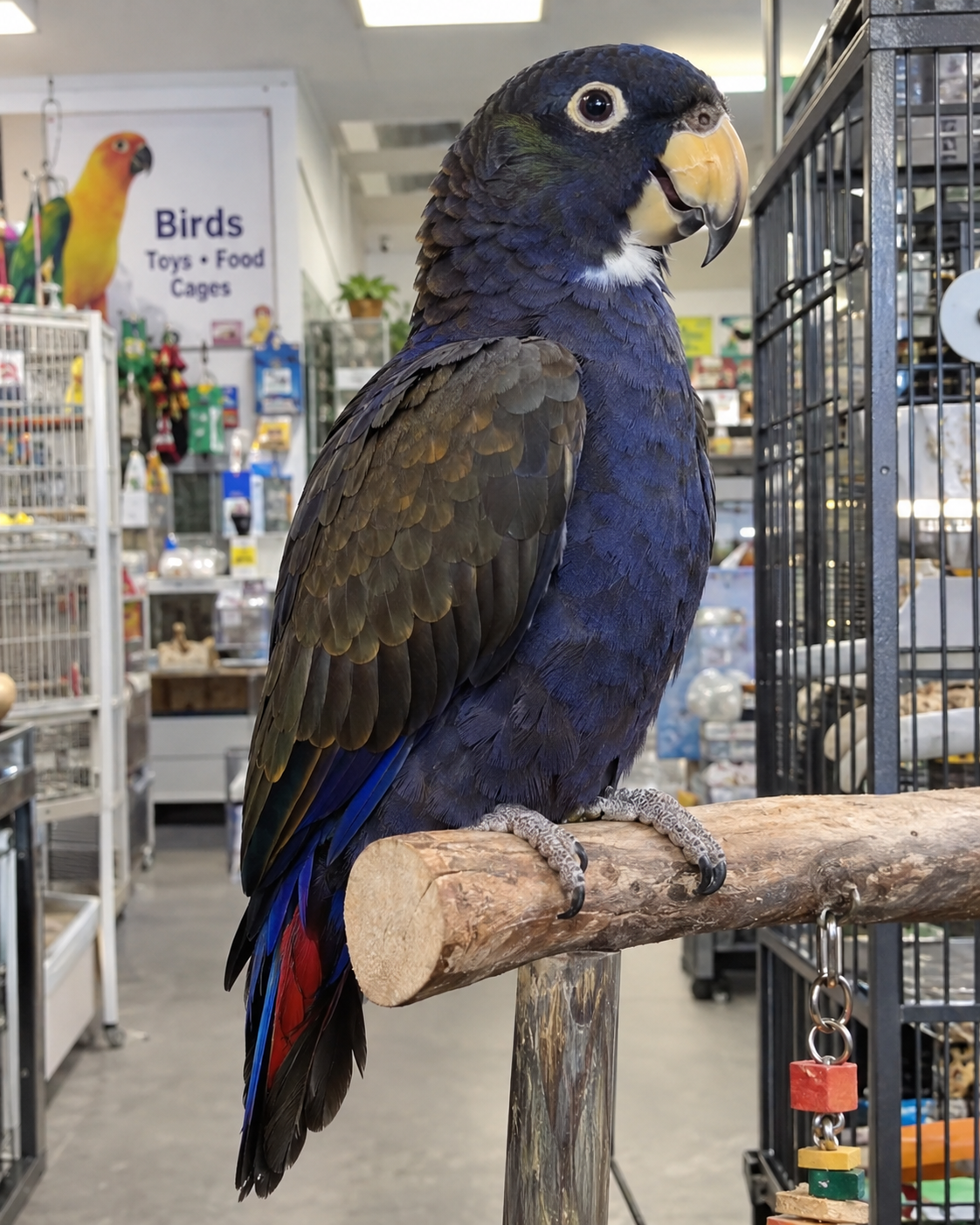
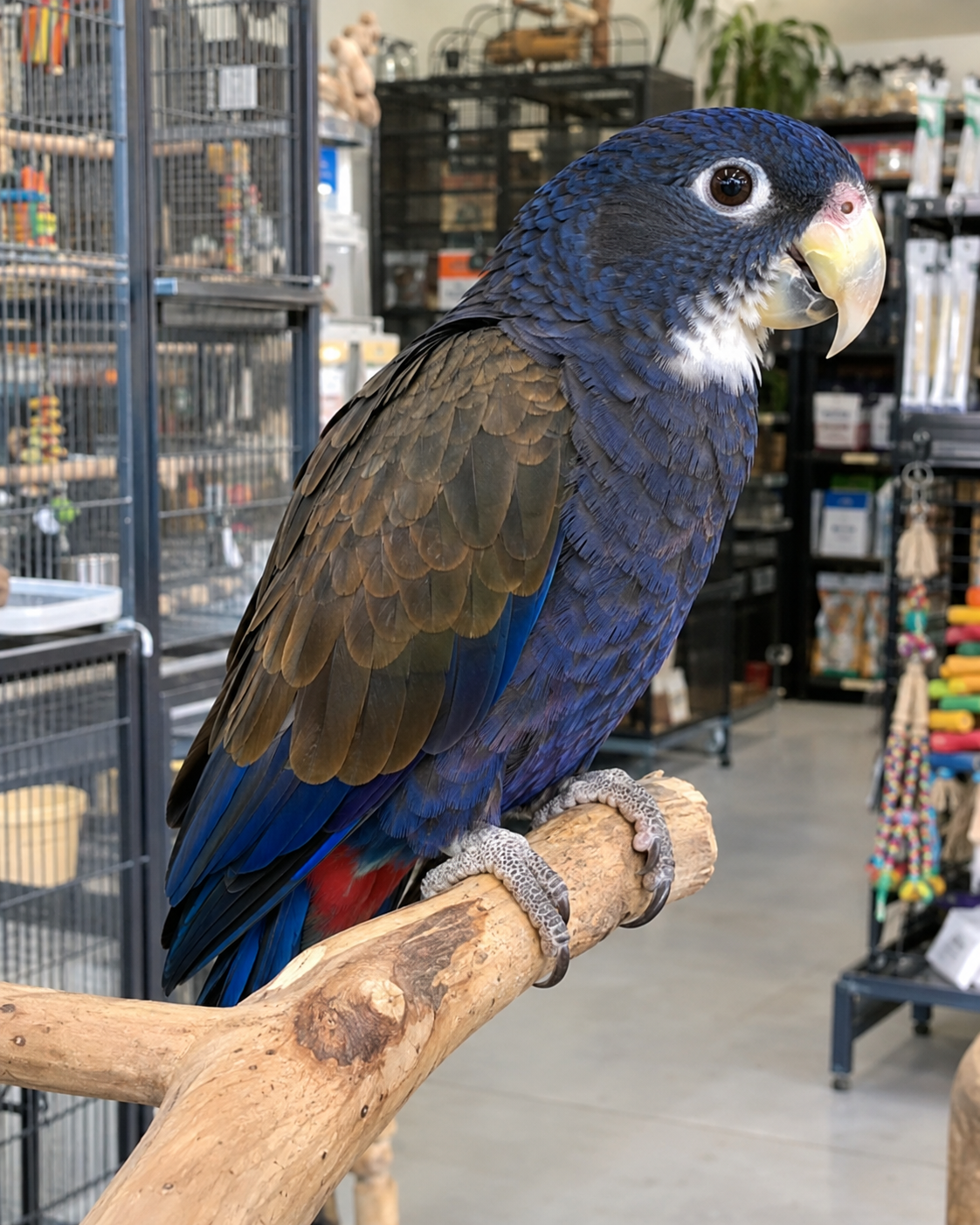
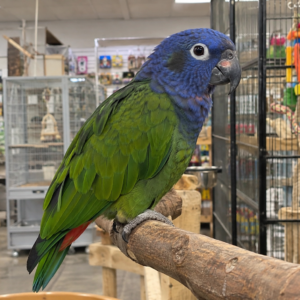
Male and female Bronze Winged Pionus parrots are represented in this listing. Scientifically known as Pionus chalcopterus, this South American parrot is distinguished by dark blue-purple body plumage, bronze-brown wings, a white chin, deep blue lower back and the characteristic red undertail feathers associated with Pionus parrots. Adults reach approximately 11.3 inches and weigh around 210 grams. With a reported lifespan of approximately 35–40 years, Bronze Winged Pionus parrots require appropriate housing, balanced nutrition, enrichment and long-term avian veterinary care.
Bronze Winged Pionus for Sale – Male & Female
For buyers researching a bronze winged pionus for sale, the Bronze Winged Pionus is a medium-sized South American parrot with unusually deep and subtle colouring.
Scientifically classified as Pionus chalcopterus, the species is also known as the Bronze-winged Parrot.
Adults reach approximately 11.3 inches in overall length and weigh around 210 grams.
Rather than displaying the extremely bright greens, yellows and reds found in some tropical parrots, the Bronze Winged Pionus combines dark purple-blue plumage with bronze-brown wing feathers, blue across the lower back and tail, and bright red undertail coverts.
In suitable lighting, these colours can appear especially rich and metallic.
Bronze Winged Pionus Details
- Common Name: Bronze Winged Pionus
- Alternative Name: Bronze-winged Parrot
- Scientific Name: Pionus chalcopterus
- Bird Type: South American Parrot
- Sex Represented: Male and Female
- Adult Size: Approximately 11.3 inches
- Adult Weight: Approximately 210 g
- Reported Lifespan: Approximately 35–40 years
- Primary Colours: Purple-blue, bronze-brown, blue and red
- Natural Range: Northwestern South America
- Conservation Status: Least Concern
- CITES Listing: Appendix II
What Does a Bronze Winged Pionus Look Like?
The adult Bronze Winged Pionus has a distinctive dark appearance.
Much of the body is deep purple-blue, while the head and neck contain bronze-brown feathers broadly edged with darker blue-purple colouring.
The chin is white.
A muted pink edge appears across some feathers of the front of the neck, creating a subtle band when viewed closely.
The upper back and mantle are bronze-green, while the lower back and rump become a deeper blue.
The wing coverts carry the characteristic bronze-brown colouring that gives the species its common name.
The tail is dark blue with red near its base, while the undertail coverts are distinctly red.
The beak is yellowish and the eyes are brown.
Male and Female Bronze Winged Pionus
Male and female Bronze Winged Pionus parrots look very similar externally.
Unlike species such as Eclectus parrots, plumage does not provide an obvious visual way to distinguish adult males from females.
Where confirmed sex matters, appropriate breeder documentation or professional DNA sex testing is preferable.
Individual temperament should also not be predicted solely from sex.
Personality may be influenced by:
- Socialization
- Age
- Handling history
- Environment
- Daily routine
- Previous experiences
Bronze Winged Pionus Size
The Bronze Winged Pionus reaches approximately 11.3 inches in overall length.
Adult weight is around 210 grams.
This makes it considerably smaller than large Amazon parrots and macaws while still giving it a substantial, compact parrot build.
Housing should provide enough room for:
- Wing stretching
- Climbing
- Moving between perches
- Foraging
- Bathing
- Safe exercise
Bronze Winged Pionus Lifespan
The reported Bronze Winged Pionus lifespan is approximately 35–40 years.
That makes ownership a significant long-term commitment.
Actual longevity can vary according to:
- Genetics
- Nutrition
- Veterinary care
- Exercise
- Housing quality
- Environmental safety
- Body condition
- Overall husbandry
Potential owners should therefore consider future care requirements before choosing this species.
Bronze Winged Pionus Personality
Pionus parrots are often described as observant and socially aware birds.
The Bronze Winged Pionus benefits from regular interaction while also having opportunities to explore and occupy itself independently.
A suitable daily routine can include:
- Foraging
- Climbing
- Training
- Exploring
- Safe chewing
- Bathing
- Social interaction
Individual behaviour varies, so prospective owners should evaluate the bird itself rather than relying on a universal personality description.
Are Bronze Winged Pionus Parrots Loud?
Bronze Winged Pionus parrots are vocal birds.
Their natural flight calls can be harsh and screeching.
They may also use softer social sounds in everyday interaction.
Although many Pionus parrots are not generally associated with the extreme volume of large macaws, buyers should not expect them to remain silent.
Every parrot will communicate vocally to some degree.
Pionus Wheezing Behaviour
Pionus parrots have an unusual behaviour that can surprise inexperienced owners.
When frightened, excited or stressed, some Pionus parrots may briefly produce wheezing or gasping sounds.
This behaviour can occur even when the bird is not experiencing respiratory illness.
However, persistent or unexplained breathing changes should never automatically be dismissed as normal Pionus behaviour.
Any concern involving breathing should be assessed by an avian veterinarian.
Housing a Bronze Winged Pionus
Adequate movement space is important.
Professional avicultural guidance recommends an aviary or suspended enclosure approximately 6.5–9.8 feet in length.
A suitable environment should include:
- Natural wooden perches
- Different perch diameters
- Horizontal movement space
- Climbing opportunities
- Food and water stations
- Safe chewable enrichment
- Bathing access
- Foraging opportunities
Open space should remain available so the bird can move comfortably.
Enrichment for Bronze Winged Pionus Parrots
Bronze Winged Pionus parrots can be vigorous chewers.
Suitable enrichment may include:
- Bird-safe branches
- Wooden block toys
- Sterilized pine cones
- Climbing ropes
- Ladders
- Swings
- Puzzle toys
- Foraging toys
- Safe noise-making toys
- Bathing opportunities
Bird-safe natural branches can provide both exercise and chewing opportunities.
Enrichment should be inspected regularly and replaced when heavily damaged.
Bronze Winged Pionus Diet
A varied diet is important for long-term health.
A managed feeding program may include suitable formulated parrot food together with fresh vegetables and moderate portions of fruit.
Suitable fresh foods may include:
- Apple
- Pear
- Orange
- Banana
- Pomegranate
- Carrot
- Celery
- Green beans
- Peas
- Fresh corn
- Leafy greens
Sprouted or cooked legumes and limited appropriate seed mixtures may also be incorporated depending on individual nutritional needs.
Diet should be adjusted according to the bird’s age, weight, activity and veterinary recommendations.
Fruit and Fresh Foods
Fresh foods can provide useful nutritional and sensory variety.
Fruit should be washed thoroughly before serving and offered as part of a balanced feeding program.
Vegetables and leafy greens should also be included appropriately rather than relying heavily on fruit.
Food can additionally be incorporated into foraging activities so the bird has opportunities to search, manipulate and work for part of its diet.
Natural Range of the Bronze Winged Pionus
The Bronze Winged Pionus occurs naturally across portions of northwestern South America.
Its range includes areas of:
- Venezuela
- Colombia
- Ecuador
- Peru
The species is particularly associated with Andean regions.
Natural Habitat
Bronze Winged Pionus parrots inhabit a variety of forest environments.
These include:
- Humid forest
- Highland cloud forest
- Montane forest
- Forest edges
- Partially cleared landscapes
- Drier deciduous woodland
They can occur at elevations ranging from approximately 900 to 2,800 metres.
Wild Bronze Winged Pionus Diet
Wild birds consume fruits and seeds.
Recorded foods include fruits from several native plants as well as figs and small seeds.
They generally forage in the upper levels of forest vegetation.
This natural feeding behaviour supports the value of providing captive birds with safe opportunities to forage rather than presenting every food item in an open bowl.
Wild Behaviour
Bronze Winged Pionus parrots are social, particularly outside the breeding season.
Wild birds may forage and travel together while searching for food.
They spend considerable time in the upper forest canopy.
Like many parrots, they rely on tree cavities for nesting.
Bronze Winged Pionus Breeding
The species typically nests in natural tree hollows.
A normal clutch contains approximately three to four eggs.
Young birds generally fledge at around nine weeks.
Breeding requires suitable knowledge of:
- Pair compatibility
- Nutrition
- Nesting behaviour
- Health screening
- Chick development
- Appropriate housing
Housing a male and female together should not automatically be treated as a breeding setup.
Bronze Winged Pionus Conservation Status
The Bronze Winged Pionus is currently classified as Least Concern and listed under CITES Appendix II.
However, the global population trend is decreasing.
Regional threats include:
- Forest clearance
- Habitat loss
- Local trapping
- Agricultural expansion
- Persecution as a crop pest
In some portions of its range, populations may be substantially smaller than they once were.
Responsible captive sourcing therefore remains important.
Bronze Winged Pionus vs Blue Headed Pionus
The Bronze Winged Pionus and Blue Headed Pionus belong to the same genus but have noticeably different colouring.
Bronze Winged Pionus
- Dark purple-blue body
- Bronze-brown wings
- White chin
- Deep blue lower back
- Red undertail coverts
Blue Headed Pionus
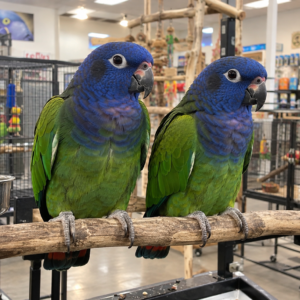
- Predominantly green body
- Strong blue head and neck
- Different wing colouring
- Red undertail typical of the genus
Both share the compact body structure associated with Pionus parrots, but their plumage makes them relatively easy to distinguish.
Juvenile Bronze Winged Pionus
Young Bronze Winged Pionus parrots look different from mature adults.
Juveniles typically have:
- Greener heads
- Greener upperparts
- Brownish underparts
- Blue wash across portions of the body
- Green-edged feathers
- Paler eye rings
The dramatic darker purple-blue and bronze adult plumage becomes more pronounced as the bird matures.
Veterinary Care
An avian veterinarian should be identified before bringing home a Bronze Winged Pionus.
Routine examinations can help monitor:
- Weight
- Plumage
- Beak
- Feet
- Body condition
- Nutrition
- Respiratory health
- Overall wellbeing
Professional veterinary guidance is particularly important if changes in breathing, appetite or behaviour are noticed.
For professional companion-bird care information:
Association of Avian Veterinarians
Preparing for Bronze Winged Pionus Ownership
Before choosing a bronze winged pionus for sale, the bird’s environment should already be prepared.
A suitable setup should provide:
- Secure housing
- Natural perches
- Adequate movement space
- Foraging enrichment
- Chewable materials
- Bathing access
- Balanced nutrition
- Veterinary care
Owners should also consider the species’ potential 35–40 year lifespan when planning for long-term care.
Why the Bronze Winged Pionus Is Distinctive
The Bronze Winged Pionus offers a colour palette very different from many brightly coloured companion parrots.
Its deep purple-blue body, bronze wings, blue back and bright red undertail create an appearance that becomes particularly striking under natural light.
Its moderate size also gives it a compact appearance while retaining the strong build associated with the Pionus genus.
For buyers researching a bronze winged pionus for sale, individual health, age, sex, socialization, housing, nutrition and long-term veterinary care should all be considered alongside appearance.
Frequently Asked Questions
What is the scientific name of the Bronze Winged Pionus?
The scientific name is Pionus chalcopterus.
Is the Bronze Winged Pionus also called the Bronze-winged Parrot?
Yes. Bronze-winged Parrot is another common name for the species.
How big is a Bronze Winged Pionus?
Adults reach approximately 11.3 inches in length.
How much does a Bronze Winged Pionus weigh?
Adults weigh approximately 210 grams.
How long does a Bronze Winged Pionus live?
The reported lifespan is approximately 35–40 years under suitable captive care.
What colours does a Bronze Winged Pionus have?
Adults combine dark purple-blue plumage, bronze-brown wings, a white chin, deep blue lower back and red undertail coverts.
Can you tell male and female Bronze Winged Pionus parrots apart visually?
Males and females look very similar externally. Professional DNA testing or appropriate documentation is preferable when confirmed sex is required.
Are Bronze Winged Pionus parrots loud?
They can produce harsh flight calls and other vocalizations, although individual noise levels vary.
What does a Bronze Winged Pionus eat?
A balanced feeding program can include suitable formulated foods, vegetables, leafy greens, legumes and moderate amounts of fruit based on veterinary guidance.
Do Bronze Winged Pionus parrots need enrichment?
Yes. Foraging toys, bird-safe wood, climbing opportunities, puzzle toys and bathing are useful forms of enrichment.
Where does the Bronze Winged Pionus come from?
The species occurs naturally in portions of Venezuela, Colombia, Ecuador and Peru.
Where can I learn more about professional parrot care?
The Association of Avian Veterinarians provides professional companion-bird care information:
Be the first to review “Bronze Winged Pionus for Sale”
Related products
Pionus Parrots

Pionus Parrots
Reviews
There are no reviews yet.