


Blue Headed Pionus for Sale
Original price was: $1,200.00.$900.00Current price is: $900.00.
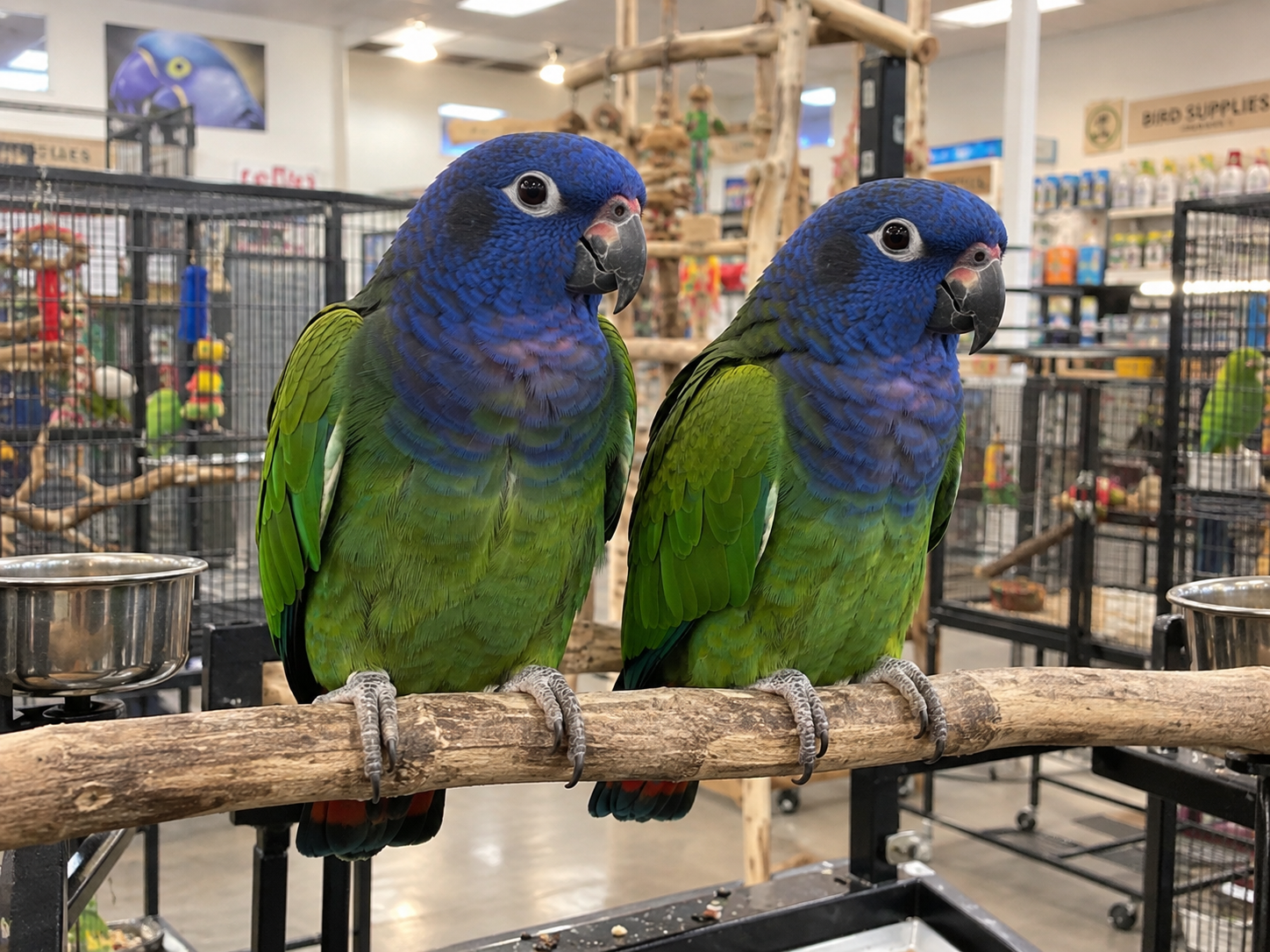
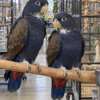
Male and female Blue Headed Pionus parrots are represented in this listing. Scientifically known as Pionus menstruus, this medium-sized South American parrot is recognized for its rich blue head and neck, green body, pale eye ring and distinctive red undertail feathers. Adults reach approximately 10.9 inches and weigh around 234–295 grams. With a reported Blue Headed Pionus lifespan of approximately 30–45 years, these parrots require appropriate housing, enrichment, balanced nutrition and regular avian veterinary care.
Blue Headed Pionus for Sale – Male & Female
For buyers researching a blue headed pionus for sale, the Blue Headed Pionus is a distinctive medium-sized South American parrot with a compact body, strong build and unmistakable blue head.
Scientifically classified as Pionus menstruus, the species is also known as the Blue-headed Parrot, Blue-hooded Parrot and Red-vented Parrot.
Adult birds reach approximately 10.9 inches in total length and generally weigh around 234–295 grams.
The species is predominantly green but develops rich blue colouring across the head, neck and upper breast. This strong blue contrasts with the green body and bright red undertail feathers characteristic of many Pionus parrots.
Blue Headed Pionus Details
- Common Name: Blue Headed Pionus
- Alternative Names: Blue-headed Parrot, Blue-hooded Parrot
- Scientific Name: Pionus menstruus
- Bird Type: South American Parrot
- Sex Represented: Male and Female
- Adult Size: Approximately 10.9 inches
- Adult Weight: Approximately 234–295 g
- Reported Lifespan: Approximately 30–45 years
- Primary Colours: Green, blue and red
- Natural Range: Central and South America
- Conservation Status: Least Concern
- CITES Listing: Appendix II
What Does a Blue Headed Pionus Look Like?
The adult Blue Headed Pionus is predominantly green across the body.
Its most obvious characteristic is the deep blue colouring extending across the head and neck.
A faint reddish band may appear around the throat.
The ear-covering feathers are darker and can appear dull black or charcoal.
The wings remain mainly green but may contain olive-brown edging, giving them more depth than a uniformly green parrot.
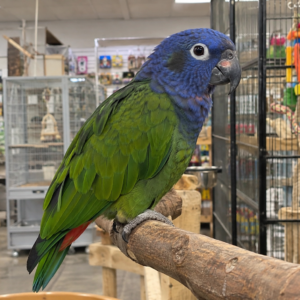
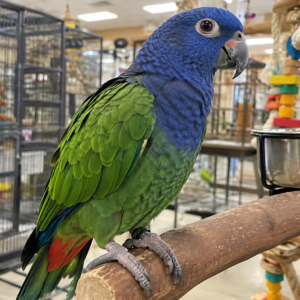
The undertail feathers are bright red with blue-green tips, while the tail itself is green with red colouring near the base.
The beak is dark grey with reddish colouring near the base, and the pale eye ring creates a noticeable contrast against the blue head.
Male and Female Blue Headed Pionus
Male and female Blue Headed Pionus parrots look very similar externally.
Unlike Eclectus parrots, where the sexes have completely different colours, a male and female Blue Headed Pionus cannot usually be distinguished reliably from plumage alone.
Where confirmed sex matters, breeder documentation or professional DNA testing should be used.
Individual temperament should also be evaluated separately from sex.
Age, socialization, environment and handling history can all affect how an individual bird behaves.
Blue Headed Pionus Size
The typical Blue Headed Pionus size is approximately 10.9 inches in total length.
Adults generally weigh between 234 and 295 grams.
This places the species in the medium-sized companion parrot range.
The bird has a compact, relatively sturdy body rather than the long, slender shape associated with many parakeets.
Housing should provide enough room for:
- Wing stretching
- Climbing
- Moving between perches
- Foraging
- Exercise
- Bathing
- Resting
Blue Headed Pionus Lifespan
The reported Blue Headed Pionus lifespan is approximately 30–45 years.
That potential lifespan makes this bird a significant long-term commitment.
Actual longevity can depend on:
- Genetics
- Diet
- Weight management
- Veterinary care
- Housing
- Exercise
- Environmental safety
- Overall husbandry
Anyone considering ownership should plan for decades of feeding, housing, enrichment and veterinary care.
Blue Headed Pionus Price
The Blue Headed Pionus price can vary considerably according to the individual bird.
Factors that can affect pricing include:
- Age
- Sex
- Tameness
- Handling history
- Health information
- Documentation
- Geographic location
- Breeder availability
Because no exact selling price has been supplied for this listing, the live product page should display the actual current price rather than an unsupported generic estimate.
Buyers should also consider ongoing expenses such as food, appropriate housing, toys and avian veterinary care.
Blue Headed Pionus Personality
The Blue Headed Pionus is an intelligent and socially aware parrot.
Individual personality varies, but suitable captive environments should provide regular opportunities for:
- Foraging
- Climbing
- Safe chewing
- Training
- Bathing
- Exploration
- Social interaction
Pionus parrots can become accustomed to familiar people, but handling should still respect the individual bird’s temperament and comfort level.
Are Blue Headed Pionus Parrots Loud?
The Blue Headed Pionus parrot is naturally vocal.
Its calls can include high-pitched screeches, shrill notes and harsher contact calls.
Noise levels vary from bird to bird.
Although a Pionus is smaller than a large macaw, buyers should not assume that it will always remain quiet.
Normal parrot communication should be expected.
Housing a Blue Headed Pionus
Adequate movement space is important.
Professional avicultural guidance commonly recommends an aviary or suspended enclosure approximately 6.5–9.8 feet long.
A suitable environment should contain:
- Natural wooden perches
- Different perch diameters
- Open movement space
- Climbing ropes
- Feeding stations
- Foraging toys
- Safe chewable materials
- Bathing opportunities
The enclosure should remain spacious enough for the bird to move easily rather than being overcrowded with accessories.
Enrichment and Chewing
Blue Headed Pionus parrots are active chewers.
Suitable enrichment may include:
- Bird-safe branches
- Wooden blocks
- Pine cones
- Foraging toys
- Puzzle toys
- Ladders
- Swings
- Climbing ropes
- Safe leather toys
- Bathing dishes
Toys and branches should be checked regularly for wear and replaced when necessary.
Rotating enrichment can help keep the bird’s environment stimulating.
Blue Headed Pionus Diet
A varied feeding plan is important for long-term health.
Appropriate foods may include suitable formulated parrot food combined with fresh vegetables, leafy greens and moderate amounts of fruit.
Fresh foods can include:
- Apple
- Pear
- Orange
- Banana
- Pomegranate
- Kiwi
- Carrot
- Celery
- Green beans
- Peas
- Fresh corn
- Kale
- Other suitable leafy greens
Cooked beans, pulses and appropriately prepared sprouted foods may also form part of a managed diet.
The exact feeding plan should be adapted to the bird’s body condition, activity and veterinary recommendations.
Natural Range of the Blue Headed Pionus
The Blue Headed Pionus has a broad natural distribution.
Depending on subspecies, populations occur across areas including:
- Trinidad
- Venezuela
- Colombia
- Ecuador
- Peru
- Bolivia
- Brazil
- The Guianas
- Costa Rica
- Panama
The species occupies a variety of tropical environments.
Natural Habitat
Blue Headed Pionus parrots can be found in:
- Humid forest
- Wet forest
- Deciduous woodland
- Gallery forest
- Seasonally flooded forest
- Secondary growth
- Plantations
- Semi-open landscapes
They can occur at elevations reaching approximately 1,600 metres.
Wild Diet and Behaviour
Wild Blue Headed Pionus parrots feed on seeds, fruits, flowers and plant material.
They generally forage high in the forest canopy.
Outside the breeding season, the species can be social and boisterous.
Groups may gather where food is abundant or at communal roosting sites.
One particularly interesting natural behaviour is visiting clay banks.
Wild Blue Headed Pionus parrots may consume mineral-rich clay, which is associated with neutralizing some naturally occurring dietary toxins.
Blue Headed Pionus Breeding
Blue Headed Pionus parrots typically nest in existing tree cavities.
The normal clutch is approximately three to four eggs.
Young birds generally fledge at around 10 weeks.
Captive breeding should only be undertaken with appropriate knowledge of:
- Pair compatibility
- Nutrition
- Veterinary screening
- Nest management
- Genetics
- Chick development
Simply housing a male and female together does not automatically create a suitable breeding setup.
Blue Headed Pionus Conservation Status
The Blue Headed Pionus is currently classified as Least Concern and listed under CITES Appendix II.
The global population is considered stable overall, although some regional populations face pressure from:
- Deforestation
- Habitat loss
- Illegal trapping
- Wildlife trade
Responsible captive sourcing should therefore remain an important consideration.
Blue Headed Pionus vs Bronze Winged Pionus
These two Pionus species have noticeably different appearances.
Blue Headed Pionus
- Green body
- Deep blue head and neck
- Red undertail
- Approximately 10.9 inches
- Approximately 234–295 g
Bronze Winged Pionus
- Dark purple-blue body
- Bronze-brown wings
- White chin
- Blue lower back
- Red undertail
- Approximately 11.3 inches
Both have the compact body and red undertail characteristic of the Pionus group, but their body colours make them easy to distinguish.
Juvenile Blue Headed Pionus
Young birds have noticeably less blue than mature adults.
Juveniles typically have:
- Pale green heads
- Green throat and breast
- Less developed blue colouring
- Yellow-green undertail feathers
- Variable red undertail markings
- Paler beak colouring
The characteristic adult blue becomes stronger as the bird matures.
Veterinary Care
An avian veterinarian should be identified before bringing home a Blue Headed Pionus.
Routine examinations can help monitor:
- Weight
- Body condition
- Beak
- Feet
- Plumage
- Diet
- Respiratory health
- General wellbeing
Professional veterinary guidance is particularly important for a bird that may live for several decades.
For professional companion-bird information:
Association of Avian Veterinarians
Preparing for Blue Headed Pionus Ownership
Before choosing a blue headed pionus for sale, the bird’s environment should already be prepared.
A suitable setup should provide:
- Secure housing
- Natural perches
- Adequate movement space
- Safe chewable materials
- Foraging opportunities
- Bathing access
- Balanced nutrition
- Veterinary care
Owners should also consider the potential 30–45 year lifespan when planning for long-term ownership.
Why the Blue Headed Pionus Is Distinctive
The Blue Headed Pionus combines an intense blue head with a predominantly green body and the characteristic red undertail of the Pionus genus.
Its compact build, moderate Blue Headed Pionus size and striking colour pattern distinguish it from many similarly sized companion parrots.
For buyers researching a blue headed pionus for sale, individual health, age, socialization, housing, nutrition and long-term care should all be considered alongside the Blue Headed Pionus price.
Frequently Asked Questions
What is the scientific name of the Blue Headed Pionus?
The scientific name is Pionus menstruus.
How big is a Blue Headed Pionus?
The typical Blue Headed Pionus size is approximately 10.9 inches.
How much does a Blue Headed Pionus weigh?
Adults generally weigh approximately 234–295 grams.
What is the Blue Headed Pionus lifespan?
The reported Blue Headed Pionus lifespan is approximately 30–45 years under suitable captive care.
What is the Blue Headed Pionus price?
The Blue Headed Pionus price varies according to age, sex, handling history, health, documentation, location and availability. The actual current selling price should be displayed on the individual product listing.
What colour is a Blue Headed Pionus?
Adults are mainly green with a rich blue head and neck, a pale eye ring and bright red undertail feathers.
Can you visually tell male and female Blue Headed Pionus parrots apart?
Males and females look very similar externally. DNA testing or appropriate breeder documentation is preferable when confirmed sex is required.
Are Blue Headed Pionus parrots loud?
They can produce high-pitched screeches and harsh calls, although individual noise levels vary.
What does a Blue Headed Pionus eat?
A managed diet can include suitable formulated parrot food, vegetables, leafy greens, legumes and moderate amounts of appropriate fruit.
Do Blue Headed Pionus parrots need enrichment?
Yes. They benefit from safe chewing materials, climbing, foraging, puzzle toys, swings and bathing opportunities.
Where can I learn more about professional parrot care?
The Association of Avian Veterinarians provides professional companion-bird care information:
Be the first to review “Blue Headed Pionus for Sale”
Related products

Pionus Parrots


Pionus Parrots
Reviews
There are no reviews yet.