

White Capped Pionus for Sale

$600.00
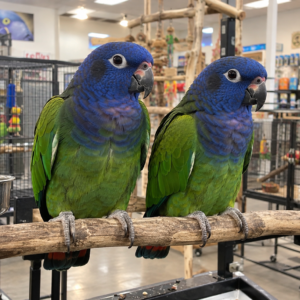
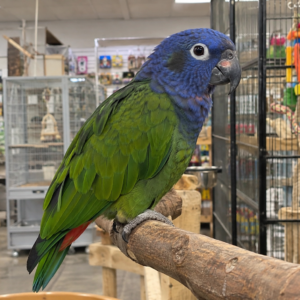
Male and female White Capped Pionus parrots are represented in this listing. Scientifically known as Pionus senilis, this compact Central American parrot is recognized for its distinctive white forehead and crown, green body, blue-purple breast tones and bright red undertail feathers. Adults reach approximately 9.3 inches and generally weigh around 193–229 grams. With a reported White Capped Pionus lifespan of approximately 30 years, these parrots require suitable housing, balanced nutrition, regular enrichment and long-term avian veterinary care.
White Capped Pionus for Sale – Male & Female
For buyers researching a white capped pionus for sale, the White Capped Pionus is one of the smaller members of the Pionus genus and is immediately recognizable by the contrasting white feathers across its forehead and crown.
Scientifically classified as Pionus senilis, the species is also widely known as the White-crowned Parrot or White-crowned Pionus.
Adults reach approximately 9.3 inches in overall length and generally weigh between 193 and 229 grams.
The bird’s compact body combines predominantly green plumage with blue-purple tones across the breast, bronze-gold wing colouring and the characteristic red undertail feathers found throughout the Pionus group.
White Capped Pionus Details
- Common Name: White Capped Pionus
- Alternative Name: White-crowned Parrot
- Scientific Name: Pionus senilis
- Bird Type: Central American Parrot
- Sex Represented: Male and Female
- Adult Size: Approximately 9.3 inches
- Adult Weight: Approximately 193–229 g
- Reported Lifespan: Approximately 30 years
- Primary Colours: Green, white, blue-purple, bronze and red
- Natural Range: Central America
- Conservation Status: Least Concern
- CITES Listing: Appendix II
What Does a White Capped Pionus Look Like?
The adult White Capped Pionus is mainly green.
Its most distinctive feature is the white colouring across the forehead and front portion of the crown.
A second white patch appears around the chin and centre of the throat.
Dark blue feathers surround the ear area, while the breast has an olive base with individual feathers edged in blue or purple. This gives the chest a softly layered blue-green appearance.
The wing coverts display gold-brown or bronze tones, contrasting with the otherwise green wings.
Like other Pionus parrots, the species has vivid red undertail coverts.
The tail itself is green with red near the base.
The beak is yellow-green with grey colouring near the base, while the eyes are brown and surrounded by a prominent bare eye ring.
Male and Female White Capped Pionus
Male and female White Capped Pionus parrots look very similar externally.
There is no dramatic plumage difference between the sexes comparable with species such as Eclectus parrots.
Where confirmed sex is required, appropriate breeder documentation or DNA testing is preferable to visual estimation.
Sex should also not be used as the sole predictor of personality.
Individual behaviour can be influenced by:
- Age
- Socialization
- Handling history
- Environment
- Daily routine
- Previous experiences
White Capped Pionus Size
The typical White Capped Pionus reaches approximately 9.3 inches in length.
Adult weight generally ranges from 193–229 grams.
This gives the species a compact, relatively sturdy body.
Although smaller than Blue Headed and Bronze Winged Pionus parrots, the White Capped Pionus still requires sufficient space to:
- Stretch its wings
- Climb
- Move between perches
- Exercise
- Forage
- Bathe
- Explore enrichment
Small overall body size should never be treated as a reason for keeping the bird in cramped housing.
White Capped Pionus Lifespan
The reported White Capped Pionus lifespan is approximately 30 years under captive care.
Individual longevity can vary according to:
- Genetics
- Diet
- Veterinary care
- Exercise
- Weight management
- Environmental safety
- Housing
- Overall husbandry
A potential three-decade lifespan makes this parrot a significant long-term responsibility.
Prospective owners should therefore consider future housing, veterinary and financial commitments before acquisition.
White Capped Pionus Price
The White Capped Pionus price can vary according to the individual bird.
Factors that may affect price include:
- Age
- Sex
- Handling history
- Tameness
- Health information
- Documentation
- Captive-bred availability
- Geographic location
Because no exact selling price has been supplied for this listing, the live product page should display your actual current price rather than inserting a generic market estimate.
The purchase price should also not be treated as the complete cost of ownership.
Long-term expenses include suitable housing, food, enrichment, replacement perches and avian veterinary care.
White Capped Pionus Personality
The White Capped Pionus parrot is an intelligent and observant bird.
Individual personalities vary considerably, but a suitable captive environment should provide opportunities for both interaction and independent activity.
Daily enrichment may involve:
- Foraging
- Climbing
- Training
- Exploring
- Safe chewing
- Bathing
- Social interaction
Birds should be allowed to become comfortable with interaction at their own pace rather than being forced into handling.
Are White Capped Pionus Parrots Loud?
White Capped Pionus parrots are naturally vocal.
Their flight calls can be continuous, high-pitched and screechy.
Individual birds may also use quieter social calls around familiar people or other birds.
Although their smaller body means they do not produce exactly the same type of powerful calls as large macaws, prospective owners should still expect normal daily parrot vocalization.
No Pionus should be purchased under the assumption that it will remain silent.
Housing a White Capped Pionus
Adequate movement space is important for this species.
Professional avicultural guidance recommends an aviary or suspended enclosure with a minimum length of approximately 6.5 feet.
A suitable setup should provide:
- Natural wooden perches
- Multiple perch diameters
- Horizontal movement space
- Climbing areas
- Feeding and water stations
- Safe enrichment
- Foraging activities
- Bathing opportunities
The enclosure should remain spacious enough for comfortable movement rather than being overcrowded with accessories.
Perches and Climbing
Different perch sizes help provide variation in foot position.
Natural bird-safe branches can also create opportunities for:
- Climbing
- Chewing
- Balancing
- Exploring
Perches should be positioned so food and water remain clean and so the bird can travel between different areas of the enclosure comfortably.
Enrichment for a White Capped Pionus
White Capped Pionus parrots benefit from several different forms of enrichment.
Suitable options can include:
- Bird-safe wooden toys
- Ladders
- Swings
- Climbing ropes
- Play gyms
- Puzzle toys
- Foraging toys
- Safe leather toys
- Natural branches
- Bathing bowls or misters
The Association of Avian Veterinarians identifies sensory, nutritional, manipulative, environmental and behavioural enrichment as useful categories when planning a companion bird’s environment.
Rotating toys periodically can help maintain novelty.
White Capped Pionus Diet
A varied feeding program is important for long-term health.
Suitable fresh fruits can include:
- Apple
- Pear
- Orange
- Banana
- Pomegranate
Vegetables and greens may include:
- Carrot
- Celery
- Green beans
- Peas
- Fresh corn
- Swiss chard
- Dandelion greens
- Other suitable leafy vegetables
Appropriately prepared legumes, sprouted foods and a nutritionally suitable formulated parrot diet may also be incorporated.
Seeds should form only part of an appropriately managed feeding plan rather than automatically becoming the entire diet.
Fresh Fruit and Vegetables
Fresh produce should be thoroughly washed before serving.
Fruit provides nutritional and sensory variety but should be balanced with appropriate vegetables and other components of the diet.
Individual dietary requirements depend on:
- Age
- Weight
- Activity
- Body condition
- Existing health needs
Changes to diet should be discussed with an avian veterinarian when necessary.
Natural Range of the White Capped Pionus
The White Capped Pionus is native to Central America.
Its natural range extends through areas including:
- Mexico
- Belize
- Guatemala
- Honduras
- El Salvador
- Nicaragua
- Costa Rica
- Panama
The species can occur in both forested and human-modified environments.
Natural Habitat
White Capped Pionus parrots inhabit a range of environments, including:
- Lowland forest
- Woodland
- Savanna
- Agricultural land
- Plantations
- Open habitat
Their ability to use different habitat types has helped the species persist even where original forest has been altered.
However, forest loss remains a concern in portions of its natural range.
Wild Behaviour
Wild White Capped Pionus parrots may occur in pairs, small groups or larger gatherings where food is abundant.
They travel between feeding and resting areas and communicate using characteristic screeching calls.
Like other parrots, much of their day is naturally spent:
- Searching for food
- Flying
- Socializing
- Resting
- Exploring vegetation
Captive enrichment should attempt to provide appropriate opportunities for some of these natural behaviours.
White Capped Pionus Breeding
White Capped Pionus parrots nest in cavities.
A typical clutch contains approximately four to six eggs.
Young birds generally fledge at around eight weeks.
Captive breeding should only be undertaken when suitable experience and resources are available for:
- Pair compatibility
- Nutrition
- Health screening
- Nest management
- Chick development
- Veterinary care
Simply keeping a male and female together does not automatically make an appropriate breeding setup.
Juvenile White Capped Pionus
Young White Capped Pionus parrots differ somewhat from mature adults.
Juveniles may have:
- Buff-white feather edging on the forehead
- Less developed white crown colouring
- No strong white throat patch
- Reduced blue edging across the breast
- Greener wing feathers
- Yellow-green undertail feathers
The distinctive adult markings become more developed as the bird matures.
White Capped Pionus Conservation Status
The White Capped Pionus is currently classified as Least Concern and listed under CITES Appendix II.
The estimated wild population is approximately 50,000–500,000 mature individuals, with an overall decreasing population trend.
Potential threats include:
- Habitat loss
- Forest clearance
- Agricultural development
- Loss of nesting trees
The species remains relatively common in some areas, particularly Costa Rica.
Responsible captive sourcing should still be considered when purchasing any parrot.
White Capped Pionus vs Blue Headed Pionus
The White Capped Pionus and Blue Headed Pionus have noticeably different head colouring.
White Capped Pionus
- White forehead and crown
- Green body
- Blue-purple breast tones
- Bronze-gold wing feathers
- Approximately 9.3 inches
- Approximately 193–229 g
Blue Headed Pionus
- Deep blue head and neck
- Green body
- Red undertail
- Approximately 10.9 inches
- Approximately 234–295 g
The Blue Headed Pionus is generally larger, while the White Capped Pionus is more compact and immediately recognizable by its white crown.
White Capped Pionus vs Bronze Winged Pionus
The Bronze Winged Pionus has a much darker appearance.
White Capped Pionus
- Green body
- White crown
- Blue-purple breast
- Bronze-gold wing colouring
Bronze Winged Pionus
- Dark purple-blue body
- Bronze-brown wings
- White chin
- Deep blue lower back
Both species have red undertail feathers characteristic of the Pionus genus.
Veterinary Care
An avian veterinarian should be identified before bringing home a White Capped Pionus.
Routine examinations can help monitor:
- Body weight
- Plumage
- Beak
- Feet
- Diet
- Activity
- Respiratory health
- General physical condition
The Association of Avian Veterinarians recommends regular veterinary checkups for companion birds and provides resources covering basic care, diet, foraging and signs of illness.
Association of Avian Veterinarians
Preparing for White Capped Pionus Ownership
Before choosing a white capped pionus for sale, the bird’s environment should already be prepared.
A suitable setup should provide:
- Secure housing
- Natural perches
- Adequate movement space
- Safe enrichment
- Chewing opportunities
- Foraging activities
- Bathing access
- Balanced nutrition
- Avian veterinary support
Its potential 30-year lifespan should also be considered before purchase.
Why the White Capped Pionus Is Distinctive
The White Capped Pionus combines a compact body with one of the most recognizable facial patterns in the Pionus genus.
The bright white crown contrasts strongly with the green body, blue-purple chest and bronze wing feathers, while the red undertail adds another characteristic Pionus feature.
For buyers searching for a white capped pionus for sale, individual health, age, sex, socialization, condition, housing requirements and long-term care should all be considered alongside the White Capped Pionus price.
Frequently Asked Questions
What is the scientific name of the White Capped Pionus?
The scientific name is Pionus senilis.
Is the White Capped Pionus also called the White-crowned Parrot?
Yes. White-crowned Parrot is another common name for the species.
How big is a White Capped Pionus?
Adults reach approximately 9.3 inches in total length.
How much does a White Capped Pionus weigh?
Adults generally weigh approximately 193–229 grams.
What is the White Capped Pionus lifespan?
The reported White Capped Pionus lifespan is approximately 30 years under suitable captive care.
What is the White Capped Pionus price?
The White Capped Pionus price varies according to age, sex, socialization, documentation, health, location and availability. The actual current selling price should be displayed on the product listing.
What colours does a White Capped Pionus have?
Adults have a predominantly green body, white forehead and crown, blue-purple breast tones, bronze-gold wing feathers and red undertail coverts.
Can you visually distinguish male and female White Capped Pionus parrots?
Males and females look very similar externally. Appropriate documentation or DNA testing is preferable when confirmed sex is required.
Are White Capped Pionus parrots loud?
They can produce continuous screeching flight calls, although everyday vocalization varies between individual birds.
What does a White Capped Pionus eat?
A managed diet may include appropriate formulated food, vegetables, leafy greens, legumes and moderate amounts of suitable fruit.
Where does the White Capped Pionus come from?
The species is native to Central America, from Mexico through parts of Panama.
Where can I learn more about professional parrot care?
The Association of Avian Veterinarians provides professional companion-bird care information:
Be the first to review “White Capped Pionus for Sale”
Related products
Pionus Parrots


Pionus Parrots
Reviews
There are no reviews yet.