


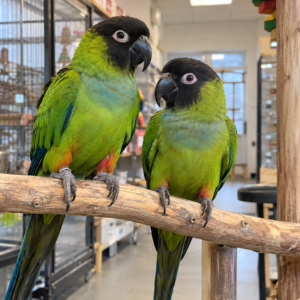

Nanday Conure for Sale


$500.00
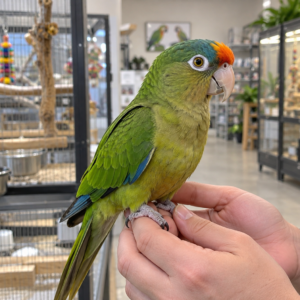
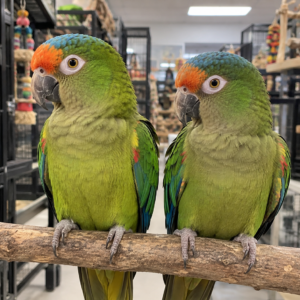
Male and female Nanday Conures are represented in this listing. Scientifically known as Aratinga nenday, this South American parrot is recognized for its distinctive black head, green body, blue-washed throat and upper breast, orange-red thighs and long green tail tipped with blue. Adults reach approximately 11.7 inches and weigh around 140 grams. With a reported Nanday Conure lifespan of approximately 35–45 years, these social parrots require appropriate housing, balanced nutrition, regular enrichment, bathing opportunities and long-term avian veterinary care.
Nanday Conure for Sale – Male & Female
For buyers researching a nanday conure for sale, the Nanday Conure is a medium-sized South American parrot with one of the most recognizable head patterns among conures.
Scientifically classified as Aratinga nenday, it is also commonly called the Black-headed Conure, Black-masked Conure or Nanday Parakeet.
Adults reach approximately 11.7 inches in overall length and weigh around 140 grams. Their body is mainly green and olive, but the entire head and face are black, creating a strong contrast with the rest of the plumage.
The throat and upper breast can show a blue wash, while the thighs are orange-red and the tail is olive-green with blue at the tips.
Nanday Conure Details
- Common Name: Nanday Conure
- Alternative Names: Black-headed Conure, Black-masked Conure
- Scientific Name: Aratinga nenday
- Bird Type: South American Conure
- Sex Represented: Male and Female
- Adult Size: Approximately 11.7 inches
- Adult Weight: Approximately 140 g
- Reported Lifespan: Approximately 35–45 years
- Primary Colours: Green, black, blue and orange-red
- Natural Range: South America
- Captive Status: Common
- Conservation Status: Least Concern
- CITES Listing: Appendix II
What Does a Nanday Conure Look Like?
The adult Nanday Conure has a highly distinctive appearance.
The forehead, crown, nape and face are black.
The throat and upper breast are washed with blue, while the remainder of the body is primarily green or olive-green.
One of the most noticeable additional markings is the bright orange-red colouring on the thighs.
The long tail is olive-green and ends in blue.
The beak is black, the bare eye ring is pink, and the eyes are brown.
This black-headed appearance makes the Nanday Conure relatively easy to distinguish from Green Cheek, Sun and Blue Crowned Conures.
Nanday Conure Male vs Female
The search “nanday conure male vs female” is common because adult males and females look very similar.
Both sexes display:
- Black head and face
- Green body
- Blue-washed throat
- Orange-red thighs
- Long green-and-blue tail
There is no reliable plumage feature that consistently distinguishes every male from every female.
Where confirmed sex is important, DNA testing or suitable breeder documentation is preferable.
Nanday Conure Size
The typical Nanday Conure size is approximately 11.7 inches.
Adults weigh around 140 grams.
This places the species above many smaller Pyrrhura conures in body mass while still keeping it much smaller than large parrots such as macaws.
Appropriate housing should provide room for:
- Full wing stretching
- Horizontal movement
- Climbing
- Foraging
- Bathing
- Safe chewing
- Exercise
Professional avicultural guidance recommends an enclosure approximately 6.5–9.8 feet long where dedicated aviary housing is provided.
Nanday Conure Lifespan
The reported Nanday Conure lifespan is approximately 35–45 years under suitable captive conditions.
This is a substantial commitment.
Actual longevity can depend on:
- Genetics
- Nutrition
- Veterinary care
- Exercise
- Body condition
- Housing
- Environmental safety
- Overall husbandry
Anyone considering a Nanday Conure should plan for decades of care.
Nanday Conure Price
The Nanday Conure price can vary according to the individual bird and current availability.
Factors that may influence price include:
- Age
- Sex
- Socialization
- Handling history
- Health information
- Documentation
- Geographic location
- Breeder availability
Because no exact selling price has been supplied for this listing, the live product page should display the actual current price rather than using an unsupported generic figure.
Nanday Conure Personality
The Nanday Conure personality is often described as social, active and expressive.
Wild birds regularly gather in groups, and captive birds likewise benefit from regular interaction and environmental stimulation.
A suitable daily routine can include:
- Foraging
- Climbing
- Training
- Bathing
- Safe chewing
- Play
- Social interaction
Individual temperament still varies substantially.
A bird’s behaviour can be influenced by age, handling, socialization and previous experiences.
Is the Nanday Conure a Social Bird?
Yes.
The Nanday Conure bird is naturally social.
Wild birds gather while feeding, and large numbers may congregate at communal roosting areas.
This natural behaviour means captive birds benefit from:
- Appropriate social interaction
- Predictable routines
- Mental stimulation
- Regular exercise
- Opportunities to forage
Social behaviour should still be managed around the needs and comfort of the individual bird.
Nanday Conure Sounds
Nanday Conures are naturally vocal.
Their flight calls can be loud, clamorous and screeching.
When perched, they may produce shrill chatter.
Potential owners should therefore expect:
- Contact calls
- Excited vocalizations
- Alarm calls
- Shrill chatter
- Loud flight-style calls
This species should not be marketed as a quiet parrot.
Housing a Nanday Conure
A Nanday Conure needs enough usable space for movement.
Professional avicultural guidance recommends an aviary or suspended enclosure approximately 6.5–9.8 feet in length.
A suitable setup should include:
- Natural wooden perches
- Multiple perch diameters
- Horizontal movement space
- Climbing structures
- Feeding stations
- Safe chewing materials
- Bathing access
- Foraging toys
The enclosure should not be overcrowded with accessories that restrict movement.
Nanday Conure Enrichment
Nanday Conures benefit from varied enrichment.
Useful options include:
- Ladders
- Swings
- Puzzle toys
- Foraging toys
- Natural branches
- Bird-safe chewables
- Vegetable-tanned leather toys
- Sterilized pine cones
- Bathing opportunities
Regular socialization is also an important part of enrichment.
Toy condition should be checked frequently and damaged items replaced when necessary.
Nanday Conure Diet
A managed captive diet can include appropriate formulated parrot food together with suitable vegetables, leafy greens, legumes and moderate portions of fruit.
Fresh foods may include:
- Apple
- Pear
- Orange
- Pomegranate
- Carrot
- Celery
- Green peas
- Beans
- Fresh corn
- Swiss chard
- Dandelion greens
Appropriately prepared cooked beans or pulses can also form part of the diet.
Individual nutrition should be adjusted according to the bird’s age, body condition, activity and veterinary recommendations.
Fruit in the Nanday Conure Diet
Fruit can provide both nutritional and sensory variety.
Examples can include:
- Apple
- Pear
- Orange
- Pomegranate
Fresh produce should be washed thoroughly before serving.
Fruit should form only one part of a broader balanced feeding program rather than becoming the bird’s entire fresh-food intake.
Natural Range of the Nanday Conure
The Nanday Conure is native to the upper Rio Paraguay basin.
Its range includes parts of:
- Bolivia
- Brazil
- Paraguay
- Argentina
Feral populations have also become established in locations outside the natural range, including parts of Florida and southern California.
Natural Habitat
Wild Nanday Conures inhabit lowland environments.
These can include:
- Eastern Chaco habitats
- Pantanal regions
- Cattle rangeland
- Areas containing Copernicia palms
- Open woodland
They occur at elevations up to approximately 800 metres.
Wild Nanday Conure Diet
Wild Nanday Conures consume a variety of foods, including:
- Seeds
- Fruits
- Nuts
- Berries
They appear to show a particular preference for Copernicia palm nuts.
Captive nutrition should still be based on a balanced feeding program rather than attempting to reproduce only a few wild foods.
Wild Behaviour
Wild Nanday Conures are highly social.
They congregate while feeding, and communal roosts can contain several hundred birds.
They may also gather at waterholes alongside other bird species.
These behaviours reflect the highly social nature of the species and reinforce the importance of daily environmental and social enrichment under captive care.
Nanday Conure Breeding
Nanday Conures nest in cavities in trees and palm trunks.
A typical clutch contains approximately three to five eggs.
Young birds generally fledge at around eight weeks.
Responsible captive breeding requires proper knowledge of:
- Pair compatibility
- Genetics
- Nutrition
- Veterinary screening
- Nest management
- Chick development
- Weaning
Simply housing a male and female together should not be treated as a complete breeding program.
Juvenile Nanday Conures
Young Nanday Conures resemble adults but have several subtle differences.
Juveniles generally show:
- Less blue on the throat and breast
- Shorter tails
- Similar black head colouring
- Green body plumage
The adult appearance becomes more developed as the bird matures.
Nanday Conure vs Sun Conure
The Nanday and Sun Conure belong to the same genus but look dramatically different.
Nanday Conure
- Black head
- Green body
- Blue-washed throat
- Orange-red thighs
- Approximately 11.7 inches
- Around 140 g
Sun Conure
- Bright yellow body
- Orange-red head and breast
- Green and blue wings
- Much brighter overall appearance
The Nanday is therefore much darker and greener.
Nanday Conure vs Green Cheek Conure
These species also differ noticeably.
Nanday Conure
- Black head
- Larger build
- Approximately 11.7 inches
- Around 140 g
- Orange-red thighs
Green Cheek Conure
- Brown crown
- Green cheeks
- Scalloped chest
- Approximately 10.1 inches
- Around 60–80 g
The Nanday Conure is significantly heavier and has a completely black head.
Nanday Conure Conservation Status
The Nanday Conure is currently classified as Least Concern and listed under CITES Appendix II.
Its wild population is considered to be increasing overall.
The species has historically been heavily traded internationally, and responsible captive sourcing remains important.
Veterinary Care
An avian veterinarian should be identified before bringing home a Nanday Conure parrot.
Routine examinations can help monitor:
- Weight
- Body condition
- Plumage
- Beak
- Feet
- Nutrition
- Respiratory health
- General wellbeing
Professional companion-bird care information is available from:
Association of Avian Veterinarians
Preparing for Nanday Conure Ownership
Before choosing a nanday conure for sale, the bird’s environment should already be prepared.
A suitable setup should include:
- Secure housing
- Natural perches
- Adequate movement space
- Safe climbing structures
- Chewable enrichment
- Foraging opportunities
- Bathing access
- Balanced nutrition
- Avian veterinary support
Prospective owners should also consider the species’ vocal level and potential 35–45 year lifespan.
Why the Nanday Conure Is Distinctive
The Nanday Conure combines an unmistakable black head with a green body, blue-washed chest and bright orange-red thighs.
Its larger build compared with many smaller conures and its highly social natural behaviour give it a distinctive profile among companion parrots.
For buyers researching a nanday conure for sale, age, health, socialization, captive origin, housing and long-term veterinary needs should all be considered alongside the Nanday Conure price.
Frequently Asked Questions
What is the scientific name of the Nanday Conure?
The scientific name is Aratinga nenday.
Is the Nanday Conure also called the Black-headed Conure?
Yes. Black-headed Conure and Black-masked Conure are alternative common names.
What is the Nanday Conure size?
Adults reach approximately 11.7 inches.
How much does a Nanday Conure weigh?
Adults weigh approximately 140 grams.
What is the Nanday Conure lifespan?
The reported Nanday Conure lifespan is approximately 35–45 years under suitable captive care.
What is the Nanday Conure price?
The Nanday Conure price varies according to age, sex, socialization, health, documentation, location and availability.
What is the Nanday Conure personality like?
The Nanday Conure personality is typically active and social, although individual temperament varies according to history, handling and environment.
What is the difference between a male and female Nanday Conure?
For Nanday Conure male vs female identification, visual plumage is generally not reliable because both sexes look similar. DNA testing or appropriate documentation is preferable.
Are Nanday Conures loud?
Yes. They can produce clamorous screeching flight calls and shrill chatter while perched.
What does a Nanday Conure eat?
A managed diet can include appropriate formulated food, vegetables, leafy greens, legumes and moderate amounts of suitable fruit.
Is a Nanday Conure a parrot?
Yes. The Nanday Conure parrot is a medium-sized South American member of the parrot family.
Where can I learn more about professional conure care?
The Association of Avian Veterinarians provides professional companion-bird care information:
Be the first to review “Nanday Conure for Sale”
Related products
Conure Parrots

Conure Parrots

Conure Parrots


Conure Parrots

Conure Parrots

Conure Parrots
Conure Parrots
Conure Parrots
Reviews
There are no reviews yet.