



Half Moon Conure for Sale
$650.00
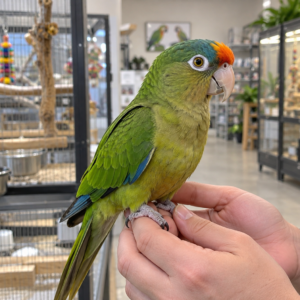
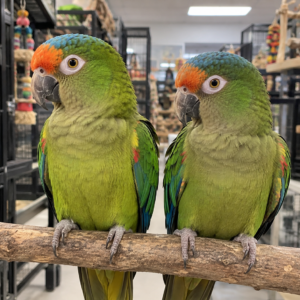
Male and female Half Moon Conures are represented in this listing. Scientifically known as Eupsittula canicularis, this compact Central American conure is recognized for its orange forehead, blue forecrown, green body, pale olive breast and distinctive bare eye ring. Adults reach approximately 9.4 inches and generally weigh around 70–75 grams. Half Moon Conures are active social parrots that require suitable housing, balanced nutrition, climbing and foraging opportunities, regular bathing and ongoing avian veterinary care.
Half Moon Conure for Sale – Male & Female
For buyers researching a half moon conure for sale, the Half Moon Conure is a compact Central American parrot recognized by the distinctive orange patch extending across its forehead.
Scientifically classified as Eupsittula canicularis, the species is also widely known as the Orange-fronted Conure, Orange-fronted Parakeet and Petz’s Conure.
Adults reach approximately 9.4 inches in overall length and weigh around 70–75 grams.
Its green body is combined with an orange forehead, dull blue forecrown, pale olive throat and breast, giving the Half Moon Conure a colour pattern noticeably different from brighter Sun or Golden Conures.
Half Moon Conure Details
- Common Name: Half Moon Conure
- Alternative Name: Orange-fronted Conure
- Scientific Name: Eupsittula canicularis
- Bird Type: Central American Conure
- Sex Represented: Male and Female
- Adult Size: Approximately 9.4 inches
- Adult Weight: Approximately 70–75 g
- Primary Colours: Green, orange, blue and olive
- Natural Range: Central America and western Mexico
- Conservation Status: Vulnerable
- CITES Listing: Appendix II
- Recognized Subspecies: Three
What Does a Half Moon Conure Look Like?
The Half Moon Conure is predominantly green.
Its most recognizable feature is the orange band across the forehead. This orange colouring extends toward the lores beside the beak and helps give the bird its distinctive facial appearance.
Behind the orange forehead is a muted blue area across the forecrown.
The throat and breast are generally pale olive, while the rest of the body remains largely green.
The bird also has a bare eye ring that can appear dull orange-yellow.
The bill is horn-coloured, while mature birds have yellow eyes.
This combination creates a subtle but recognizable colour pattern.
Male and Female Half Moon Conures
Male and female Half Moon Conures look very similar externally.
Unlike Eclectus parrots, there is no dramatic sex-based difference in adult plumage.
Where confirmed sex is important, DNA testing or suitable breeder documentation is preferable.
Individual temperament should also not be predicted solely from sex.
Factors that can influence behaviour include:
- Age
- Socialization
- Handling history
- Previous environment
- Daily routine
- Individual personality
Half Moon Conure Size
Adult Half Moon Conures reach approximately 9.4 inches in total length.
They typically weigh around 70–75 grams.
Although compact, these parrots remain highly active.
Suitable housing should provide enough room for:
- Full wing stretching
- Horizontal movement
- Climbing
- Foraging
- Safe chewing
- Bathing
- Exercise
Their smaller body size should not be treated as a reason for keeping them in cramped housing.
Half Moon Conure Lifespan
People researching half moon conure lifespan should prepare for long-term parrot ownership.
Exact lifespan figures vary between captive records, and longevity depends significantly on:
- Genetics
- Nutrition
- Veterinary care
- Housing
- Exercise
- Body condition
- Environmental safety
- Daily enrichment
Rather than relying on one guaranteed lifespan figure, prospective owners should be prepared to provide consistent care for many years.
Half Moon Conure Price
The half moon conure price varies according to the individual bird and availability.
Relevant factors can include:
- Age
- Sex
- Captive-bred origin
- Socialization
- Handling history
- Health information
- Documentation
- Geographic location
- Availability
Because no exact selling price has been provided for this listing, the live product page should display the actual current price rather than using a generic market estimate.
Long-term ownership expenses should also be considered, including housing, food, enrichment and veterinary care.
Half Moon Conure Personality
Half Moon Conures are active and social parrots.
Their natural flock behaviour means they benefit from environments that provide regular opportunities for interaction and exploration.
A suitable daily routine can include:
- Foraging
- Climbing
- Training
- Chewing
- Bathing
- Play
- Social interaction
Each bird should still be evaluated individually because temperament can differ substantially between individuals.
Half Moon Conure Sounds
Half Moon Conures are vocal birds.
Calls made during flight can be raucous and screeching, with some notes repeated rapidly.
Perched birds may also produce:
- Piping whistles
- Chirping
- Quiet chatter
- Contact calls
- Alarm vocalizations
Potential owners should therefore expect regular parrot noise.
Housing a Half Moon Conure
A Half Moon Conure needs secure housing with appropriate movement space.
A suitable setup should provide:
- Natural wooden perches
- Multiple perch diameters
- Climbing areas
- Feeding and water stations
- Safe chewing materials
- Foraging toys
- Bathing opportunities
- Open movement space
Perches should be arranged so the bird can move around the enclosure comfortably without excessive crowding.
Half Moon Conure Enrichment
Environmental enrichment is particularly important for an active conure.
Suitable options include:
- Puzzle toys
- Foraging toys
- Natural bird-safe branches
- Wooden toys
- Vegetable-tanned leather toys
- Ladders
- Swings
- Climbing ropes
- Bathing opportunities
Fresh, untreated branches can provide both chewing and climbing opportunities.
Rotating enrichment periodically can help prevent the environment from becoming repetitive.
Half Moon Conures and Bathing
Half Moon Conures can benefit from regular access to bathing.
Suitable options may include:
- Shallow water dishes
- Bird baths
- Gentle misting
Bathing supports normal feather maintenance while also providing additional enrichment.
Fresh bathing water should be replaced regularly.
Half Moon Conure Diet
A balanced diet is important for long-term health.
A managed feeding program may include appropriate formulated parrot food together with vegetables, leafy greens and suitable portions of fruit.
Fresh foods can include:
- Apple
- Pear
- Banana
- Pomegranate
- Carrot
- Bell pepper
- Peas
- Green beans
- Fresh corn
- Leafy greens
Appropriately prepared legumes can also form part of the diet.
Individual nutrition should be adjusted according to the bird’s age, activity, body condition and veterinary guidance.
Natural Range of the Half Moon Conure
The Half Moon Conure is native to western Mexico and Central America.
The natural range extends along the Pacific side of Central America from southern Mexico through areas including:
- Mexico
- Guatemala
- El Salvador
- Honduras
- Nicaragua
- Costa Rica
Different subspecies occupy different parts of this range.
Natural Habitat
Half Moon Conures occupy a variety of environments.
These can include:
- Deciduous woodland
- Forest edges
- Savanna
- Semi-open country
- Agricultural areas
- Secondary growth
- Scrub
The species can adapt to landscapes containing suitable feeding and nesting locations.
Wild Behaviour
Wild Half Moon Conures are social.
They may travel in pairs or flocks while searching for food.
Normal activities include:
- Flying
- Foraging
- Social interaction
- Preening
- Roosting
- Exploring vegetation
Their natural social behaviour emphasizes the importance of appropriate interaction and enrichment in captive care.
Half Moon Conure Nesting
One particularly distinctive fact about the Half Moon Conure is its nesting behaviour.
The species can nest in arboreal termite nests.
It may also use cavities previously occupied or created by other birds.
A typical clutch contains approximately three to five eggs, with young generally fledging at around seven weeks.
Captive breeding should only be undertaken with appropriate experience involving pair compatibility, nutrition, veterinary screening and chick care.
Juvenile Half Moon Conures
Young Half Moon Conures resemble adults but show several differences.
Juveniles generally have:
- A narrower orange forehead band
- Less developed adult facial colouring
- Brown eyes rather than the mature yellow eye colour
The characteristic adult appearance develops as the bird matures.
Blue Half Moon Conure
The keyword blue half moon conure is best treated carefully.
The standard Half Moon Conure is predominantly green with an orange forehead and muted blue forecrown.
“Blue Half Moon Conure” is not the standard wild-type description of Eupsittula canicularis.
If a breeder uses this term for a captive colour mutation, the bird should only be marketed that way when its mutation or breeding history is properly documented.
A bird should not be labelled a blue Half Moon Conure simply because it shows more blue around the crown than another individual.
Half Moon Conure vs Green Cheek Conure
These species are relatively similar in overall size but differ significantly in appearance.
Half Moon Conure
- Approximately 9.4 inches
- 70–75 g
- Orange forehead
- Blue forecrown
- Predominantly green body
- Pale olive breast
Green Cheek Conure
- Approximately 10.1 inches
- 60–80 g
- Brown crown
- Bright green cheeks
- Scalloped chest
- Maroon-red tail
The Half Moon Conure is most easily identified by its orange forehead.
Half Moon Conure vs Sun Conure
The Half Moon and Sun Conure have dramatically different colour patterns.
Half Moon Conure
- Predominantly green
- Orange forehead
- Dull blue forecrown
- Approximately 9.4 inches
Sun Conure
- Extensive yellow and orange
- Bright orange-red head
- Green and blue wing feathers
- More intensely coloured overall
They should not be confused simply because both species can show orange facial colouring.
Half Moon Conure Conservation Status
The Half Moon Conure is currently classified as Vulnerable and listed under CITES Appendix II.
Its wild population is estimated at approximately 500,000–5,000,000 mature individuals, but the overall population trend is decreasing.
Major threats include:
- Illegal trapping
- Wildlife trade
- Habitat loss
- Land-use change
Large numbers of birds have historically been taken illegally from the wild.
Responsible captive sourcing is therefore particularly important.
Veterinary Care
An avian veterinarian should be identified before bringing home a Half Moon Conure.
Routine examinations can help monitor:
- Weight
- Body condition
- Plumage
- Beak
- Feet
- Nutrition
- Respiratory health
- General wellbeing
Professional companion-bird care information is available from:
Association of Avian Veterinarians
Preparing for Half Moon Conure Ownership
Before choosing a half moon conure for sale, the bird’s environment should already be prepared.
A suitable setup should include:
- Secure housing
- Natural perches
- Adequate movement space
- Safe climbing areas
- Chewable enrichment
- Foraging opportunities
- Bathing access
- Balanced nutrition
- Avian veterinary support
Responsible captive origin should also be considered because of the species’ Vulnerable conservation status.
Why the Half Moon Conure Is Distinctive
The Half Moon Conure combines a compact body with an unusual orange forehead, muted blue forecrown and predominantly green plumage.
Its appearance is more understated than that of brighter Sun or Golden Conures, but the facial colour pattern makes it immediately recognizable.
For buyers researching a half moon conure for sale, health, captive origin, age, socialization, housing and long-term care should all be evaluated alongside the Half Moon Conure price.
Frequently Asked Questions
What is the scientific name of the Half Moon Conure?
The scientific name is Eupsittula canicularis.
Is the Half Moon Conure the same as the Orange-fronted Conure?
Yes. Half Moon Conure and Orange-fronted Conure are common names for the same species.
How big is a Half Moon Conure?
Adults reach approximately 9.4 inches in total length.
How much does a Half Moon Conure weigh?
Adults typically weigh approximately 70–75 grams.
What is the Half Moon Conure lifespan?
Published captive longevity figures vary. Genetics, diet, veterinary care, exercise and overall husbandry can all influence how long an individual bird lives.
What is the Half Moon Conure price?
The Half Moon Conure price varies according to age, sex, socialization, health, documentation, captive-bred origin, location and availability.
What colours does a Half Moon Conure have?
Adults are primarily green with an orange forehead, dull blue forecrown, pale olive throat and breast, and a dull orange-yellow eye ring.
What is a blue Half Moon Conure?
The standard species is not predominantly blue. The phrase may be used in connection with captive colour variation, so confirmed mutation information should be obtained before using it as a product description.
Can male and female Half Moon Conures be distinguished visually?
Males and females look similar externally. DNA testing or reliable documentation is preferable where confirmed sex is required.
Are Half Moon Conures vocal?
Yes. They produce screeching flight calls as well as whistles, chirps and quieter social chatter.
Where do Half Moon Conures nest in the wild?
They can nest in arboreal termite nests as well as suitable cavities previously used by other birds.
Is the Half Moon Conure endangered?
The species is currently classified as Vulnerable and listed under CITES Appendix II.
Where can I learn more about professional conure care?
The Association of Avian Veterinarians provides professional companion-bird care information:
Be the first to review “Half Moon Conure for Sale”
Related products

Conure Parrots

Conure Parrots

Conure Parrots

Conure Parrots
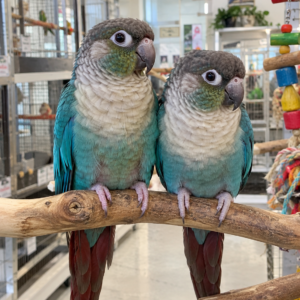
Conure Parrots
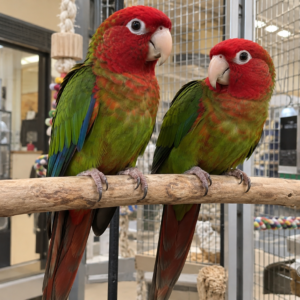
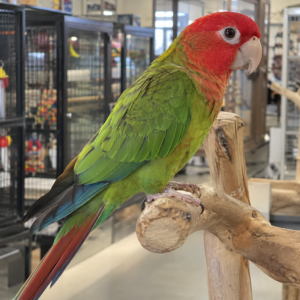
Conure Parrots


Conure Parrots
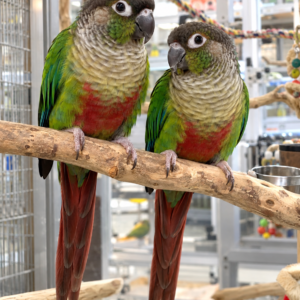

Conure Parrots
Reviews
There are no reviews yet.