



Cherry Headed Conure for Sale

$500.00
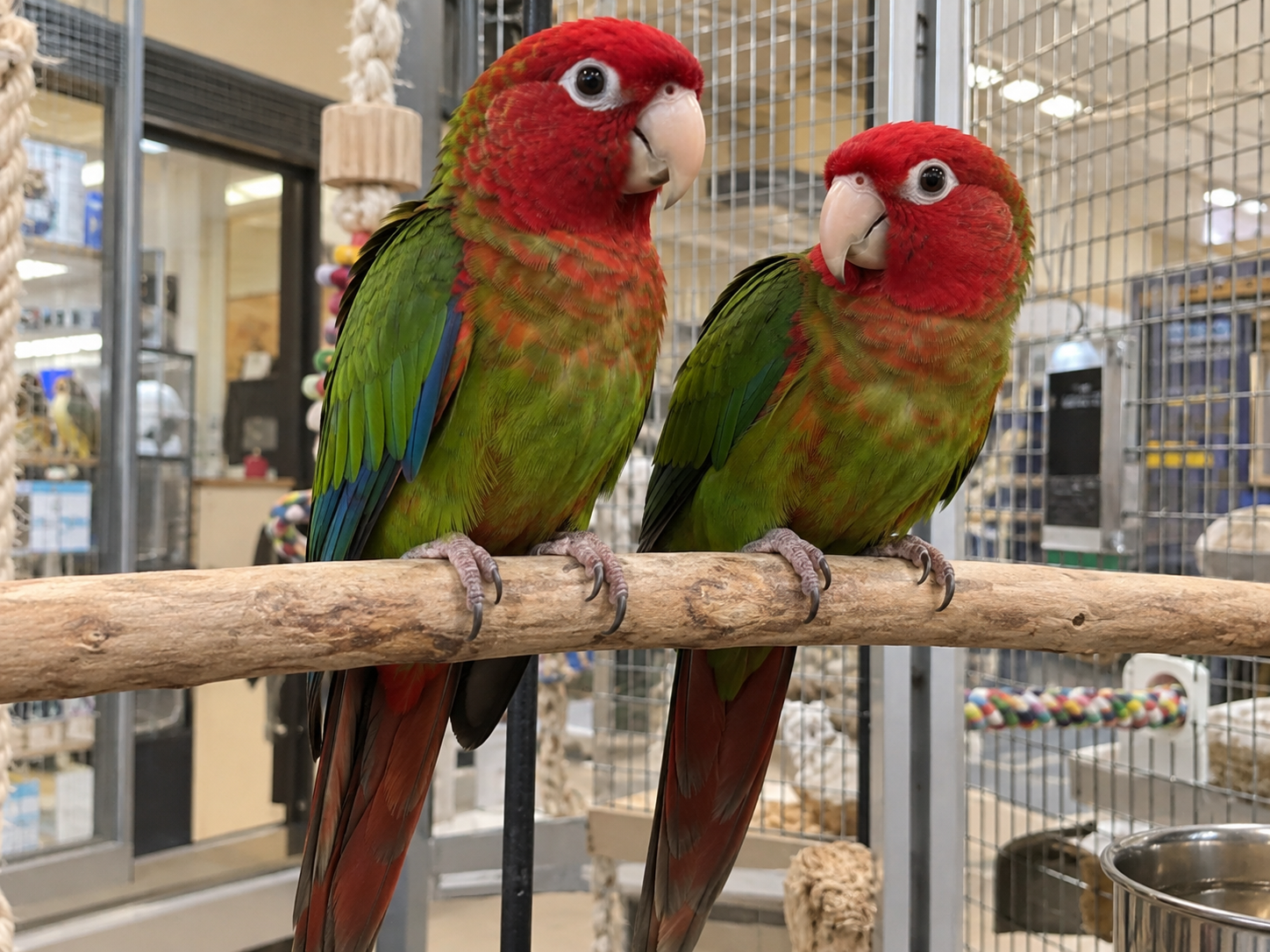
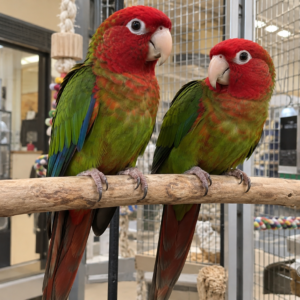
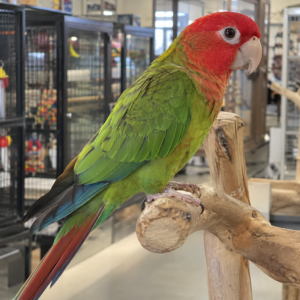
Male and female Cherry Headed Conures are represented in this listing. Scientifically known as Psittacara erythrogenys, this South American conure is recognized for its bright red head, green body, long tapered tail and red markings around the shoulder and wing area. Adults reach approximately 13 inches and generally weigh around 165–200 grams. With a reported Cherry Headed Conure lifespan of roughly 25–35 years under suitable captive care, these parrots require adequate flight space, regular enrichment, balanced nutrition and long-term avian veterinary support.
Cherry Headed Conure for Sale | Male & Female
For buyers researching a cherry headed conure for sale, this medium-sized South American conure is one of the easiest species to recognize because of its vivid red facial colouring.
Scientifically classified as Psittacara erythrogenys, it is also widely known as the Red-masked Parakeet or Red-headed Conure.
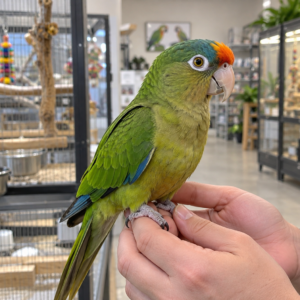
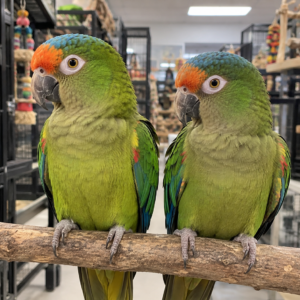
Adults are predominantly green with a bright red forehead, crown, cheeks and face. Red may also appear around the bend of the wing and portions of the thighs.
The rest of the body remains mainly green, while the tail is long and tapered.
Cherry Headed Conure Details
- Common Name: Cherry Headed Conure
- Alternative Name: Red-masked Parakeet
- Scientific Name: Psittacara erythrogenys
- Bird Type: Conure
- Sex Represented: Male and Female
- Adult Size: Approximately 13 inches
- Adult Weight: Approximately 165–200 g
- Reported Lifespan: Approximately 25–35 years
- Primary Colours: Green and red
- Natural Region: Western South America
- Conservation Status: Near Threatened
- CITES Listing: Appendix II
What Does a Cherry Headed Conure Look Like?
The Cherry Headed Conure is mainly green.
Its most distinctive feature is the bright red colouring covering much of the head.
The red typically extends across:
- Forehead
- Crown
- Cheeks
- Area around the eyes
- Portions of the face
Red may also appear at the shoulder or bend of the wing and around the thighs.
The wings and body remain mainly green.
The tail is long and tapered, with green and darker tones.
The beak is pale horn-coloured, while the bare skin around the eye is light and clearly visible.
Male and Female Cherry Headed Conures
Male and female Cherry Headed Conures look very similar externally.
Unlike species such as Eclectus parrots, there are no dramatic colour differences between mature males and females.
Where confirmed sex matters, DNA testing or appropriate breeder documentation is preferable.
Individual personality should also not be predicted solely from sex.
Behaviour can be influenced by:
- Socialization
- Handling history
- Age
- Environment
- Daily routine
- Previous experience
Cherry Headed Conure Size
The typical Cherry Headed Conure reaches approximately 13 inches in overall length.
Adults generally weigh around 165–200 grams.
The species is noticeably larger than smaller Pyrrhura conures such as Green Cheeks and Black Capped Conures.
A significant portion of total length comes from the long tail.
Housing should therefore provide enough room for:
- Wing stretching
- Climbing
- Turning comfortably
- Moving between perches
- Foraging
- Exercise
Cherry Headed Conure Lifespan
The reported Cherry Headed Conure lifespan is approximately 25–35 years under suitable captive care.
Actual longevity can vary according to:
- Genetics
- Nutrition
- Veterinary care
- Exercise
- Body condition
- Housing
- Environmental safety
- Overall husbandry
Anyone considering this species should plan for a long-term commitment.
Cherry Headed Conure Price
The Cherry Headed Conure price can vary considerably depending on the individual bird.
Factors that may influence price include:
- Age
- Sex
- Socialization
- Handling history
- Health information
- Documentation
- Geographic location
- Breeder availability
Because no exact selling price has been supplied for this listing, the live product page should display the actual current price rather than an unsupported generic estimate.
Long-term costs should also be considered, including housing, food, replacement toys and veterinary care.
Cherry Headed Conure Personality
Cherry Headed Conures are active and intelligent parrots.
They are social birds and benefit from environments that allow regular interaction and exploration.
A suitable routine can include:
- Foraging
- Climbing
- Training
- Safe chewing
- Bathing
- Play
- Social interaction
Individual temperament varies.
Some birds may become very confident around familiar people, while others may need gradual socialization.
Are Cherry Headed Conures Loud?
Yes.
Cherry Headed Conures can be loud.
Their natural calls include:
- Harsh contact calls
- Screeches
- Excited flock calls
- Alarm calls
- Softer social vocalizations
Potential owners should consider household noise tolerance before choosing this species.
They should not be marketed as quiet parrots.
Housing a Cherry Headed Conure
Cherry Headed Conures need substantial movement space.
A suitable setup should provide:
- Natural wooden perches
- Different perch diameters
- Horizontal movement space
- Climbing opportunities
- Feeding and water stations
- Safe chewing materials
- Foraging toys
- Bathing access
The enclosure should be large enough to allow comfortable wing stretching and movement without the long tail repeatedly striking the sides.
Enrichment
This species benefits from regular enrichment.
Suitable options include:
- Wooden chew toys
- Natural branches
- Climbing ropes
- Ladders
- Swings
- Puzzle feeders
- Foraging toys
- Foot toys
- Bathing opportunities
Rotating enrichment helps prevent the environment from becoming repetitive.
Cherry Headed Conure Diet
A balanced feeding program is important for long-term health.
Suitable foods may include appropriate formulated parrot food along with vegetables and moderate portions of fruit.
Fresh foods can include:
- Apple
- Pear
- Orange
- Banana
- Papaya
- Pomegranate
- Carrot
- Bell pepper
- Green beans
- Peas
- Corn
- Leafy greens
Appropriately prepared legumes may also form part of the diet.
Food should be adjusted according to the bird’s age, activity, body condition and veterinary guidance.
Natural Range
The Cherry Headed Conure is native primarily to parts of western South America.
Its natural range is centred around:
- Ecuador
- Peru
The species occupies dry woodland, forest edges, agricultural landscapes and other semi-open environments.
Introduced populations have also become established in some urban areas outside the natural range.
Wild Behaviour
Wild Cherry Headed Conures are highly social.
They may travel in pairs, small groups or large flocks depending on season and food availability.
Much of their daily activity involves:
- Flying
- Foraging
- Socializing
- Resting
- Exploring vegetation
Their loud calls help maintain contact between flock members.
Cherry Headed Conure Breeding
Cherry Headed Conures are cavity-nesting parrots.
Breeding pairs typically use tree hollows or similar protected spaces.
Responsible captive breeding requires knowledge of:
- Pair compatibility
- Nutrition
- Genetics
- Veterinary screening
- Nest management
- Chick development
- Weaning
Housing a male and female together should not automatically be treated as a complete breeding setup.
Cherry Headed Conure Conservation Status
The Cherry Headed Conure is generally classified as Near Threatened.
Threats include:
- Habitat loss
- Capture for the bird trade
- Agricultural expansion
- Local population pressure
Responsible captive sourcing is therefore especially important.
Buyers should favour legitimately captive-bred birds with appropriate origin information.
Cherry Headed Conure vs Blue Crowned Conure
These two species are both medium-sized conures but have very different head colouring.
Cherry Headed Conure
- Bright red head
- Green body
- Approximately 13 inches
- Around 165–200 g
Blue Crowned Conure
- Blue forehead and crown
- Green body
- Approximately 14.4 inches
- Around 165 g
The easiest visual distinction is the head colour: bright red in the Cherry Headed Conure and blue in the Blue Crowned Conure.
Veterinary Care
An avian veterinarian should be identified before bringing home a Cherry Headed Conure.
Routine examinations can help monitor:
- Body weight
- Plumage
- Beak
- Feet
- Nutrition
- Respiratory health
- Activity
- General condition
For professional companion-bird information:
Association of Avian Veterinarians
Preparing for Cherry Headed Conure Ownership
Before choosing a cherry headed conure for sale, the bird’s environment should already be prepared.
A suitable setup should provide:
- Secure housing
- Adequate movement space
- Natural perches
- Climbing opportunities
- Safe chewing materials
- Foraging activities
- Bathing access
- Balanced nutrition
- Veterinary support
Owners should also consider noise and the potential 25–35 year lifespan before purchase.
Why the Cherry Headed Conure Is Distinctive
The Cherry Headed Conure combines a bright red head with a predominantly green body and long tapered tail.
Its striking red facial colouring makes it one of the easiest medium-sized conures to identify.
For buyers researching a cherry headed conure for sale, age, health, socialization, housing requirements and long-term care should all be considered alongside the Cherry Headed Conure price.
Frequently Asked Questions
What is the scientific name of the Cherry Headed Conure?
The scientific name is Psittacara erythrogenys.
How big is a Cherry Headed Conure?
Adults reach approximately 13 inches in overall length.
How much does a Cherry Headed Conure weigh?
Adults generally weigh around 165–200 grams.
What is the Cherry Headed Conure lifespan?
The reported Cherry Headed Conure lifespan is approximately 25–35 years under suitable captive care.
What is the Cherry Headed Conure price?
The Cherry Headed Conure price varies according to age, sex, socialization, health information, documentation, location and availability.
What colours does a Cherry Headed Conure have?
Adults are mainly green with vivid red colouring across the head and additional red markings around portions of the wings and thighs.
Can male and female Cherry Headed Conures be distinguished visually?
Males and females look similar externally. DNA testing or appropriate breeder documentation is preferable where confirmed sex is required.
Are Cherry Headed Conures loud?
Yes. They can produce loud contact calls and screeches, particularly during periods of excitement or flock communication.
What does a Cherry Headed Conure eat?
A managed diet can include suitable formulated parrot food, vegetables, leafy greens, legumes and moderate portions of fruit.
Where does the Cherry Headed Conure come from?
The natural range is centred mainly in Ecuador and Peru.
Where can I learn more about professional conure care?
The Association of Avian Veterinarians provides professional companion-bird care information:
Be the first to review “Cherry Headed Conure for Sale”
Related products
Conure Parrots


Conure Parrots
Conure Parrots

Conure Parrots

Conure Parrots

Conure Parrots

Conure Parrots

Conure Parrots
Reviews
There are no reviews yet.