



Derbyan Parakeet

$550.00
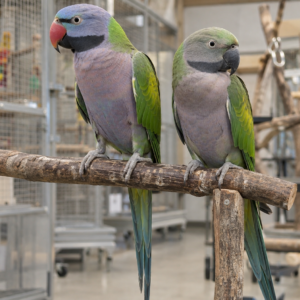
Male and female Derbyan Parakeets are represented in this listing. Scientifically known as Psittacula derbiana, this large Asian parakeet is recognized for its blue-purple head, green upperparts, lilac-purple chest, black facial markings and long blue-green tail. Adult males develop a red upper beak, while adult females have an entirely dark beak and slightly different head colouring. Adults reach approximately 19.5 inches and weigh around 320 grams. With a reported lifespan of approximately 15–20 years, Derbyan Parakeets require suitable flight space, strong housing, enrichment and regular avian veterinary care.
Derbyan Parakeet – Male & Female
The Derbyan Parakeet is a large, colourful Asian parakeet distinguished by its striking combination of green, blue, purple and black plumage.
Scientifically classified as Psittacula derbiana, it is also commonly known as Derby’s Parakeet or Lord Derby’s Parakeet.
Adults reach approximately 19.5 inches in overall length and weigh around 320 grams. Their long tails account for a considerable portion of their total length and give the species the elegant profile associated with Asian parakeets.
The Derbyan is larger and more heavily built than many familiar parakeets. Its powerful beak, active temperament and strong chewing behaviour mean that housing and enrichment should be selected specifically for a bird of this size.
Derbyan Parakeet Details
- Common Name: Derbyan Parakeet
- Alternative Names: Derby’s Parakeet, Lord Derby’s Parakeet
- Scientific Name: Psittacula derbiana
- Bird Type: Asian Parakeet
- Sex Represented: Male and Female
- Adult Size: Approximately 19.5 inches
- Adult Weight: Approximately 320 g
- Reported Lifespan: Approximately 15–20 years
- Primary Colours: Green, blue, purple, black and grey
- Natural Range: Eastern Himalayas and Tibetan Plateau
- Conservation Status: Least Concern
- CITES Listing: Appendix II
What Does a Male Derbyan Parakeet Look Like?
The adult male Derbyan Parakeet has a distinctive blue-purple head combined with black facial markings.
A black band extends across the lower cheeks, while the forehead also contains dark markings.
The upperparts are predominantly green.
From the throat through much of the lower body, the plumage develops a soft lilac or purple colour that creates a noticeable contrast with the green wings and back.
The tail is primarily blue with green tones closer to the base.
One particularly useful feature for identifying an adult male is the beak. The upper mandible is bright red, while the lower mandible is black.
This red-and-black beak combination helps distinguish a mature male from an adult female.
What Does a Female Derbyan Parakeet Look Like?
Female Derbyan Parakeets share many of the same basic colours but have several important differences.
Females generally lack the strong blue colouring across the front of the head seen in mature males.
The throat and lower body can appear duller grey-purple rather than the stronger lilac-purple colouring of the male.
Females also have a pinkish stripe extending from behind the lower cheek toward the back of the head.
One of the easiest differences is the beak.
Unlike the male’s red upper mandible, the adult female Derbyan Parakeet has a dark or black beak.
Females also generally have a somewhat shorter tail.
Derbyan Parakeet Size
The Derbyan Parakeet reaches approximately 19.5 inches in overall length and weighs around 320 grams.
This places it among the larger parakeets.
Its body is more substantial than species such as the Indian Ringneck, while the long tail increases its total length considerably.
Housing therefore needs to accommodate both its physical body and long tail.
The bird should be able to move between perches, stretch its wings and turn comfortably without repeatedly contacting the sides of the enclosure.
Derbyan Parakeet Lifespan
The reported Derbyan Parakeet lifespan is approximately 15–20 years under appropriate captive care.
Actual longevity can vary according to factors such as:
- Genetics
- Nutrition
- Exercise
- Veterinary care
- Housing
- Environmental safety
- Enrichment
- Overall husbandry
Anyone considering this species should therefore prepare for a long-term responsibility.
Derbyan Parakeet Price
The Derbyan Parakeet price can vary significantly from one individual bird to another.
Factors that may influence price include:
- Age
- Sex
- Tameness
- Handling history
- Health information
- Breeding history
- Documentation
- Geographic location
- Current availability
The Derbyan Parakeet is less commonly established in captivity than many popular parakeets, and limited availability can affect pricing.
Because no exact selling price has been provided for this listing, the current product price should be displayed directly on the product page rather than using a generic market estimate.
Derbyan Parakeet Personality
Derbyan Parakeets are active and social birds.
Wild birds often occur in noisy flocks containing several dozen individuals rather than living primarily alone.
Under human care, individual temperament can vary considerably.
A Derbyan Parakeet may benefit from:
- Regular social interaction
- Foraging opportunities
- Training
- Climbing
- Chewing
- Flight
- Bathing
- Exploration
Handling history can strongly influence how comfortable an individual bird becomes around people.
Are Derbyan Parakeets Loud?
Derbyan Parakeets are naturally vocal.
Their calls can be loud, metallic and raucous, especially during flight or when communicating across a distance.
This should be considered before choosing the species for a home environment.
Potential owners should not expect a Derbyan Parakeet to remain consistently quiet.
Providing appropriate social interaction, exercise and enrichment can help ensure the bird has suitable outlets for normal behaviour.
Housing a Derbyan Parakeet
Because of its size and strong beak, the Derbyan Parakeet needs durable housing.
Professional avicultural guidance recommends a walk-in aviary approximately 14.7 feet in length.
Wood should not form the main structural material because Derbyan Parakeets are strong chewers.
Suitable housing should include:
- Strong metal construction
- Natural perches
- Multiple perch heights
- Horizontal flight space
- Climbing opportunities
- Safe feeding stations
- Chewing materials
- Bathing access
Enough open space should remain inside the enclosure for movement and flight.
Enrichment and Chewing
Chewing is a normal part of Derbyan Parakeet behaviour.
Suitable enrichment may include:
- Bird-safe branches
- Sterilized pine cones
- Safe wooden toys
- Vegetable-tanned leather toys
- Climbing ropes
- Foraging activities
- Bathing dishes
- Natural perches
Items should be inspected regularly because a powerful parakeet can damage toys and perches over time.
Rotating enrichment materials can also help keep the environment interesting.
Derbyan Parakeet Diet
A varied feeding plan is important for long-term health.
Suitable foods may include fresh fruits such as:
- Apple
- Pear
- Orange
- Banana
- Pomegranate
Vegetables can include:
- Carrot
- Celery
- Green peas
- Beans
- Fresh corn
- Leafy greens
A limited seed mixture, sprouted foods, cooked legumes and an appropriate formulated parrot diet may also form part of a balanced feeding program.
The exact diet should be adjusted according to the bird’s age, weight, health and activity.
For professional companion-bird health information, owners can consult:
Association of Avian Veterinarians
Natural Range of the Derbyan Parakeet
The Derbyan Parakeet is native to high-altitude regions of Asia.
Its range includes areas of:
- Northeastern India
- Southeastern Tibet
- Southwestern China
- Sichuan
- Yunnan
The species is associated particularly with the eastern Himalayas and Tibetan Plateau.
Wild birds occur in highland forest at elevations of approximately 2,700–4,000 metres.
Habitats include coniferous forests, mixed pine and oak woodland and alpine areas containing rhododendron growth.
Wild Derbyan Parakeet Behaviour
Wild Derbyan Parakeets are highly social.
They are frequently found in noisy groups and may form flocks containing several dozen birds.
Pairs or single individuals are less commonly observed.
Natural foods include pine seeds, tree catkins, pine cones, cultivated fruits and grain.
Their strong beaks allow them to manipulate hard plant material efficiently.
Derbyan Parakeet Conservation
The Derbyan Parakeet is currently classified as Least Concern and is included under CITES Appendix II.
The global population is not precisely known, but it is believed to be slowly decreasing.
Threats include trapping for the bird trade, particularly in areas where wild birds are captured for local or international markets.
Remote high-altitude populations can experience less pressure because they occur farther from areas of intensive human activity.
Responsible sourcing remains important when purchasing any Derbyan Parakeet.
Captive-bred birds with clear origin information should be preferred over birds taken from wild populations.
Derbyan Parakeet vs Alexandrine Parakeet
The Derbyan Parakeet and Alexandrine Parakeet are both large members of the Asian parakeet group, but their appearance differs considerably.
Derbyan Parakeet
- Approximately 19.5 inches
- Around 320 g
- Blue-purple head
- Lilac-purple chest
- Green upperparts
- Black cheek markings
- Male has red upper beak
Alexandrine Parakeet
- Approximately 22.6 inches
- Around 250–260 g
- Primarily green
- Maroon shoulder patch
- Mature male develops black and pink neck markings
- Long tapered tail
The Alexandrine is longer overall, while the Derbyan generally has a heavier reported body weight and much stronger purple colouring across the head and chest.
Male vs Female Derbyan Parakeet
Adult Derbyans show useful sexual differences.
Male:
- Stronger blue-purple head
- Bright lilac-purple chest
- Red upper mandible
- Black lower mandible
- Longer tail
Female:
- More subdued head colouring
- Duller grey-purple chest
- Dark beak
- Pinkish head stripe
- Slightly shorter tail
These characteristics can assist visual identification once a bird has developed mature plumage.
Veterinary Care
An avian veterinarian should be identified before bringing home a Derbyan Parakeet.
Routine examinations can help monitor:
- Body weight
- Plumage
- Beak condition
- Feet
- Diet
- Respiratory health
- General physical condition
Preventive care is particularly valuable for a bird that may live for 15–20 years.
Professional bird-care information is available through:
Association of Avian Veterinarians
Preparing for Derbyan Parakeet Ownership
Before bringing home a Derbyan Parakeet, the environment should already be prepared.
A suitable setup should provide:
- Strong housing
- Adequate horizontal flight space
- Durable perches
- Chewing materials
- Safe enrichment
- Bathing access
- Balanced nutrition
- Veterinary support
Owners should also consider the species’ natural vocal level and strong chewing ability before deciding whether it fits their home environment.
Why the Derbyan Parakeet Is Distinctive
The Derbyan Parakeet combines substantial size with an unusual and attractive colour pattern.
The blue-purple head, lilac chest, green wings and long blue-green tail make the species visually different from many other Asian parakeets.
Adult males become especially distinctive because of their bright red upper beak and contrasting black facial markings.
For anyone considering a Derbyan Parakeet, the bird’s sex, age, condition, origin, housing needs and long-term veterinary care should all be considered alongside the Derbyan Parakeet price.
Frequently Asked Questions
What is the scientific name of the Derbyan Parakeet?
The scientific name is Psittacula derbiana.
Is the Derbyan Parakeet also called Derby’s Parakeet?
Yes. Derby’s Parakeet and Lord Derby’s Parakeet are alternative common names.
How big is a Derbyan Parakeet?
Adults reach approximately 19.5 inches in overall length.
How much does a Derbyan Parakeet weigh?
Adult weight is approximately 320 grams.
How long does a Derbyan Parakeet live?
The reported lifespan is approximately 15–20 years under suitable captive care.
What is the Derbyan Parakeet price?
The Derbyan Parakeet price varies according to age, sex, tameness, documentation, health, geographic location and availability. The actual current price should be displayed directly on the product listing.
What colours does a Derbyan Parakeet have?
Adults combine green upperparts with a blue-purple head, lilac-purple chest, black facial markings and a long blue-green tail.
How can you tell a male Derbyan Parakeet from a female?
One of the easiest adult differences is the beak. Mature males have a red upper mandible and black lower mandible, while females have a dark beak. Males also generally show stronger blue-purple colouring.
Are Derbyan Parakeets loud?
Yes. Their natural calls can be loud, metallic and raucous.
Are Derbyan Parakeets rare in captivity?
They are less commonly established in captivity than several other Asian parakeet species, and captive breeding is comparatively limited.
Where can I learn more about professional parrot care?
The Association of Avian Veterinarians provides professional bird-care resources:
Be the first to review “Derbyan Parakeet”
Related products

Asiatic Parrots

Asiatic Parrots


Asiatic Parrots
Reviews
There are no reviews yet.