



Alexandrine Parakeet for Sale

$2,500.00
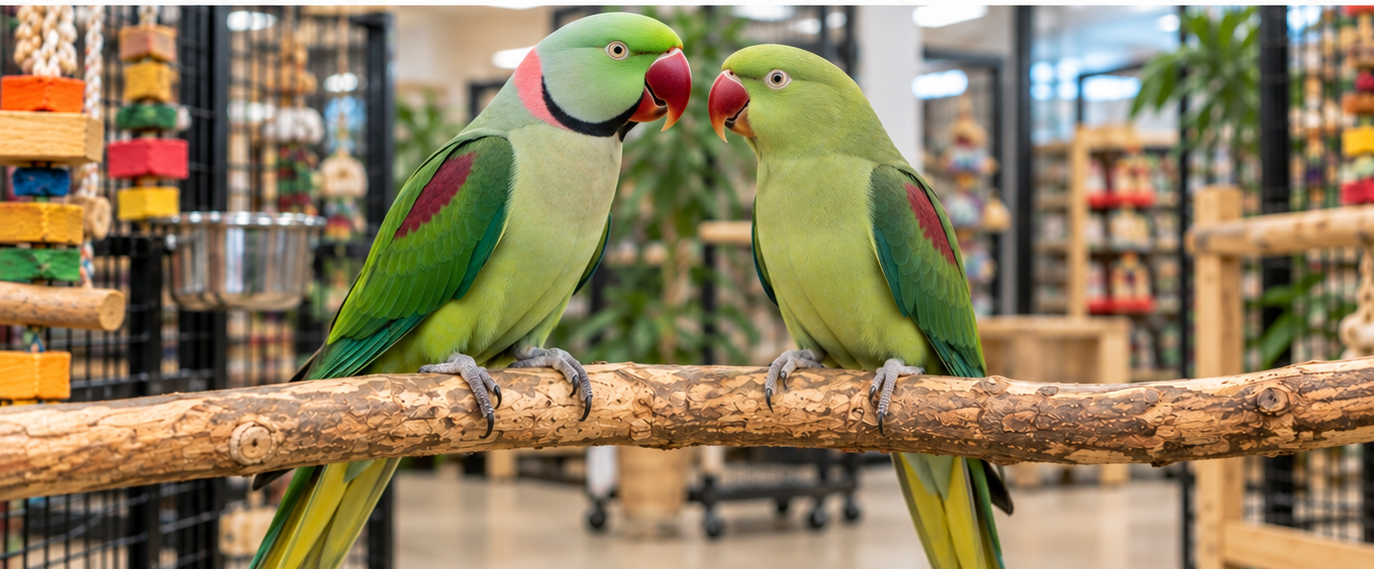
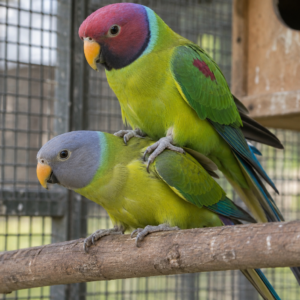
Male and female Alexandrine Parakeets are represented in this listing. Scientifically known as Psittacula eupatria, this large Asian parakeet is recognized for its long tail, red beak, predominantly green plumage and distinctive maroon shoulder patch. Mature males also develop a black lower cheek stripe and a pink collar around the neck. Adults reach approximately 22.6 inches and weigh around 250–260 grams. The reported Alexandrine Parakeet lifespan is approximately 25–30 years, making appropriate housing, enrichment, nutrition and avian veterinary care important parts of long-term ownership.
Alexandrine Parakeet for Sale – Male & Female
For buyers researching an alexandrine parakeet for sale, the Alexandrine Parakeet is one of the largest and most distinctive long-tailed parakeets commonly kept in aviculture.
Scientifically classified as Psittacula eupatria, the species is also known as the Alexandrine Ring-necked Parakeet, Greater Rose-ringed Parakeet and Great-billed Parakeet.
Adults reach approximately 22.6 inches in length and weigh around 250–260 grams.
The species combines a substantial body, long tapered tail and powerful beak with elegant green plumage. Mature males develop strong neck markings, while both sexes carry the characteristic maroon shoulder patch that helps distinguish the Alexandrine from similar parakeets.
Alexandrine Parakeet Details
- Common Name: Alexandrine Parakeet
- Scientific Name: Psittacula eupatria
- Bird Type: Asian Parakeet
- Sex Represented: Male and Female
- Adult Size: Approximately 22.6 inches
- Adult Weight: Approximately 250–260 g
- Reported Lifespan: Approximately 25–30 years
- Primary Colour: Green
- Distinctive Markings: Maroon shoulder patch, red beak, long tail
- Conservation Status: Least Concern
- CITES Listing: Appendix II
There are five recognized subspecies of the Alexandrine Parakeet. These vary slightly in size, beak shape and colouring depending on geographic origin.
What Does an Alexandrine Parakeet Look Like?
The Alexandrine Parakeet is predominantly green.
Adult males develop a black stripe running across the lower cheeks and a broad pink collar around the back of the neck. The head and neck may also show subtle blue tones depending on the subspecies.
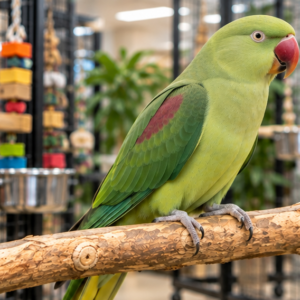
One of the most important identifying features is the dark maroon or red shoulder patch on the wings.
The beak is large and red, while the tail is exceptionally long and contributes significantly to the bird’s total body length.
Females are generally duller in appearance and do not develop the same strong black cheek markings and neck ring seen in mature males.
Male and Female Alexandrine Parakeets
Male and female Alexandrine Parakeets become easier to distinguish once fully mature.
The male typically develops:
- A black lower cheek stripe
- A pink neck collar
- Stronger head and neck markings
The female generally lacks these pronounced markings and has a more uniform green appearance.
Juvenile birds often resemble females, so colour alone should not always be used to determine the sex of younger birds.
Where sex confirmation is important, breeder documentation or professional testing is preferable.
Alexandrine Parakeet Lifespan
The reported alexandrine parakeet lifespan is approximately 25–30 years under suitable captive care.
Actual lifespan can vary depending on:
- Genetics
- Nutrition
- Exercise
- Veterinary care
- Housing quality
- Environmental safety
- Daily enrichment
Anyone considering an Alexandrine Parakeet should plan for a long-term commitment rather than treating the bird as a short-term pet.
Alexandrine Parakeet Price
People researching alexandrine parakeet price should understand that there is no single universal price for every bird.
Price can vary according to:
- Age
- Sex
- Colour mutation
- Tameness
- Handling history
- Health information
- Documentation
- Geographic location
- Current availability
Because no exact selling price has been provided for this listing, the live product page should display the actual current price rather than using a generic market estimate.
Long-term expenses should also be considered, including housing, food, toys, enrichment and avian veterinary care.
Alexandrine Parakeet Personality
Alexandrine Parakeets are active, intelligent birds with a strong physical presence.
They are naturally vocal and can produce loud, ringing and sometimes harsh calls.
Individual personality varies significantly.
Factors that can influence behaviour include:
- Socialization
- Handling
- Age
- Environment
- Daily routine
- Previous experiences
Regular interaction and mental stimulation are important, but owners should also respect the individual bird’s boundaries.
Alexandrine Parakeet Sounds
The Alexandrine Parakeet is a vocal species.
Calls can include:
- Loud ringing notes
- Harsh calls
- Deep scolding sounds
- Shrieks
- Social flock calls
Potential owners should consider household noise tolerance before choosing this species.
They should not be expected to remain quiet throughout the day.
Housing an Alexandrine Parakeet
The Alexandrine Parakeet has a powerful beak and requires durable housing.
Metal or welded-mesh construction is preferable because wooden structures can be damaged quickly.
A large enclosure should provide:
- Long horizontal flight space
- Strong perches
- Multiple perch levels
- Safe climbing areas
- Feeding and water stations
- Chewing opportunities
- Bathing access
- Enrichment
A walk-in aviary with a minimum length of approximately 14.7 feet is commonly recommended for professional or avicultural settings.
Enrichment and Mental Stimulation
Alexandrine Parakeets benefit from regular physical and mental enrichment.
Suitable options include:
- Bird-safe chewable wood
- Swings
- Ladders
- Climbing ropes
- Foot toys
- Push-and-pull toys
- Pine cones
- Bathing opportunities
- Foraging activities
Because of their strong beak, they need toys and materials that can withstand regular chewing.
Rotating enrichment items can help prevent the environment from becoming repetitive.
Alexandrine Parakeet Diet
A balanced and varied diet is essential.
Suitable foods may include:
- Apples
- Pears
- Oranges
- Bananas
- Pomegranate
- Carrots
- Celery
- Green peas
- Beans
- Fresh corn
- Leafy greens
- Limited seed mixtures
- Sprouted or cooked legumes
- Formulated parrot food
Diet should be adjusted according to the individual bird’s age, weight, activity and health.
For professional bird-care information, owners can consult the Association of Avian Veterinarians:
Association of Avian Veterinarians
Natural Range of the Alexandrine Parakeet
The Alexandrine Parakeet is native to parts of South and Southeast Asia.
Its natural range includes areas of:
- India
- Sri Lanka
- Pakistan
- Nepal
- Bhutan
- Afghanistan
- Myanmar
- Thailand
- Cambodia
- Laos
- Vietnam
- Andaman Islands
Different subspecies occupy different parts of this broad range.
The species lives in dry and moist woodland, forest edges, mangroves, plantations, gardens and areas where trees grow near water.
Alexandrine Parakeet Conservation Status
The Alexandrine Parakeet is currently classified as Least Concern and listed under CITES Appendix II.
Although the species is not globally threatened, some regional populations have declined because of:
- Habitat loss
- Habitat degradation
- Capture for the wild-bird trade
- Agricultural expansion
Responsible captive sourcing remains important.
Violet Yellow Alexandrine Parakeet
The phrase violet yellow alexandrine parakeet refers to colour-mutation interest rather than the standard wild-type appearance of the species.
The normal Alexandrine Parakeet is primarily green with:
- A maroon shoulder patch
- Red beak
- Long green tail
- Black and pink neck markings in mature males
If you offer a specific violet yellow Alexandrine Parakeet mutation, it is better to identify the mutation clearly and accurately rather than presenting those colours as standard for all Alexandrines.
For stronger SEO, a rare or specific mutation can also justify its own dedicated product page.
Alexandrine Parakeet vs Indian Ringneck
The keyword alexandrine parakeet vs indian ringneck is useful because buyers often compare these two species.
The Alexandrine Parakeet is generally much larger and heavier.
Alexandrine Parakeet
- Approximately 22.6 inches
- Around 250–260 g
- Maroon shoulder patch
- Heavier beak
- Larger overall build
Indian Ringneck
- Approximately 15.6 inches
- Around 116–140 g
- Slimmer body
- No maroon shoulder patch
- Lighter build
The maroon shoulder patch is one of the easiest physical features for distinguishing an Alexandrine Parakeet from an Indian Ringneck.
Both mature males can develop neck rings, but the Alexandrine is substantially larger and more robust.
Veterinary Care
An avian veterinarian should be identified before bringing home an Alexandrine Parakeet.
Routine examinations can help monitor:
- Weight
- Plumage
- Beak condition
- Feet
- Diet
- Respiratory health
- General wellbeing
The Association of Avian Veterinarians provides professional resources for bird owners:
Association of Avian Veterinarians
Preparing for Alexandrine Parakeet Ownership
Before choosing an alexandrine parakeet for sale, the bird’s environment should already be prepared.
A suitable setup should provide:
- Strong housing
- Adequate flight space
- Durable natural perches
- Chewing materials
- Climbing opportunities
- Bathing access
- Balanced nutrition
- Regular enrichment
- Avian veterinary care
The species’ 25–30 year lifespan also means owners should consider long-term housing, financial and care commitments before purchase.
Why the Alexandrine Parakeet Is Distinctive
The Alexandrine Parakeet combines the streamlined appearance of a ring-necked parakeet with a much larger body and heavier build.
Its long tail, red beak, green plumage and distinctive maroon shoulder patch make it easy to identify.
Adult males add a pink neck collar and black lower cheek stripe, creating an especially striking appearance.
For buyers searching for an alexandrine parakeet for sale, age, sex, mutation, condition, housing, handling history and long-term veterinary needs should all be considered alongside price.
Frequently Asked Questions
What is the scientific name of the Alexandrine Parakeet?
The scientific name is Psittacula eupatria.
How big is an Alexandrine Parakeet?
Adults reach approximately 22.6 inches in length.
How much does an Alexandrine Parakeet weigh?
Adults generally weigh around 250–260 grams.
What is the Alexandrine Parakeet lifespan?
The reported Alexandrine Parakeet lifespan is approximately 25–30 years.
What is the Alexandrine Parakeet price?
The Alexandrine Parakeet price varies according to age, sex, mutation, handling history, documentation, location and availability. The current product listing should display the actual selling price.
What colour is an Alexandrine Parakeet?
The natural form is primarily green with a maroon shoulder patch and red beak. Mature males also develop black and pink neck markings.
What is a violet yellow Alexandrine Parakeet?
It refers to a colour-mutation search term rather than the standard natural colour of the species.
What is the difference between an Alexandrine Parakeet and an Indian Ringneck?
The Alexandrine is significantly larger, heavier and has a distinctive maroon shoulder patch. The Indian Ringneck is smaller, slimmer and lacks that shoulder patch.
Are Alexandrine Parakeets loud?
Yes. They are naturally vocal and can produce loud ringing, harsh and shrill calls.
How long should an Alexandrine Parakeet enclosure be?
Large flight space is important. Professional aviary guidance commonly recommends an enclosure around 14.7 feet in length.
Where can I learn more about parrot care?
The Association of Avian Veterinarians provides professional bird-care information:
Be the first to review “Alexandrine Parakeet for Sale”
Related products

Asiatic Parrots

Asiatic Parrots

Asiatic Parrots
Reviews
There are no reviews yet.