

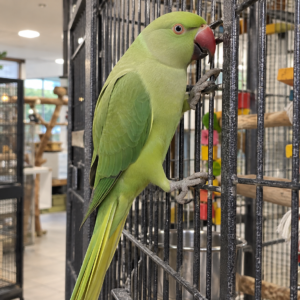
Indian Ringnecks for Sale

Original price was: $600.00.$550.00Current price is: $550.00.
Male and female Indian Ringnecks are represented in this listing. Also known as Indian Ringneck Parakeets or Rose-ringed Parakeets, these long-tailed parrots are recognized for their predominantly green natural plumage, red beaks and the distinctive black-and-pink neck ring that develops in mature males. Adults reach approximately 15.6 inches and generally weigh around 116–140 grams. Indian Ringnecks can live approximately 25–30 years under suitable captive care and require appropriate flight space, enrichment, balanced nutrition and routine avian veterinary care.
Indian Ringnecks for Sale – Male & Female
For buyers researching Indian Ringnecks for sale, these elegant Asian parakeets combine a relatively lightweight body with a remarkably long tail, strong personality and highly recognizable appearance.
The Indian Ringneck belongs to the Rose-ringed Parakeet species, scientifically classified as Alexandrinus krameri. Older references may also use the scientific name Psittacula krameri.
Adult Rose-ringed Parakeets reach approximately 15.6 inches in overall length and weigh roughly 116–140 grams.
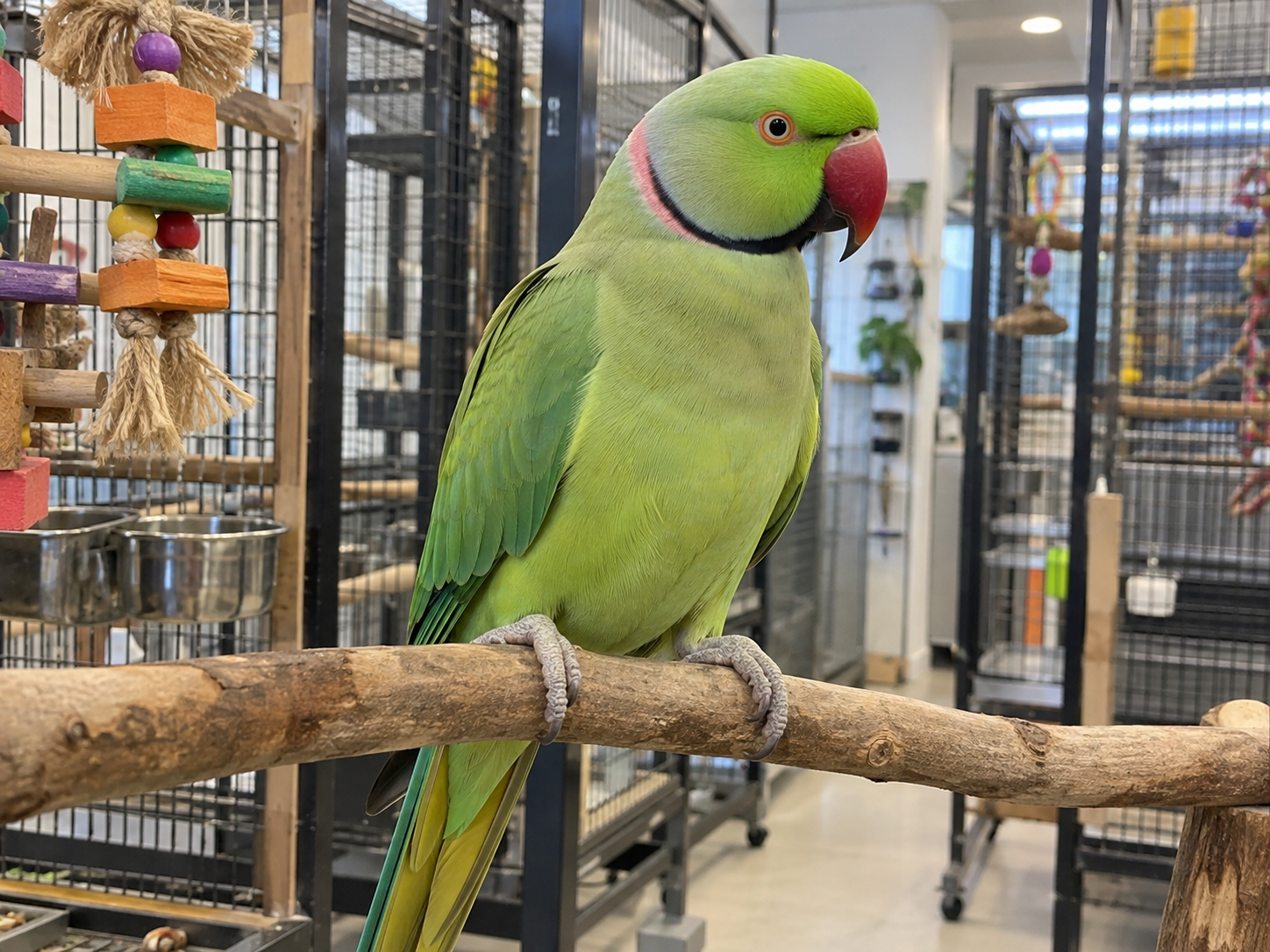
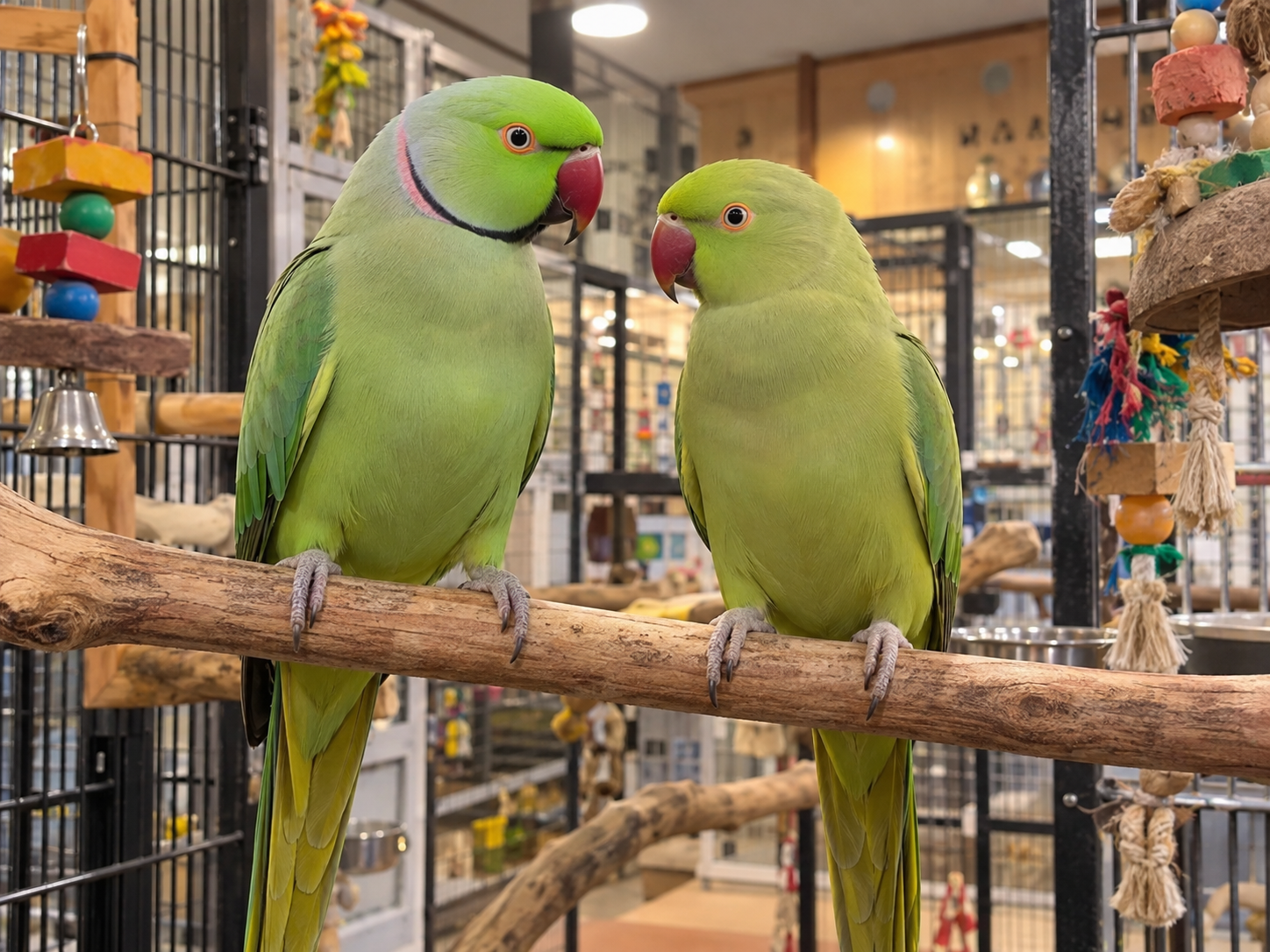
Natural-coloured birds are predominantly green. Mature males develop a black chin and cheek stripe along with a pink collar around the back of the neck, creating the characteristic “ringneck” appearance.
Indian Ringnecks have also been bred in many captive colour mutations, resulting in considerably more colour variety than is seen in wild populations.
Indian Ringneck Details
- Common Name: Indian Ringneck
- Alternative Name: Indian Ringneck Parakeet
- Species: Rose-ringed Parakeet
- Scientific Name: Alexandrinus krameri
- Bird Type: Asian Parakeet
- Sex Represented: Male and Female
- Adult Size: Approximately 15.6 inches
- Adult Weight: Approximately 116–140 g
- Reported Lifespan: Approximately 25–30 years
- Natural Colour: Primarily green
- Natural Range: Parts of Africa and Asia
- Conservation Status: Least Concern
What Do Indian Ringnecks Look Like?
Wild-type Indian Ringnecks are primarily green with long, tapered tails.
Their upper mandible is red, while darker colouring appears on portions of the lower beak.
The adult male develops one of the species’ most recognizable features: a dark stripe extending across the lower cheeks and chin together with a pink collar around the hindneck.
Blue colouring may also be visible around portions of the male’s neck.
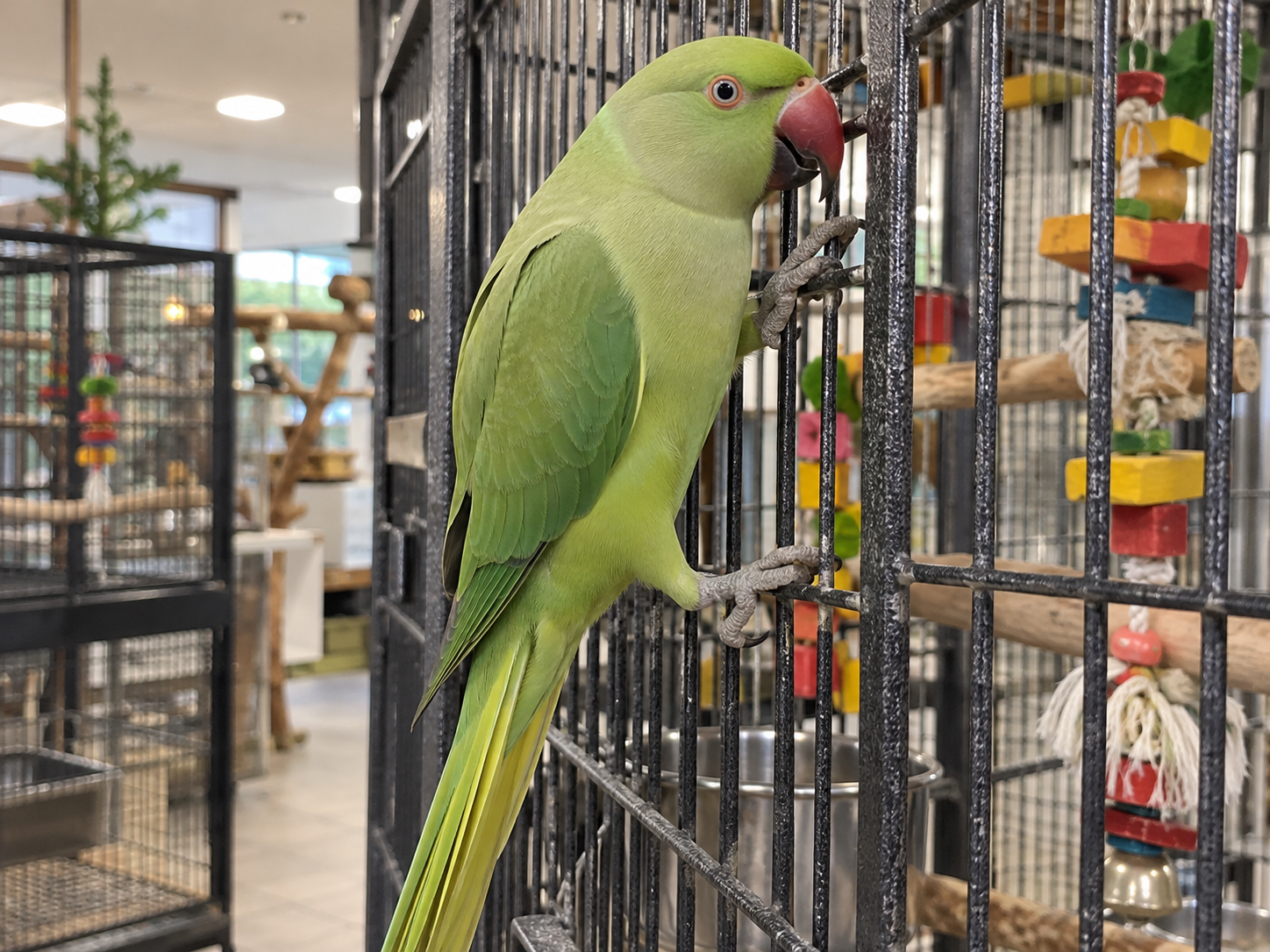
Adult females generally lack the pronounced black-and-pink neck ring. Instead, they retain a more uniform green appearance and can show a subtle green or yellowish collar.
Juveniles also resemble females, which means a young male may not yet have the obvious neck ring associated with an adult bird.
Male and Female Indian Ringnecks
Adult Indian Ringnecks show noticeable differences between males and females.
Adult Male Indian Ringneck:
- Black chin
- Black lower cheek stripe
- Pink neck collar
- Red upper beak
- Long tail
- Predominantly green natural plumage
Adult Female Indian Ringneck:
- No pronounced black facial stripe
- No strong pink male-style neck ring
- More uniform head colouring
- Slightly shorter tail in the natural form
- Predominantly green plumage
Where confirmed sex is important, breeder documentation or appropriate testing remains preferable, particularly with young birds that have not developed adult plumage.
How Long Do Indian Ringnecks Live?
For people asking how long do Indian Ringnecks live, approximately 25–30 years is a useful general captive lifespan range.
Actual longevity can vary according to:
- Genetics
- Nutrition
- Veterinary care
- Exercise
- Housing
- Daily enrichment
- Environmental safety
- Overall husbandry
A potential 25–30 year lifespan means acquiring an Indian Ringneck should be considered a long-term commitment.
The initial purchase is only one part of responsible ownership.
Are Indian Ringnecks Good Pets?
The question “are Indian Ringnecks good pets?” does not have the same answer for every household.
They can be engaging companion parrots for owners who understand their behaviour and provide sufficient time, space and enrichment.
Indian Ringnecks are intelligent, active and naturally vocal.
They may suit an owner who can provide:
- Regular interaction
- Appropriate training
- Flight and exercise opportunities
- Foraging activities
- Chewable enrichment
- Consistent daily routines
- Avian veterinary care
However, they are not automatically suitable for every household.
Their vocalizations, long lifespan and need for regular mental stimulation should be considered before purchase.
Individual personality also matters. Two Indian Ringnecks of the same age and sex can behave differently depending on socialization, previous experiences and environment.
Indian Ringneck Personality
Indian Ringnecks are active and observant parrots.
They frequently investigate their environment using both their beak and feet and benefit from opportunities to climb, chew, forage and explore.
A well-socialized individual may become comfortable interacting with familiar people, but handling should never be forced.
Their intelligence also means a repetitive environment can become unstimulating.
A suitable routine should include variation in toys, foraging activities and safe forms of interaction.
Are Indian Ringnecks Loud?
Indian Ringnecks are naturally vocal.
They can produce:
- Shrill calls
- Whistles
- Social contact calls
- Harsh vocalizations
- Softer musical sounds
Wild Rose-ringed Parakeets are particularly vocal when gathering in communal groups.
Potential owners should therefore expect normal daily parrot noise rather than choosing the species under the assumption that it will remain consistently quiet.
What Do Indian Ringnecks Eat?
People searching “what do Indian Ringnecks eat?” should focus on variety and nutritional balance rather than feeding only seeds.
A managed feeding program may include an appropriate formulated parrot food combined with suitable fresh vegetables and smaller amounts of fruit.
Vegetable choices can include foods such as:
- Carrots
- Broccoli
- Bell peppers
- Squash
- Sweet potato
- Leafy greens
- Peas
- Suitable cooked legumes
Fruit can be offered in smaller amounts because it naturally contains more sugar.
Examples may include:
- Apple
- Pear
- Mango
- Papaya
- Melon
- Berries
- Grapes
- Strawberries
Fresh produce should be washed thoroughly before serving.
The exact diet should be adapted to the individual bird’s age, weight, activity level and veterinary recommendations.
Can Indian Ringnecks Eat Grapes?
Yes, Indian Ringnecks can eat grapes as part of a varied diet.
Grapes should be:
- Fresh
- Thoroughly washed
- Served in manageable portions
- Offered as part of a varied diet rather than becoming a primary food
Because fruit contains natural sugar, grapes are better treated as one component of the diet rather than an unlimited food.
They can also be cut into smaller pieces, particularly when being used for enrichment or training.
Can Indian Ringnecks Eat Strawberries?
Yes, Indian Ringnecks can eat strawberries.
Fresh strawberries should be washed thoroughly before being offered.
They can be served in small pieces and incorporated alongside other appropriate fruits and vegetables.
As with grapes, strawberries should complement a nutritionally balanced feeding program rather than replace the bird’s primary diet.
Rotating different suitable fresh foods can provide both nutritional variety and additional sensory enrichment.
Foods That Require Care
A bird-safe diet also requires knowing that some human foods are unsuitable.
Owners should not assume that anything people eat is automatically safe for a parrot.
Before introducing an unfamiliar food, checking with a qualified avian veterinarian is the safer approach.
For professional companion-bird health and nutrition guidance, consult the Association of Avian Veterinarians.
Housing Indian Ringnecks
Indian Ringnecks have long tails and are active flyers, so usable horizontal space is especially important.
A suitable enclosure should allow the bird to:
- Turn comfortably
- Stretch its wings
- Move between perches
- Climb
- Explore
- Maintain its long tail without constant rubbing
- Interact with enrichment
Professional avicultural guidance recommends access to substantial flight space, with approximately 14.7 feet of aviary length used as a reference for larger flight setups.
The enclosure should prioritize usable movement rather than being overcrowded with accessories.
Perches and Enrichment
A good Indian Ringneck environment should provide multiple forms of enrichment.
Suitable items can include:
- Natural branches
- Bird-safe wooden toys
- Climbing ropes
- Swings
- Ladders
- Foraging toys
- Foot toys
- Safe shreddable materials
- Bathing opportunities
Different perch diameters can provide more varied footing.
Toys should also be checked regularly for damage and replaced where necessary.
Flight and Exercise
Indian Ringnecks are naturally active birds.
Exercise opportunities help them use normal behaviours including flying, climbing and balancing.
Where appropriate, a safe supervised environment outside the primary enclosure can provide additional movement.
A bird’s wings, weight and overall body condition should also be discussed during routine avian veterinary examinations.
Indian Ringneck Colour Mutations
One reason Indian Ringnecks are well known in aviculture is the large number of captive colour mutations.
Although wild birds are predominantly green, captive breeding has produced various colour forms.
Depending on genetic lines, breeders may work with birds displaying:
- Blue
- Yellow
- White or pale forms
- Grey
- Turquoise
- Violet-associated colouring
- Combinations of established mutations
Specific mutation names should only be used when the bird’s actual colour genetics are known.
This is particularly important for product SEO because photographs and descriptions should accurately match the bird being offered.
Indian Ringneck vs Alexandrine Parakeet
Indian Ringnecks and Alexandrine Parakeets are frequently confused because both are long-tailed Asian parakeets.
However, there are major differences.
Indian Ringneck
- Approximately 15.6 inches
- Approximately 116–140 g
- Slimmer build
- No maroon shoulder patch
- Adult male develops a neck ring
Alexandrine Parakeet
- Approximately 22.6 inches
- Approximately 250–260 g
- Considerably larger build
- Distinctive maroon shoulder patch
- Much heavier beak
- Adult male also develops neck markings
The maroon shoulder patch is one of the easiest ways to distinguish an Alexandrine from an Indian Ringneck.
Indian Ringneck Price Factors
Even though price is not one of the supplied focus keywords for this page, buyers commonly compare price when researching Indian Ringnecks for sale.
The price of an individual bird may depend on:
- Age
- Sex
- Colour mutation
- Handling history
- Tameness
- Health information
- Documentation
- Geographic location
- Availability
Because no specific selling price has been supplied, the live listing should display your actual price rather than using a generic estimate.
Natural Range
Rose-ringed Parakeets have an unusually broad natural distribution.
Native populations occur across parts of both Africa and Asia.
Habitats can include:
- Woodland
- Open forest
- Savanna
- Agricultural areas
- Mangroves
- Parks
- Gardens
- Urban environments
Their adaptability has also allowed introduced populations to establish in various locations outside their original range.
Indian Ringneck Conservation Status
The species is currently classified as Least Concern, and the overall global population trend is considered increasing.
However, trapping for the bird trade remains a concern in some parts of its range.
Responsible buyers should favour legitimate captive-bred birds with appropriate origin information.
Veterinary Care
An avian veterinarian should be identified before bringing home an Indian Ringneck.
Routine examinations can help monitor:
- Weight
- Plumage
- Beak
- Feet
- Nutrition
- Activity
- Respiratory health
- Overall condition
Diet changes and new foods can also be discussed with an avian veterinarian.
Recommended Outbound Resource: Association of Avian Veterinarians
Preparing for Indian Ringneck Ownership
Before choosing from Indian Ringnecks for sale, prospective owners should already have a suitable environment prepared.
That should include:
- Secure housing
- Horizontal flight space
- Safe perches
- Feeding and water equipment
- Chewing materials
- Foraging opportunities
- Bathing access
- Balanced nutrition
- Access to avian veterinary care
The bird’s potential 25–30 year lifespan should be considered as seriously as appearance or colour.
Why Indian Ringnecks Are Distinctive
Indian Ringnecks combine a slim build, exceptionally long tail and unmistakable adult male neck markings.
Their intelligence, wide variety of captive colours and striking appearance have made them well established in aviculture.
For buyers researching Indian Ringnecks for sale, the individual bird’s age, sex, colour, socialization, condition and care requirements should all be considered before purchase.
A suitable home should be prepared for decades of feeding, enrichment, housing and veterinary care rather than focusing solely on obtaining the bird.
Frequently Asked Questions
What is an Indian Ringneck?
An Indian Ringneck is a form of the Rose-ringed Parakeet, a long-tailed parrot native to parts of Africa and Asia.
What is the scientific name of the Indian Ringneck?
The currently used species name is Alexandrinus krameri. Older references may use Psittacula krameri.
How big are Indian Ringnecks?
Adults reach approximately 15.6 inches in overall length.
How much do Indian Ringnecks weigh?
Adults generally weigh approximately 116–140 grams.
How long do Indian Ringnecks live?
Indian Ringnecks can live approximately 25–30 years under suitable captive care.
Are Indian Ringnecks good pets?
They can be suitable companion parrots for owners prepared for their intelligence, vocal behaviour, exercise needs and long lifespan. Suitability depends on the bird and the household.
What do Indian Ringnecks eat?
A balanced feeding program can include appropriate formulated parrot food, vegetables and smaller portions of suitable fruit, with individual nutrition adjusted according to veterinary guidance.
Can Indian Ringnecks eat grapes?
Yes. Fresh, thoroughly washed grapes can be offered in moderate portions as part of a varied diet.
Can Indian Ringnecks eat strawberries?
Yes. Washed fresh strawberries can be offered in appropriate portions alongside other suitable foods.
How can you tell a male Indian Ringneck from a female?
Mature males typically develop a black cheek and chin stripe together with a pink neck collar. Females lack the pronounced male-style ring.
Are Indian Ringnecks the same as Alexandrine Parakeets?
No. Alexandrines are considerably larger and have a distinctive maroon shoulder patch that Indian Ringnecks do not have.
Where can I learn more about professional parrot care?
The Association of Avian Veterinarians provides professional companion-bird health and care information.
Be the first to review “Indian Ringnecks for Sale”
Related products

Asiatic Parrots

Asiatic Parrots


Asiatic Parrots
Reviews
There are no reviews yet.